
This article is for general cat behavior and household safety education, not a diagnosis or medical advice. For sudden physical or behavior changes, suspected swallowing of a nonfood object, painful urination, or injuries, contact a veterinarian. Read our veterinary disclaimer.
Your cat finishes dinner, walks a half circle around the bowl, and scrapes the floor as though burying something. The dish is on tile, so nothing actually covers the food. This may look like food rejection. Often, however, it reflects an ordinary food-covering pattern. Cats Protection describes it as a possible inherited caching behavior. Because a single gesture does not reveal a cat’s exact motivation, the best response is to check whether the cat is otherwise eating normally, whether the bowl area is comfortable, and whether food is left exposed long enough to spoil. Here is a practical way to tell routine pawing from a change worth discussing with a veterinarian.
Identify the actual pawing motion
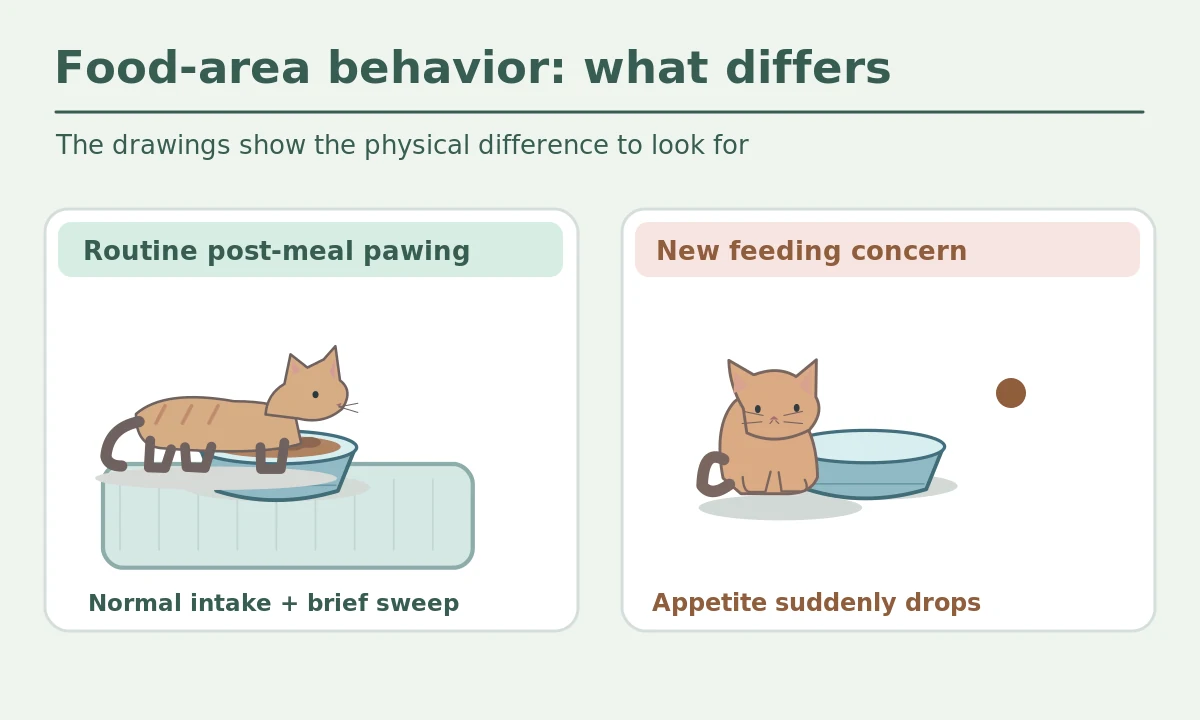
Watch whether the cat uses a front paw to sweep the floor beside the dish, briefly reaches around the bowl rim, or drags a nearby placemat toward it. These motions often resemble covering an object with loose material, even on a smooth kitchen floor where there is nothing to move. Separate this from scratching a tall post or digging in a litter box; those have different contexts. Note whether pawing happens before eating, halfway through, or after the meal. An occasional few seconds of scraping near a dish without other changes is not, by itself, evidence of food allergy, spoiled food, or dissatisfaction.
Why food-covering behavior may appear indoors
Cats Protection’s behavior discussion suggests some cats make a caching-like movement after eating. This may reflect ancestral food-saving patterns. This is a plausible explanation, not proof that an individual house cat thinks it is hiding a meal for later. The behavior may happen when food remains in the bowl or when the cat is already done. Some cats perform it more readily when a towel or loose object sits near the dish, because the material moves under their paws. You do not need to provide sand, soil, or cloth for a cat to cover its dinner. Adding loose material beside food could create contamination or ingestion hazards.

Check how much the cat actually ate
Measure the normal portion with the same scoop or scale you usually use and look at the amount left after the session. If your cat ate a typical meal, seems relaxed, and only scraped briefly afterward, treat the floor action as a behavior to observe rather than fix aggressively. If the cat suddenly eats less, struggles to chew, drops food, or walks away from a favorite meal, do not blame a caching instinct. Contact your veterinarian about a persistent or abrupt feeding change. Keep a log of meal type, amount offered, amount eaten, and any vomiting or other physical signs.
Make the bowl area easy to clean
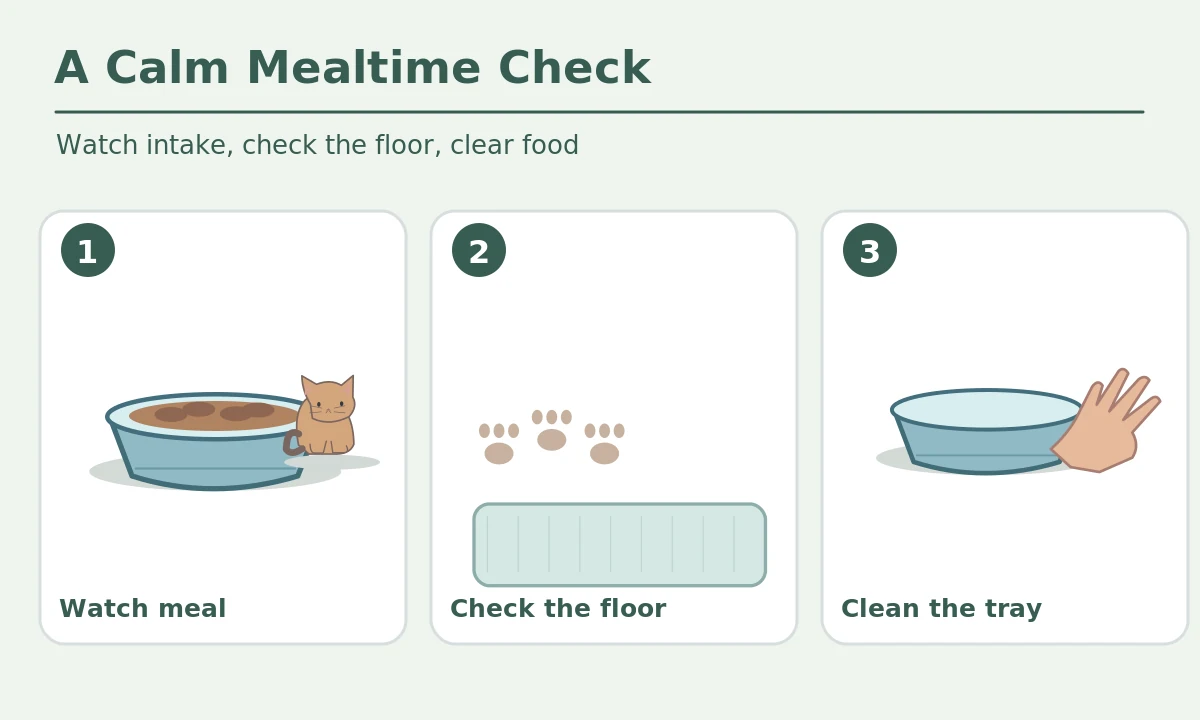
Put the bowl on a flat, stable, washable tray. Loose fabric mats can bunch up and trap food. Choose a dish that stays steady when touched by a paw. Keep the feeding station away from the litter box and from a location where other pets can corner the cat. Clean crumbs and wet-food residue soon after meals according to the food’s storage instructions. A rigid tray with smooth edges is easier to wipe than a thick fluffy mat. Avoid plastic sheeting that might catch claws or tempt chewing. If a cat repeatedly pulls a mat toward food, try removing the loose mat rather than scolding the cat.
Compare routine scraping with feeding concerns
A brief scrape after the cat has eaten a normal amount is different from repeatedly approaching food, retreating, drooling, pawing at the mouth, or showing signs of discomfort. Floor scratching can happen alongside those symptoms, but it does not explain them. Compare the day with the cat’s usual feeding behavior, not a stranger’s cat on social media. For example, a cat that suddenly barely touches its usual breakfast needs attention. The same floor-scraping movement does not change that. Do not label a cat picky or force-feed it without veterinary advice. Normal-looking paw motions never override obvious illness signs.
Reduce conflict at multi-cat feeding stations
In a shared home, observe whether another cat approaches or blocks access while the eater paws at the floor. Some cats prefer distance and quiet at mealtime. Provide separated feeding sites and enough exits so one animal cannot guard the only route away. Bowls in a tight corner can make a cat feel trapped whether or not it scratches. Put water at a convenient location as well, without crowding feeding and toileting resources together. Do not assume all post-meal pawing is territorial marking: the gesture alone cannot tell you whether social pressure is present. Watch posture, pace of eating, and where other pets are standing.
Avoid accidental reinforcement and punishment
Do not chase the cat away or spray it for scraping tile or laminate. The action is usually harmless, and punishment can make the meal area stressful. Instead, keep your response neutral, clear the food after the meal when appropriate, and offer normal activities away from the dish. A firm wipeable tray protects delicate flooring from paw scratches. Do not add a noisy motion-activated deterrent where the cat eats. For intense or repetitive behavior, track triggers and ask a veterinarian whether the cat needs a physical or behavioral assessment. A simple environmental fix is preferable to a confrontation.
Time wet-food cleanup sensibly
Do not leave perishable food out indefinitely because the cat appears to be trying to hide it for later. Follow the food manufacturer’s instructions for refrigeration and safe holding time; discard food that has become unsafe. Separate measuring the cat’s appetite from saving uneaten leftovers. Offer meals on a consistent schedule so you can recognize changes. Clean the bowl and tray with pet-appropriate methods and rinse them thoroughly. A shallow dish may make it easier to see actual intake and wipe the area; it does not guarantee that scratching stops. Never apply essential oils or strong fragrance to discourage pawing near a food station.
Use a quick meal-area observation routine
First, watch the beginning of one normal meal without hovering. Second, measure how much the cat eats and whether it scrapes before or after leaving. Third, remove leftover perishable food safely, wipe the floor tray, and note any unusual appetite or posture. Repeat on a few ordinary days if the cat is otherwise well. Seek veterinary advice for persistent refusal to eat, pain signs, repeated vomiting, or a sudden major shift in feeding habits. The goal is not to eliminate every sweep of a paw; it is to preserve a clean, comfortable feeding area and recognize meaningful changes.
How We Research
We reviewed first-party behavioral and veterinary guidance from Cats Protection, ASPCA and Cats Protection. We separated directly described behavior from possible explanations, checked how risk differs when an object is swallowed or pain signs appear, and wrote practical observations that do not involve punishing a cat. The illustrations are explanatory drawings, not diagnostic measurements. Our recommendations are general, not a veterinary examination, product test, or medical treatment. Learn about our editorial process at About HubPet.
Sources
Cats Protection, Behavior Matters: Learn to Speak Cat. Read the source.
ASPCA, Litter Box Problems (food and toileting placement). Read the source.
Cats Protection, Spotting Signs of Cat Stress. Read the source.
Safety note: A change in eating, apparent mouth pain, repeated vomiting, or other illness signs needs veterinary advice rather than an assumed behavioral explanation.
Not necessarily. Cats may make food-covering motions even after eating their normal amount. Judge acceptance by actual intake and general behavior.
The movement may resemble food caching, according to Cats Protection, but we cannot know the cat’s precise intention from pawing alone.
You do not need a towel. A loose cloth may drag food across the floor, trap residue, or invite chewing; a stable washable mat is simpler.
Call your veterinarian if it accompanies a new loss of appetite, mouth pain, drooling, vomiting, or a sustained change in normal eating.
Place the bowl on a firm, nonslip washable tray and clean crumbs after meals. Avoid punishment or startling the cat at the feeding area.