
This article is general information, not veterinary advice. For sudden behavior changes, pain, aggression, bite risk or distress, consult your veterinarian. Read our vet disclaimer.
Why does my dog growl at me? A growl is information, not proof that your dog is trying to dominate you. Your dog might want space near its bed or be guarding a valued object. A frightening touch, pain or relaxed play can also prompt vocalizing. The body, location and events before the growl tell you more than the sound alone. First, stop the action that prompted the warning and make sure people can move away safely. Never force contact to see whether the growl was ‘serious.’
Read the context before deciding what a growl means
Note what your hand was doing, where the dog was resting, whether food or a chew was present, and whether the dog could retreat. Some growls accompany loose, bouncy play; others appear with freezing, a tense muzzle, hard staring, lip lifting or an attempt to escape. These combinations change the safety picture. Do not assume that wagging a tail cancels a warning. Dogs can experience excitement and worry together. Watch the entire sequence rather than labeling a single sound.
Record the first three things you can observe: what happened just before the growl, the dog’s body response and what happened when you stepped back. Do not deliberately repeat the trigger while taking notes. If the dog growls on the sofa when approached, a rest-space concern may be involved. If it happens during petting, discomfort or pain deserves special attention. Our guide to subtle canine stress signals helps you spot earlier cues, before a growl becomes necessary.
| What happens | Possible context | Immediate response |
|---|---|---|
| During loose, bouncy play | Play vocalization can occur | Pause; assess whole body |
| Near food or chew | Possible resource guarding | Back away; prevent intrusion |
| When woken or approached | Startle or resting-space concern | Give space; avoid touch |
| During grooming or lifting | Potential pain, fear or handling history | Stop; book veterinary advice |
| Stiff body, teeth showing | Warning with possible bite risk | Do not approach; use safe separation |
| New behavior without clear trigger | Pain or sensory change possible | Contact veterinarian |
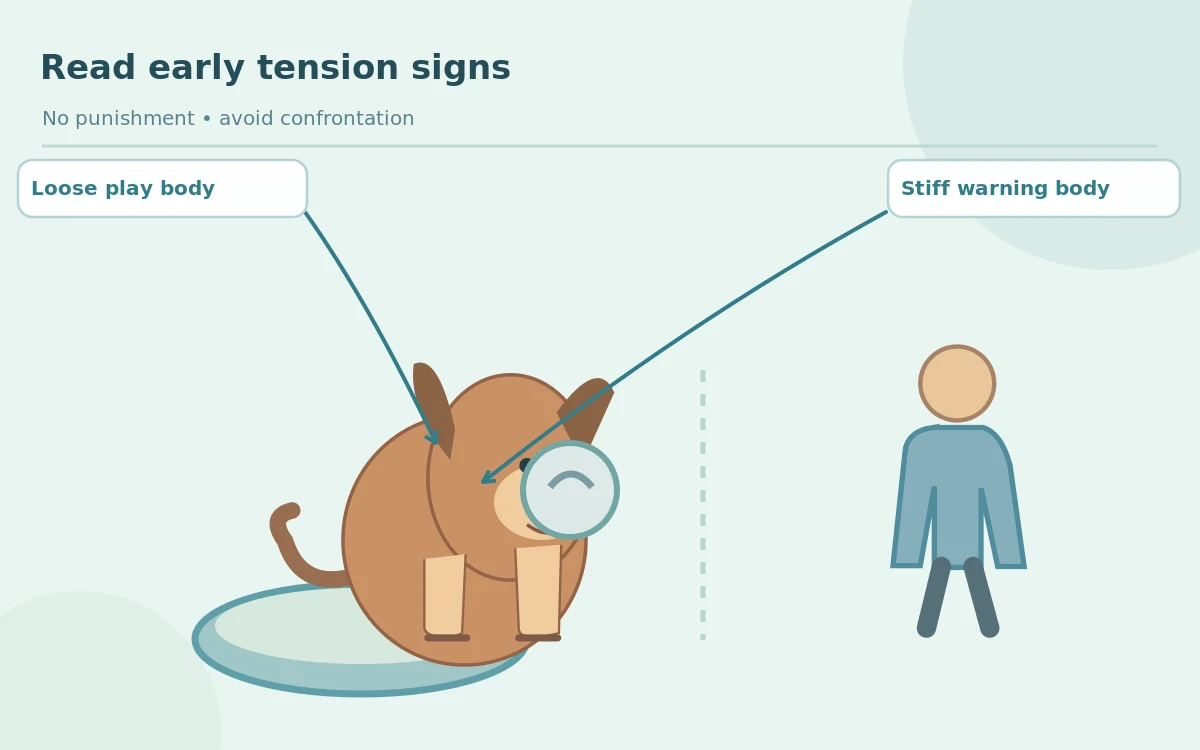
Stop confrontation and protect family members
When a dog growls at you, pause, avoid staring, let your hands relax and allow the dog a clear path away. Never punish, shout, grab the collar, roll the dog onto its back or hold it in place. ASPCA warns that punishing a growl can remove an early warning while the underlying discomfort remains. If a child is nearby, use an adult-controlled barrier and keep the child away; do not rely on a young child to read signals. Do not reach into a dog’s bowl, forcefully remove a prized object or wake a resting dog with touch.
Manage access to known triggers while you obtain appropriate guidance. For example, move feeding and chewing to a quiet dog-only space where nobody needs to walk past. This is temporary prevention, not a training test. If the dog growls when a person tries to take an item, avoid a struggle and consult the published resource-guarding overview for background. A specialist can plan safe changes using rewards and predictable routines, without provoking confrontations.
- Stop approaching, handling or reaching toward the dog when a warning begins.
- Move people, especially children, away without cornering the dog.
- Record the setting and body-language clues only when safe to observe.
- Arrange a veterinary assessment for new or unexplained growling.
- Keep management in place while a qualified reward-based professional designs a safe plan.

Check for pain or sudden behavior changes
A dog who normally welcomes touch but suddenly growls when someone touches a certain area may be protecting a painful body part. Ear discomfort, oral problems, joint pain or injury are possible examples, but only a veterinarian can examine and diagnose the cause. Older dogs may also experience changes in hearing, sight or mobility that make unexpected approach unsettling. Do not touch a painful area repeatedly to confirm the finding or attempt a home physical examination when bite risk is present.
Describe when the change began and whether your dog has started avoiding stairs, moving stiffly, eating differently, licking a spot, sleeping more or startling easily. A short video captured without creating the trigger may help the veterinarian understand the setting, but recording is never worth provoking a bite. For sudden or unexplained growling, schedule a veterinary assessment before an elaborate behavior-training plan. Pain relief or other treatment, if needed, requires a veterinarian’s direction.
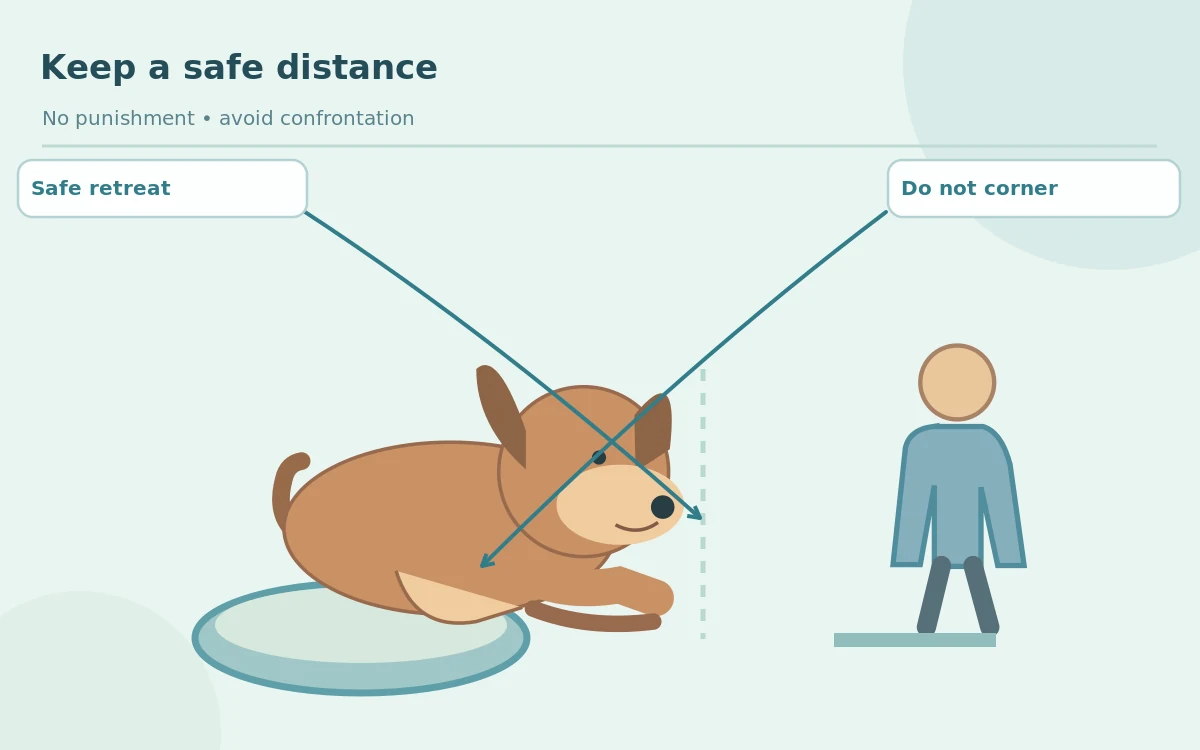
Build trust without testing the warning
After you manage hazards and a veterinarian evaluates medical factors, a behavior specialist can identify triggers. That professional can then create a careful reward-based plan. For simple comfortable interactions, let the dog approach voluntarily, stop petting periodically and see whether it chooses more contact. Teach ordinary cues only in easy non-conflict contexts. Do not lure a dog into surrendering a guarded item; the reward may bring you too close to a bite without changing the underlying feelings.
Improvement should look like more relaxed choices, predictable routines and fewer situations in which the dog needs to ask for space. Avoid measuring progress by whether the dog has stopped growling, because suppression can hide risk. Teach every household member the same safety rules and prevent surprise handling. For broader kind training principles, positive-reinforcement training explains why rewarding wanted behavior is preferable to intimidation. A bite history requires an individualized professional safety plan. A growl during handling is different from ordinary alert barking; our published excessive-barking guide and door-barking explanation cover those separate vocalization contexts.
Do not use the term ‘dominance’ as a diagnosis. A growl near a bed or possession does not authorize grabbing the item or making the dog ‘submit.’ Also avoid flooding: repeatedly handling, hugging or confronting a worried dog until it becomes quiet. That approach can increase fear and bite risk. Safety and voluntary calm behavior form the foundation for change. Keep the dog’s ability to warn. All instructions here assume nobody is in immediate danger; if there is a threat, withdraw and seek professional assistance.
When to Call Your Vet
Call a veterinarian promptly for sudden growling, pain on handling, limping, neurological changes, confusion, altered appetite or any abrupt behavior shift. For a bite, seek appropriate human medical care and follow local reporting guidance. If the dog has lunged, snapped or bitten, prevent further risky encounters. Contact a veterinarian or credentialed behavior professional. Do not recreate the incident.
How We Research
For this guide HubPet compared the stated reader problem with published veterinary, animal-welfare and, where applicable, manufacturer instructions. We distinguish observable signs and verified installation requirements from diagnoses, guarantees and our own product testing, which we did not perform. Read our editorial approach.
Sources
ASPCA — Aggression and Warning Behaviors — primary background for the behavior or equipment safety advice above.
ASPCA — Why You Should Not Punish Growling — primary background for the behavior or equipment safety advice above.
VCA — Aggression Toward Family Members — primary background for the behavior or equipment safety advice above.
PetMD — What Dog Growling Can Mean — primary background for the behavior or equipment safety advice above.
No. Context matters: playful vocalizing can occur, but stiffening, guarding and fear warrant caution. Do not ignore a warning.
No. Punishment can suppress an important signal without resolving fear, discomfort or guarding.
They may want contact to end, feel fearful or have pain. Stop touching and contact your vet if this is new or unexplained.
Do not forcibly grab it. Prevent conflict and get individualized, reward-based help for possible guarding.
Sudden, uncharacteristic growling or behavior changes that suggest pain, confusion or sensory loss justify a veterinary assessment.