
This article is general information, not veterinary advice. If your pet seems unwell, is in pain or may have eaten something harmful, contact your vet or an animal poison control line right away. Read our vet disclaimer.
Veterinary information notice: recurring paw chewing may signal pain or skin disease. This page offers educational checks only, not diagnosis or treatment. Seek prompt veterinary assessment for persistent licking, wounds or limping. See the HubPet veterinary disclaimer.
To stop dog chewing paws safely, do not begin with a bitter spray or an obedience command. Recurring chewing can reflect irritation, injury, something between the toes or another problem that needs veterinary care. This is a practical first-response plan: notice the pattern, inspect gently without causing pain, reduce exposure to obvious irritants, prevent further damage as your veterinarian directs and track whether the paws improve. It is not a diagnosis. For a separate explanation of why dogs lick or bite their feet, HubPet already covers the causes; here the focus is what an owner can do next without masking a medical problem.
Assess whether the chewing needs prompt veterinary care
Look from a comfortable distance before touching sore feet. A dog repeatedly chewing one paw after a walk may have a cut, lodged debris, torn nail or localized pain. Several paws chewed at night can suggest widespread itch, but appearance alone cannot establish the cause. Look for limping, swelling, discharge, bleeding, a bad odor, broken skin, sudden pain or reluctance to bear weight. If any of these appear, contact your veterinarian promptly; severe pain or major injury requires urgent care.
Do not probe deeply between toes, dig out embedded objects, pull a damaged nail or use human antiseptic creams without professional guidance. Avoid bandaging tightly or leaving improvised socks on unattended: moisture and friction can worsen skin trouble. VCA notes that itch, parasites, allergy and secondary infection can reinforce a cycle of paw licking. Only a veterinary assessment can decide what treatment is appropriate.
| What you notice | Why it matters | Safe next action |
|---|---|---|
| Chews one paw; limping | Possible local pain or injury | Prompt veterinary examination |
| Red, moist skin between toes | Irritation or infection possible | Call vet; avoid home medication |
| Brief licking after sandy walk | May be normal grooming | Gentle clean and dry if comfortable |
| Several paws; persistent chewing | Widespread itch possible | Vet evaluation; log pattern |
| Bleeding, severe pain or swollen foot | Potential urgent injury | Seek urgent veterinary care |

Use a gentle, consistent paw-check routine
When the dog settles, briefly lift a paw only if they are comfortable with handling. Compare between the toes, pads and nails; use natural light and note redness or damp fur. Stop when the dog pulls away or shows pain. If feet are visibly dusty after an ordinary walk and the skin is intact, wipe with a damp soft cloth and dry carefully, especially between toes. Follow the published after-walk paw-care routine for the basic cleaning method.
Routine wiping is not a treatment for itchy paws and frequent bathing can irritate skin. Avoid switching food, applying essential oils, giving human antihistamines or using medicated shampoo without a veterinarian’s plan. If chewing is worse after contact with sidewalk salt or deicers, clean residue after walks and review cold-weather paw protection. Keep a note of routes, surfaces and the last time the dog chewed each foot.
- Observe paw chewing without force; record which foot and duration.
- Check for limping, cuts, swelling, discharge or painful handling; call the vet promptly for concerning signs.
- If comfortable and skin is intact, gently wipe ordinary debris away and dry feet after walks.
- Avoid human medicines, essential oils, tight wraps and harsh bitter sprays; ask the vet about safe protection.
- Track episodes with photos and follow the veterinary plan, seeking recheck if the problem persists.
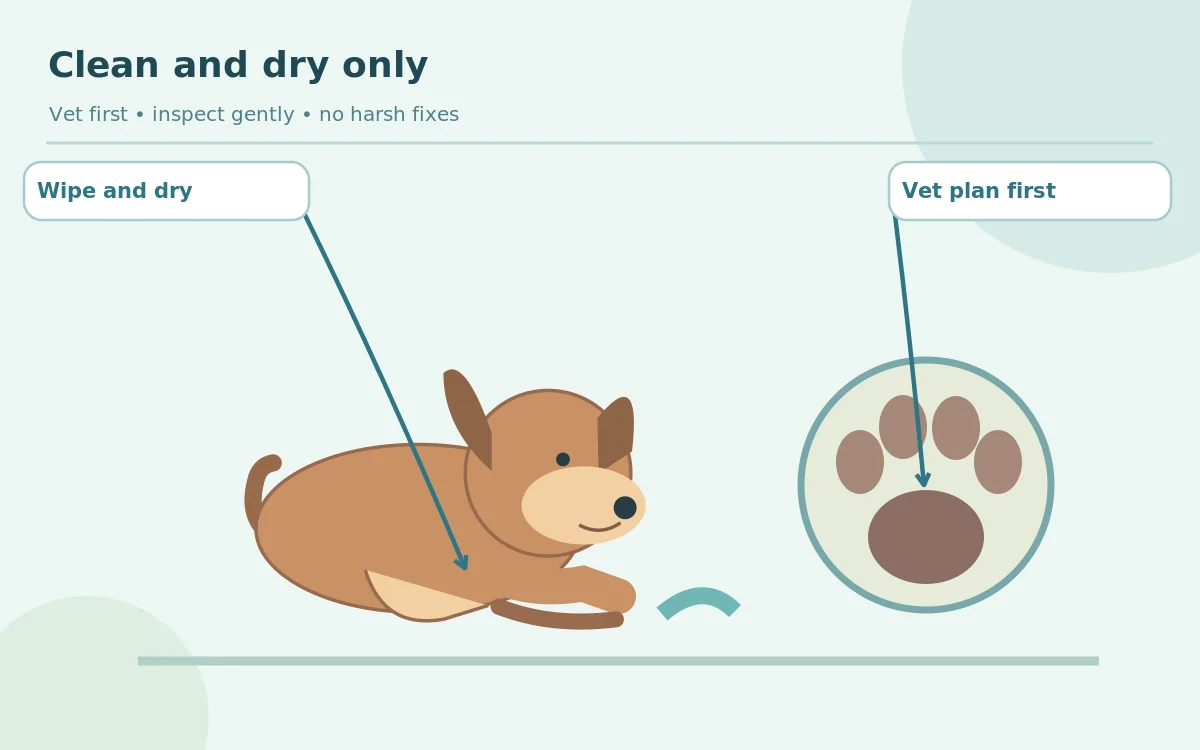
Interrupt damage gently while arranging help
If the dog is chewing a raw patch, contact the veterinary team about safe temporary protection; the veterinary team may recommend a properly fitted recovery collar to limit self-trauma, but fit and comfort matter. Use calm distraction only as a supportive measure. Give an appropriate food puzzle or gentle activity rather than physically pinning the dog or repeatedly yelling “no.” Keep the floor clean and dry, avoid obvious irritants and maintain easy access to drinking water.
A dog that licks a paw for a few seconds as normal grooming is not the same as a dog making the skin wet and sore every evening. Distinguish frequency, duration and whether you can interrupt chewing easily. If the veterinary team rules out medical causes, enrichment and stress support may be useful; do not presume a behavior problem before that step. Our chewing-behavior guide discusses object chewing, which is a different problem from chewing one’s own skin.
Bring observations to the veterinary appointment
Take a clear photo of the paws in ordinary light and a short video of a typical episode if this does not delay care. Report which foot shows the problem, how long the episodes last, whether the dog limps, recent walks, grooming products and any recurrence. Veterinarians may need to check skin or nails rather than treating based on pictures. Tracking one new exposure at a time is more useful than changing food, toys and cleaners all at once.
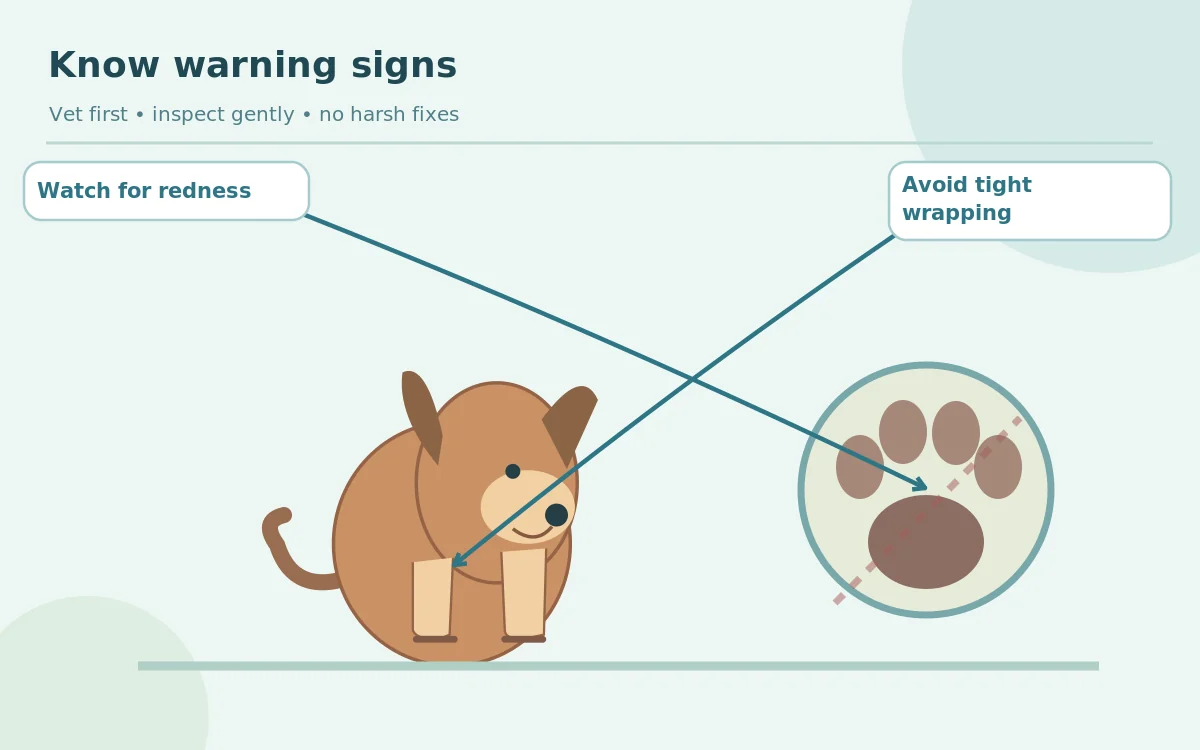
After treatment, follow the veterinarian’s monitoring instructions and return if chewing persists, spreads or the skin worsens. A healed surface may still itch while an underlying issue remains. For dogs that guard painful paws or may bite, do not force examination; the clinic can advise safe handling. Never rely on a decorative boot, spray or cone as proof the problem has resolved.
A frequent mistake is using “distraction training” as a treatment for itching. A dog may pause chewing while busy and resume after you put the toy away; that does not show the skin is healthy. Avoid treating a suspected infection with leftover prescriptions, and do not withhold food to test an allergy. A comfortable environment and enrichment support wellbeing but never replace a skin or nail examination when licking is repetitive or damaging.
When to Call Your Vet
Call your veterinary team promptly for persistent paw chewing, redness, limping, discharge, bleeding, new pain or spreading damage. Seek urgent help for severe injury, marked swelling or inability to bear weight. Do not use home medicine, tight wraps or deterrents on sore skin.
How We Research
HubPet compared the linked veterinary, animal welfare and behavior resources with the exact search intent in this guide. We favor observable signals, a practical household decision chart and reward-based alternatives; we do not infer medical diagnoses from behavior or recommend punishment. Read our editorial approach for additional context.
Sources
VCA — Paw Licking and Itch — consulted for behavior, welfare and safety guidance.
AKC Veterinary Review — Why Dogs Chew Paws — consulted for behavior, welfare and safety guidance.
VCA — Interdigital Skin Problems — consulted for behavior, welfare and safety guidance.
One-foot chewing can be associated with localized discomfort or injury. Ask a veterinarian to assess sudden persistent chewing, especially with a limp.
Do not use harsh deterrents on irritated skin. Ask your veterinary team how to prevent self-trauma while the underlying cause is evaluated.
A sock can trap moisture, rub or be swallowed. Only use protective gear with veterinary advice and appropriate supervision.
No. Food trials and allergy assessment should be veterinarian-guided; sudden changes can distract from other causes.
Seek urgent veterinary help for severe pain, major swelling, bleeding, inability to bear weight or rapidly worsening wounds.