
A translucent claw-shaped husk beside a scratching post is often a normal shed outer layer, not a whole lost claw. This article provides practical checks and limitations. See our veterinary information disclaimer for health-related decisions.
What a hollow claw sheath actually is
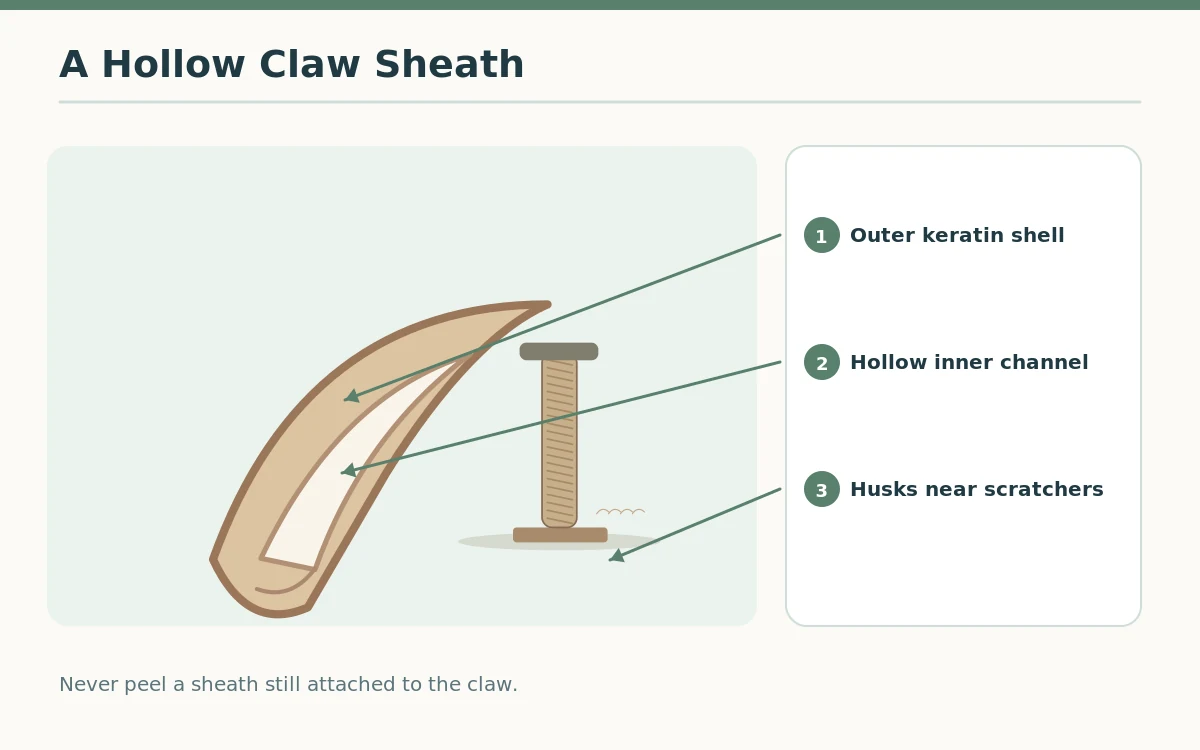
A cat’s claw has layers of hard keratin that change as the claw grows. As the cat scratches, an older translucent outer covering may loosen and fall away. The result often looks like a tiny curved claw, especially when you find it near a well-used scratching post. Cats Protection describes these shed sheaths as normal. Look closely at a loose piece: it tends to feel thin and light, with a hollow inner surface rather than fresh tissue or blood. Finding a shell does not mean your cat has ripped out the living claw. Avoid pulling at material that still clings to the paw.
Why scratching helps release the outer layer
Scratching serves several normal purposes. A cat stretches the body, leaves visual and scent messages, and helps maintain the outer claw surface. Cornell’s feline behavior guidance explains that scratching can remove the translucent sheath from a claw. That is why you may find small husks around cardboard scratchers, sisal posts, door mats or other favorite scratching places. One cat may use a tall vertical post; another prefers a horizontal board. The aim is to provide stable, attractive surfaces where the cat chooses to scratch. Punishing the behavior can increase stress without solving a natural need.
Recognize a typical shed piece
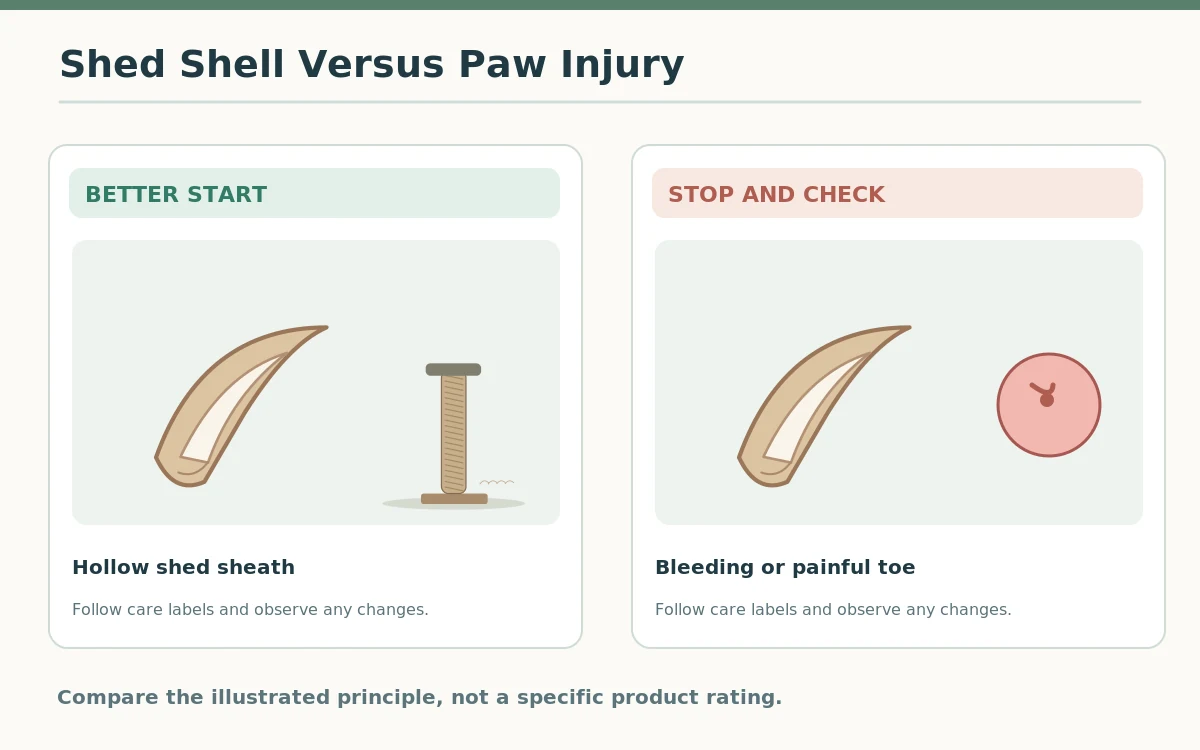
A normal detached sheath usually looks like a light, hollow, crescent-shaped sliver. Its color may range from clear to pale beige depending on lighting and accumulated dirt. Compare several pieces from the same scratcher rather than inspecting a single fragment in isolation. A whole claw injury is different: you may see active bleeding, a torn nail bed, marked pain or a cat who avoids putting weight on that paw. Do not treat these warning signs as routine shedding. When you cannot tell where a piece came from, examine the cat’s behavior from a distance and ask your veterinary clinic for guidance.
Offer a scratching surface the cat will use
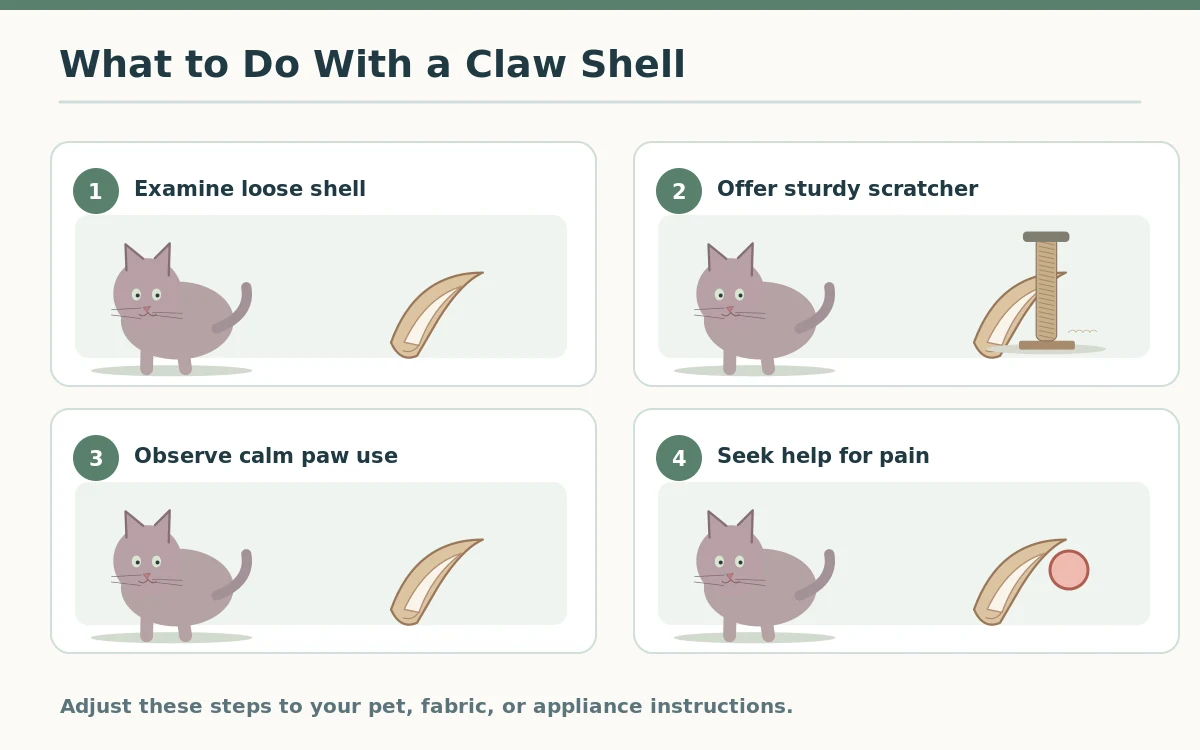
Place a sturdy scratcher near the surface your cat already chooses, such as a sofa arm or favorite resting spot. For vertical scratching, the base should resist tipping when the cat stretches fully. For horizontal scratching, choose a board that stays flat and does not skid. Offer different textures without covering the entire room in fragile loose fibers. Reward the cat for voluntary use with play or a small treat if appropriate. Do not push its paws down the post or force the claws to extend. Keep damaged sharp staples, loose strings and unstable posts out of reach. Replace surfaces before they become hazardous.
Inspect claws without forcing the paw
Choose a calm moment after the cat has settled. Look at the paws for changes you can see without squeezing or pulling. The claw tips should not hook into fabric constantly, and the surrounding toe should not show swelling or discharge. If your cat accepts touch, you can briefly view each foot while rewarding relaxed cooperation. Never pry at a sheath or peel material from a claw. Cats with arthritis, limited mobility or reduced scratching may need additional nail care, but a veterinarian or veterinary nurse can show you safe handling. Avoid restraining a frightened cat for a cosmetic inspection.
Know the signs that need veterinary advice
Contact a veterinarian if a claw bleeds, breaks close to the base, grows into a paw pad, or comes with limping, persistent licking, swelling, bad odor or obvious pain. A cat that suddenly stops using a favorite paw or hiding more than usual also warrants attention. Do not put human painkillers, harsh disinfectants or adhesives onto the claw. Do not cut into a damaged claw to ‘tidy’ it; you may make an injury worse. If your cat is very upset or the paw looks seriously injured, arrange prompt professional assessment rather than repeatedly examining the area yourself.
Separate normal sheath shedding from nail trimming
Sheaths can come off through scratching even when the cat’s claws need occasional careful trimming. Long tips can still snag blankets or curve toward the pad, particularly in older or less active cats. Trimming changes the tip length; it does not replace the cat’s need to scratch. Cats Protection recommends seeking hands-on guidance if you are unsure about clipping claws. Use cat-specific tools and avoid the living quick. If your cat resists, stop and arrange professional help rather than trying to complete every nail in one session. The household should support both scratching and comfortable claw health.
Use a simple observation log
Notice where discarded sheaths appear and whether your cat continues to scratch, climb and walk as usual. Record any change in scratcher preference, toe sensitivity or snagging on soft furnishings. A few fragments after a vigorous session may mean nothing unusual. A sudden change accompanied by pain or swelling is a different story. Keep scratchers clean of sharp debris but allow your cat to use them naturally. This distinction can prevent unnecessary alarm without overlooking a real problem. If the cat is otherwise comfortable and the pieces are clearly hollow sheaths, there is usually no need to intervene.
How We Research
We compared pet-care or textile/equipment guidance from the sources below, looking for practical checks that an owner can verify without buying a particular brand. We separated observed mechanisms from marketing claims and checked the limitations specific to cat claw sheaths. This guide does not claim original laboratory tests, certified product performance, veterinary diagnosis, or exhaustive testing of every model. Read more about our editorial approach. Product manuals and fabric care labels take priority. Reviewed October 28, 2026.
Sources
Cats Protection, How to Trim Cat Claws. Read source. Accessed October 28, 2026.
Cornell Feline Health Center, Feline Behavior Problems: Destructive Behavior. Read source. Accessed October 28, 2026.
Cats Protection, Grooming Your Cat. Read source. Accessed October 28, 2026.
Safety note: Product and routine advice must be adapted to the individual animal, fabric, and appliance. For pain, injury, unexplained coat changes, or persistent distress, contact a veterinary professional. Follow equipment and care-label instructions rather than forcing an unsafe workaround.
Usually not. A hollow translucent husk is commonly the old outer layer, while bleeding and pain may signal injury.
Cats often shed outer sheaths while scratching preferred surfaces, including furniture.
No. Do not pull or peel attached claw material; ask a veterinarian if the paw seems uncomfortable.
Yes. Scratching fulfills natural maintenance, stretching and marking needs.
Bleeding, swelling, a torn claw, limping, persistent licking or a claw growing into the pad warrants veterinary assessment.