
Buying cat litter in bulk can lower shopping frequency, but bag weight, dry storage, accessibility, and your cat’s preferences decide real value. The checks below prioritize your cat’s normal toilet habits and the real handling limits of the material. For health-related decisions, see our veterinary information disclaimer.
Buy by the cat’s preference, not the largest discount
Before purchasing a large supply, make sure the cat consistently uses that exact litter type and formula. A bulk box of unfamiliar grains becomes expensive waste if your cat dislikes the texture, scent or clumping behavior. Cats Protection advises maintaining familiar substrate when practical, because cats can be particular about toilet materials. Compare the package name, texture, formula and fragrance information with the litter already working in your home. A new scent, reformulated product or different grain size can matter even if the brand looks identical. Start with a single regular-size bag when testing any change.
Calculate cost per usable week rather than per pound
Write down the purchase price, total weight and approximate number of weeks the current formula lasts. The lowest price per pound can be a poor deal if clumps crumble, tracking increases or you must replace the entire tray more often. Record scooped waste and complete refills over a normal period rather than weighing a cat’s output. Include delivery charges or fuel, packaging waste and the risk of unused stock after a formula change. A realistic household calculation can show that two manageable bags are better than one enormous package, even when the sticker price is slightly higher.
Check the safest lifting and carrying route
Very heavy litter packages can be awkward in a narrow hallway or on stairs. Consider whether you can lift and pour the package without twisting, dropping it or spilling dust. A handled smaller container or scoop may let you refill gradually without hoisting a large box over the tray. Keep a stable step-free route between storage and the litter area when possible. Avoid leaving stacked bags where a cat can climb them or where a child can pull them over. Shop for a package that fits the people doing the work, not just the shelf.
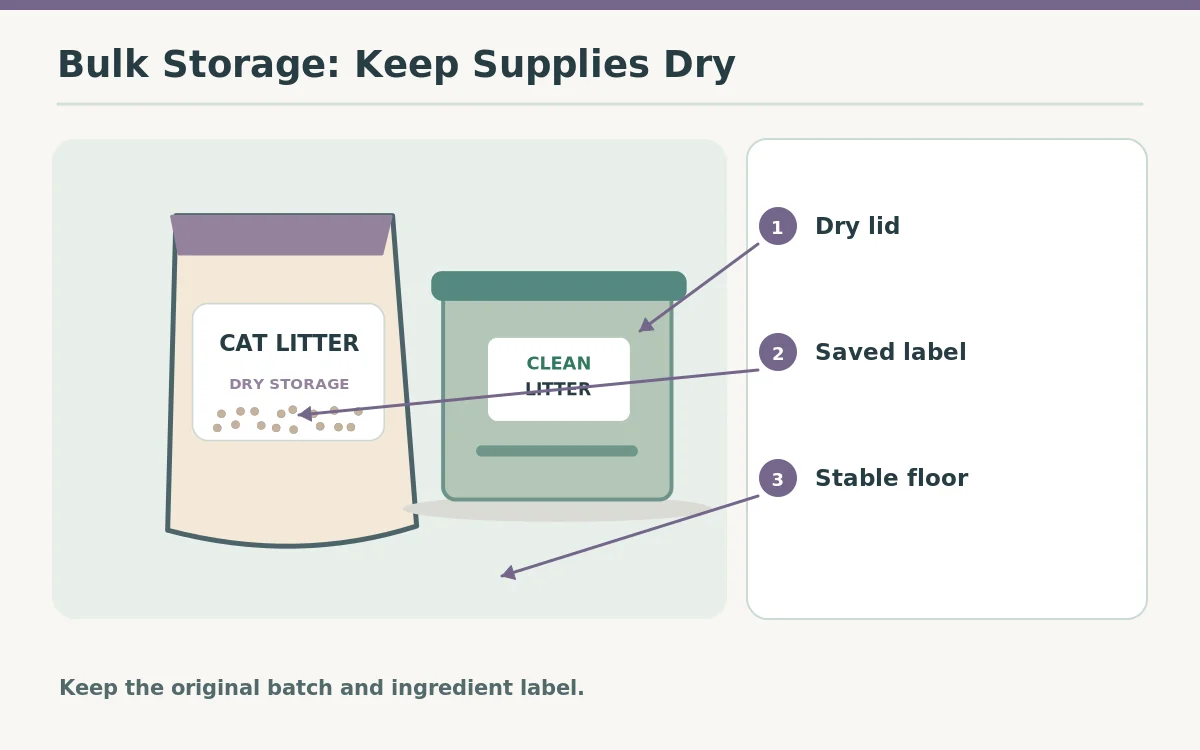
Choose a cool, dry place for unopened supplies
Store bags off concrete floors that can become damp, away from leaks, high humidity and direct water exposure. Moisture can compromise some clumping and plant-based formulations before they reach the litter box. Check that cardboard cartons are not softened, punctured or infested. Do not place litter next to food-preparation items, pet food or open water bowls. Make room for clear access so you do not need to drag a huge sack through crowded storage. Always follow the manufacturer’s stated storage and shelf-life guidance when the packaging provides it.
Decide whether a separate refill bin helps
A sealed, dry container can make daily refilling easier, but only if it is easy to clean and properly labeled. Some products work best in their original moisture-barrier bag. If you decant litter, keep the original package information, including ingredients, date and lot code, so you can identify changes or recalls. Use a scoop reserved for clean litter rather than one used for waste. Keep the lid secure, place the container on a stable surface and avoid storing it where a pet could become trapped or topple it. Never reuse a container that might later hold human food.
Avoid creating dust while transferring bulk material
Large pours can raise more airborne dust than small controlled refills. Open a bag carefully, keep the pour close to the tray and avoid deliberately shaking or tossing dry granules. If you are using a separate clean refill cup, transfer modest amounts at a time. Work in a ventilated area without blowing particles into the cat’s face or toward the cat’s food. Do not treat an unscented label as a dust-free guarantee. If anyone in the household has respiratory concerns, ask an appropriate professional about practical exposure reduction rather than making unverified health claims.
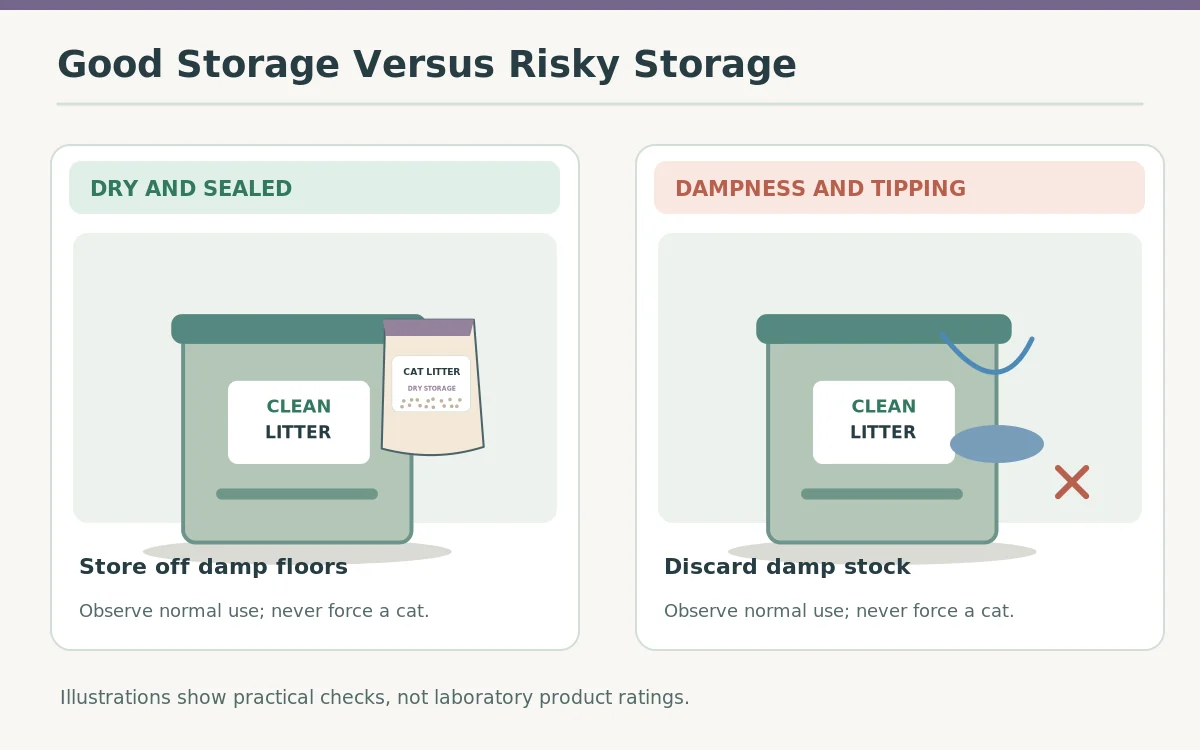
Plan for formula changes and multiple cats
Bulk purchasing works best when the number of cats and their preferences are stable. A newly adopted cat may prefer a different texture; a senior cat may need a softer substrate and lower entry; an automatic box may have a strict litter compatibility list. Keep a modest reserve of familiar material when trying a new formula. Do not dump an entire old stock into an incompatible machine to avoid wasting it. If your household uses different litter types in separate trays, label refill bins clearly to prevent confusion. Shopping convenience should not eliminate an animal’s ability to choose a comfortable toilet.
Keep used waste separate from new stock
Choose one area for clean supplies and another covered container for used scoops and waste bags. Mark them clearly, especially if both containers look alike. Wash hands after handling used litter and clean waste scoops independently of clean refill tools. Used cat litter should not go into home compost or plumbing; follow your local waste rules. Keeping the clean bag closed reduces contamination from tools, paw prints and spills. A simple storage arrangement can prevent costly mistakes and make daily cleaning quicker without moving the litter box itself.
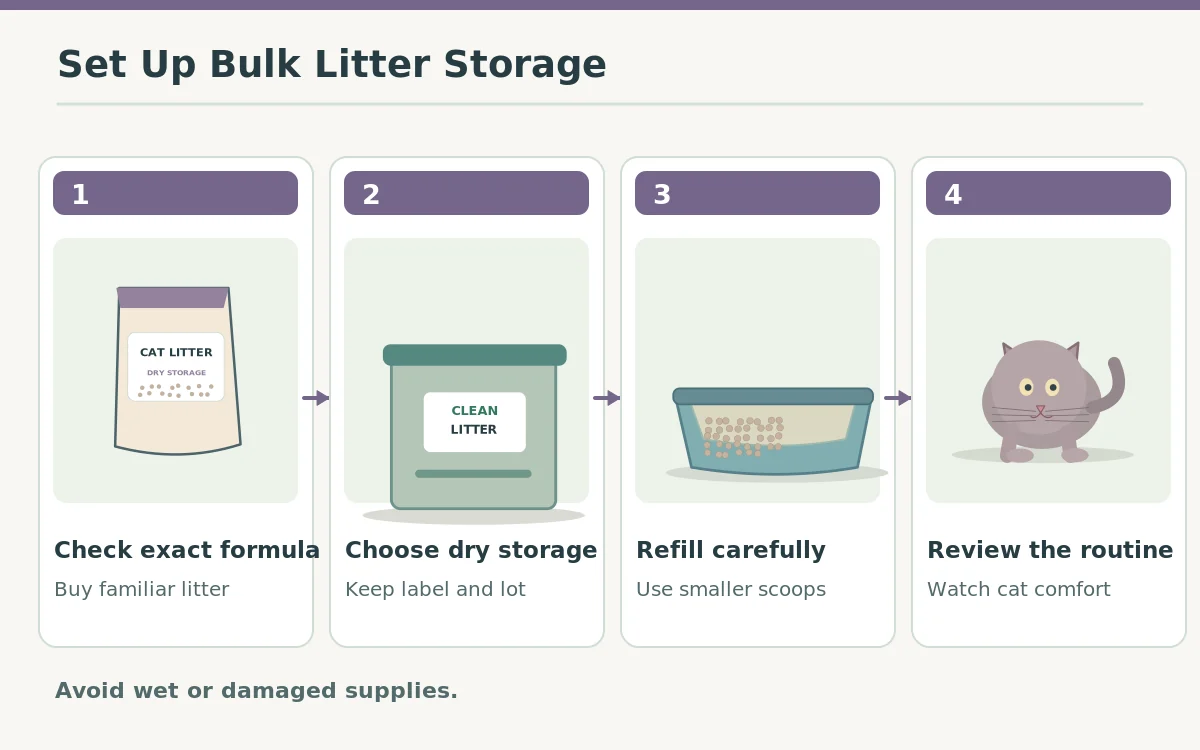
A practical buying checklist before checkout
Confirm the exact formula, the cat’s established acceptance, number of days you can store it dry, and whether the bag fits your lifting limit. Check price per estimated week, not just sale signage, and remember to include shipping. Plan how you will open, label and refill from the package without producing dust or blocking the cat’s access. If the litter is new, buy small first. If storage is damp or space is tight, choose multiple modest packages rather than one huge one. Bulk buying succeeds when it makes a proven routine easier instead of introducing new problems.
How We Research
We compared feline welfare and public-agency guidance cited below, separated general litter-box preferences from product-specific claims, and identified what owners can safely observe during normal use. Our comparison of bulk cat litter does not claim laboratory testing, brand endorsement, veterinary diagnosis, measured dust scores, or proof that an eco label applies to used pet waste. Product instructions, local disposal rules and the individual cat’s response take priority. See how we approach editorial research. Reviewed October 28, 2026.
Sources
Cats Protection, How to Choose the Best Cat Litter for Your Cat. View the guidance. Accessed October 28, 2026.
ASPCA, Litter Box Problems. View the guidance. Accessed October 28, 2026.
RSPCA, Litter Training Your Cat. View the guidance. Accessed October 28, 2026.
RSPCA Australia, How Do I Encourage My Cat to Use a Litter Tray?. View the guidance. Accessed October 28, 2026.
Safety note: For sudden litter-box avoidance, repeated straining, obvious pain, breathing difficulty or abnormal urination, contact a veterinarian rather than attempting to treat the problem by changing products. Follow safe hygiene and local waste-disposal rules.
Not always. Include shipping, actual usable weeks, waste from broken clumps and any leftover supply the cat refuses.
Use a cool, dry, stable place away from leaks, food areas and tipping hazards; keep bags sealed as directed.
Only if the material instructions allow it. Use a clean dry container and keep the original label and lot details.
It is safer to test a smaller package while retaining the cat’s familiar litter, then purchase more after consistent acceptance.
Transfer smaller amounts near tray level with a clean scoop, avoid shaking the bag, and keep animals away during pouring.