
Overgrown cat claws are not just a cosmetic issue. A curved claw can catch fabric or eventually reach a paw pad, especially when a cat cannot wear or shed its claw tips comfortably. Regular inspection is important, but the correct response depends on whether the claw is simply long, pressing on skin, or already injured. Do not cut through a hook that seems embedded. This guide focuses on spotting trouble early, keeping a cat comfortable during checks, and choosing between ordinary maintenance and veterinary care. It is not a substitute for an examination of a painful paw.

Look for the direction of the curve
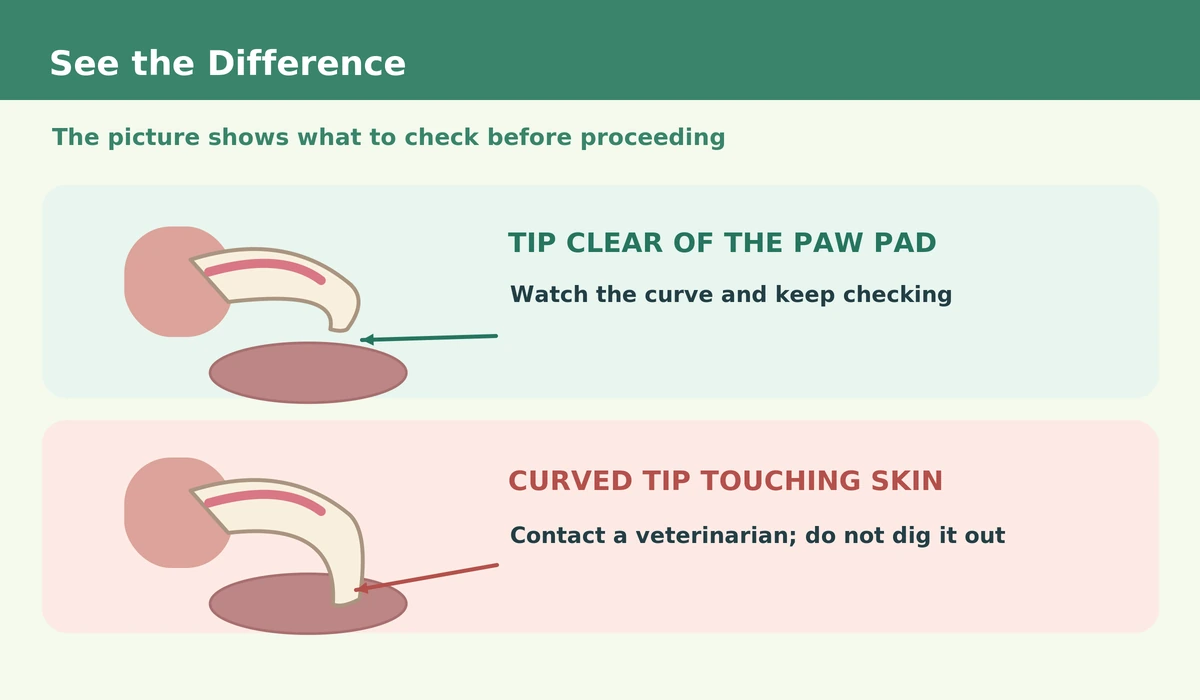
A healthy claw naturally curves, so a curved shape alone is not a diagnosis of overgrowth. The important question is where the point ends. Observe whether it remains clear of the skin or turns back toward the toe and paw pad. If the cat allows it, briefly expose the claw for a side view without pinning the limb. Watch for snagging on bedding or a new hesitation when stepping down. You cannot determine the exact quick location from the curve alone, so avoid deep trimming based on the silhouette.
Check the paw pads without digging
A claw that has reached the pad may cause pain, swelling, or a puncture. View the underside of the foot only if the cat willingly presents it. Do not peel the pad away from a curled claw or insert scissors between the nail and skin. If you suspect penetration, arrange prompt veterinary care; a clinic can examine the tissue, assess infection risk, and remove the offending nail safely. Avoid applying creams, disinfectants, or bandages without advice, because trapped moisture or an inappropriate product can make matters worse.
Notice changes in walking and behavior
Cats often conceal discomfort. A pet may step carefully, avoid a favorite perch, resist climbing, groom one foot repeatedly, or withdraw from touch. These changes do not prove a claw injury, but they make an ordinary home trim less appropriate. Note which paw seems affected and when you first noticed the change. A short, unprovoked video of walking may be useful for your veterinarian. Do not make a limping cat repeatedly jump or walk simply to document the problem.
Consider why a claw was missed
A claw can grow unnoticed if it is hidden in the fur, belongs to a less-used toe, or receives less contact with scratching surfaces. Mobility changes and lower activity may also alter natural wear. Do not assume every cat needs the same trim interval or that a scratching post removes the need for paw checks. Inspect each visible toe at a comfortable grooming time, including the front inner claws that may not meet the floor. Track which claws are repeatedly problematic rather than treating the entire paw as one measurement.
Distinguish maintenance from a medical issue
A long tip that remains clearly separate from skin may be suitable for a cautious tip trim when the cat stays calm and the quick is visible or safely avoided. A claw that contacts or penetrates a pad, bleeds, splits near the base, or causes limping belongs with a veterinarian. Do not try to cut back a severely overgrown claw in one session. The quick may extend farther into a long claw than expected, so an aggressive cut can cause significant pain or bleeding.
Prepare a calm inspection station
Choose a familiar rug or nonslip surface, good light, and a place with an easy exit. Start with a short stroke the cat accepts; move toward the paw only if the body stays loose. You might see enough to decide that a clinic appointment is needed without ever using a clipper. Keep other pets away from the inspection area so the cat does not feel trapped. If it becomes tense, release the paw. Repeated comfortable visual checks are far safer than a forced examination of sore toes.
Avoid common home fixes that create more risk
Do not pull on the claw, dig underneath it, use household wire cutters, or file an inflamed toe until the skin looks raw. Never try to push an ingrown claw back out of the pad. Avoid essential oils and unprescribed topical products on the foot. If the claw appears embedded, place the cat safely in a carrier and contact the clinic for instructions. Painful foot problems sometimes require treatment beyond trimming. A home workaround should not delay assessment because the cat still manages to walk.
Make the veterinarian visit more useful
Tell the veterinary team whether the nail is touching the pad, when the problem began, and whether your cat has been limping, hiding, or licking that paw. Mention any previous difficulty with restraint or nail trimming. Ask whether a veterinary technician can demonstrate safe future checks while the cat is comfortable. Do not attempt to sedate your cat at home. The clinic can advise on appropriate handling and follow-up if a pad has been injured. Bringing clear observations is more useful than guessing the cause.
Plan an individualized check routine
Once the paw is comfortable, set a reminder to visually check claws during a routine your cat already enjoys. A brief observation can catch a problem before a tip reaches skin. Adjust how often you check based on growth, activity, mobility, and professional advice, not an arbitrary number of weeks. A cat with a history of curved claws may need closer monitoring. Avoid making every check a trimming session. Inspecting, rewarding, and leaving the paw alone when it looks healthy preserves trust.

Keep scratching options accessible but realistic
A sturdy scratching surface placed near a favored resting area can support normal claw maintenance and stretching. Some cats prefer vertical posts, while others use horizontal scratchers. Provide stable access without requiring painful jumping or balancing. However, scratching is not a substitute for treating an embedded nail or checking a cat with limited mobility. If a claw repeatedly grows into an unsafe curve despite an appropriate environment, ask your veterinarian about a monitoring and maintenance plan tailored to that animal.
How We Research
HubPet reviewed veterinary and animal-welfare guidance relevant to overgrown cat claws, compared what sources support, and separated everyday observation from problems needing hands-on care. We accessed the resources below on November 1, 2026. We do not diagnose wounds or recommend forceful grooming. For more about the editorial process, see About HubPet.
Sources
VCA Animal Hospitals — How to Trim a Cat’s Nails. The complete reference explains its recommended handling or nail-care method and limitations.
Humane World for Animals — Trimming Your Cat’s Claws. The complete reference explains its recommended handling or nail-care method and limitations.
This is general pet-care education, not veterinary diagnosis or treatment. A painful nail, persistent bleeding, swelling, a claw in the pad, or major walking changes need a veterinarian. Read the veterinary disclaimer.
No. Curvature is normal; concern rises when the point approaches skin, snags often, or causes discomfort.
No. Contact a veterinarian for safe removal and examination.
A post supports normal scratching but cannot treat a claw embedded in skin.
Changes in mobility and activity may alter claw wear, so inspections may need adjustment.
A claw in the pad, bleeding, swelling, marked pain, or limping calls for veterinary advice promptly.