
This guide is general education, not individual veterinary advice. If your cat or dog becomes unwell, is injured or may have swallowed a toy component, seek veterinary advice promptly. Read the HubPet veterinary disclaimer.
People searching for cats that don’t shed much are usually trying to reduce loose fur on clothes and furniture, but low shedding and low allergies are different questions. No cat is completely non-shedding, and a hairless cat is not automatically lower maintenance. Short, fine or wavy coats can drop less visible hair in some individuals, while other cats with short fur shed heavily at particular seasons. Breed pages from Purina and veterinary-reviewed summaries describe common lower-shedding coat types; the individual’s coat and health still matter. A realistic comparison looks at visible fur, brushing or skin care, and what you can expect at home—not a claim of an allergy-free pet.
Compare coat types, not a promise of zero shedding
Sphynx cats have very little visible fur, but their skin can accumulate oils and requires care tailored to the cat and veterinarian’s advice. Cornish Rex and Devon Rex cats often have fine or wavy coats that leave less visible hair on fabrics, although individual coat density varies. A short coat on an Oriental Shorthair or Siamese may be easier to maintain than a long dense one; it does not mean shedding stops. Even cats without a full fur coat create dander, saliva and skin secretions. Use breed tendencies only to make an initial shortlist, then meet individual cats and ask about their actual grooming needs.
| Coat example | Visible hair around home | Care tradeoff |
|---|---|---|
| Sphynx or similar hairless coat | Very little visible coat hair | Skin oil care, temperature and skin protection |
| Cornish Rex | Often fine and relatively low shedding | Gentle handling of delicate coat |
| Devon Rex | Usually soft, wavy coat with variable shedding | Monitor coat and skin; avoid rough brushing |
| Oriental Shorthair | Short coat, shedding still occurs | Periodic gentle coat care |
| Domestic shorthair | Varies widely by individual | Observe seasonal shedding and coat health |
Test the actual care routine before you choose
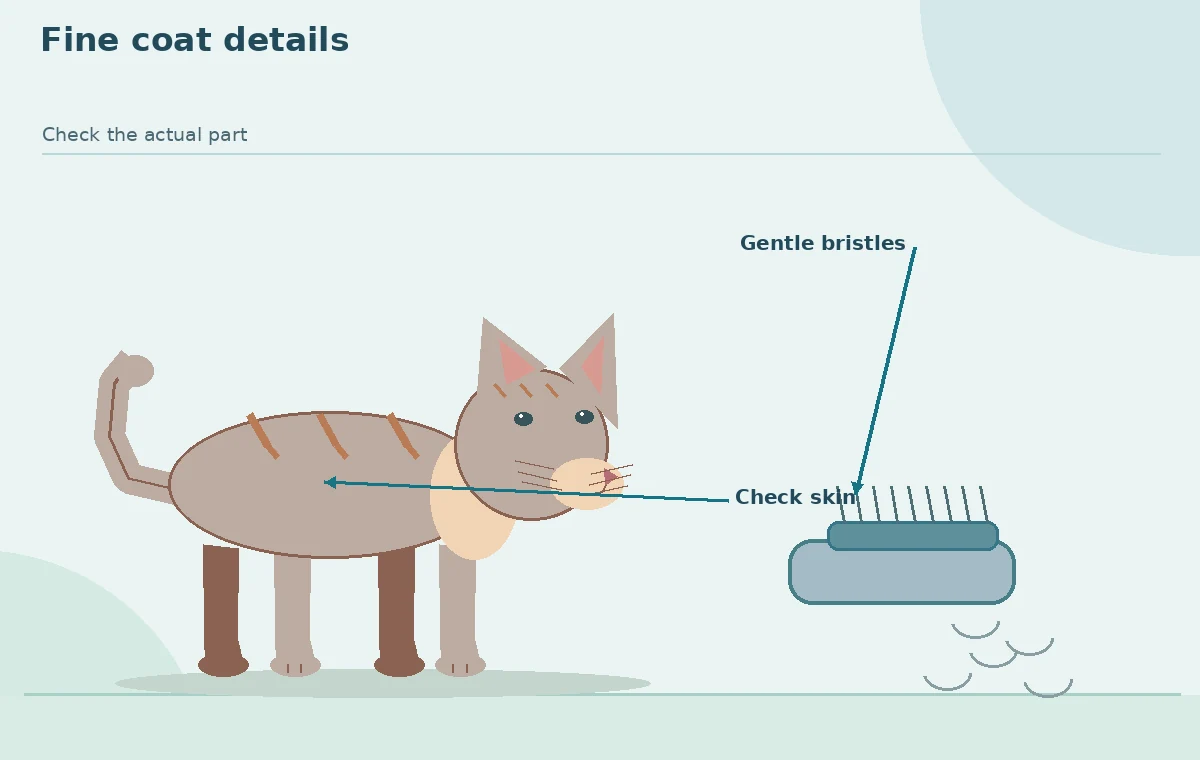
Ask a rescue or reputable caregiver what normal brushing looks like for the specific cat and how often they notice loose fur. A relaxed short-haired cat may need only gentle periodic brushing, while a hairless cat may need particular skin cleaning and environmental protection. Never use strong human skin products or impose frequent bathing without veterinary advice. Watch how the cat responds to touch, soft brush strokes and handling around shoulders and hips. Our guide to calm cat brushing explains how to make each short session more comfortable. Plan for washing bedding and vacuuming regardless of coat type.
- Meet the individual cat and ask about typical shedding, skin care and seasonal changes.
- Discuss coat maintenance with the caregiver and, for special skin needs, a veterinarian.
- Introduce soft grooming tools gradually, pairing calm cooperation with appropriate rewards.
- Clean bedding and fabric surfaces regularly; keep a washable throw where the cat rests.
- Reassess if shedding suddenly increases, bald patches appear or the skin looks inflamed.

Low shedding is not a hypoallergenic claim
Many people react to proteins associated with cat saliva, skin secretions and dander, not simply to the amount of hair stuck on a couch. Every cat produces allergens, and individual people react differently. Cats Protection explains that the length or breed of a cat’s coat cannot guarantee an allergy-free home. A person with symptoms should discuss exposure and management with a healthcare professional before adopting; trying one cat briefly does not reliably predict future symptoms. A more accurate question is whether the overall care, home environment and individual animal fit the household. For everyday fur control, see realistic pet shedding management.
| Goal | What helps | What it cannot promise |
|---|---|---|
| Fewer hairs on a dark sofa | Some fine or hairless coat types plus cleaning | No hair on fabrics at all |
| Less daily grooming | An individual short coat with low matting risk | No skin or coat care required |
| Managing human allergies | Medical advice, exposure planning and cleaning | A zero-allergen breed |
| Less seasonal fur | Regular brushing and bedding upkeep | No change during shedding seasons |
| Choosing an easy-care companion | Meet the cat and learn the routine | Predicting all behavior from breed name |

Watch for unusual shedding rather than treating it as a nuisance
Loose hair can be normal, but sudden bald patches, flaky or red skin, excessive grooming and visible discomfort deserve investigation. Parasites, skin disease, stress and other conditions can all affect a cat’s coat, and you cannot diagnose them from a breed chart. Never assume a cat is healthy merely because it is famous for a short coat. If the cat licks one spot repeatedly or avoids touch, ask a veterinary professional to assess the cause. Do not start supplements or medicated shampoos on the basis of online claims.
At home, remove shed fur from favored furniture, use washable covers and groom gently when the cat welcomes it. Short sessions matter more than aggressive brushing. Hairless cats still need a safe temperature range, comfortable bedding and appropriate skin care. For the cleaning side of the problem, our pet hair on furniture guide covers practical housekeeping. The useful takeaway is that “cats that don’t shed” is a search phrase, not a literal description: choose for temperament, wellbeing, maintenance and realistic coat expectations.
When to Call Your Vet
Contact your veterinarian for patchy hair loss, inflamed skin, sudden excessive shedding, persistent scratching or a marked change in grooming. Human allergy symptoms should be assessed by a healthcare professional; a breed label cannot replace medical guidance.
How We Research
We used Purina’s breed and coat reference for examples, a 2026 veterinary-reviewed overview for typical coat profiles, and veterinary education about the difference between hair shedding and allergen production. Shedding categories remain tendencies rather than numerical promises. Checked November 2026. For editorial context, learn about HubPet.
Sources
Purina — Cat Breeds by Shedding and Coat; Chewy, Veterinary-Reviewed — Cats That Don’t Shed Much (May 2026); Cats Protection — Cats and Allergies.
No. Even cats that appear hairless have skin and sometimes fine fuzz. Low visible shedding is a relative tendency, not a guarantee of zero material on surfaces.
Not necessarily. Their skin can require particular care, and temperature and sun exposure deserve attention. Ask a veterinarian about the needs of the individual cat.
They often have fine coats that shed less visibly, but individuals differ. Meet the cat, discuss its grooming history and plan for routine cleaning.
Not reliably. Allergens arise from skin, saliva and other sources. No cat breed is allergen-free; seek medical advice for allergies.
Promptly discuss bald patches, irritated skin, constant scratching or rapid changes in coat density with a veterinarian rather than assuming seasonal shedding.