
A cat can spend much of the day curled on a blanket and still be behaving normally. Unlike people who typically plan one long sleep period, cats often alternate naps and short bursts of activity. Age, household routine, and safe resting choices affect that pattern. The useful question is not simply ‘How many hours?’ but whether the cat wakes comfortably, eats, grooms, moves, and enjoys familiar activities. This article explains the difference between ordinary resting and concerning low energy, plus how to provide peaceful sleep without sacrificing enrichment. It cannot diagnose lethargy or other medical conditions. See our veterinary disclaimer for health concerns.
Catnaps reflect an energy-saving rhythm
Domestic cats retain activity patterns shaped by their predatory ancestry. Rest conserves energy between periods of stalking, climbing, and exploring, even when meals come from a bowl. Many cats sleep in multiple short sessions, with some time spent simply dozing and monitoring the room. A curled pose is not proof of deep sleep. Watch what the cat does when awake rather than demanding constant activity. A cat may readily get up for familiar meals, walk normally, and choose play. In that case, frequent naps may be its ordinary rhythm.
Dawn and dusk may be busy periods
Cats are often more active around sunrise and sunset, although individual schedules adapt to life with people. A cat that seems sleepy throughout a workday may become lively when someone comes home. Use that natural energy window to offer short, voluntary play sessions instead of repeatedly waking a sleeping cat. Move a wand toy along the floor like prey, let the cat catch it occasionally, and put the toy away afterward. Avoid laser-only games that never offer a tangible catch. The aim is a satisfying, gentle daily rhythm, not exhausting the animal before bed.
Age changes what rest looks like
Kittens often sleep heavily between intense bursts of exploration, while some seniors rest more and move differently. A quiet older cat should not automatically be described as ‘just old’ if it struggles to jump, hesitates at stairs, or stops joining favorite activities. These changes can reflect discomfort and deserve a veterinary conversation. Likewise, a kitten that cannot be roused normally or is not eating is not merely taking an extra-long nap. Compare each cat to its own typical behavior and ask a veterinarian about concerning changes, not just broad age averages.
Make resting places stable and easy to leave
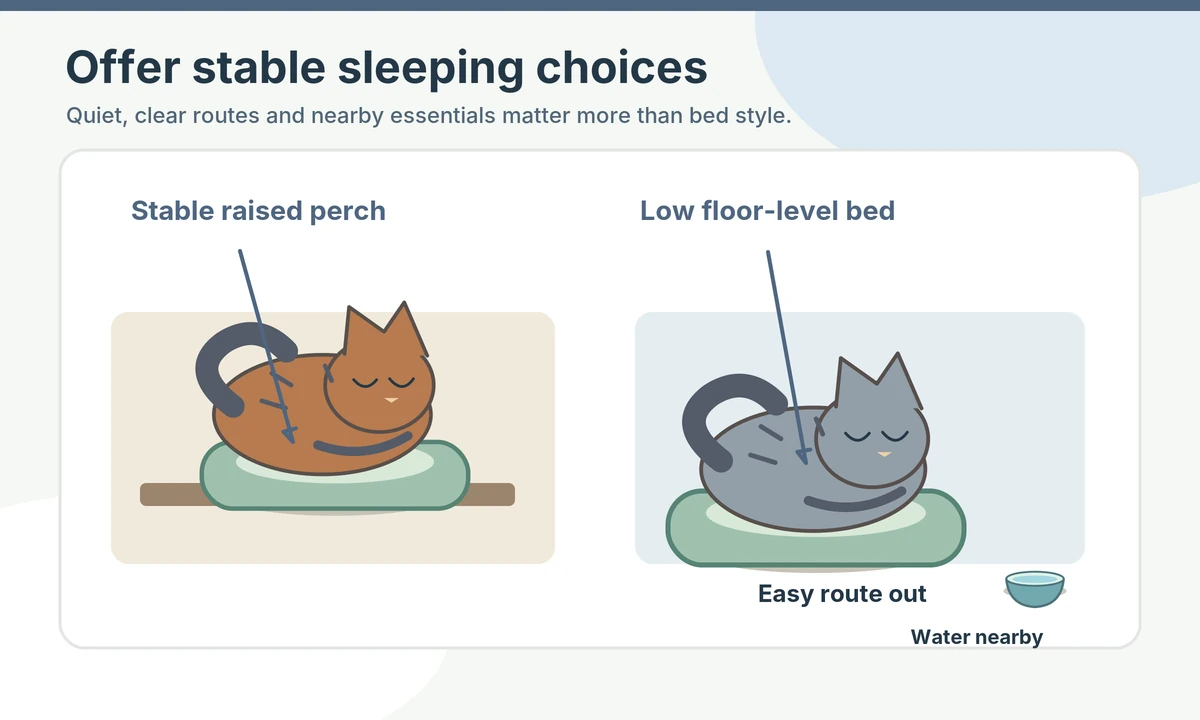
Cats may choose a sunny chair, a cardboard hide, or a higher shelf with a view. Offer more than one clean, secure resting option so the cat can select warmth, quiet, or a lookout. Check that elevated beds have a stable surface and an easy route down; avoid precarious stacks and open windows. Keep food, water, and litter accessible without forcing a sleepy or older cat to climb. Respect the cat’s chosen spot and let it retreat from noise. A comfortable sleep location is part of environmental care, not proof that the cat needs more sleep.
Distinguish sleep from unusual low energy
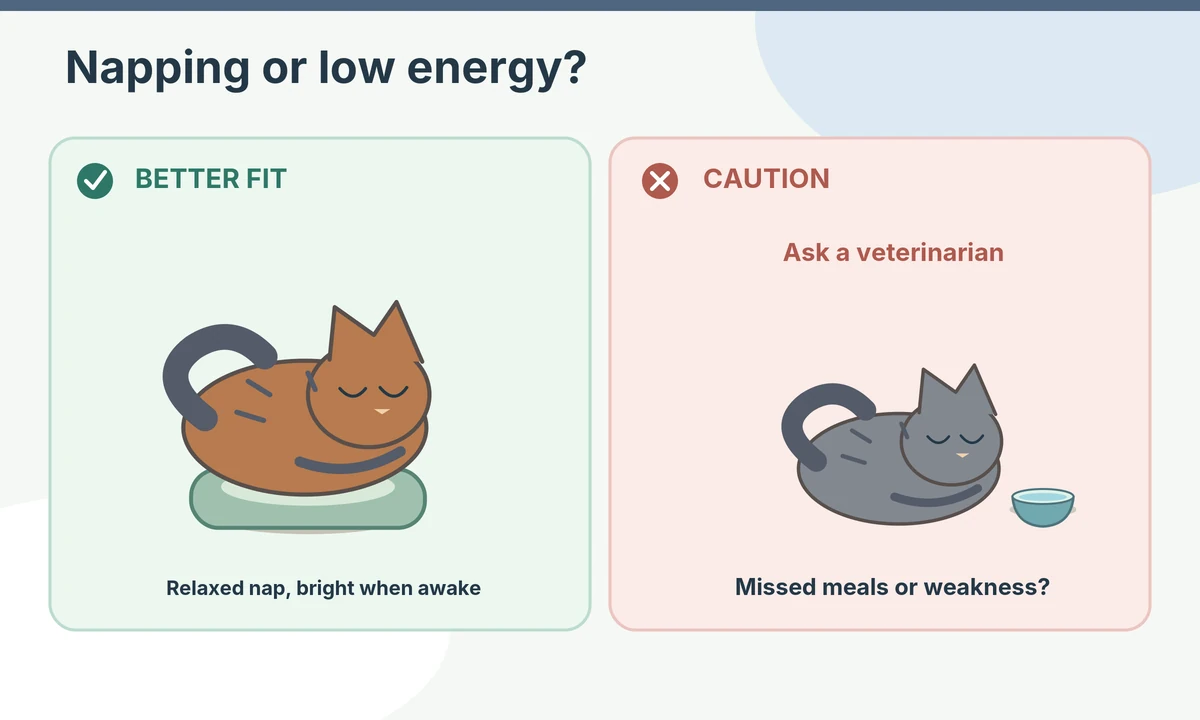
A resting cat usually responds to normal sights, sounds, or a familiar invitation when fully awake. Lethargy means reduced alertness or energy compared with that animal’s baseline; it is not simply the presence of long naps. Look for missed meals, poor grooming, hiding, weakness, breathing changes, trouble standing, or a sudden loss of interest in ordinary activities. Contact a veterinarian when these appear, and seek urgent help if the cat is severely unresponsive or having difficulty breathing. Never try to force exercise or wake a truly ill cat with rough handling.
Provide choice rather than constant entertainment
Enrichment does not mean making a cat busy every hour. Place a sturdy scratching post, a view from a secure window, and a couple of safe toys where the cat can use them when awake. Rotate some toys to keep interest without cluttering the floor. Puzzle feeders can add foraging opportunities if they are easy enough and food portions are measured. When a cat is resting, leave it alone. A predictable balance of sleep, observation, exploration, and voluntary contact supports welfare. Avoid disturbing a sleeping cat just to increase activity.
Observe the pattern over a normal day
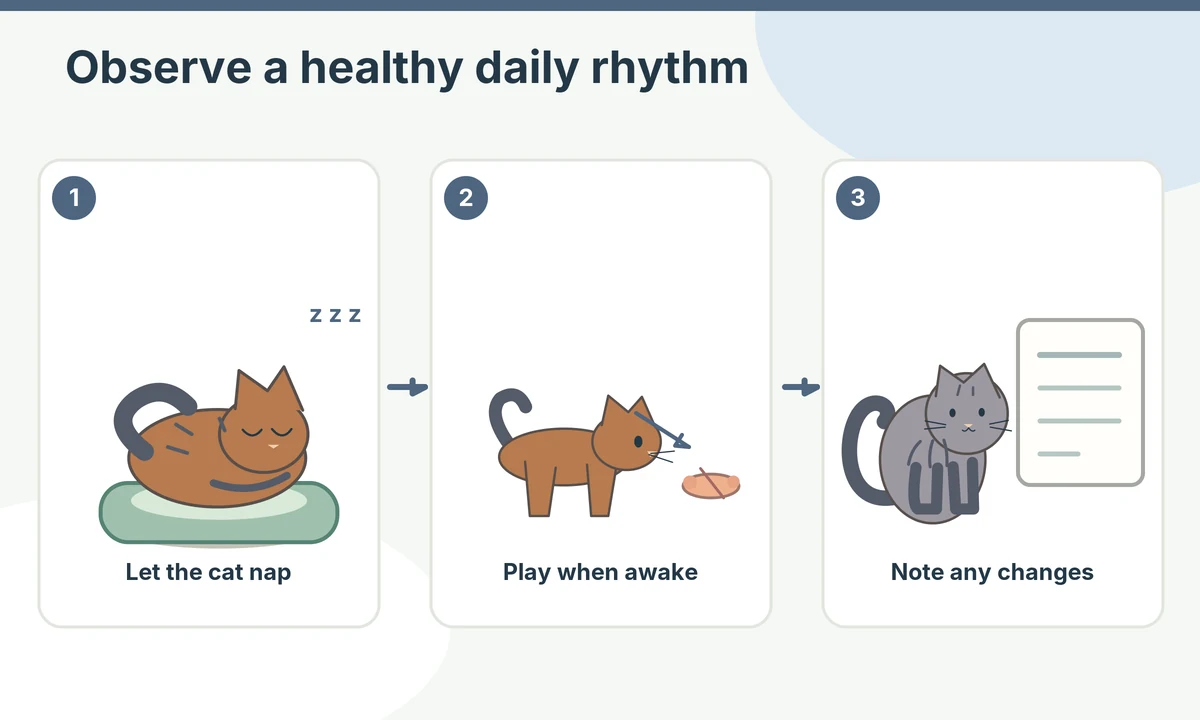
Write down broad daily periods: sleep, meals, play, and movement after waking. Rough notes work; you do not need minute-by-minute tracking. You do not need to watch every minute or set a rigid hour target. Look for meaningful changes from a typical week, such as staying hidden during meals, abandoning a familiar perch, or not responding to a favorite game. A short video can help your veterinarian understand unusual behavior. Keep notes neutral and factual rather than calling a cat lazy or depressed without medical evaluation.
Give cats a quiet night without unsafe shortcuts
For a cat who wakes people, offer daytime play, reliable food and water access, and quiet nighttime options away from hazards. Never withhold drinking water or restrict litter access. Do not use sedatives without veterinary advice or confine a cat in a tiny space. Curtains, stable resting beds, and an evening routine may help. If the cat yowls, seems confused, or changes its nighttime pattern suddenly, contact a veterinarian. An environmental plan should make rest easier for everyone while protecting the cat’s ability to meet basic needs.
Consider the whole household environment
Noise, temperature shifts, tense interactions with another pet, or loss of a safe resting place may change sleep patterns. Cats in multi-pet households may need several separated places where nobody can block access. Provide a choice of cozy and cooler locations rather than a single heated spot. Check that bedding is clean, easy to exit, and free from dangling cords. Watch whether a pet repeatedly disturbs the sleeping cat. If a major household change coincides with hiding or less activity, combine environmental improvements with veterinary assessment if the behavior persists or includes other symptoms.
Know when an observation becomes a medical concern
Sudden extra sleep or difficulty waking may mean something is wrong. Take appetite changes, breathing issues, vomiting, limping, or withdrawal seriously. Contact your veterinary team with the time course and any other signs. If a cat collapses, cannot stand, or is seriously struggling to breathe, seek emergency help. Online sleep-hour averages are not a diagnostic tool. The combination of alertness, movement, eating, grooming, and behavior is far more informative than a single estimated number of hours spent curled up.
Let the cat keep its own healthy rhythm
The best sleep plan creates a stable, secure place to rest and meaningful activities available when the cat chooses to be awake. It also gives caregivers a baseline to recognize change. Respect naps, offer safe play, and observe whether your cat is bright and comfortable during its active windows. If the rhythm shifts suddenly, record what you see and consult a veterinarian instead of experimenting with supplements or sleep aids. A sleepy cat can be perfectly well; a cat that cannot enjoy its normal day deserves closer attention.
How We Research
HubPet cross-checked veterinary and animal-welfare guidance on normal resting, individual baseline, and signs of low energy. Illustrations show safe home observations and rest locations rather than a medical sleep tracker. We avoid using one fixed sleep-hour number as a test of health. Visit our editorial information for context on HubPet content standards.
Sources
Cats Protection, Do Cats Dream? — https://www.cats.org.uk/cats-blog/do-cats-dream (accessed October 2026).
VCA Animal Hospitals, Is Your Pet Sleeping Too Much? — https://vcahospitals.com/resources/behavior-cat/concerns/is-your-pet-sleeping-too-much (accessed October 2026).
PetMD, Why Do Cats Sleep So Much? — https://www.petmd.com/cat/behavior/why-do-cats-sleep-so-much (accessed October 2026).
AAFP/ISFM, Feline Environmental Needs Guidelines — https://pmc.ncbi.nlm.nih.gov/articles/PMC11383066/ (accessed October 2026).
Safety note: Sudden lethargy, serious breathing changes, collapse, inability to stand, or altered responsiveness requires urgent veterinary advice. Do not administer human sleep remedies or force a cat to exercise.
Many cats sleep or rest for a large part of the day; reported averages vary by source and age, so compare with your own cat’s usual pattern.
Yes, frequent daytime naps can fit a normal activity rhythm, especially if the cat is alert and active at other times.
No. Let the cat rest and offer optional, short play sessions during natural awake periods rather than forcing activity.
Lethargy involves reduced energy or alertness compared with normal and may include missed food, weakness, withdrawal, or other signs.
Call if the pattern changes markedly or comes with poor appetite, reduced grooming, weakness, breathing issues, or unusual behavior.