
Puppies do not reach a magic birthday when they stop chewing household objects. Teething often eases as adult teeth arrive, around six months. However, curiosity, excitement, and unsupervised access can keep chewing going through adolescence. The useful question is what drives today’s chewing, not just how old your puppy is.
If your puppy swallows an object, gags, vomits repeatedly, or seems unwell, contact a veterinarian promptly. This article offers behavior guidance rather than medical advice; read our veterinary information disclaimer. For everyday chewing, you can start by making unwanted objects harder to reach.
The chewing timeline is not one straight line
Young puppies explore with their mouths before they understand household rules. Baby teeth begin to give way to adult teeth in early puppyhood. Consequently, many owners notice intense chewing while those teeth come through. The ASPCA says the teething-driven peak often settles around six months, but chewing itself remains normal.
Adolescent dogs can chew more again, even after teething discomfort passes. The American Kennel Club describes another chewing phase around eight to ten months. Meanwhile, VCA notes that unusually intense chewing can continue much longer in some dogs. Expect gradual improvement with management and teaching, not an automatic switch.
Tell teething, exploration, and stress apart
Notice the setting before changing your plan. A puppy who calmly settles with a soft, safe toy may simply enjoy chewing. A puppy who raids shoes after a dull afternoon may need play or a different enrichment activity. However, destruction that happens only during departures deserves a closer look for separation-related distress.
Keep a short record for three days: time, object, what happened beforehand, and what helped. For example, a shredded slipper after play differs from frantic damage around a closed doorway. If departures trigger panic signs, consult your veterinary team rather than assuming the puppy will outgrow it. Our separation-anxiety guide explains the warning pattern.

Puppy-proof one room before teaching anything
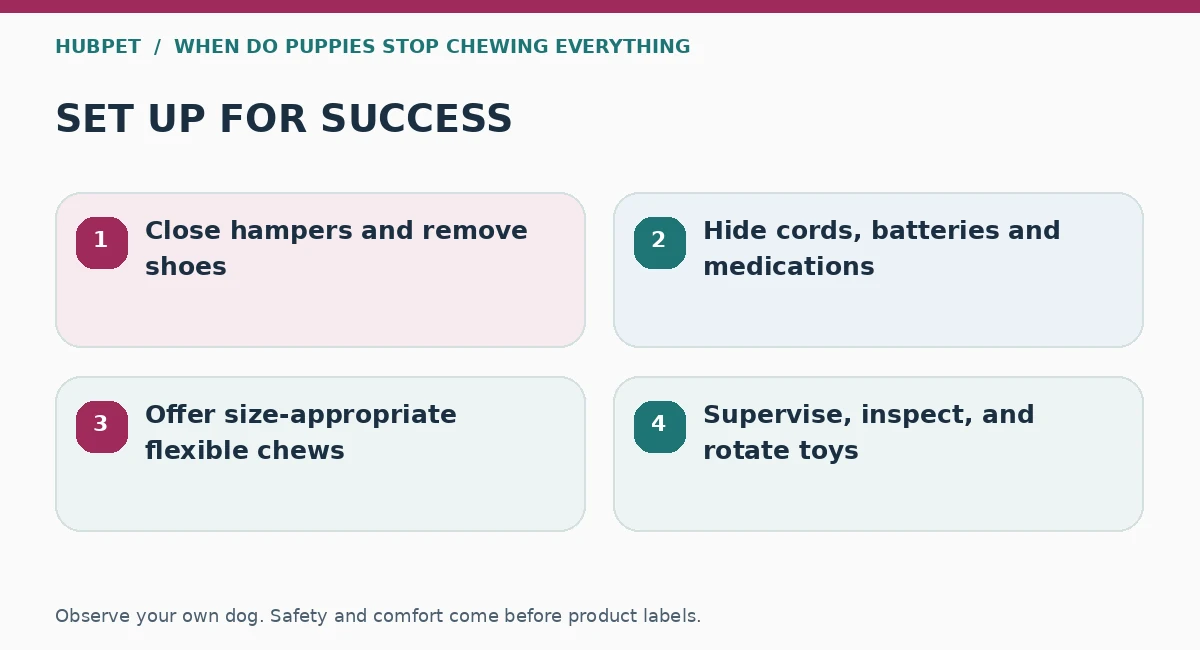
Start with a space where your puppy can succeed. Move cords, medications, batteries, children’s toys, socks, and shoes out of reach. Close hampers and block access to trash. Then provide water, a comfortable resting area, and supervised access to appropriate chews. Prevention matters because each successful shoe-chewing session gives the puppy more practice.
A baby gate or puppy pen may help while you cook or work nearby. Introduce confinement positively and do not use it as punishment. Also, never leave unsafe bedding or chew pieces inside a pen if your puppy tears and swallows them. For a practical home sweep, use HubPet’s pet-proofing checklist.
Choose a chew by size, texture, and chewing style
Pick a dog-appropriate product large enough that the puppy cannot swallow it whole. Favor chew toys that give slightly under pressure instead of extremely hard antlers, bones, or rigid items. VCA cautions that very hard chews can fracture teeth. Examine every toy for loose pieces before and after play. Replace damaged toys promptly.
No toy is completely risk-free. Supervise new chews, especially with a puppy that quickly tears toys apart or gulps pieces. Avoid cooked bones and any object that splinters. If your puppy is a powerful chewer, ask your veterinarian about a safer size and texture. Read manufacturer instructions as well as watching the dog in front of you.
Teach an exchange instead of a chase
When your puppy grabs something harmless but off-limits, keep your voice calm. Show an appealing, safe alternative and praise the moment your puppy takes it. If the puppy willingly releases an item, reward that choice. Then put the tempting object away. Repeating this sequence teaches that chewing appropriate toys pays better than stealing household objects.
Never wrestle a guarded item from the puppy’s mouth. A chase can turn the object into a game, and grabbing can increase guarding. If your dog stiffens, growls, or protects items, seek a qualified reward-based professional. For a safe skill to practice separately, see how to teach a reward-based trade.
Give chewing a predictable job each day
Offer a safe chew during the parts of the day that tend to go wrong. For example, follow a short sniff walk with quiet time and a suitable chewing activity. Feed part of a meal in an appropriate food puzzle when your puppy enjoys it. Still, count food rewards within the day’s ration and watch for broken pieces.
Keep two or three useful toy choices accessible and rotate the extras. This can restore interest without buying a pile of objects. However, enrichment is not a substitute for sleep. An overtired puppy may become mouthier, so include regular rest breaks. Watch how your own puppy responds rather than imposing a universal minute-by-minute schedule.
What to do during a chewing incident
First, check for immediate hazards such as a power cord or swallowed plastic. If the object is dangerous, protect the puppy and call a veterinarian when ingestion seems possible. Otherwise, interrupt gently by offering a more interesting approved item. Praise the switch. Then move the original object out of reach without a lecture.
Afterward, ask why that object was available. It may help to rearrange a room or add a gate. Avoid scolding when you discover damage later; the puppy cannot connect delayed punishment to the earlier action. Consistent management protects your belongings and prevents repeated rehearsal of the same unwanted behavior.
A one-week progress test you can actually measure
Choose one safe room and a few tempting object categories. On each day, note the number of attempted grabs, the times you offered an alternative, and whether your puppy settled afterward. Do not test progress by leaving valuable items in reach. Instead, track ordinary opportunities where supervision already keeps everyone safe.
If chewing drops only when your puppy has a chew nearby, that is still useful progress. You are building a habit while reducing accidents. Next, widen supervised access gradually and return to an easier setup after setbacks. Remember that the goal is safer choices over time, not stopping normal chewing altogether.
When ordinary puppy chewing needs professional help
A sudden increase in chewing can coincide with pain, stress, or a routine change. Contact your veterinarian for oral bleeding, broken teeth, refusal to eat, or signs that the puppy swallowed fabric or plastic. Repeated vomiting, trouble breathing, or collapse requires urgent care. Do not attempt to induce vomiting without veterinary direction.
Behavior support also matters when the puppy injures themselves trying to escape, destroys things only when alone, or guards objects aggressively. Choose a qualified professional who uses reward-based methods. A humane plan treats the cause and protects the dog while everyone practices new routines.

The takeaway: improvement is trained, not timed
Teething-related chewing often eases as permanent teeth come in, but normal chewing continues throughout life. Some adolescents have another pronounced chewing phase. Therefore, age estimates help set expectations but cannot replace observation. Match chew options to your puppy and teach a calm trade.
Keep important items inaccessible, reward appropriate chewing, and build rest into the day. If something suddenly changes, look for a medical or distress-related cause instead of blaming the dog. A safe environment plus repeatable practice offers a more reliable path than waiting for a date on the calendar.
How We Research
We reviewed veterinary care and animal-welfare guidance alongside material-specific shopping information. Sources were checked on October 26, 2026; practical buyer observations remain distinct from clinical claims. HubPet does not endorse brands, claim hands-on product tests, or recommend a bed as a treatment. Learn about HubPet at About HubPet.
Sources
ASPCA: Destructive Chewing. Accessed October 26, 2026.
VCA Animal Hospitals: Teeth, Teething and Chewing in Puppies. Accessed October 26, 2026.
American Kennel Club: Your Adolescent Puppy and Changes to Expect. Accessed October 26, 2026.
ASPCA: Position Statement on Dog Chews/Treats. Accessed October 26, 2026.
Teething-related chewing may ease around six months, but exploration and adolescent chewing can continue. Focus on safe alternatives and supervision rather than expecting a fixed deadline.
Some adolescent dogs show a second chewing phase. Increased energy, frustration, and access to tempting objects can add to the problem. Check routine and redirect gently.
No chew is completely risk-free. Supervise new products and follow safety guidance. Remove damaged items and ask a veterinarian about appropriate choices for your puppy.
Delayed punishment does not teach which object to chew. Prevent access, offer a safe alternative, and reinforce the puppy for choosing it. Keep exchanges calm.
Call promptly for a possible swallowed object, a broken tooth, oral bleeding, or an abrupt behavior change. Trouble breathing or collapse requires emergency care.