
This article offers general pet-care information, not a diagnosis or treatment plan. For urgent ingestion concerns, pain, or sudden behavior changes, consult a veterinarian. See our veterinary information disclaimer. Some dogs nibble a blanket gently while settling. Others pull seams, tear holes, or swallow pieces of fabric. Those behaviors look similar at first, but the safety implications differ. Focus on what the dog does to the material, not only why it might enjoy the texture. A blanket that sheds threads or stuffing must come out of reach. A dog that has swallowed fabric or shows vomiting, pain, low energy, or appetite changes needs veterinary advice promptly. You can provide comfort and appropriate chewing without letting the dog rehearse a risky fabric-shredding habit.
Separate gentle mouthing from shredding
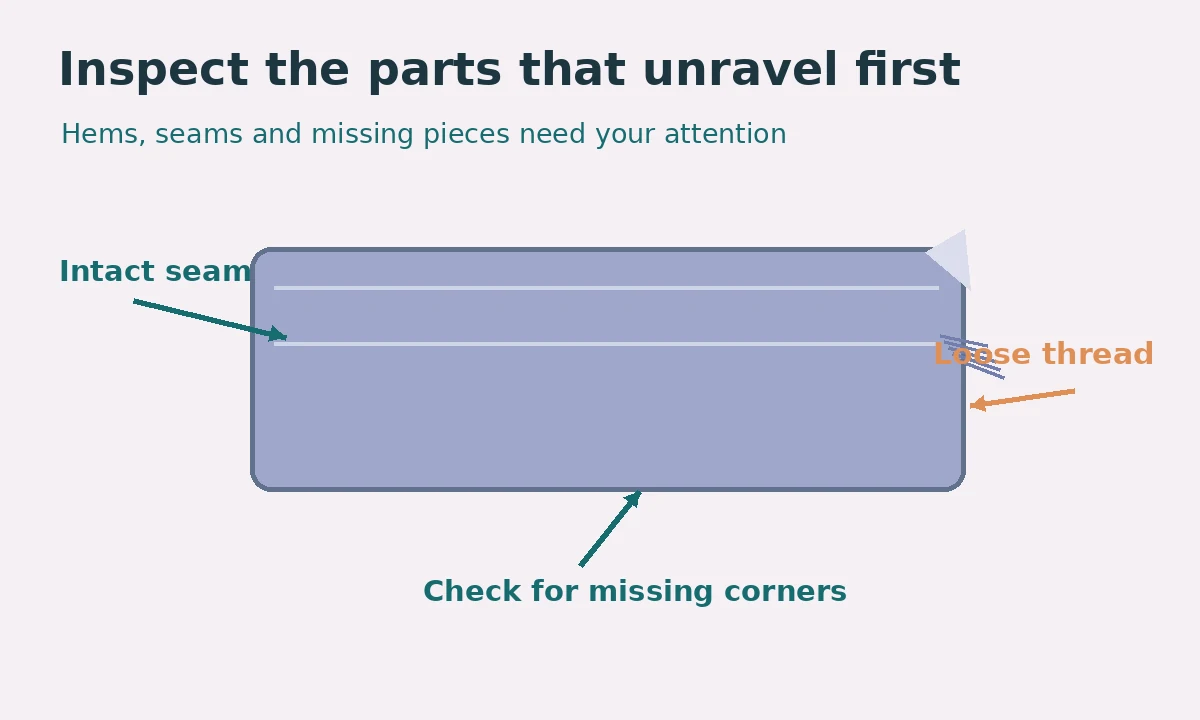
Watch the dog during a calm, supervised period. Does it rest with an intact blanket in its mouth, or does it grip seams, shake, tear, and swallow fibers? Inspect the textile for holes, loose binding, missing corners, and stuffing. If material is coming apart, remove the blanket and clear loose pieces from the floor. Avoid giving back a damaged item because the dog appears relaxed. The central question is whether the dog can use the bedding without ingesting it. That may change over time as chewing habits, age, and stress levels change.
Choose the safest resting surface available
A simple uncovered bed or washable mat may be more appropriate than a loose blanket for a dog that shreds fabric. Compare seams, accessible zippers, labels, and raised edges. Remove any item the dog pulls apart; descriptions such as durable do not guarantee safety. Avoid improvised repairs with pins, staples, loose thread, or tape. If a dog chews every soft surface, discuss the pattern with your veterinarian and manage access during rest. A comfortable resting place does not need to include cloth that the dog repeatedly swallows.
Observe the setting, not just the blanket
Notice whether chewing starts after active play, during household departures, near a noisy appliance, or as the dog becomes sleepy. Some animals chew at the same time each day, while others react to changes in routine. Use a short log that includes what happened before and after the behavior. Do not diagnose anxiety from one blanket-chewing session. If chewing appears alongside pacing, drooling, or intense distress during separation, seek qualified guidance. Understanding context helps you choose the right amount of stimulation, supervision, and support.
Offer a chew that does not imitate cloth
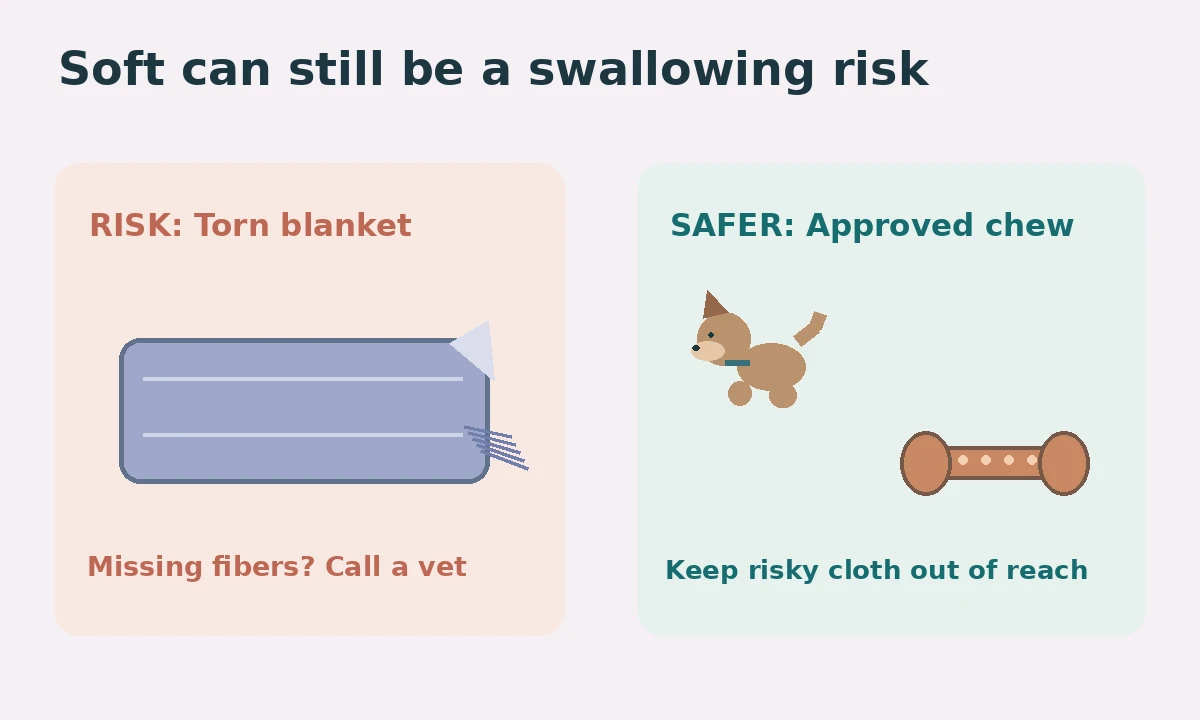
Choose a size-appropriate toy designed for dogs, with no accessible strings or easily detached parts. Supervise first use and inspect it regularly. Soft fabric toys may not be suitable for an animal that swallows textile pieces. Offer the replacement at a predictable relaxed time, before the dog reaches for a blanket. Praise interest in the toy and store risky bedding out of reach. Avoid using an old towel as an approved chew. It blurs the difference between household fabric and the objects you actually want your dog to use.
Avoid physical struggles over fabric
If the dog has seized a blanket, do not tug at it or chase the animal through the room. For some dogs, this turns the moment into a game. Practice exchanging a low-value toy for a reward when the dog is relaxed. Use that skill with safe objects before confronting a higher-value stolen blanket. Do not reach toward a dog that freezes, growls, or guards its possession. Instead, step away and seek professional behavior support. Your immediate priority is to avoid escalating conflict while limiting future access to the dangerous textile.
Make downtime genuinely restful
Dogs need chances to sleep without constant interruption. Provide a quiet spot with a clear exit, fresh water nearby, and a surface that is appropriate for their chewing style. If the dog starts fabric mouthing when overstimulated, try a brief calm transition after play. Do not use more and more exercise as the only answer. An overtired dog may struggle to settle. A short sniffing activity or a suitable supervised chew can help some animals transition to rest. Observe whether the dog relaxes without needing to shred material.
Check laundry and bedding routines
Worn blankets may develop loose hems after repeated washing. Inspect seams before returning them to a dog’s space. Remove dangling laundry tags, broken edging, and stray threads. Keep dirty towels and clothing in a secured hamper if the dog raids fabric for scent. Do not assume a familiar scent makes cloth safe to swallow. Wash dog bedding according to its care label and dry it fully before use. If a repaired blanket continues to fray, retiring it is safer than repeatedly adding another weak seam.
Take possible ingestion seriously
Missing material can be a clue that a dog swallowed fabric rather than merely tearing it. Contact your veterinarian if you suspect ingestion, particularly with long strips, stuffing, or pieces that cannot be accounted for. Repeated vomiting, bloating, discomfort, straining, or reduced appetite warrant urgent assessment. Do not pull strings from the mouth or rectum. Do not use oil, food, or home vomiting methods to push fabric through. Keep a photograph of the item and note approximately when the dog had access so the clinic can assess the risk.

Reintroduce comfort without rushing
If the dog now settles calmly on a safer surface, maintain that choice consistently. Do not restore loose blankets simply because several days passed without chewing. Try only brief supervised contact with an intact item if a veterinarian or trainer considers it appropriate. Watch for renewed pulling at seams and remove the item before damage begins. Progress means safe rest and successful alternatives, not forcing a particular bedding style. If fabric chewing intensifies or seems compulsive, ask for individual veterinary and qualified behavior guidance rather than increasing punishment.
How We Research
We compare veterinary behavior guidance and humane animal welfare advice with real household setup decisions. Our practical checks address access, chewing or digging opportunities, equipment wear, and warning signs that require professional help. We favor management and reward-based teaching over aversive techniques. Learn about our editorial approach. This is an educational guide, not a product test or a promise that one solution fits every dog.
Sources
ASPCA — Destructive Chewing — Guidance on normal behavior, welfare and safer household or outdoor management.
VCA Animal Hospitals — Dogs and Destructive Digging — Guidance on normal behavior, welfare and safer household or outdoor management.
Dogs Trust — Keeping Your Garden Dog Friendly — Guidance on normal behavior, welfare and safer household or outdoor management.
Some dogs mouth soft items while settling. The concern rises when the dog tears, removes, or swallows fibers or cannot relax without chewing.
Not if your dog shreds or eats fabric. Choose an appropriate safe resting setup and seek advice if the dog persistently chews all bedding.
Contact your veterinarian promptly, especially if material is missing. Do not pull any visible string or try to induce vomiting at home.
A suitable chew may help, but you also need to prevent access to unsafe fabric and address when the behavior occurs.
Avoid punishment, particularly after finding damage. Use management, positive reinforcement, safer chew options, and professional help if the behavior persists.