
A dog bed that looks comfortable in a product photo can still fail at home. It may fit the corner but not a stretched-out dog, wobble on a smooth floor, or trap heat. This guide starts with a dog’s actual sleep position and daily routine before discussing mattress labels.
A bed supports rest but does not replace assessment for limping, stiffness, or pain. If rising or lying down has become difficult, ask a veterinarian for guidance and see our veterinary information disclaimer. For ordinary selection, begin with the dimensions of the usable sleeping surface.
Measure your dog at rest, not just by breed
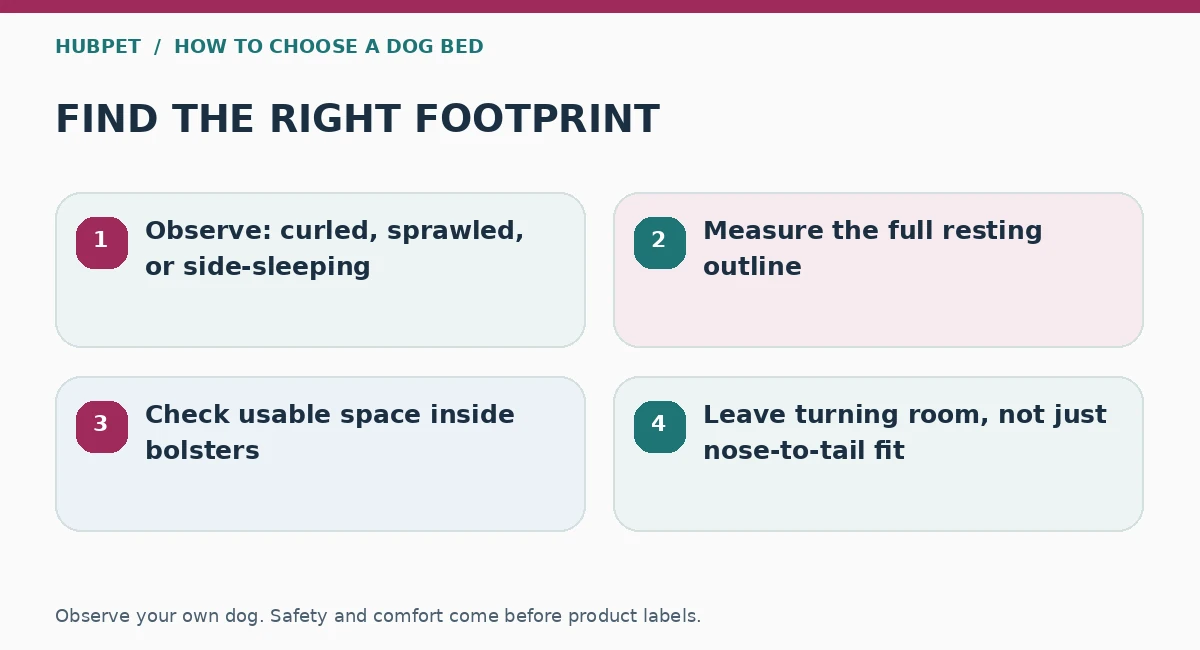
Watch the dog sleep on an ordinary day. Does your dog curl tightly, lie on a side, or stretch with paws ahead? Measure the space the resting dog actually uses, then allow extra room around the outline. That is more useful than guessing from a breed label or a model photograph. The listed exterior width may include thick bolsters.
Check the manufacturer’s interior sleeping dimensions when available. For example, a bed with large raised sides can offer less usable space than a plain mat of the same overall length. If your dog switches between curled and stretched positions, favor the larger position. Also, check the space available in your home before ordering.
Choose a shape that respects the sleeping style
Flat mats suit dogs that sprawl, rotate, or dislike obstacles at the edge. Bolstered beds may appeal to dogs that tuck their heads against a side. Donut designs create an enclosed feel for some curlers. However, a high continuous rim can block an older dog or a dog with limited mobility from entering easily.
Do not assume that every dog wants the same level of enclosure. Notice which places the dog chooses now: a cool tile floor, sofa cushion, rug, or sheltered corner. Then select a bed that recreates useful features without adding a fall risk. Our senior-dog comfort guide explains why easy access matters.
Evaluate cushioning without trusting a label
Press the center of a bed and observe how quickly it rebounds. Look for steady support rather than a thin center that collapses to the floor. Density, layer construction, and the dog’s weight all influence the result. A soft top can feel pleasant while a firmer base prevents bottoming out. Ask sellers for specific construction details.
A high price or the word orthopedic does not prove clinical benefit. For a dog with discomfort, combine bed selection with veterinary advice. Meanwhile, consider whether the cover protects the filling from accidents and whether the mattress keeps its shape after routine cleaning. Comfort is a practical test, not a medical promise.
Check entry height and floor traction
Place the bed on the surface where the dog normally rests. Watch a calm entry and exit. Can your dog step on without jumping, and stand without slipping? A low edge may help dogs with stiffness or shorter legs. A rug with a grippy backing can help on slick flooring. Do not force repeated trials if your dog struggles.
VCA advises accessible bedding and traction for dogs with mobility limitations. Even a young dog benefits from a bed that stays put when turning. Test the base on the actual floor material, not just a showroom carpet. See how to make rooms easier for senior pets for related home changes.
Choose covers you can truly maintain
Read the wash tag before choosing a fabric. A removable machine-washable cover may simplify regular care, especially when your dog sheds heavily. Check whether the insert itself tolerates moisture and whether a replacement cover exists. Some decorative beds look tidy but require impractical spot cleaning. A bed that stays dirty is not a good fit.
Also inspect seams and zippers. Dogs that chew loose fabric need close supervision and a different construction if parts break away. Allow washable pieces to dry fully before putting the bed back together. Consider a spare cover if accidents are frequent. Our pet-friendly cleaning guide adds household strategies.
Plan for heat, airflow, and the room itself
Thick plush sides can feel cozy in a cool room yet unpleasant for a dog that seeks a cool floor. If your dog often moves onto tile, choose a breathable surface and keep a cool, safe alternative accessible. Put the bed away from direct heater airflow and cramped passages. Resting places should support relaxation, not block everyday movement.
An elevated cot may offer airflow underneath, while a padded ground bed offers a different kind of contact. Neither design wins for every dog. Consider drafts in winter, nearby noise, and whether children or other pets interrupt rest. Then place the bed in a quiet but comfortable part of your dog’s routine.

Look at durability through your dog’s habits
A tidy, gentle sleeper has different needs from a dog that scratches and nests before lying down. Check stitching, fastening points, and the strength of the base. If your dog destroys stuffing, do not leave loose filling within reach. Review the manufacturer’s safety warnings and match the material to the dog’s chewing pattern.
Separate durability from harshness. Heavy fabric may resist claws but can still have unsafe closures. Smooth edges and a stable underside matter more than grand claims of indestructibility. Do not treat any soft bed as chew-proof. If chewing becomes persistent, address the behavior as well as the bedding.
Run a three-night home-fit test
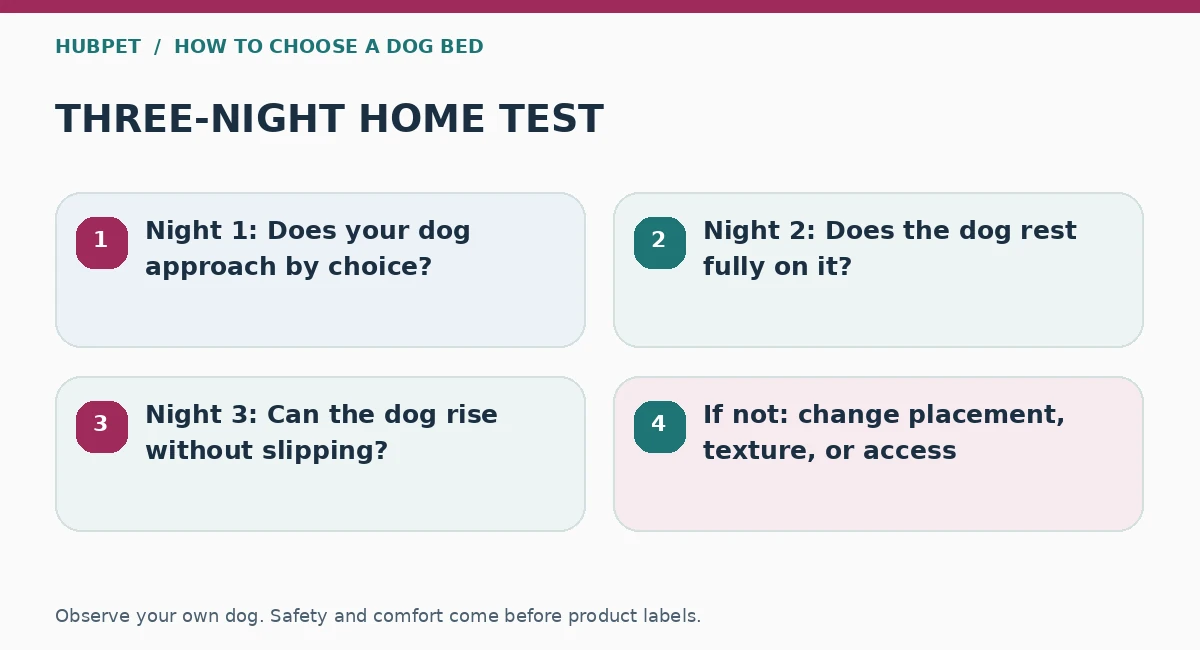
Introduce the bed in a familiar spot. Invite your dog to explore with a small reward, then allow a choice. During several nights, observe whether the dog rests fully on the surface, shifts often, or returns to another location. A dog may need time, but avoidance can also signal the wrong shape, heat level, or placement.
Do not force a dog to stay on a bed for an arbitrary duration. Instead, use voluntary settling as feedback. Try adjusting location or cover texture before buying another design. Also, watch how easily your dog rises. Changes in gait or reluctance to stand merit veterinary attention, whatever bed you choose.
A quick checklist before checkout
Confirm the usable interior measurements, expected dog size, entry height, stability, cleaning instructions, and return terms. Check actual product specifications rather than relying on a category name alone. Ask about layer construction in memory foam. For elevated frames, review joints and fabric tension. When comparing orthopedic claims, look for functional details instead of medical-sounding adjectives.
If two beds fit equally well, prioritize the one you can clean, place safely, and replace parts on. Because preference varies, a reasonable return policy can be useful. This guide does not rank specific brands and does not claim that one design treats a condition.
Match the bed to the dog you have today
Your dog’s preferences and mobility can change with age, recovery, or the seasons. Revisit the setup when your dog begins sleeping elsewhere, hesitates at the edge, or struggles to get up. A low, stable resting surface may become more important than plushness. Keep paths and water access clear around the bed.
The right choice supports sleep without making movement harder. Start with space, access, and maintenance; use marketing labels only after those basics. If you notice persistent pain signs, call a veterinarian. A comfortable bed complements care but cannot replace it.
How We Research
We reviewed veterinary care and animal-welfare guidance alongside material-specific shopping information. Sources were checked on October 26, 2026; practical buyer observations remain distinct from clinical claims. HubPet does not endorse brands, claim hands-on product tests, or recommend a bed as a treatment. Learn about HubPet at About HubPet.
Sources
VCA Animal Hospitals: Creating a Comfortable Home for Your Mobility Compromised Dog. Accessed October 26, 2026.
American Kennel Club: The Importance of a Good Dog Bed. Accessed October 26, 2026.
American Kennel Club: How to Clean Your Dog’s Bed. Accessed October 26, 2026.
Measure your dog while resting in a preferred position, then allow room to stretch and turn. Check usable interior space, because thick bolsters reduce sleeping area.
Preferences vary. Dogs that stretch often like open mats, while some curlers enjoy raised edges. Watch where and how your own dog settles.
No. Support depends on the whole construction, your dog’s size, and how the material compresses. A thick bed that collapses may offer less useful support than a stable one.
Try a familiar room, familiar scent, and voluntary exploration. Check heat, surface feel, and access. Avoid forcing the dog to use it.
Ask for guidance if your dog limps, seems painful, slips while rising, or suddenly avoids resting places. A bed cannot diagnose or treat these changes.