
General educational guidance only. For sudden behavior changes, suspected ingestion or litter box distress, speak with your veterinarian. Read our vet disclaimer.
If you searched for how to stop my dog from chewing the walls, first prevent access to any damaged drywall or paint while you work out what started the chewing. A rough corner, exposed plaster, chipped paint and swallowed fragments create risks that a typical chewed toy does not. Dogs may gnaw walls from normal exploration, boredom, distress when alone, reactions to sounds inside a wall or an underlying health concern. The safest plan combines a physical barrier, careful observation, an appropriate chew substitute and veterinary input when materials may have been swallowed.
Find the pattern before choosing a solution
Check which wall or corner is targeted and whether it happens only when the dog is home alone, during noisy construction, after confinement or just before a walk. A dog chewing one spot may hear or smell something behind the wall. A dog chewing many objects may need broader enrichment and management. Make a short incident log with location, time, who was home, the dog’s activity before chewing and any separation-related pacing or barking. Do not assume a motive from a single damaged corner.
The American Veterinary Society of Animal Behavior advises a veterinary assessment for dogs chewing through walls, including a discussion of the material and possible ingestion. If you find dust around the muzzle, missing chunks or loose paint, isolate the area and save information about the wall’s age and recent renovation. Older painted surfaces may pose additional concerns; ask the appropriate qualified professional about testing rather than guessing whether paint is safe. If the dog appears unwell, the veterinary question comes before training.
| Observation | What to investigate | First safe action |
|---|---|---|
| Only when alone | Separation-related distress | Record pattern; discuss with vet |
| Same corner repeatedly | Sound or odor behind wall | Inspect safely; block location |
| Drywall or paint missing | Possible ingestion or toxic exposure | Call vet; keep sample or photos |
| Chews after long idle periods | Insufficient safe activities | Add structured enrichment |
| Grabs at wall when interrupted | Attention or high arousal | Prevent access; reward alternate chew |
Block access and create a safe alternative
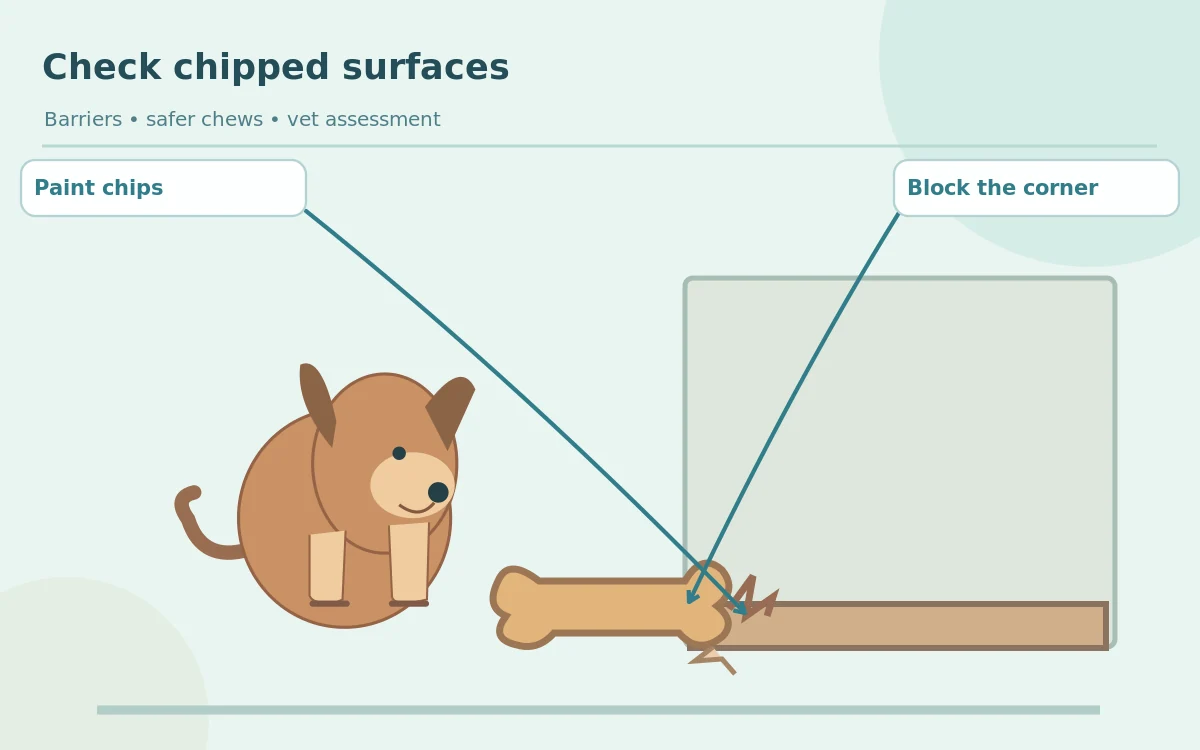
Close the room or install a secure freestanding barrier that the dog cannot move, jump or chew through. Do not attach a tempting chew toy directly beside exposed plaster. Vacuum or sweep dust only after the dog is safely elsewhere, and store spackle, adhesives, cleaners and tools out of reach. Patch the wall only when the dog cannot interfere with drying materials. A small gap behind furniture can still invite a determined muzzle, so inspect the entire reachable edge from the dog’s height.
Place one or two appropriately sized, supervised chew options in the room where you want the dog to settle. Select a resilient product that does not shed pieces in this dog’s mouth; supervise its first uses and remove damaged items. If the dog is an avid gulper, ask your veterinarian to help select a safer chew. Reward the instant the dog engages with the legal object. The goal is to reinforce an alternative behavior and make wall chewing physically unavailable while the new habit develops.
- Move your dog away from the damaged surface and photograph the area before cleanup.
- Block every reachable damaged edge; keep repair products and paint inaccessible.
- Record when chewing occurs and whether fragments or dust are missing.
- Introduce a safe supervised chew; reinforce voluntary use and brief calm leave-it practice.
- Review the pattern after a week and seek professional assessment if it persists.

Teach a rewarded response, not fear of the wall
Practice ‘leave it’ away from the damaged area with an easy, low-value object and a food reward. Start with calm conditions; mark and reward the moment the dog backs away. Later, use the cue only when you can prevent access and offer a legal chew. Do not wait for active chewing and then shout, grab the collar or chase the dog around the room. Such responses can worsen anxiety and may turn the episode into a high-arousal game.
Schedule short play, sniffing and training opportunities before the time the chewing usually occurs. Food puzzles that use part of the normal meal can occupy a dog. Choose a device that is safe for that animal, with supervision when necessary. If chewing occurs during departures, video from a safe camera can reveal distress signs that a person does not see. Persistent separation distress deserves an individualized plan from a veterinarian or qualified, humane behavior specialist rather than tighter confinement.
Recheck the environment and know when to escalate
Compare the incident log across a week: did the dog choose a chew toy, rest calmly or avoid the wall without active interruption? A better indicator than a spotless wall is more voluntary use of safe outlets and fewer attempts to reach the barrier. Keep the barrier until the dog has repeatedly made those choices and the underlying trigger is addressed. Repair cracked plaster and check for sharp edges or exposed wires before allowing access again.

If you cannot safely supervise, arrange a genuinely dog-proofed living area with water, rest and appropriate activity—not prolonged isolation as punishment. Consult a credentialed behavior professional if the dog shows panic, injury, increasingly intense chewing or guarding when approached. The broader HubPet guide to furniture chewing explains ordinary household chewing; wall damage needs extra attention to material hazards and possible ingestion.
Common mistakes to avoid: applying essential oils, harsh sprays or household chemicals to a wall; using punishment; giving a chew small enough to swallow; and assuming a brand-new behavior is “just boredom.” Some wall coatings and building materials are hazardous if eaten. A dog that swallows fragments needs an individualized veterinary risk assessment, not advice to induce vomiting at home. For basic reward timing, see our published leave-it walkthrough.
When to Call Your Vet
Contact your veterinarian promptly if drywall, plaster, paint, caulk, metal or insulation may have been swallowed. Seek emergency assessment for choking, repeated vomiting, marked lethargy, pain, tremors, collapse or other serious signs. Do not give home remedies or try to make a dog vomit without veterinary instruction.
How We Research
HubPet reviewed veterinary, animal welfare and relevant manufacturer documentation for this exact reader question. We distinguish verified manufacturer specifications from independent evidence and do not claim to have conducted proprietary tests. This article offers practical, observable decision criteria rather than medical diagnosis, hidden product rankings or paid endorsements. Read our editorial approach for more context.
Sources
AVSAB — Dog Chewing Through Walls — reference for product facts, safety or feline/dog welfare.
ASPCA — Destructive Chewing — reference for product facts, safety or feline/dog welfare.
ASPCA — Keeping Pets Safe During Home Repairs — reference for product facts, safety or feline/dog welfare.
AVSAB — Humane Dog Training — reference for product facts, safety or feline/dog welfare.
Possible reasons include distress, novelty, oral discomfort or interest in noises behind a wall. Sudden change or possible ingestion needs a veterinary check.
Do not use irritating sprays, oils or homemade chemical mixtures. Start with secure physical access control and safe chew alternatives.
Enrichment helps some dogs, but alone-time distress or health issues require a different plan. Track the context before choosing an intervention.
Call your vet with the estimated amount, material, dog size and any symptoms. Do not assume a small fragment is harmless.
Teach the cue in an easy safe location first. Reward turning away, then practice near the room only after a barrier prevents access.