
For general education only, not a diagnosis or a substitute for veterinary care; see our veterinary disclaimer. If your puppy won’t stop biting me—or that is exactly how the problem feels at home—you need a repeatable plan, not a harsher reaction. Mouthing and nipping are common in puppies exploring, playing and learning how hard to use their mouths. That does not make painful bites acceptable or mean you must let children endure them.
In brief: make hands boring, redirect to an appropriate toy before the puppy grabs, end the game calmly when teeth hit skin, and reward gentler choices. Watch for fatigue, excitement and frustration. If biting causes serious injury, has a stiff or fearful context, or escalates despite management, involve a veterinarian and a qualified reward-based behavior professional.
First identify the kind of biting you are seeing
| Situation | Clue to watch | Safer first response |
|---|---|---|
| During fast play | Loose body; bouncy movement; grabbing hands or sleeves | Slow down; present a longer toy; pause when teeth touch skin |
| At ankles or feet | Puppy targets movement when people walk past | Stop moving safely; redirect before walking again |
| Late-day bursts | Puppy becomes frantic after activity or missed rest | Reduce stimulation and offer a calm rest opportunity |
| During restraint or handling | Freezing, pulling away, growling, hard stare | Stop handling; give space; seek help if repeated |
| Bites that puncture skin or escalate | Injury, intensity or inability to safely disengage | Separate safely and contact a professional |
A five-step response when puppy teeth reach your skin
- Prepare before play. Keep a suitable puppy-safe chew or tug toy within reach and supervise all play, especially around children.
- When nipping starts, stop hands and feet from becoming the moving target. Offer the toy to invite a different action.
- If teeth touch skin, calmly interrupt attention and step out of reach for a short reset. Do not shout, jerk, pin or hit the puppy.
- When the puppy is ready to engage with the toy or settles briefly, reward that choice with quiet praise or an appropriate game.
- Change the setup if nipping repeats: shorter play, more rest, a physical barrier for safety, or a different activity. Keep notes on what helped.
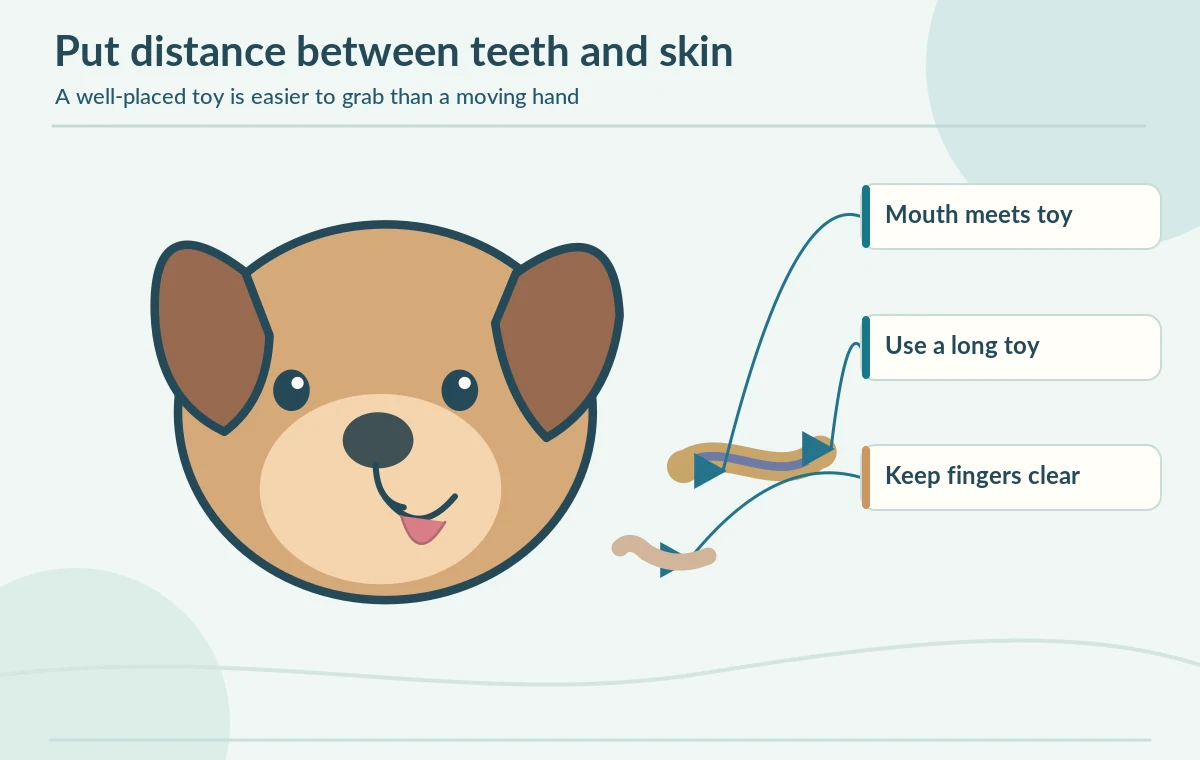
A calm reset is not a frightening isolation punishment. It simply removes the exciting part of the game long enough to offer another behavior. Sometimes the puppy needs sleep, not another teaching repetition. Children should never be responsible for managing a biting puppy on their own.
A daily prevention plan that works with development
Make chewing alternatives accessible and reward spontaneous calm behavior. Reinforce sitting, looking away from skin, bringing a toy or walking beside you without grabbing clothing. Use management such as a gate when people are moving through a busy room. Avoid rough hand wrestling if it consistently predicts painful nipping.

Puppy mouths develop alongside their learning. A 9-week-old puppy may grab hands during exploration; a 3-month-old may be in a heavy chewing phase; a puppy at 8 months can still nip when overexcited. The response depends more on context and intensity than a magic birthday. Persisting severe biting in an older puppy deserves individual assessment.
What not to do when the nipping gets frustrating
Avoid forced restraint to assert dominance, muzzle grabbing, hitting, shouting into the puppy’s face, frightening noises or painful equipment. Those methods can increase fear and damage trust. The AVSAB humane training guidance recommends reward-based methods and opposes aversive training. If a puppy is too wound up to take a toy, stop the interaction and make the environment quieter rather than escalating force.
When to seek professional help
Consult a veterinarian for sudden or unusual biting, signs of mouth pain or injury, an abrupt change from the puppy’s usual demeanor, or bites that puncture skin. Seek qualified behavior support when the puppy bites in fear, stiffens or guards resources, or family members cannot manage contact safely. A trainer should use reward-based methods and know when a veterinary referral is needed.

For other behaviors that overlap with puppy nipping, see our guides to responses to competing attention and distress when separated. Those explanations should not replace a tailored assessment where bites are dangerous. Reward-based basics are covered in positive-reinforcement training.
Troubleshooting a nipping plan that is not working
If the puppy keeps grabbing your clothes as you pass the sofa, move the play area or use a barrier so people can cross without triggering a chase game. Practice a toy invitation before the puppy reaches for fabric, not only after nipping starts. Reward the puppy for following the toy and for settling while someone walks by at an easy distance. If the puppy cannot respond, increase space or lower activity. This avoids accidentally turning each bite into an exciting wrestling match.
When a puppy bites a child’s sleeve, the adult should safely separate them without asking the child to deliver a lesson. Children may freeze, squeal or move quickly when startled; those are normal reactions and should not become training instructions. Organize supervised interaction so the puppy has a toy and an exit, and the child can step away. The puppy should also have uninterrupted sleeping and eating spaces. Family safety is not a test of whether a young dog is ‘dominant.’
An owner may say the puppy bites harder after every correction. This is a reason to change the plan, not increase punishment. Fast movement, confrontation and raised voices can add arousal or fear. Write down the last few incidents: time of day, activity, who was there, whether a toy was available, how the puppy’s body looked, and how long it took to settle. Move the successful part of the routine earlier and keep practice easy enough to reward frequently.
Do not focus only on how often teeth touch skin. Consider intensity, context, and recovery. Soft exploratory mouthing during an easy game differs from a dog freezing over food or biting when touched near a painful area. If skin is repeatedly broken, a person feels unsafe, or the puppy shows stiff warning behavior, prioritize separation and professional assessment. A veterinarian can check medical contributors; a qualified humane trainer or veterinary behaviorist can help build a behavior plan that fits the household.
How We Research
This practical guide cross-checks established veterinary or animal-behavior guidance against the specific question a reader is trying to answer. The age ranges, signs, and examples below are navigation aids, not diagnostic tests. Read our editorial approach for how we select and explain sources. The plan is grounded in puppy mouthing guidance and veterinary behavior recommendations. We exclude aversive methods and distinguish common play nipping from signs that require clinical or behavior assessment.
Sources
Sources: ASPCA: Mouthing, Nipping and Biting in Puppies; PetMD: Puppy Biting, veterinary-reviewed; AVSAB: Humane Dog Training.
Mouthing during exploration is common at this age. Redirect early and protect skin; stiff, fearful or injurious biting needs a closer look.
Excitement, chewing needs and fatigue can cluster late in the day. Keep a short log, add appropriate rest and reduce high-energy hand play.
Some dogs improve with maturity, but waiting without teaching and management is unreliable. Maintain consistent reward-based skills and seek help for persistent severe bites.
A loud reaction may increase excitement or worry in some puppies. A calm pause, safe separation and reinforcement of toy use is a lower-drama starting point.
Bites with serious injury, repeated punctures, marked fear or inability to safely separate people and puppy warrant prompt veterinary and qualified behavior support.