
A vacuum sold for pet hair still needs to clean the surfaces in your home. Thick rugs, smooth floors, upholstered furniture, and stairs pose different problems. A brush that lifts fur from carpeting may scatter debris across hardwood, while impressive suction claims say little about how easy the machine is to empty. This guide starts with the cleanup tasks you actually face.
Hair and dander also differ. Read the HubPet veterinary disclaimer before interpreting allergy-related information. Visible hair can collect around a brush roll, while microscopic allergens may remain in textiles or become airborne. The American Academy of Allergy, Asthma & Immunology recommends suitable filtration and household exposure controls for allergy management. A vacuum is one tool, not a substitute for medical allergy care or surface cleaning.
Map where pet hair collects before shopping
Walk through your home and note hard flooring, low rugs, thick carpet, couch fabric, car seats, stairs, and tight corners. Rank the three surfaces you clean most often. An upright might suit carpet-heavy rooms; a canister or cordless stick may be easier to maneuver in smaller spaces. No single design wins in every layout.
Also record obstacles: scattered toys, loose charging cords, food bowls, and resting pets. Consider machine storage, lifting weight, and the distance to outlets. The pet-hair furniture guide can reduce how much work the vacuum needs to do.
Evaluate floor-head design, not just motor figures
Some brush rolls agitate rugs effectively but may tangle with long hair or scratch delicate surfaces if used incorrectly. Other heads rely more on airflow for bare floors. Read the manufacturer’s compatibility instructions, including whether the brush can be switched off for a fragile floor.
A model that handles one surface well may perform poorly on another. Consumer Reports compares vacuum types across carpet and bare-floor tasks; use independently measured results when available. Instead of relying on an advertised wattage figure, check demonstrated pickup and ease of maintenance on your priority surfaces.

Plan for fur wrapped around moving parts
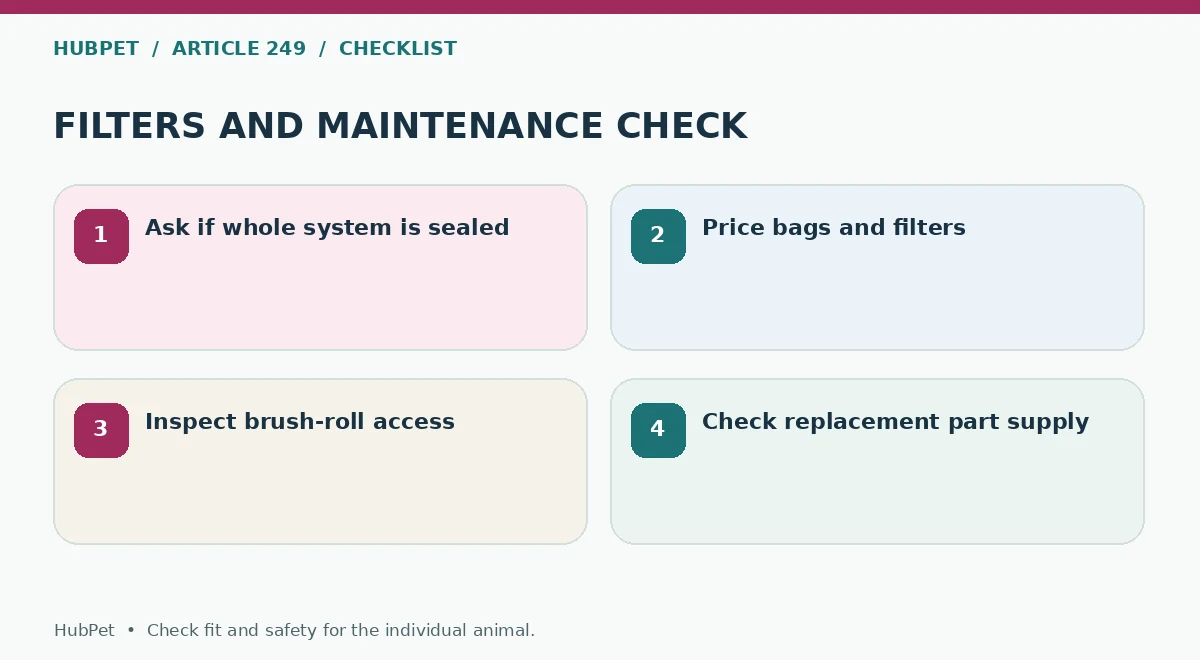
Long dog or cat hair can wind around brush rolls. Look for an accessible cleaning method, instructions for removing the roll, and replacement part availability. An anti-tangle label is not a guarantee that the brush never needs care, especially when string or threads collect with hair.
Inspect the head after cleaning a new surface. Unplug the vacuum or follow the maker’s power-isolation directions before removing debris. Keep fingers away from a spinning brush, and never force a clogged roller to keep turning. Repair or replace damaged parts instead of cutting near wiring.
Separate visible-hair pickup from filtration claims
If allergens matter, examine the whole air path rather than treating a HEPA sticker as proof of sealed filtration. AAAAI recommends a vacuum with suitable fine filtration or a double-layered bag for some pet-allergen control plans. Filtration performance can differ from the performance of a HEPA component alone.
Consider whether the dust compartment releases visible dust when emptied and whether replacement filters fit your budget. The EPA notes that household air cleaning is not a complete solution to indoor pollutants. Ask an allergist about a broader plan when someone has significant symptoms.
Choose bags or bins based on emptying reality
Bagged vacuums contain debris within a replaceable bag, while bagless bins avoid bag purchases but can release dust when opened. Neither layout is automatically cleaner in every household. Estimate how often you will empty the container with multiple shedding pets and where that task can happen.
Check the release mechanism while the machine is off and review replacement bag or filter availability. If dust exposure is a concern, choose an emptying routine that limits contact and follow medical guidance. The practical win is consistent safe maintenance, not an advertising claim about capacity.
Pay attention to upholstery and edge tools
A narrow crevice tool, soft brush, or pet-hair upholstery attachment may matter more than another motor setting. Check that accessories reach couch seams, stairs, baseboards, and pet bedding. Test the attachment on an inconspicuous fabric area to avoid snagging delicate covers.
Keep vacuum tools away from a nervous animal’s body. Vacuum the furniture after the pet moves to a comfortable space, never directly on the animal. Before replacing a machine, use the pet-friendly floor cleaning routine to remove grit and address wet spills separately.
Consider noise and the animals living with it
Vacuum noise and movement can be frightening even when the appliance does not touch the pet. Choose a cleaning time when animals can move to another room. Consider whether the power cord crosses a pet route and whether a curious puppy could chew an unattended charger.
A quieter marketing claim does not predict your individual pet’s response. For an anxious animal, start with brief distant exposure and provide an alternative space. If fear is intense, discuss a reward-based behavior plan rather than chasing the pet with a cleaning device.
Budget for ongoing operation and repairs
Compare the cost of belts, filter replacements, bags, batteries, and floor heads as well as the purchase price. A machine that needs proprietary consumables may cost more over several years. Look for repair access and warranty terms that cover your likely use, including frequent hair pickup.
Consider weight, handle comfort, charging time, and storage dimensions. A heavy vacuum that is difficult to move upstairs may be used less often than a simpler option. Value depends on whether you can complete the household routine consistently, not a brand badge.
Build a useful in-store or at-home test
If a retailer permits demonstration, compare movement over a sample rug and hard floor. Inspect how the head navigates corners, how the attachments connect, and how the bin or bag comes out. Do not scatter pet hair in a store or claim your personal test is a controlled laboratory comparison.
When reading independent reviews, look for separate carpet, bare-floor, and pet-hair results. Consider the reviewer’s test surfaces and whether their home resembles yours. Note shortcomings explicitly; a vacuum may handle everyday shedding well while struggling with shag rugs or tight furniture gaps.

Finish with a safe maintenance schedule
After each demanding session, check the brush and container, then follow the user manual for filter care. Let pets enter a freshly cleaned area after damp cleaners have dried if any were used. Store cords and attachments securely to avoid chewing or tripping.
Maintain grooming and laundering alongside vacuuming. Hair removal improves visible tidiness but cannot guarantee elimination of allergens. For periodic tasks throughout the home, use the weekly pet care checklist as a simple reminder.
How We Research
We checked this guide against the authoritative sources listed below on October 26, 2026. We reviewed practical differences, safety limits, and relevant home conditions rather than drawing conclusions from brand advertising. Specifications, warranty policies, and device capabilities change; check the manufacturer’s current manual. We did not purchase, laboratory-test, rank, or endorse individual products. Where a pet has pain, skin concerns, or fear, seek individual veterinary advice. See our approach at About HubPet.
Sources
American Academy of Allergy, Asthma & Immunology: Pet Allergy. Accessed October 26, 2026.
American Academy of Allergy, Asthma & Immunology: Managing Indoor Allergen Culprits. Accessed October 26, 2026.
Consumer Reports: How to Choose the Right Vacuum for the Job. Accessed October 26, 2026.
US Environmental Protection Agency: Guide to Air Cleaners in the Home. Accessed October 26, 2026.
They can make enclosed disposal convenient, but suitability also depends on floor pickup, filtration design, bag cost, and your cleaning routine.
No. Filter components and whole-machine sealing differ, and no vacuum removes every source of pet allergen. Seek medical advice for allergy management.
Not always. Match the floor head and upholstery tools to the surfaces that actually collect fur in your home and check maintenance access.
Do not use household floor-vacuum attachments on an animal. Vacuum furniture and floors while the pet rests elsewhere, and use suitable grooming tools.
Inspect it after hair-heavy sessions and follow the manufacturer’s maintenance guidance. Wrapped fur or debris can require cleaning sooner than a calendar interval.