
How to train a dog to wait for food is a short reward-based exercise: lower the bowl while the dog stays in the chosen position, pause if the dog moves toward it, and release the dog to eat after a brief success. The AVSAB humane-training position, reaffirmed in 2026 from its 2021 statement recommends reward-based methods for all dog training.
The goal is not to prove control or make a hungry dog wait for a long time. It is to teach a clear pause-and-release routine that the dog can succeed at. If your dog is still learning basic cues, begin with basic dog training at home and positive reinforcement basics.
How to Train a Dog to Wait for Food: Start With One Easy Pause
Choose a calm feeding area and prepare the meal before you invite the dog over. Ask for a behavior the dog already knows, such as standing still or sitting. The AKC self-control training guide, accessed 2026 uses the food bowl as the reward: the bowl moves closer when the dog stays settled and moves away when the dog gets up.
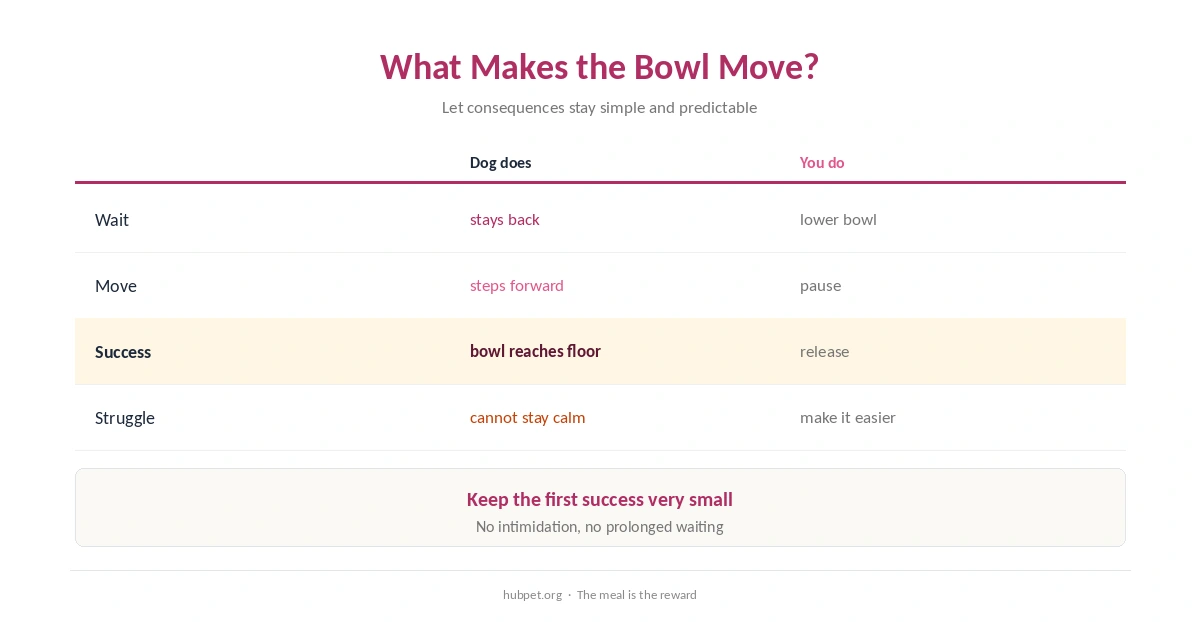
Keep the first success very small. Lower the bowl a little, mark calm behavior, and bring it back up if the dog surges forward. Then try again with less movement. This is the same principle used in doorway wait training: make the easy choice obvious and reinforce it.
| What happens | Your response | What the dog learns |
|---|---|---|
| Dog stays back | Lower the bowl | Waiting makes food approach |
| Dog moves forward | Pause and lift slightly | Moving does not speed access |
| Bowl reaches floor | Give a release cue | Release predicts permission |
| Dog struggles repeatedly | Make the step easier | Success comes before duration |
How to Train a Dog to Wait for Food With a Release Cue
Once the bowl can reach the floor, add one consistent release word. Say it immediately before the dog moves to eat. Do not repeat the wait cue over and over. A predictable release fits well with predictable pet routines and scheduled feeding.
Build only one variable at a time. First make the bowl-lowering motion easy. Next add a tiny pause after the bowl touches the floor. Later, practice with normal household movement nearby. If excitement rises sharply, shorten the pause instead of turning the exercise into a contest.
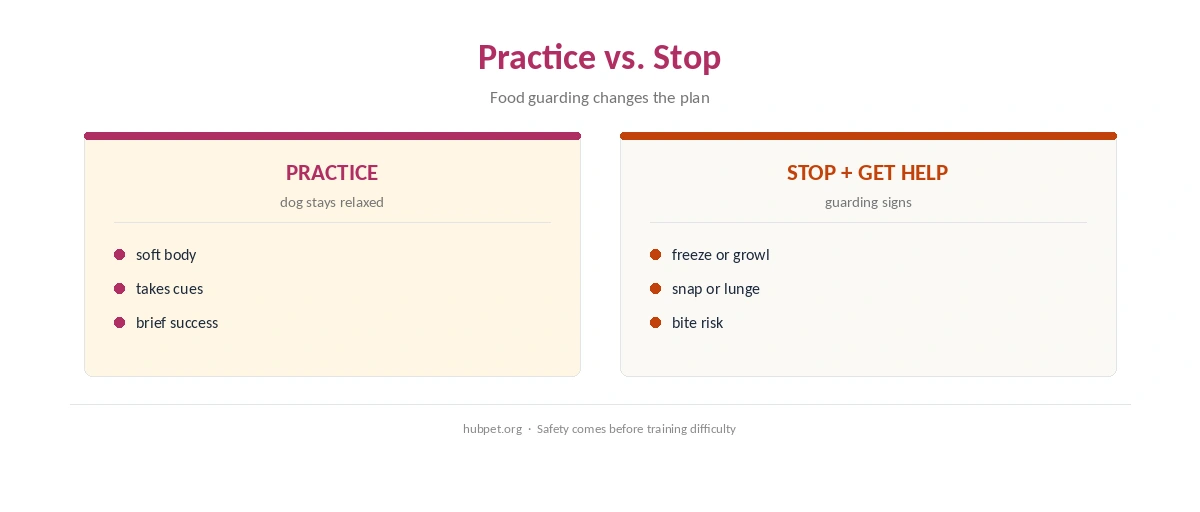
Use the meal as access, not as a threat. Do not grab the bowl away after release or crowd the dog while eating. If the dog freezes, stiffens, growls, blocks access, or shows other guarding signs, stop this exercise and use the safety steps in the resource-guarding guide.
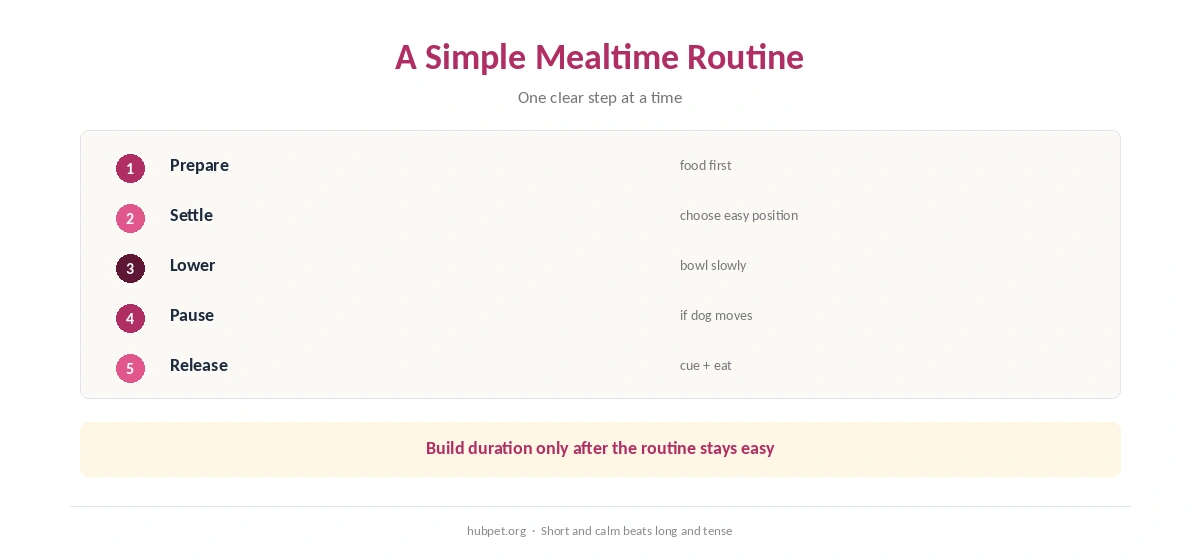
- Prepare the food before bringing the dog into the practice area.
- Ask for a familiar calm position or simply wait for four paws to stay still.
- Lower the bowl a short distance while the dog remains settled.
- Pause or raise it slightly if the dog moves toward the bowl.
- Place the bowl down, give the release cue, and let the dog eat.
- Repeat at later meals only while the routine stays easy and calm.
When Food-Wait Training Is Not the Right Exercise
How to train a dog to wait for food should never involve intimidation, physical correction, or taking food to test the dog. AVSAB 2021 states that aversive methods are not necessary for training. If a dog becomes worried around food, prioritize distance and management rather than insisting on a longer wait.
For impulse-control skills away from meals, practice leave it, drop it, and settling on a mat separately. Those skills can support daily manners without adding pressure at the food bowl.
If the dog is too excited to learn, review the balance between play and rest. For a calm alternative behavior, use reward-based redirection. For broad troubleshooting, common training mistakes covers cue timing and difficulty.
In a multi-pet home, feed animals with enough separation that one pet cannot rush another bowl. Use the multi-pet household checklist for resource placement. If guarding includes lunging, snapping, or bite risk, get qualified behavior help rather than practicing around the trigger. In a shared home, how to train a dog to wait for food should never require another pet to stand nearby as a distraction.
How We Research
HubPet reviewed these sources on October 11, 2026. We used the AVSAB Humane Dog Training Position Statement, 2021 and reaffirmed 2026, the AKC self-control training guide, accessed 2026, and reward-based principles consistent with our research process. No aversive method is recommended.
Start with a very short pause, lower the bowl only while the dog stays settled, and release quickly after success.
No. A sit can be convenient, but the useful skill is calm waiting for a clear release cue.
Pause the bowl-lowering step before release rather than grabbing food after the dog has been allowed to eat.
There is no useful universal duration. Build a brief, reliable pause that fits daily life instead of chasing a long hold.
Stop the exercise and create space. Growling can be a guarding warning, so management and qualified behavior support are safer than confrontation.
The Bottom Line on How to Train a Dog to Wait for Food
How to train a dog to wait for food is about a clear cue, an easy pause, and a release that predicts access to the meal. Keep it brief, reward-based, and separate from any attempt to challenge resource guarding.