
This article is general information, not veterinary advice. If your pet seems unwell, is in pain or may have eaten something harmful, contact your vet or an animal poison control line right away. Read our vet disclaimer.
Is scolding an effective way to stop bad behavior? It may interrupt an animal in the moment, but interruption is not the same as teaching a safer replacement. The AVSAB current position page reaffirms its 2021 Humane Dog Training Position Statement. AVSAB recommends reward-based methods for dog training and behavior modification and says trainers should not use aversive methods.
A 2020 study of 92 companion dogs also found poorer welfare indicators in dogs trained with aversive-based methods than in dogs from reward-based schools. The PLOS ONE study by Vieira de Castro and colleagues, 2020 does not test every household scolding scenario, but it supports the broader welfare concern around aversive training.
Is Scolding an Effective Way to Stop Bad Behavior? Short Answer
Is scolding an effective way to stop bad behavior over time? It is a weak teaching plan because it often tells the pet what not to do without clearly teaching what to do instead. A better sequence is management, a specific alternative behavior, and immediate reinforcement. The redirection guide shows that pattern in practice. For a separate evidence-focused question, see are Some Pets Just Stubborn by Nature?.
For dogs, this matches the principles in positive reinforcement training and basic dog training at home. Is scolding an effective way to stop bad behavior when the pet does not know the replacement? No; teach the replacement directly. For cats, the same logic favors changing access and rewarding an acceptable alternative rather than startling or frightening the animal.
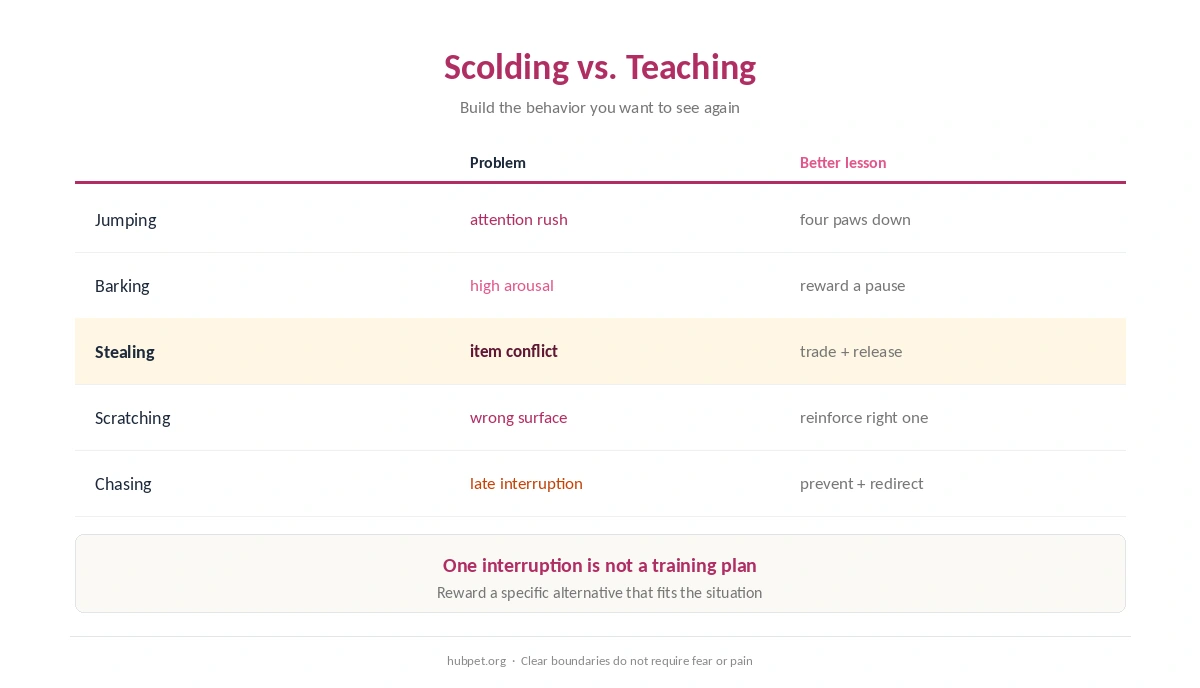
| Owner goal | Scolding may do | Better teaching step |
|---|---|---|
| Stop jumping | Interrupt briefly | Reward four paws down or a station |
| Stop barking | Add more arousal | Reward a pause and reduce trigger difficulty |
| Stop stealing | Create conflict around item | Manage access and teach a trade |
| Stop scratching | Startle or displace behavior | Provide and reinforce a suitable surface |
| Stop chasing | Interrupt too late | Prevent rehearsal and reinforce another response |
Why Is Scolding an Effective Way to Stop Bad Behavior a Misleading Question?
First, “bad” describes the human result, not the animal’s motive. A dog may bark because of fear, frustration, excitement, or a learned pattern. The article on selective barking at other dogs shows why different contexts can produce similar outward behavior.
Likewise, a pet is not necessarily acting out of revenge. The spite myth guide explains why observable triggers and consequences are more useful than assuming moral intent. Scolding based on a motive you have not established can miss the actual problem.
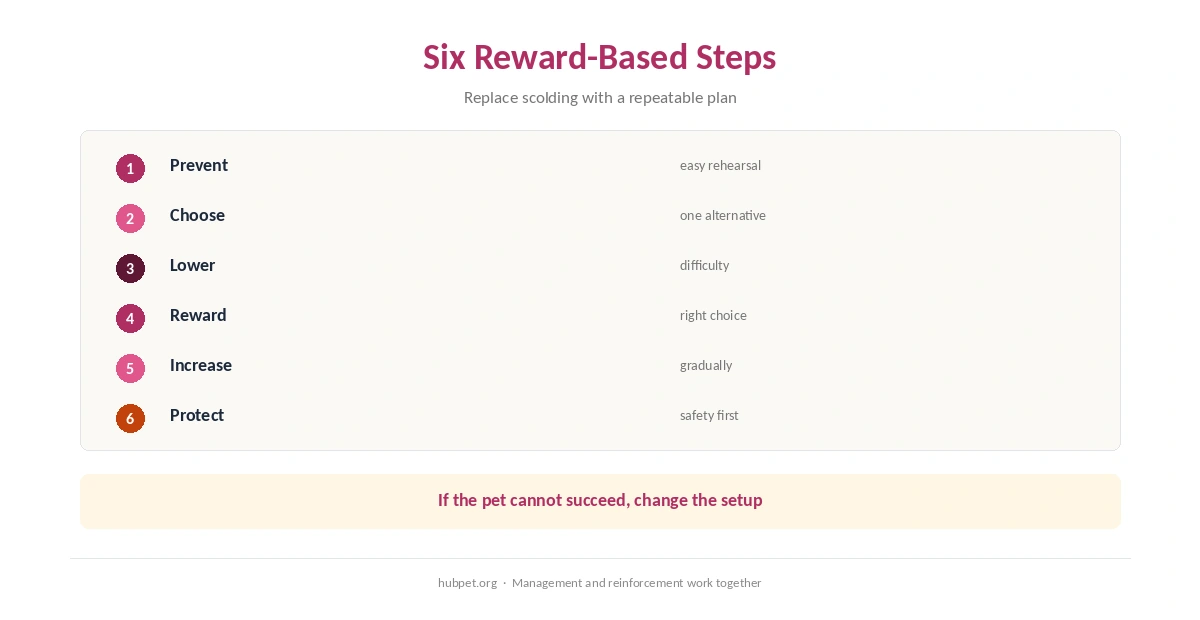
- Prevent easy rehearsal of the unwanted behavior while you train a replacement.
- Choose one observable behavior that can work in the same situation.
- Make the first practice easier than the real-life problem.
- Reward the replacement quickly and consistently when it occurs.
- Increase difficulty gradually instead of waiting for failure.
- If fear or aggression is involved, add distance and prioritize safety over obedience.
For barking, use the approach in reward-based quiet training. For item release, use drop-it training. The leave-it guide covers disengaging before the dog takes an item.
What to Do Instead of Scolding
If the problem happens around visitors or the door, change the setup first. The doorbell guide uses a rewarded station or other clear behavior instead of correction. If fear or aggression drives the behavior, add distance and prioritize safety. The fear-confidence guide emphasizes distance and choice.
For cats, unwanted behavior often improves when the environment gives a more appropriate outlet. Use the sofa-scratching guide for scratching and the counter-management guide for access problems. Management is not “letting the pet win”; it prevents repeated practice while a better pattern develops.
When resources trigger growling or guarding, do not scold or grab the item. The resource-guarding guide recommends management and voluntary trades. Established aggression or bite risk should move the plan out of casual home practice.
When to Get Professional Help
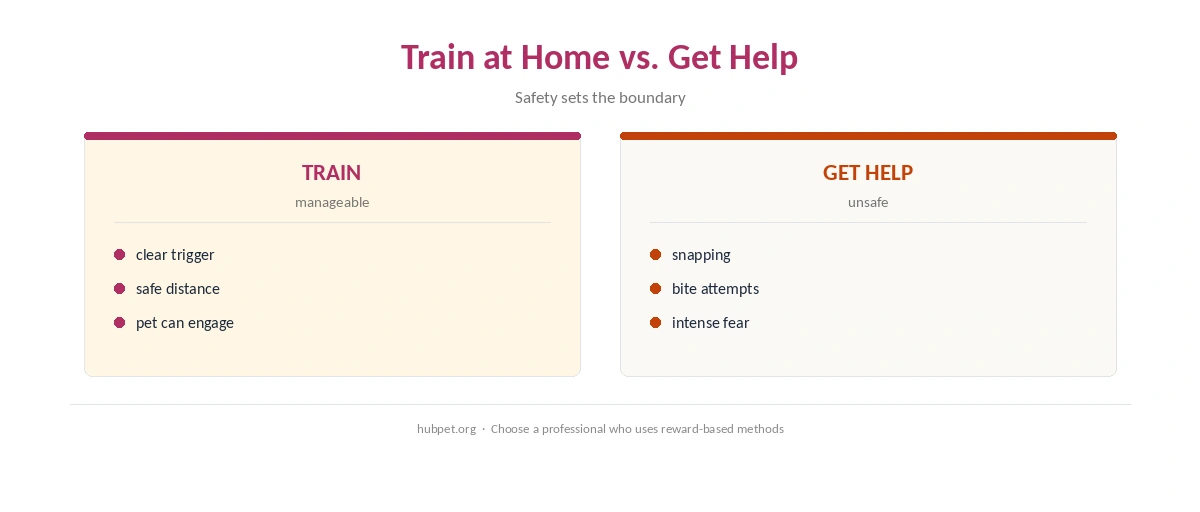
Seek a reward-based professional if the behavior involves snapping, bite attempts, escalating aggression, intense fear, or a problem the household cannot manage safely. Asking “is scolding an effective way to stop bad behavior?” is especially risky when safety is uncertain. If the behavior changed suddenly, a veterinary check can also be appropriate because health changes can alter behavior.
When choosing help, avoid programs built around intimidation or “alpha” status. The dominance-theory guide explains why dominance is not a general training recipe. You can teach clear boundaries with reward-based methods, management, and routines rather than fear or physical correction.
How We Research
HubPet reviewed these sources on October 11, 2026: the AVSAB position statements page, the current 2021 Humane Dog Training Position Statement reaffirmed by AVSAB in 2025, and the Vieira de Castro et al. PLOS ONE study, 2020. Read more about our research process.
It may interrupt some behavior in the moment, but interruption does not by itself teach a reliable replacement.
Manage the trigger, ask for an easy alternative behavior, and reward that response promptly.
No. Provide an appropriate scratching surface, manage access, and reinforce use of the better option.
No. Clear boundaries and routines can be taught with management and reinforcement rather than intimidation or pain.
Seek a qualified reward-based professional when fear, aggression, bite risk, or repeated failure makes home practice unsafe or ineffective.
The Bottom Line: Is Scolding an Effective Way to Stop Bad Behavior?
Is scolding an effective way to stop bad behavior? It can interrupt, but it does not reliably teach the replacement you want and can add fear or conflict. Manage the setup, reinforce a clear alternative, and get reward-based professional help when safety is uncertain.