
This article is general information, not veterinary advice. If your pet seems unwell, is in pain or may have eaten something harmful, contact your vet or an animal poison control line right away. Read our vet disclaimer.
How to train a dog to leave it starts by rewarding the choice to disengage from something, not by frightening the dog away from it. Dogs Trust leave-it guidance teaches the dog to look or move away from a low-value item and then receive a better reward. That approach matches the AVSAB 2021 humane-training position, which recommends reward-based methods for dog training.
Leave it is different from grabbing an item already in the dog’s mouth. If the dog has picked something up, use a trade or a separate drop cue rather than reaching into the mouth. How to train a dog to leave it safely also depends on prevention. Use pet-proofing your home and trash-can pet-proofing so training is not the only barrier between a dog and something dangerous.
How to Train a Dog to Leave It Step by Step
Start in a quiet room with a boring, safe training item and a reward the dog values more. Keep the first sessions easy enough that the dog can discover the right choice. This is the same reward-based foundation used in the positive-reinforcement guide and basic dog training at home.
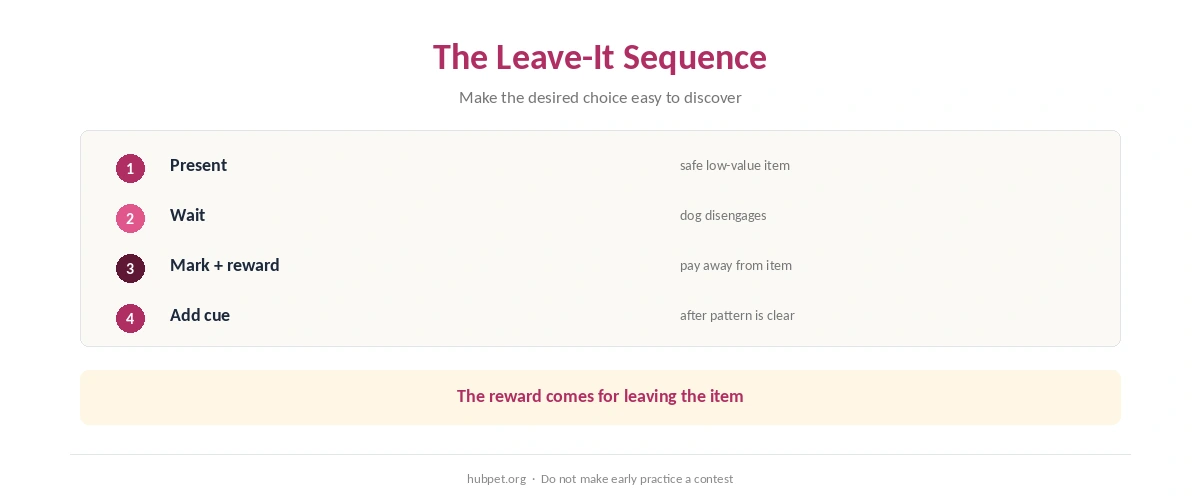
- Hold or place a low-value safe item where the dog can notice it but cannot grab it.
- Wait quietly. The moment the dog looks away or moves away, mark that choice and reward from your other hand.
- Repeat until the dog reliably disengages from the item without extra prompting.
- Add the cue “leave it” just before the dog is likely to disengage, then mark and reward the response.
- Practice with the item on the floor while you can still prevent access without jerking the leash or scolding.
- Increase difficulty gradually by changing the item, distance, and environment one variable at a time.
A successful repetition is one where the dog can hear the cue, disengage, and return attention to you without conflict. If the dog keeps diving for the item, the setup is too difficult. Reduce the challenge rather than repeating the cue louder. The common training mistakes guide explains why cue repetition can become background noise.
How to Train a Dog to Leave It Around Real-Life Distractions
Only move into harder environments after the cue works in easy ones. How to train a dog to leave it around distractions is to stage safe practice before real hazards appear. Start with ordinary low-risk items before dropped food, wildlife scent, or sidewalk debris. Counter-surfing prevention, begging management, and post-walk paw care all work better when management reduces grabbing opportunities.
| Stage | Make it easier | Ready to progress when… |
|---|---|---|
| Item in hand | Keep it still and low value | Dog disengages without pawing or mouthing |
| Item on floor | Cover or block access calmly | Dog can look away on cue |
| Different room | Increase distance from the item | Response stays prompt and relaxed |
| Outdoor practice | Use safe staged distractions first | Dog can respond before reaching the object |
Build other useful skills alongside leave it. Recall training helps move the dog away from a distraction, doorway waiting adds impulse-control practice, and mat settling gives the dog a clear alternative place to be. Rotate these skills in short sessions instead of drilling one cue until the dog loses interest.

What Not to Do When Teaching Leave It
Do not use leash corrections, yelling, painful or frightening equipment, physical intimidation, or other aversive methods to make the dog avoid an item. AVSAB’s 2021 position recommends reward-based methods for all dog training and rejects aversive methods. How to train a dog to leave it should teach a predictable choice, not fear of the handler.
Do not intentionally stage dangerous objects as practice items. Keep toxic food, medications, sharp objects, and other hazards physically inaccessible. If a dog may have swallowed something harmful, training is no longer the task: follow the emergency-signs guide and the relevant toxic-food information in foods toxic to dogs.
When to Get Professional Help
Seek a qualified reward-based trainer or veterinary behavior professional if the dog freezes, growls, snaps, or guards items when you approach. Resource guarding is not a cue-compliance problem to solve by taking things away. If object grabbing changes abruptly or becomes compulsive, ask your veterinarian whether health factors need assessment; the 2015 AAHA behavior guidelines stress checking for medical contributors to behavior problems.
For dogs that become overaroused around visitors, doors, or walks, work on the trigger separately. the quiet-cue guide, the guest-anxiety guide, and loose-leash guidance can reduce the background arousal that makes any cue harder.

How We Research
HubPet reviewed humane leave-it training sources on October 11, 2026. We used Dogs Trust leave-it training, the AVSAB 2021 Humane Dog Training Position Statement, and Dogs Trust reward-based training guidance. Our research process explains why HubPet excludes aversive tools from training instructions.
Reward the dog for looking or moving away from a safe low-value item, then add the cue once that choice is predictable.
Leave it asks the dog not to take or approach something. Drop it is for releasing something already in the mouth.
No. If the dog cannot respond, reduce the distraction or increase distance and rebuild the behavior at an easier level.
No. Use safe staged items for training and keep real hazards physically inaccessible.
Do not force the issue or punish the growl. Use management and seek qualified reward-based help, especially if guarding is escalating.
The Bottom Line on How to Train a Dog to Leave It
How to train a dog to leave it is a progression from easy choices to harder distractions. Reward disengagement, add the cue after the pattern is clear, manage real hazards, and lower difficulty when the dog cannot respond. Humane training makes the cue a reliable skill instead of a confrontation.