
This guide offers general information, not individualized veterinary advice. For pain, distress, illness, sudden changes, or unsafe behavior, contact your veterinarian. Read HubPet’s veterinary disclaimer.
A waterproof washable dog bed sounds convenient, but those words describe different layers. However, a washable cover may still allow liquid to reach its foam core. Likewise, water-resistant fabric may repel a few drops while failing at a stitched seam. For wet paws, accidents or routine cleaning, you need to know which part blocks moisture and which part can go into a machine. This guide gives a layer-by-layer shopping test, a cleaning routine and a checklist for drying. It also distinguishes surface hygiene from a waterproof claim. Choose bedding that fits the dog’s actual resting position and chewing behavior, not just a headline on a product listing.
Identify exactly which bed layer stops liquid
Start with a cutaway diagram or written construction description. A typical layered bed includes a washable outer cover, a possible protective liner and a supportive inner core. Ask whether the barrier surrounds the whole core or only the top surface. Next, check zipper openings and stitched corners, since liquid may move through seams. If a seller only calls the top fabric water-resistant, do not assume the foam below stays dry. The cleanest design is one you can open, inspect and dry without exposing loose plastic or fragile seams to the dog. Remember that an absorbent top surface may feel pleasant while holding moisture close to skin.
| Product claim | What it may mean | What to verify |
|---|---|---|
| Machine-washable cover | Outer fabric can enter washer | Care temperature and closure |
| Water-resistant top | Repels limited surface splashes | Seams and prolonged wetness |
| Waterproof inner liner | Barrier wraps cushion core | Zipper opening and full coverage |
| Washable whole bed | Fill and shell can be laundered | Drying time and shape retention |
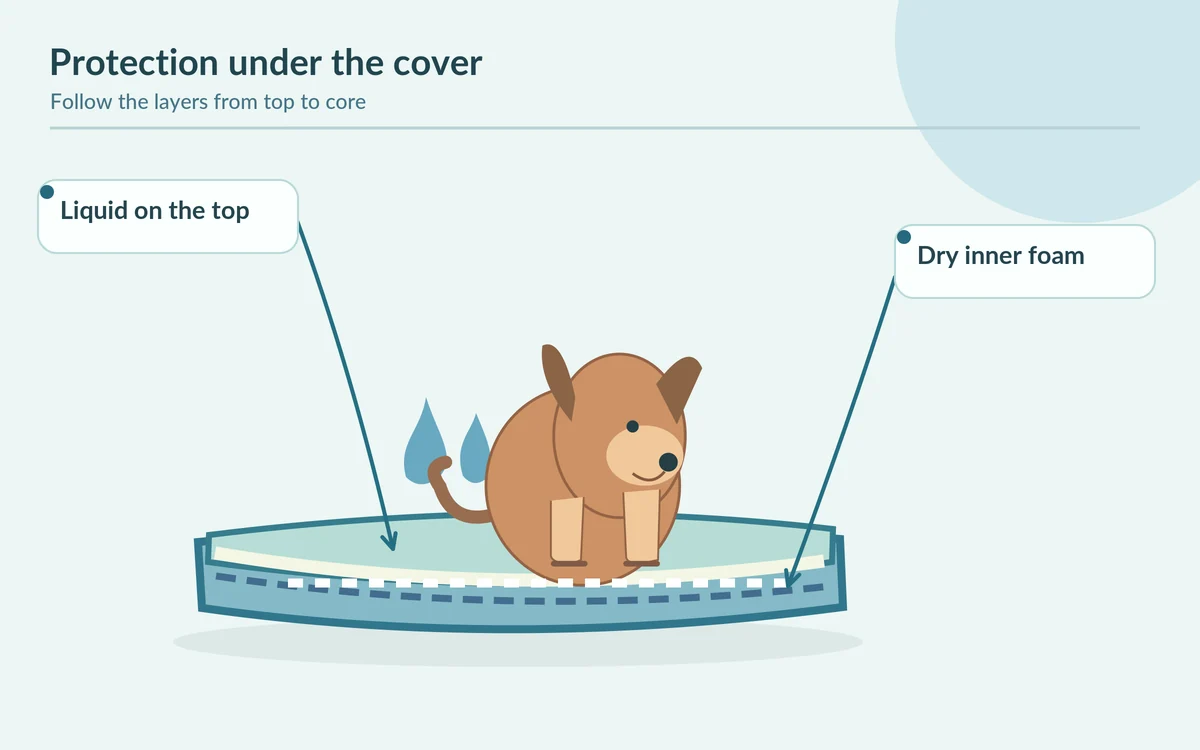
Separate cleaning steps from the waterproof label
The CDC recommends routine cleaning of dog bedding, often around once a week, or sooner when dirty. First, brush or vacuum loose hair outside the sleeping area. Then unzip the cover and inspect for moisture at the seams. Wash components only as the care tag allows. A foam core that cannot be machine-washed needs different handling from a removable textile cover. After cleaning, dry the entire assembly thoroughly before returning it to the dog. Reassemble only when both the surface and inner layers feel dry. Do not conceal a wet insert under a fresh cover.
Use a fragrance-free product if the dog has sensitive skin and the textile manufacturer permits it. However, avoid making up dilution recipes or mixing cleaning chemicals. The CDC advises following disinfectant labels and keeping pets away until surfaces are safe. If contamination involves urine or feces, clean the affected area promptly and consider whether the inner core must be replaced. Treat stubborn odor as a clue to hidden moisture, not proof that a product failed in every setting. The HubPet hygiene guide for larger beds covers room placement and wash-day logistics.
- Remove loose hair and inspect the bed before unzipping anything.
- Check the cover, liner and inner cushion for dampness separately.
- Follow care labels for washing and drying each component.
- Let the core dry fully, away from your pet and any cleaners.
- Inspect closures and reseal the dry liner before returning the bed.
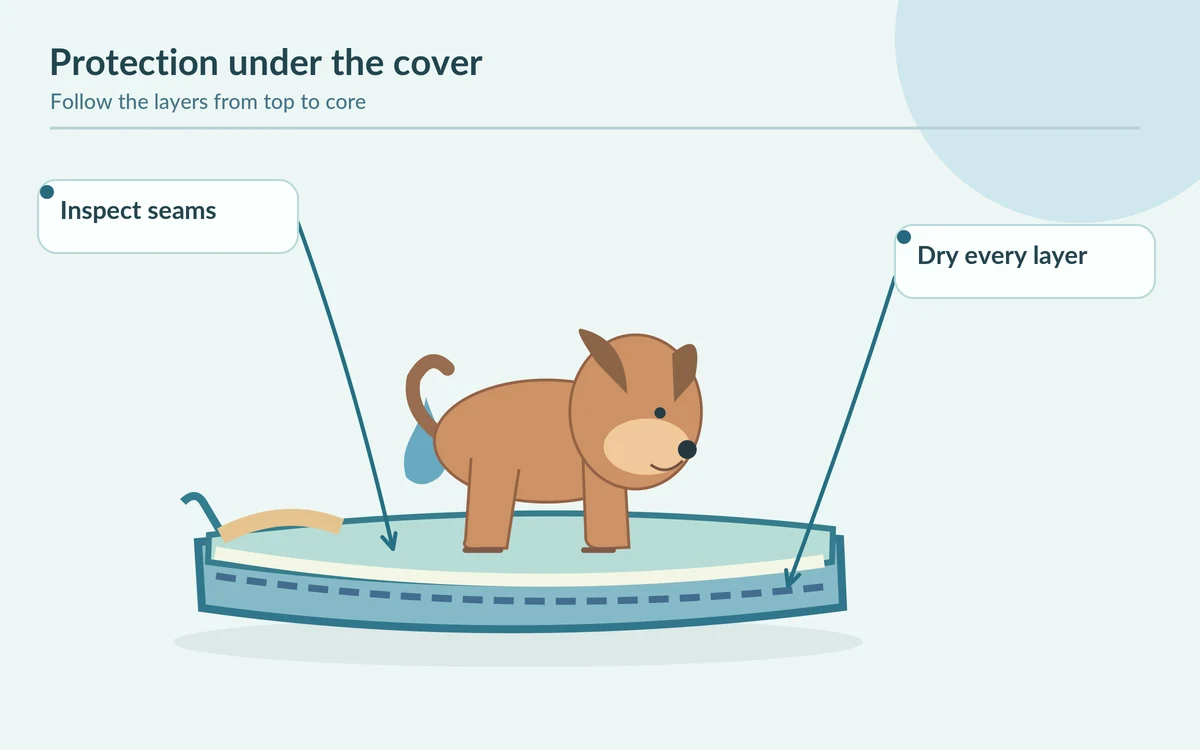
Test water management without exposing your dog
Before the dog uses a new bed, inspect its liner and openings. A small amount of clean water on a removable sample or outer edge may illustrate whether liquid beads or soaks in, but do not saturate a foam core. Instead, rely on construction details and the manufacturer’s instructions when uncertain. Check for stitching that crosses the protective membrane, unsealed zipper ends and folds that pool moisture. A liner can guard against occasional accidents but cannot compensate for poor cleaning or delayed drying. Also consider ventilation: a sealed barrier may change how warm a bed feels to the dog.
| Home situation | Prioritize | Watch for |
|---|---|---|
| Muddy paws | Quick-removal washable cover | Pile that traps grit |
| Occasional accidents | Protected inner core and spare cover | Liquid tracking through seams |
| Senior dog with limited mobility | Low entry and stable dry surface | Thick bolsters or slick liner |
| Dog that chews fabric | Durable seams and supervision | Exposed membrane or zipper pull |
Inspect the bed after laundry and daily use
Repeated washing can stress stitching, backing and water barriers. Check the protective layer for cracks, peeling, pinholes or damp patches after use. If a plastic coating flakes off, remove the bed because a dog could ingest pieces. Also look at the zipper: it should close without a gap that lets the dog reach the liner. The outer cover must not slide away from the mattress during normal turning. If you choose a crate-sized model, verify that its thickness does not reduce comfortable headroom. The adult crate guide helps with voluntary introductions to a new resting surface.
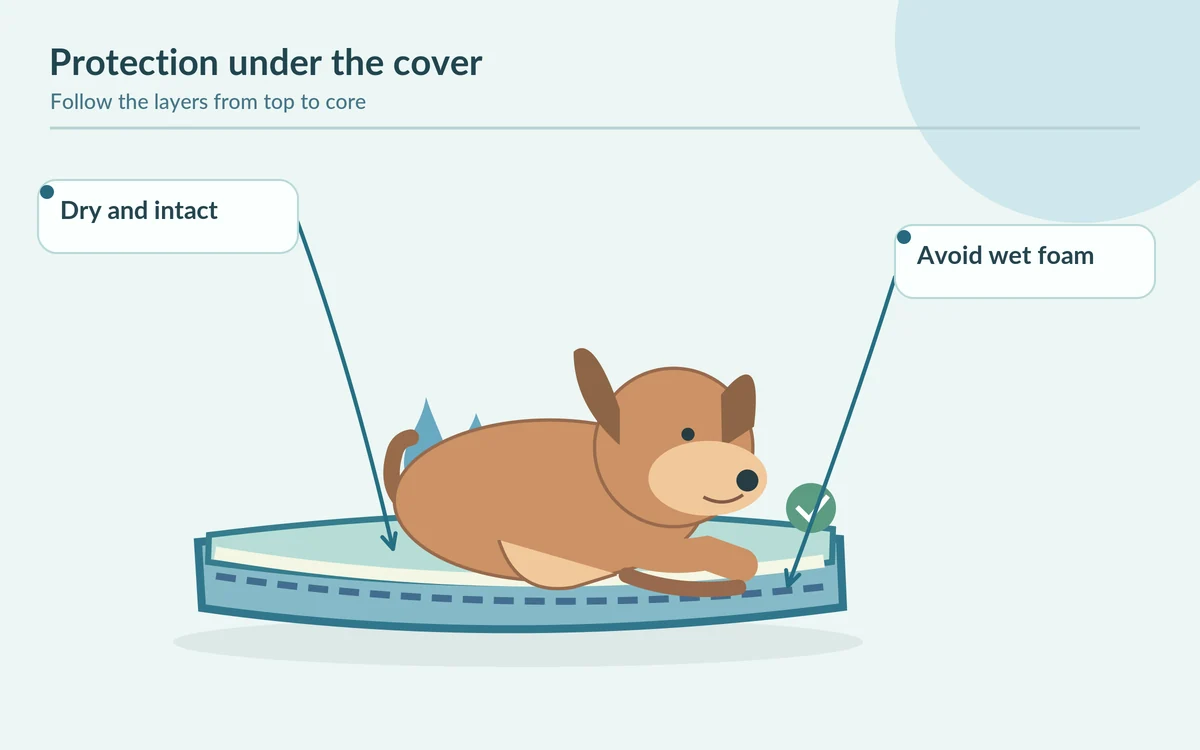
Build a realistic backup plan before purchasing. A spare cover means your dog can keep a dry place to rest while laundry finishes. If an inner core cannot be cleaned and remains smelly after an accident, replacement may be safer than repeated attempts to mask the odor. Meanwhile, keep the sleeping area away from damp doors, heating vents and direct harsh sun. Observe whether your dog chooses the bed freely or avoids it after the first night. Slick surfaces, trapped warmth and unstable edges can make a waterproof design less comfortable despite an impressive product description.
When to Call Your Vet
Contact a veterinarian for unexpected repeated accidents, urine dribbling, pain, skin redness or changes in drinking and toileting. Bedding can help manage mess but does not diagnose or treat the cause. If your dog chews and swallows liner fragments or foam, seek prompt advice. Do not keep a contaminated bed in use while waiting for medical assessment.
How We Research
We use CDC cleaning and disinfection principles, VCA guidance about unsafe damaged bedding, and Cornell’s resting-space requirements. Waterproof performance varies by construction and care instructions; we do not claim laboratory leak tests. See our research standards for the way we evaluate practical product claims.
Sources
CDC — Cleaning and Disinfecting — source consulted for the relevant section of this guide.
VCA — Bedding Safety — source consulted for the relevant section of this guide.
Cornell — Dog Resting Areas — source consulted for the relevant section of this guide.
No. Washability describes cleaning, while waterproofing depends on the barrier construction. Look for an inner liner that protects the core and check openings.
Water-resistant fabric may repel minor splashes; a waterproof barrier is designed to stop liquid under its stated conditions. Seams and zippers still matter.
Only when the specific maker permits it. Many products have removable machine-washable covers but foam inserts that require other care.
The CDC uses weekly cleaning as a useful general schedule. Clean sooner after visible dirt or accidents and follow the product label.
Check for trapped moisture or contamination inside the core. Fully dry components and replace damaged or uncleanable inserts when necessary.