
A cool-feeling mat may be pleasant on a warm afternoon, but it cannot make a dangerously hot room safe. Cooling dog beds differ in how they move or absorb heat, how long their effect lasts, and what happens if a dog chews or punctures them. This is a buying guide, not a treatment plan for overheating; see our veterinary information disclaimer.
Start with the environment and the dog. Reliable air conditioning or a shaded ventilated space, fresh water, and rest matter more than product branding. Once these are in place, a correctly sized bed can give your dog an optional place to rest rather than a forced cooling intervention.
Understand what a cooling bed actually does
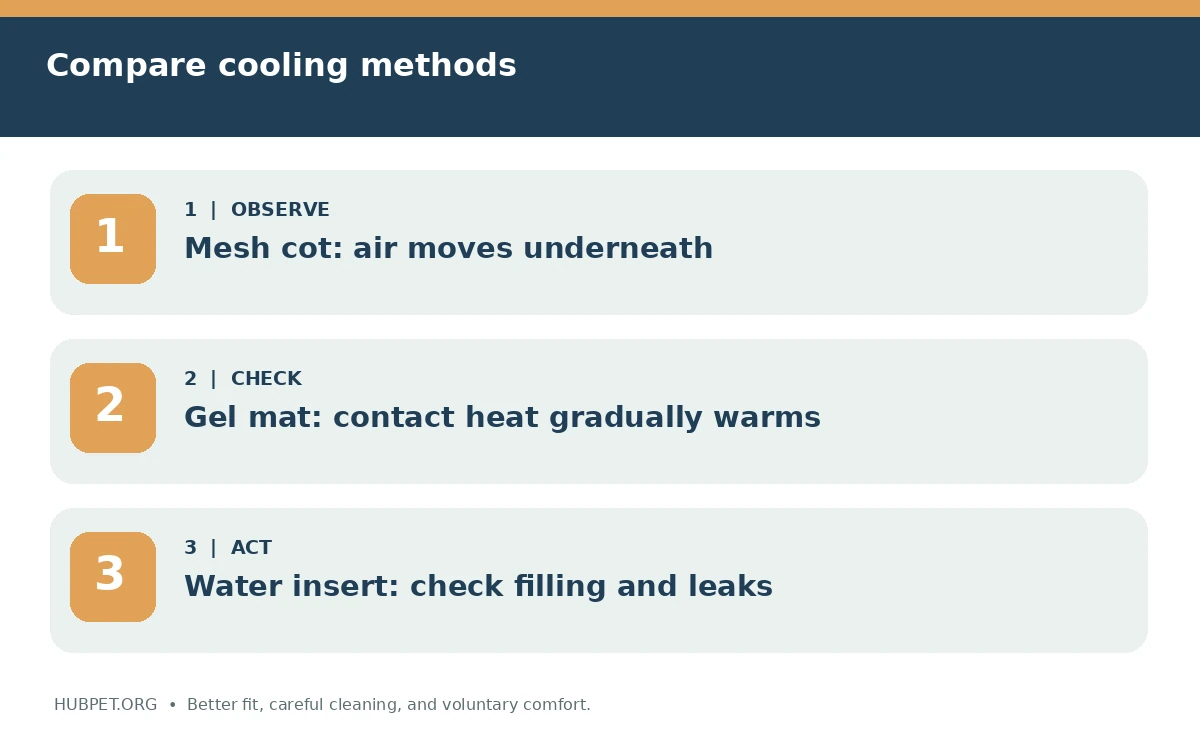
An elevated mesh cot may improve airflow beneath the dog. A gel mat can absorb some heat through contact and then gradually warm. Water-filled or refrigerable inserts depend on initial temperature and their materials. None supplies unlimited cooling, so ask how each design returns to a comfortable starting state.
Ignore unsupported claims of exact cooling hours unless the maker gives realistic conditions. Room temperature, body contact, shade, and the dog’s willingness to lie on the pad all affect experience. Compare measurable details such as airflow, instructions, washability, and whether you can see damaged parts.
Start with the dog and room temperature
Dogs with thick coats, short noses, excess weight, age-related limitations, or breathing problems can struggle more during hot weather. Ask your veterinarian about individual risk. Test the room at the time your dog usually rests, including sunlight through nearby windows and heat reflected from floors.
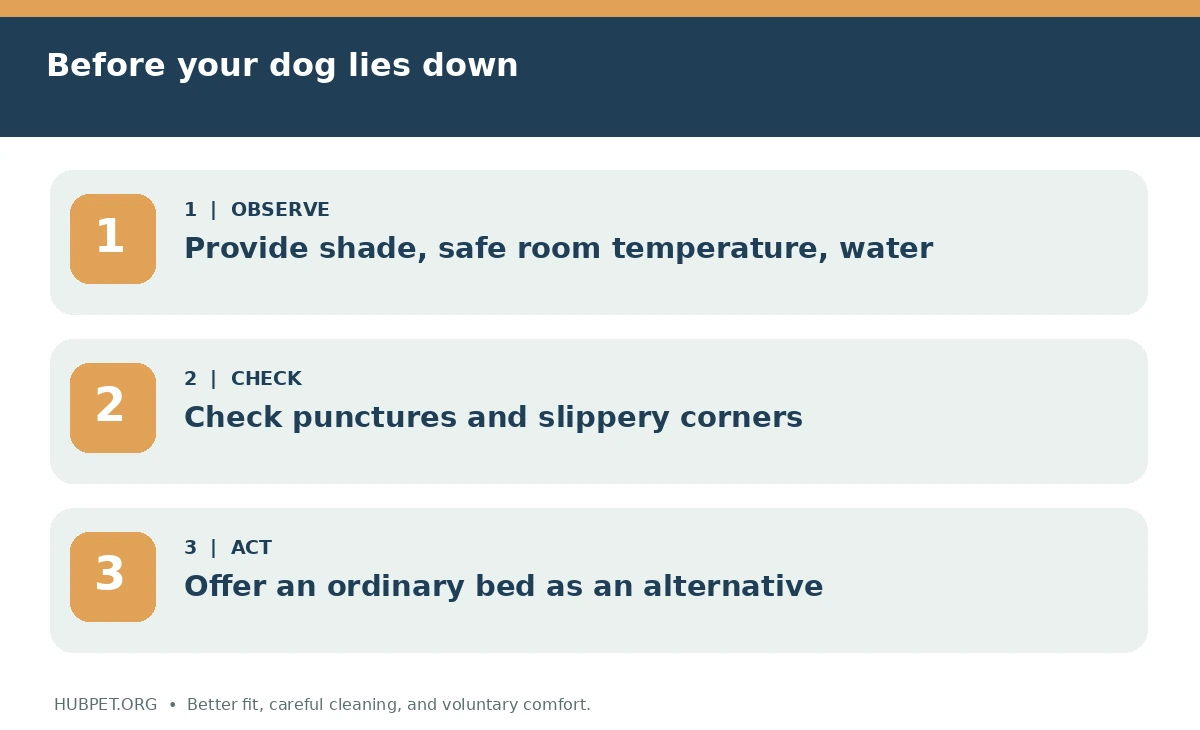
Move the resting area away from direct sun and make fresh water available. Provide a normal place to lie as well, because dogs need the ability to walk away from a surface that feels too cold or uncomfortable. Never secure a dog to a cooling mat.
Compare elevated cots with contact mats
A stable cot with breathable fabric may fit a porch or tile-floor room if the dog can step up safely. Inspect frame corners, tension, and foot grip. The benefit is airflow and a raised resting surface, not an inherently colder core or a promise of protection during a heat wave.
A thin contact mat works differently: it sits on another floor or bed, and its temperature changes as a dog uses it. Test for slipping, curling corners, and punctures. These two constructions answer different problems and should not be described as interchangeable.
Examine gel and water containment before buying
Read the product label to find out what is inside the pad. Check whether the manufacturer describes puncture response, cleaning, and replacement. Dogs that pick at seams, scratch intensely, or swallow soft materials need an especially cautious approach; a damaged fill layer must not remain accessible.
Do not assume a gel is harmless merely because a listing says non-toxic. An unknown quantity swallowed from a ruptured mat requires a veterinarian or poison-control consultation. If puncture risk is high, a simple breathable bed in a properly cooled room may be a better practical choice.
Measure the usable cooling surface
Measure the dog in a natural resting pose, including stretched legs if that is common. A mat that fits only curled-up sleeping may leave much of the body off the intended surface. Check stated dimensions against the usable flat area, not the packaging or thick decorative border.
For raised frames, include step-up height and edge clearance. Dogs with joint stiffness or uncertain balance may dislike tall cots even if airflow is good. If mobility is a concern, use a lower accessible option and seek advice before assuming a particular design supports painful joints.
Introduce the new surface by choice
Put the mat in an ordinary resting location rather than waiting for a hot day. Encourage curiosity with a treat beside the bed and allow the dog to step on or off voluntarily. Some dogs dislike smooth vinyl, wobbly frames, chilled inserts, or unusual sounds during movement.
Observe how the dog chooses between the mat and a regular bed. A refusal does not require a training battle; it may indicate that the texture or location is unpleasant. Reposition or choose a different construction rather than holding the dog on the surface.
Keep a maintenance and damage routine
Wipe or wash the surface as directed after normal use, and dry any fabric completely. Check gel pads for bulges, leakage, tacky residue, or fraying. Examine cot frames for wobble and worn feet so the bed does not slide across tile while the dog stands up.
Storage conditions matter too. A mat left in strong sunlight may start hot, while a damp folded fabric can develop odors. Inspect before each seasonal reuse. Replace damaged units rather than trying to seal a puncture with tape or improvised adhesive near a chewing dog.
Recognize when the environment needs urgent attention
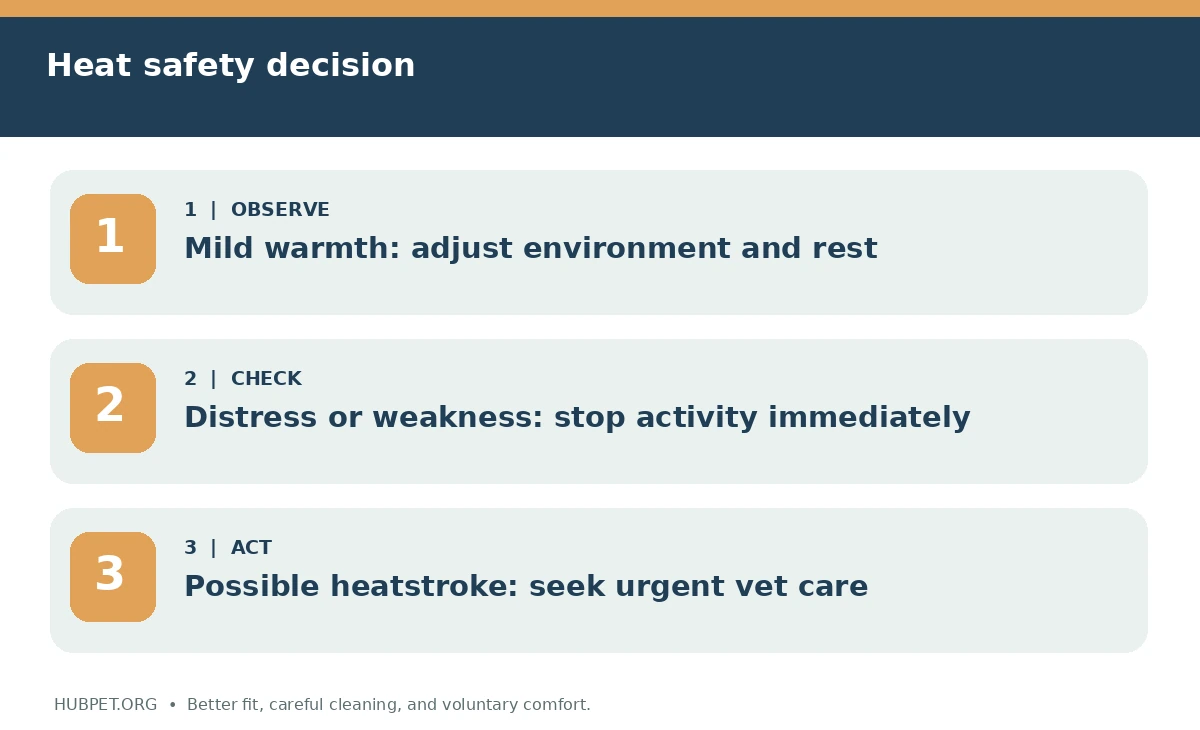
Heavy or unusual panting, weakness, wobbling, vomiting, or collapse can signal a heat emergency. Move the dog to a cooler place, contact emergency veterinary care, and follow professional first-aid instructions. Do not rely on a cooling bed to reverse suspected heatstroke.
For routine prevention, shorten outdoor activity in hot weather, offer shade and water, and supervise vulnerable dogs. The product is an optional comfort tool inside a wider heat-safety plan, never permission to leave a pet in a hot room, enclosed vehicle, or sun-exposed yard.
How We Research
Our editorial process compares animal-welfare guidance and veterinary advice relevant to this specific dog-bed construction. We compare the use case, practical safety limits, sizing, maintenance, and alternatives. This is editorial buying guidance, not hands-on product testing; no particular maker or product receives our endorsement. We do not diagnose an individual dog or claim veterinary approval. Sources were reviewed on October 26, 2026. Read more about HubPet and our editorial approach. This guide does not replace veterinary advice for your individual animal.
Sources
American Kennel Club: How Cooling Mats for Dogs Can Help Beat the Heat. Accessed October 26, 2026.
VCA Animal Hospitals: Hot Pets: Not Cool. Accessed October 26, 2026.
American Kennel Club: The Importance of a Good Dog Bed. Accessed October 26, 2026.
No bed can replace safe temperatures, fresh water, shade, and prompt veterinary care for suspected heatstroke. Treat cooling bedding as an optional comfort aid.
Puncture and ingestion risks matter. Avoid accessible fill for dogs that damage soft products, and ask a veterinarian if any of the contents may have been swallowed.
No. Mesh cots mainly allow airflow under the resting surface, while gel or water designs rely on contact and stored temperature differences.
Offer it in a safe, cool room alongside a regular bed. Observe voluntary use, comfort, slipping, and damage without forcing the dog to remain on it.
Unusual heavy panting, weakness, stumbling, vomiting, distress, or collapse require urgent veterinary guidance, especially after heat exposure.