
Waterproof dog boots are often sold as a simple solution for rain, wet grass, or salty sidewalks. Their usefulness depends on paw shape, a stable sole, comfortable closure, and the surface underneath. A boot that twists or slips can be less useful than careful route selection and paw cleaning. Measure each paw, conduct a short indoor trial, and inspect the feet afterward before trusting boots on a longer outing. These are general equipment and home-care considerations, not individualized veterinary care. If a dog has pain, injury, or ongoing skin problems, contact a veterinarian and read our veterinary disclaimer.

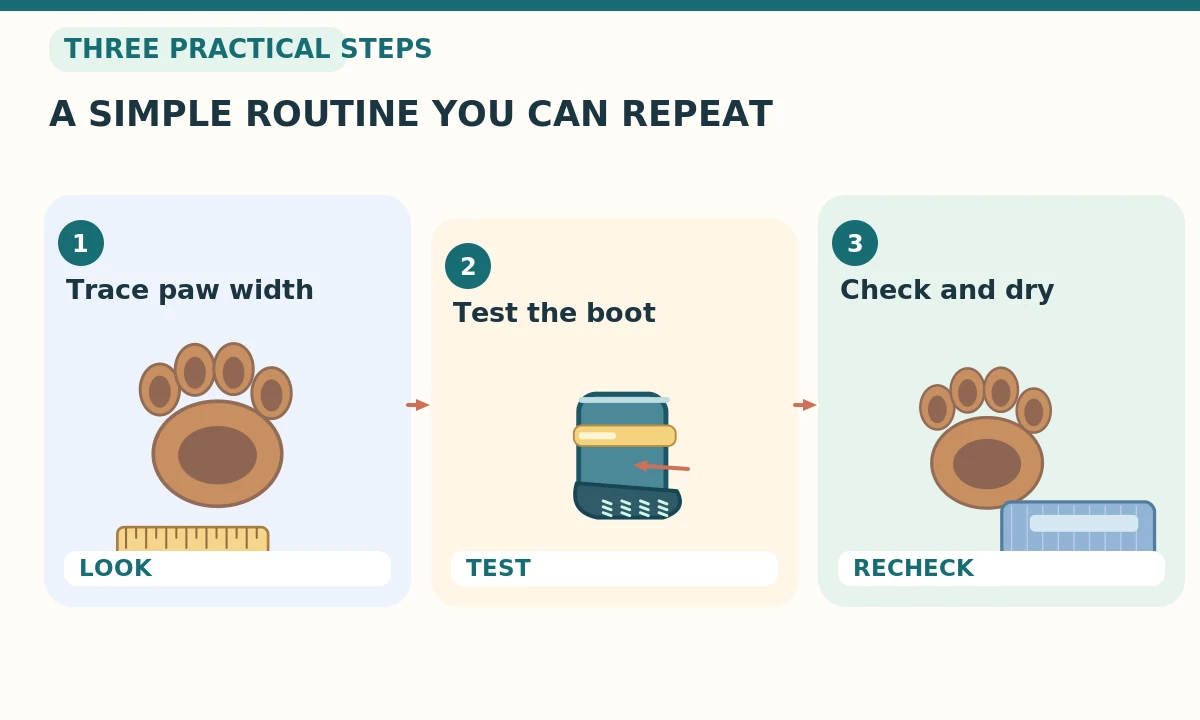
Trace the paw while weight is on it
Have your dog stand naturally on paper and gently mark the width of the paw at its widest point. Measure the tracing with a ruler, then compare it with that manufacturer’s size chart. Do not use the length of the leg as a substitute for paw width. Front and rear paws may differ, and long fur can make a tracing appear larger. If a dog pulls a foot away, practice voluntary paw placement rather than gripping or forcing it. A boot needs room for normal toe spread without allowing the foot to slide sideways inside.
Inspect toe space and ankle shape
The toe box should let nails and toes rest naturally while standing. Look for pressure at the tip, wrinkles under the paw, or a stiff edge striking the dewclaw area. A tall cuff can give more coverage but may rub when the dog bends the wrist or hock. Check the correct position of each fastening strap and whether it crosses a sensitive joint. Secure is not the same as tight. Remove boots immediately if you see a changed gait, limping, repeated shaking, or persistent attempts to dislodge one boot.
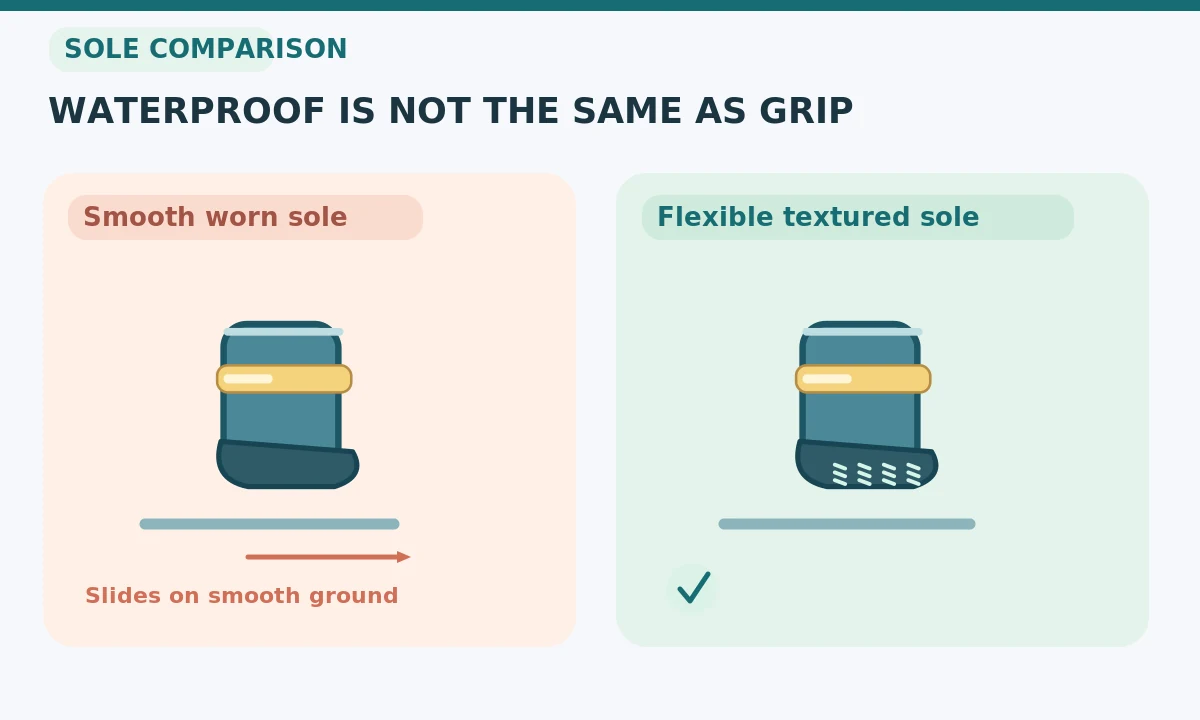
Study the sole before considering waterproof claims
Turn the boot over and inspect the actual contact surface. Shallow decorative lines may offer less grip than a flexible textured sole on a smooth wet floor. A sole that is too stiff can stop the paw flexing normally. Test on a dry nonslip mat, then on a controlled damp surface without puddles, slick stairs, or traffic. Watch every foot rather than assuming all four boots behave the same way. Waterproof material does not create slip resistance on ice, algae, mud, or polished tile. Choose safer walking routes when traction is uncertain.
Test closure retention without overtightening
Fasten the boot according to the instructions and allow several relaxed steps. Check whether the heel stays seated when the dog turns and walks backward. If the boot falls off, consider a different shape or size before tightening the strap further. Check the skin and fur directly beneath the cuff after a few minutes. Long straps can flap against the legs or catch debris, so secure loose ends as the maker directs. Avoid leaving boots on during unattended rest or play. A swallowed strap fragment can become a hazard.
Teach the movement gradually indoors
Present one boot as a neutral object and reward the dog for sniffing it. Let the dog place a paw near or into the opening voluntarily, then remove it before frustration begins. Some dogs lift their feet exaggeratedly at first. Work on a secure, non-slip surface and add short movement sessions only when the dog is relaxed. Never drag a dog forward to make it walk in boots. Increase time gradually, observe all four feet, and end before irritation develops. A boot is useful only when the dog can move comfortably in it.
Treat wet-weather hazards separately
Rainwater, road debris, ice melt, and cold ground require different decisions. Boots can reduce contact with harsh sidewalks, but they do not make a dangerous walk safe. After exposure to salt or deicers, wash or wipe exposed legs and paws as advised by veterinary sources. Inspect between toes for irritation, cracks, and trapped grit. If boots become soaked inside, take them off and dry the feet. Do not assume every waterproof fabric blocks water entering over the cuff. For icy conditions, prioritize safe ground and reduced exposure.
Remove and dry each boot after the walk
Unfasten straps gently rather than pulling a tight boot over nails. Look inside for pebbles, dirt, wet seams, and detached lining. Rinse dirt from the outside as directed by the label, then open the cuff for complete drying. Never store damp boots in a zipped tote between outings. Check your dog’s paws for red marks, unusual odor, or tenderness. A clean towel may be preferable for a short mild-weather walk if the dog rejects boots. Choose footwear based on observable comfort, not the most aggressive advertising claim.
Know when to stop using a pair
Replace or stop using boots with smooth worn soles, exposed rigid edges, torn straps, or a twisted internal liner. Retest fit after coat trimming or weight change, because the cuff and toe box may sit differently. If a dog repeatedly stumbles, refuses to bear weight, or has a sore foot, stop and seek veterinary assessment when appropriate. An intact boot should stay oriented on the paw without excessive compression. Keep spare foot-cleaning supplies ready so a failed boot does not force you to continue on an unsafe route.
How We Research
Our editors use established veterinary and animal-welfare guidance about clothing fit, paw safety, gentle handling, visibility, and cleaning. Product dimensions, physical diagrams, and material checks are inspection criteria. They are not independent laboratory ratings, medical endorsements, or promises that any specific product prevents harm. We do not claim to have tested or ranked named brands. Read more about HubPet.
Sources
American Kennel Club — Choosing Dog Boots — professional guidance informing the selection, safe-use, or hygiene checks above.
Cornell University College of Veterinary Medicine — Winter Safety Tips — professional guidance informing the selection, safe-use, or hygiene checks above.
ASPCA — Cold Weather Safety Tips — professional guidance informing the selection, safe-use, or hygiene checks above.
VCA Animal Hospitals — Cold Weather Safety for Your Pets — professional guidance informing the selection, safe-use, or hygiene checks above.
Use a paw tracing made while your dog stands with weight on the foot. Measure the widest part and compare with the maker’s own chart.
No. Tight cuffs may rub or impair movement. A secure fit comes from the right shape, size, and fastening arrangement, not maximum strap tension.
They may offer coverage but cannot guarantee traction on ice. Avoid slippery conditions and evaluate the real sole and your dog’s gait.
The sensation is unfamiliar. Introduce boots slowly on a stable indoor floor. Stop if discomfort, slipping, or an abnormal gait continues.
Yes. Water or grit may enter through a cuff. Inspect and dry the paws, including between toes, when the boots come off.