
An outdoor dog bed is a place for supervised rest, not a substitute for indoor shelter or protection during extreme weather. Sunlight, wet ground, wind, insects, and uneven flooring can change the usefulness of a bed in one afternoon. Begin by checking your yard or porch at the hours your dog normally uses it. Review our veterinary information disclaimer for health and weather concerns.
This buying guide focuses on what you can evaluate before purchase: drainage, secure footing, airflow, easy cleaning, and a dog’s ability to leave the resting spot. You will also learn why the label outdoor does not make a bed safe in heat, cold, rain, or unattended conditions.
Choose the location before choosing materials
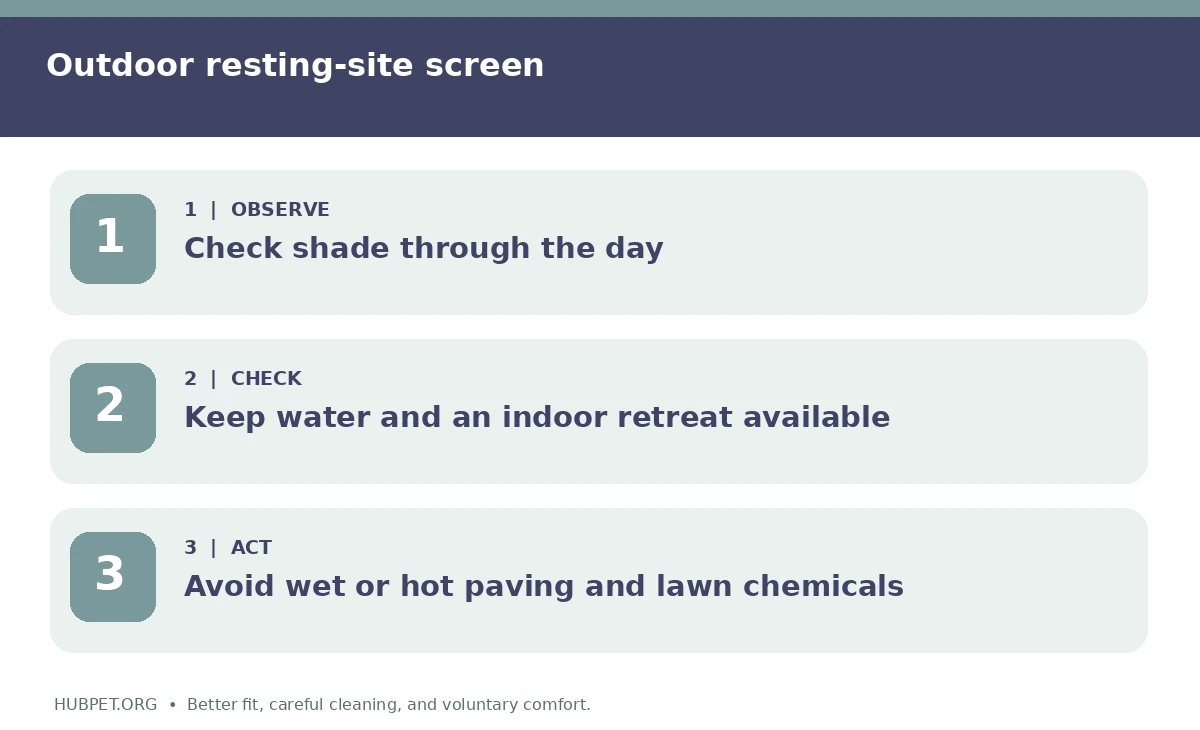
Watch where sun, wind, and rain reach the proposed resting area throughout the day. A bed beside a wall can be shaded in the morning and fully exposed later. Find a stable, level place away from hot paving, standing water, garden chemicals, grills, and vehicle traffic.
Make sure the dog can walk away from the bed and reach fresh water. Do not select a product that requires leaving the animal outdoors in uncomfortable weather. A yard bed should supplement safe indoor living and supervision, not justify long confinement outside.
Compare a raised cot with a low outdoor pad
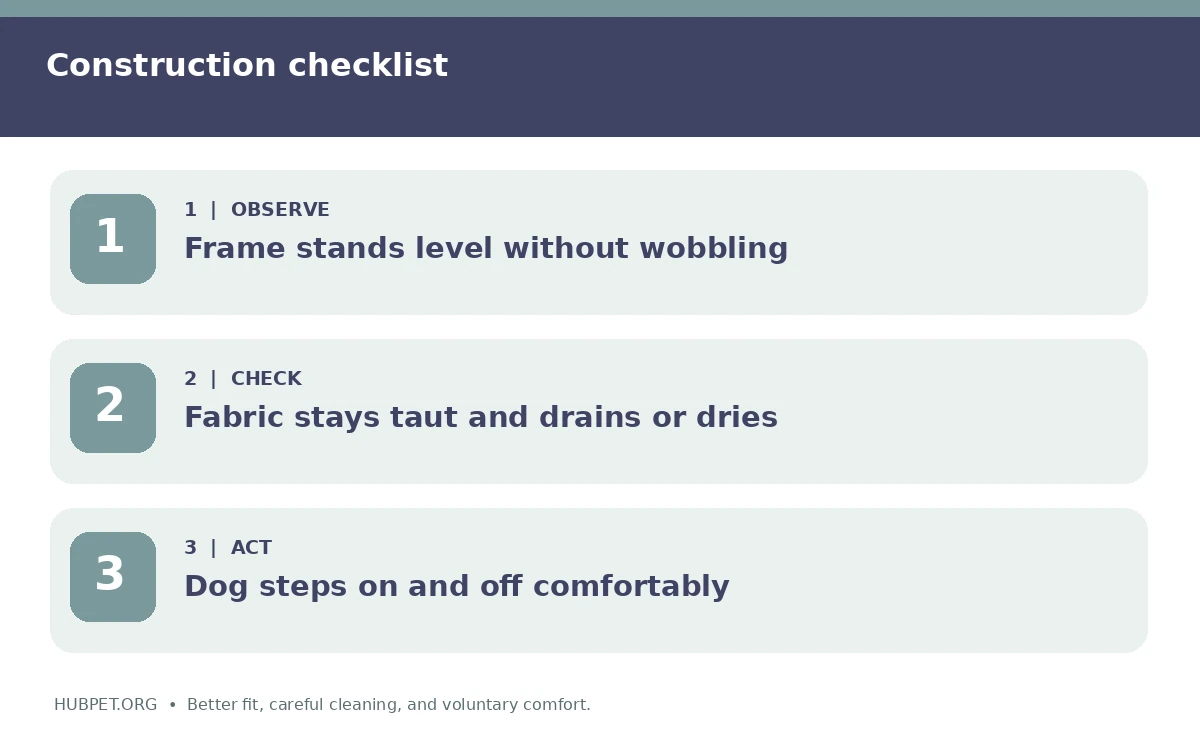
A mesh cot can allow airflow underneath while lifting the resting surface off damp ground. Confirm that the frame stands firmly on your actual decking or patio, not just a showroom floor. Check foot caps, joints, fabric tension, and whether the dog can step onto it without hesitation.
A low washable pad may be easier for a dog with limited mobility and can be simpler to store. Its underside may become damp on grass or concrete, however. Pick the construction based on the resting site and the dog’s movement rather than assuming higher always means cooler or safer.
Understand weather-resistant versus weatherproof
Water-resistant fabrics can slow light rain but may still absorb moisture at seams or edges. Weatherproof marketing may refer only to the frame rather than the padding. Look at whether the bed has an absorbent insert and how easily water can leave the material after an unexpected shower.
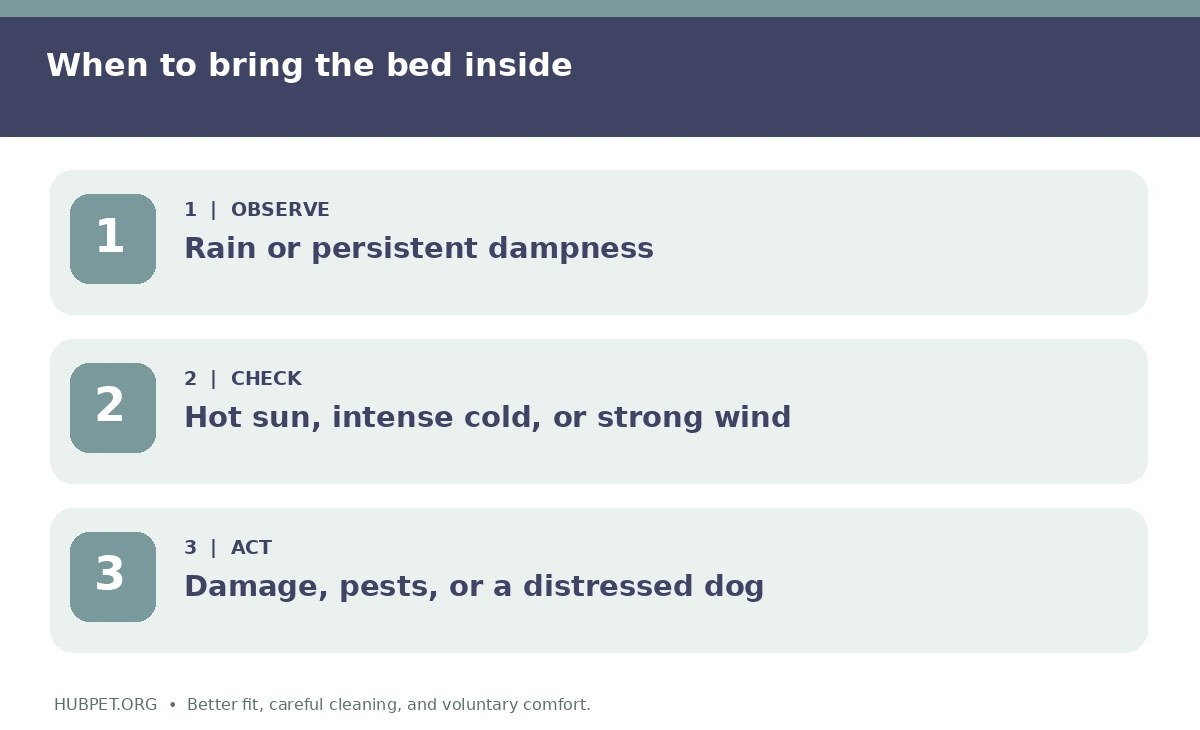
Bring soft bedding indoors when heavy rain approaches. A soaked cushion can be difficult to dry fully, and persistent dampness makes for an unpleasant place to sleep. Do not rely on a cover that traps moisture underneath while the surface appears dry.
Check heat risks at the resting surface
Touch nearby paving and the bed surface after several hours of sun before inviting your dog to lie there. Dark textiles, metal hardware, and vinyl can warm in direct sunlight. Provide shade and cool water, and move outdoor activities to safer times when temperatures climb.
No outdoor mattress prevents heatstroke. Excessive panting, weakness, staggering, or distress after heat exposure requires immediate movement to a cooler location and urgent veterinary advice. Dogs with short noses or medical limitations may tolerate heat poorly even when humans feel comfortable.
Plan for cold, wind, and rainy seasons
A cushioned porch mat offers little shelter from wind or freezing temperatures. Animal welfare guidance favors keeping dogs indoors during cold weather. If a dog spends time outdoors, provide appropriate protected shelter; a decorative raised cot alone is not a weather shelter.
Do not put electric blankets or improvised heaters outside near moisture. Bring your dog and bedding indoors during harsh conditions. The real selection question is whether the product can serve as a dry daytime resting option, not whether it can make bad weather acceptable.
Fit the height and size to the dog
Measure the dog while lying naturally, including the space needed to stretch or shift. Compare that with the usable fabric rather than the overall frame dimensions. Check that legs or shoulders will not press against hard rails and that the surface stays taut while the dog settles.
For an elevated bed, observe whether your dog can step on and off without a jump. A surface that shifts or tips can frighten a pet and increase fall risk. Mobility issues call for a low-access option and individual veterinary guidance if stiffness or pain appears.
Clean dirt, pollen, and moisture routinely
Choose fabrics you can brush or wash according to the manufacturer’s instructions. Inspect the underside for mildew odor, mud, insects, and damaged stitching. An outdoor bed needs regular attention even when it looks clean from above, especially after rainfall or lawn work.
Keep cleaning products away from your dog while treating the surface. Rinse when instructed and allow complete drying before use. Consider whether replacement fabric, a removable cover, or simple frame disassembly makes practical upkeep possible across seasons.
Create an end-of-day storage rule
Choose a covered storage area where the dry bed can rest without pests or standing water. Foldable frames must lock securely when opened again. Check bolts, feet, and fabric tension after carrying the bed between patio and home, particularly if more than one person moves it.
If a dog refuses to settle outside, do not force use for the sake of an expensive purchase. Move the dog to an indoor resting place. A good outdoor setup gives a choice during pleasant weather and disappears from the plan when conditions turn unsafe.
How We Research
Our editorial process compares animal-welfare guidance and veterinary advice relevant to this specific dog-bed construction. We compare the use case, practical safety limits, sizing, maintenance, and alternatives. This is editorial buying guidance, not hands-on product testing; no particular maker or product receives our endorsement. We do not diagnose an individual dog or claim veterinary approval. Sources were reviewed on October 26, 2026. Read more about HubPet and our editorial approach. This guide does not replace veterinary advice for your individual animal.
Sources
ASPCA: General Dog Care. Accessed October 26, 2026.
Humane World for Animals: How to Keep Pets Warm in Cold Winter Weather. Accessed October 26, 2026.
American Kennel Club: The Importance of a Good Dog Bed. Accessed October 26, 2026.
An outdoor bed does not provide adequate shelter from temperature extremes, wind, or rain. Bring dogs indoors and follow animal welfare guidance on safe housing.
An elevated mesh design can provide airflow under the surface. Actual comfort depends on shade, air temperature, materials, and your dog; it cannot prevent heatstroke.
Prioritize surfaces that dry promptly and follow clear cleaning instructions. Examine the seams, frame, and underside rather than trusting broad weatherproof claims.
Soft padding may hold moisture, even with a resistant cover. Bring it under shelter, dry every wet layer, and replace parts that stay damp or develop odors.
Test it on the intended surface, watch your dog step on and off voluntarily, and check frame feet, joints, and fabric tension for sliding or tipping.