
How to judge water-resistant collar materials without overlooking seams, buckles, skin contact or drying. This guide concerns equipment choices, not medical diagnosis. For individual pain, injury or persistent skin problems, consult a veterinarian and read our veterinary information disclaimer.
Ask what “waterproof” actually covers
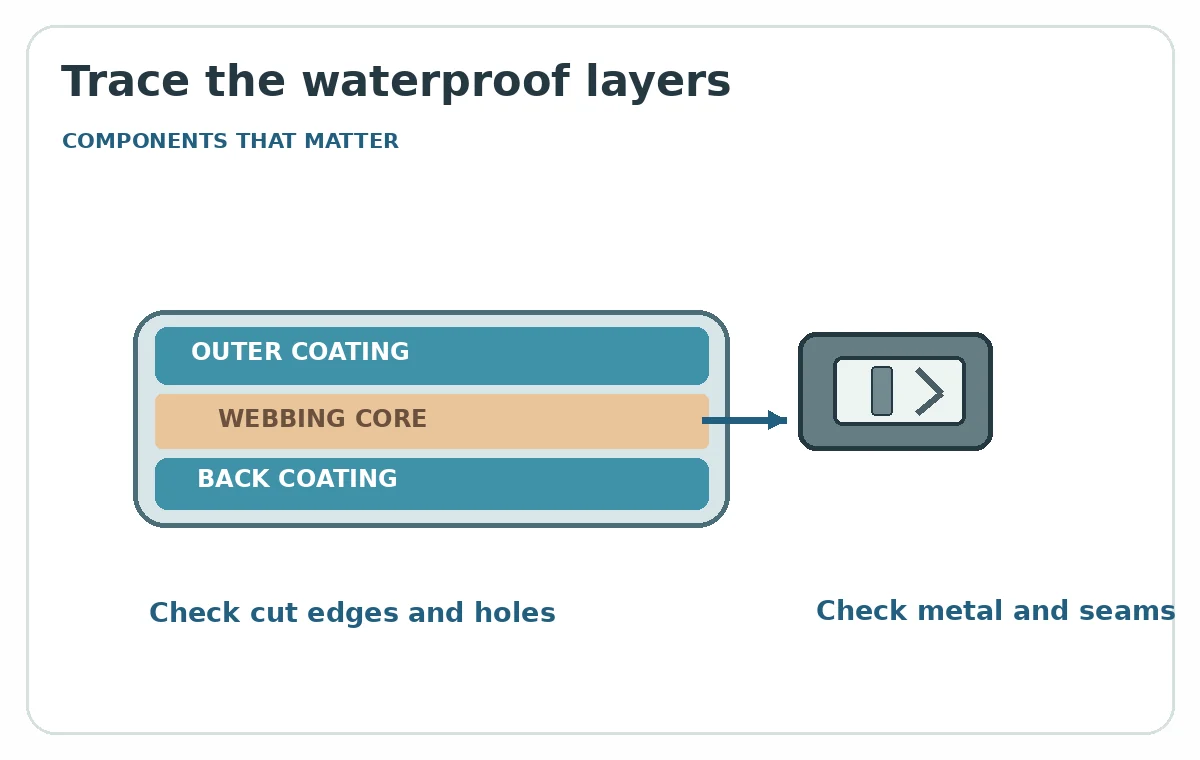
A waterproof strap and a waterproof finished collar are not identical claims. Coated webbing may repel water while a stitched label, metal buckle, rivet or integrated light remains vulnerable. Look for written information about the strap construction, attachment method and components that can corrode or trap grit. BioThane describes its branded material as polyester webbing with a TPU or PVC coating. That describes the webbing, not independent safety testing of every consumer collar. Separate information about the material from information about the finished product before comparing options.
Inspect the coated edge and the holes
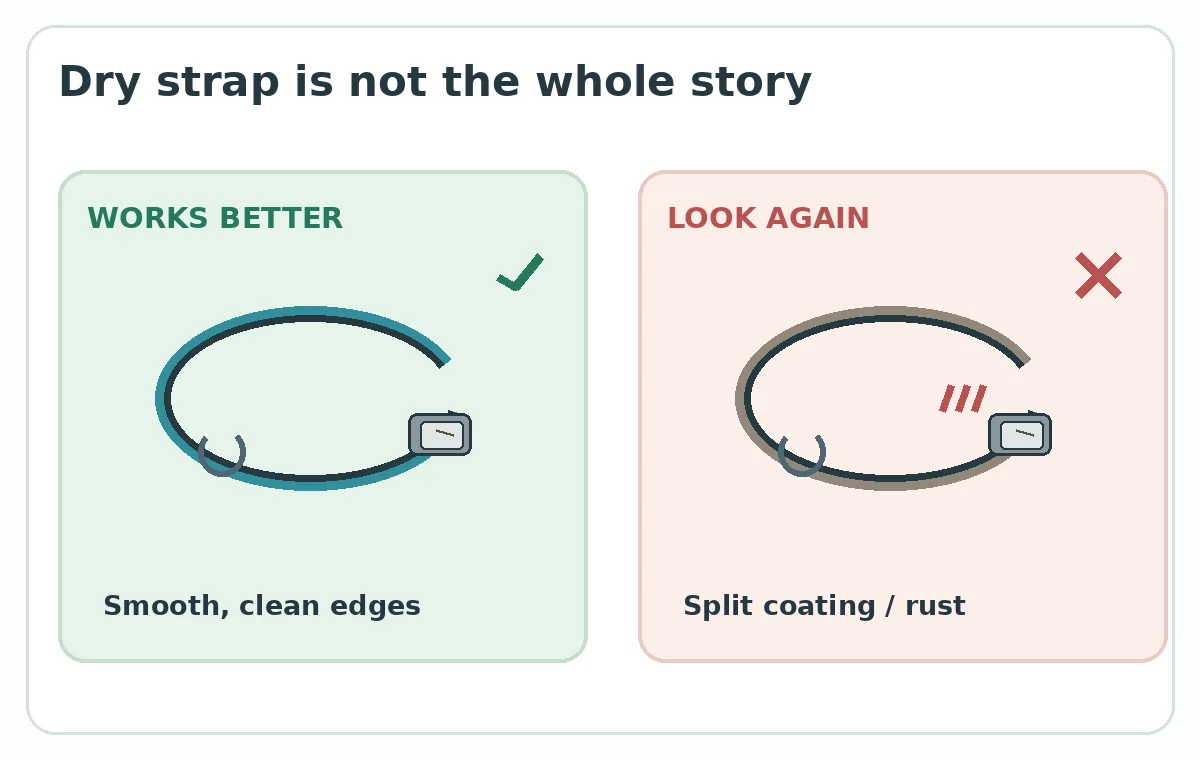
Run a finger along the entire strap edge; it should feel smooth, without sharp ridges or peeling coating. Check adjustment holes and the area around rivets because the construction is interrupted there. Bent metal, exposed fibers and a split coating deserve attention. A glossy surface may wipe clean easily, but it can still have a hard corner that rubs the dog’s neck. If the collar becomes sticky, cracked or rough after repeated wear, replace it instead of covering the defect with tape. Examine the inner face too, where moisture and dirt touch skin.
Choose hardware for the environment
Saltwater, wet sand and frequent rinsing create a different maintenance burden than an occasional rainy walk. Inspect the buckle tongue, snap hinge, D-ring weld and any screws for corrosion, looseness or grinding movement. A product description that names stainless steel or brass hardware is informative but does not prove every small part uses the same alloy. Strong-looking metal cannot compensate for a weak attachment to the strap. Test the fastener by hand before each outing and replace a collar if the ring twists, the rivet lifts or the buckle fails to close smoothly.
Check neck fit after the collar gets wet
Some coated straps do not absorb water the way woven fabric does, yet the dog’s coat underneath may become soaked and change shape. Recheck fit on the animal after swimming, rinsing and drying, rather than assuming a single measurement remains perfect. A flat collar should sit securely without pressing into the neck; RSPCA describes the two-finger fit check as a practical starting point. Move long fur aside to find trapped sand or reddened skin. Never tighten a strap to stop it rotating if doing so leaves pressure marks. Use a walking harness for dogs that pull.
Compare coated webbing with nylon and leather
Nylon is usually flexible and familiar, but a tightly woven strap can hold water and dirt until washed and dried. Leather changes with prolonged soaking and requires care suited to its finish. Coated webbing often wipes quickly, although its flexibility, feel and surface friction depend on coating type and thickness. A thin strap that folds may rub; a very stiff one may bridge across a narrow neck. Choose by actual comfort, durability of attachment points, adjustability and cleaning access rather than treating one material as universally superior.
Rinse gently instead of disinfecting by guesswork
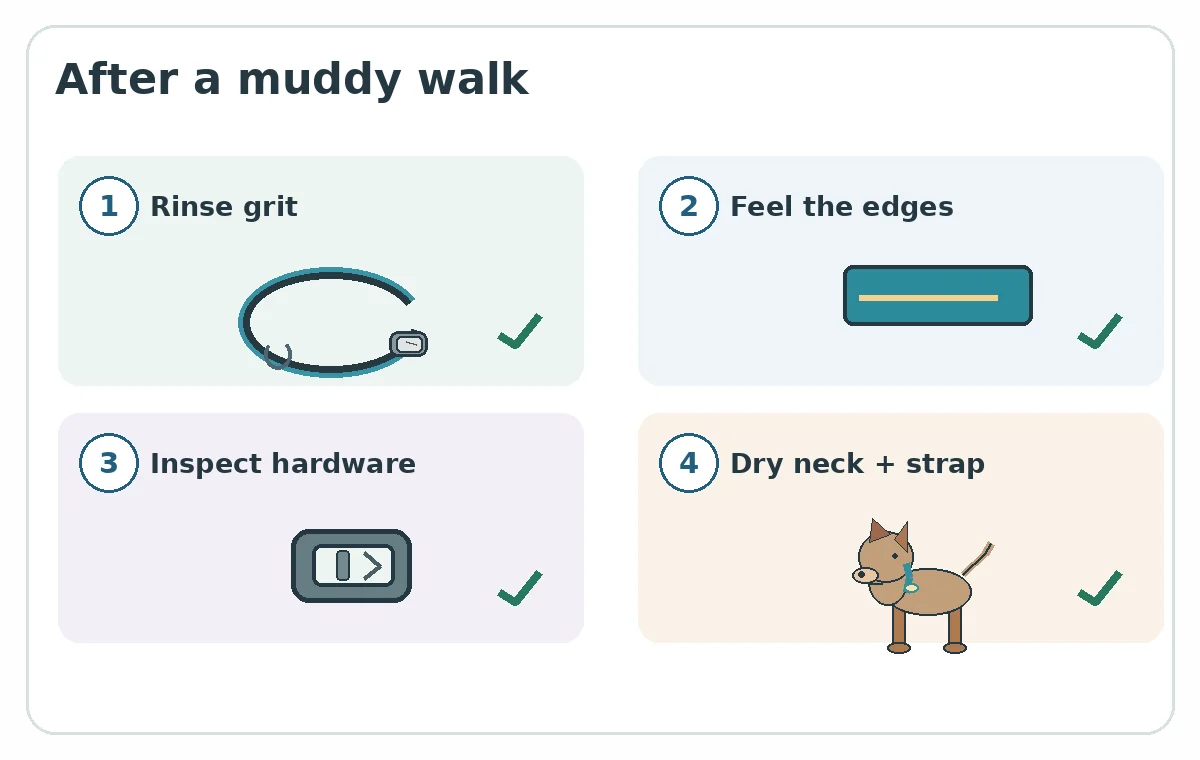
After a muddy outing, take the collar off in a secure place and rinse away grit with lukewarm water. Use mild soap only when compatible with the maker’s instructions, then rinse completely and towel dry. BioThane’s official guidance lists warm water and soap for cleaning its coated webbing. It also warns that certain chemicals, including DEET, may damage some coatings. Do not improvise strong chemical mixtures or scrub the collar with an abrasive pad. If the product carries electronic parts, use its specific cleaning directions rather than soaking the entire collar.
Dry the skin as well as the equipment
A collar that feels dry on the outside can sit over a wet neck and keep sand or moisture against the coat. After swimming or bathing, allow the skin and fur to dry while the dog is safely managed. Check beneath the throat and around the buckle for irritation or a persistent odor. A rash is not proof that the material itself caused a reaction: fit, friction and damp debris may also contribute. If redness, broken skin or discomfort continues, stop using the collar and seek veterinary advice instead of switching repeatedly between cleaning chemicals.
Plan for safe walking and identification
Water resistance does not make a collar escape-proof, chew-proof or suitable for restraining a hard puller. Check head-to-neck proportions and consider a well-fitted harness for leash control. If the collar holds an engraved ID plate, ensure the plate does not have sharp fasteners. After outdoor swimming, confirm that tags remain attached and readable. A floating collar is not a life jacket; a glowing collar is not a substitute for supervision. On trips, carry a dry spare so you can replace equipment that fails an inspection immediately.
Use an inspection that fits your routine
Set the collar on a towel and trace five areas: inner surface, outer coating, holes, buckle and ring attachment. Flex a small section gently and look for coating cracks or a change in color around folds. Check every rivet without twisting it aggressively. Wash off residue, dry the dog, verify adjustment and then test the closure before leaving home. A quick photo of wear points helps reveal deterioration over time. When you see peeling, a sharp edge or a loosening fastener, replace the whole item; do not rely on a home repair for restraint hardware.
Distinguish everyday comfort from durability claims
Manufacturers can publish tensile strength for raw webbing, but this is not automatically a measured failure strength for the complete collar. BioThane notes that the polyester core supplies webbing strength; buckles, seams and assembly remain separate components. Avoid inferring a safe working load from a marketing phrase such as heavy-duty or a single laboratory material number. Fit, inspection and humane handling remain important on every walk. A collar is useful only if it stays comfortable on the animal and the entire assembled product works as intended.
How We Research
We evaluated waterproof dog collars against veterinary, humane-equipment and published manufacturer-material guidance, focusing on fit, hardware, observable wear, cleaning and the distinction between component and product claims. These are research-based editorial criteria, not first-hand laboratory testing or an endorsement of a retail brand. We excluded punitive training tools and avoided presenting generalized sizing as individual medical advice. See our editorial approach. Sources reviewed October 28, 2026.
Sources
BioThane Coated Webbing Corporation, Frequently Asked Questions about BioThane. Read original guidance. Accessed October 28, 2026.
VCA Animal Hospitals, Collar and Harness Options for Dogs. Read original guidance. Accessed October 28, 2026.
RSPCA Australia, What equipment should I use when teaching my dog or puppy to walk on a leash?. Read original guidance. Accessed October 28, 2026.
American Kennel Club, Finding and Choosing the Right Dog Collar for Your Dog. Read original guidance. Accessed October 28, 2026.
Safety note: Keep damaged equipment away from pets. For sudden neck pain, choking, skin injury or a suspected swallowed battery, seek veterinary assistance promptly. Never rely on a collar or leash alone to eliminate traffic, snag or escape risks.
Not necessarily. Check any metal, stitching, labels and electronics separately.
Yes. Friction, damp fur, sand or poor fit may irritate the neck regardless of strap material.
Follow the maker’s directions; warm water and mild soap are commonly suitable for coated webbing, with thorough rinsing.
No. Hardware and fasteners can corrode, so rinse and inspect after exposure to salt and grit.
Replace it if coating cracks, edges sharpen, hardware loosens or the buckle no longer functions reliably.