
How to teach a dog to come when called starts by making every return worth the effort. Then build distance and distraction in small steps. RSPCA teaches recall with food or play rewards. It advises practicing indoors before moving to safe outdoor spaces (RSPCA, accessed 2026). AVSAB recommends reward-based methods for all dog training (AVSAB, 2021; reaffirmed 2025).
How to Teach a Dog to Come When Called: Start Easy
First, begin where the dog can succeed. Say the dog’s name and the recall cue in a friendly tone, then reward the return. RSPCA recommends a high-value incentive and gradual increases in distance (RSPCA, accessed 2026). This follows the same learning approach as positive reinforcement and basic dog training at home.
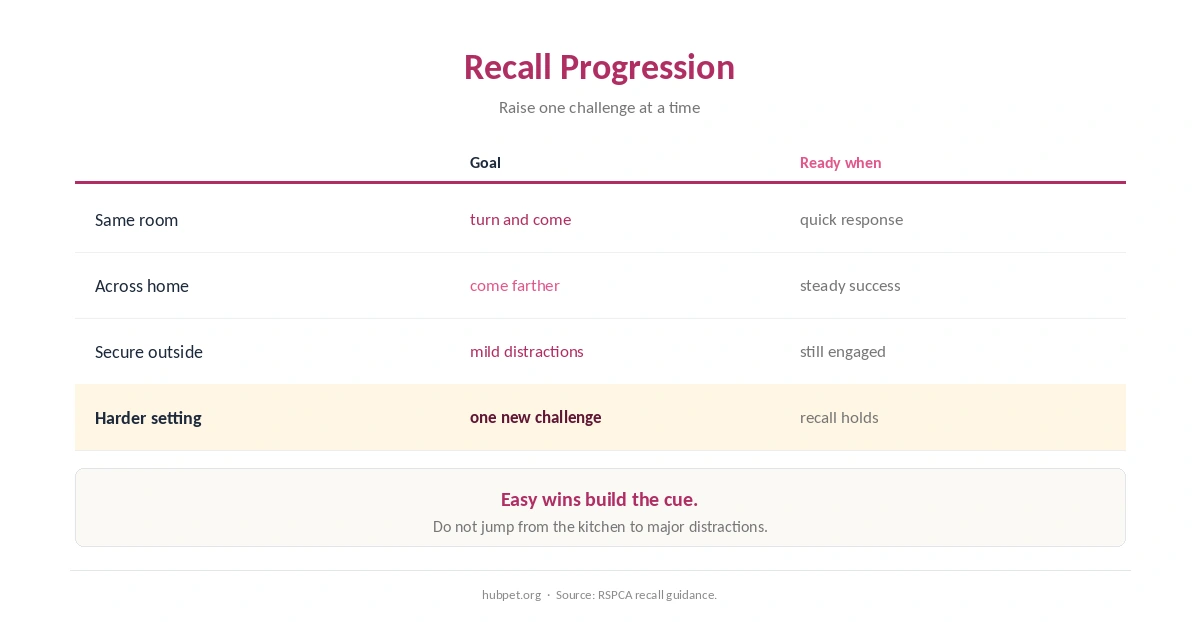
| Training stage | Goal | Move on when |
|---|---|---|
| Same room | Dog turns and comes | response is quick and relaxed |
| Across the home | Dog comes from farther away | success stays consistent |
| Secure outdoor area | Dog returns with mild distractions | dog can still take rewards |
| Harder distractions | Increase one challenge at a time | recall remains reliable |
How to Teach a Dog to Come When Called Step by Step
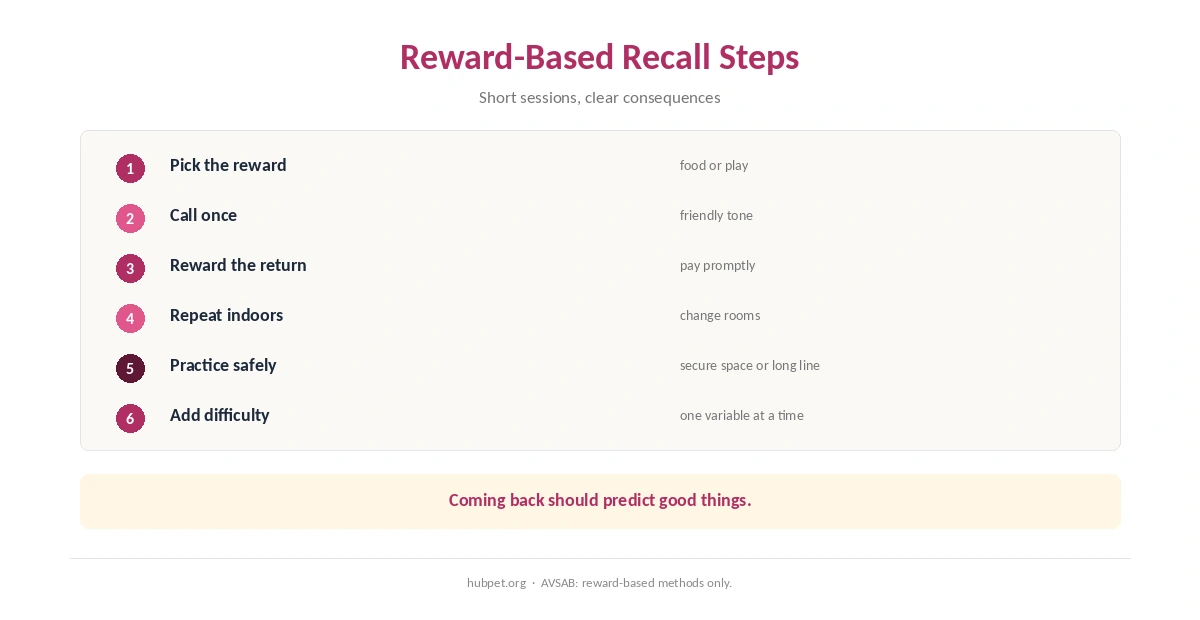
- Choose a reward the dog actively wants, such as food or a favorite toy (RSPCA, accessed 2026).
- Move a short distance away and call the dog in a friendly, upbeat voice.
- Reward immediately when the dog reaches you, then let the dog return to normal activity when appropriate.
- Repeat in different rooms before adding outdoor distractions.
- Use a secure area or a long training line for outside practice while reliability is still developing (RSPCA, accessed 2026).
- Increase distance or distraction gradually, not both at once.
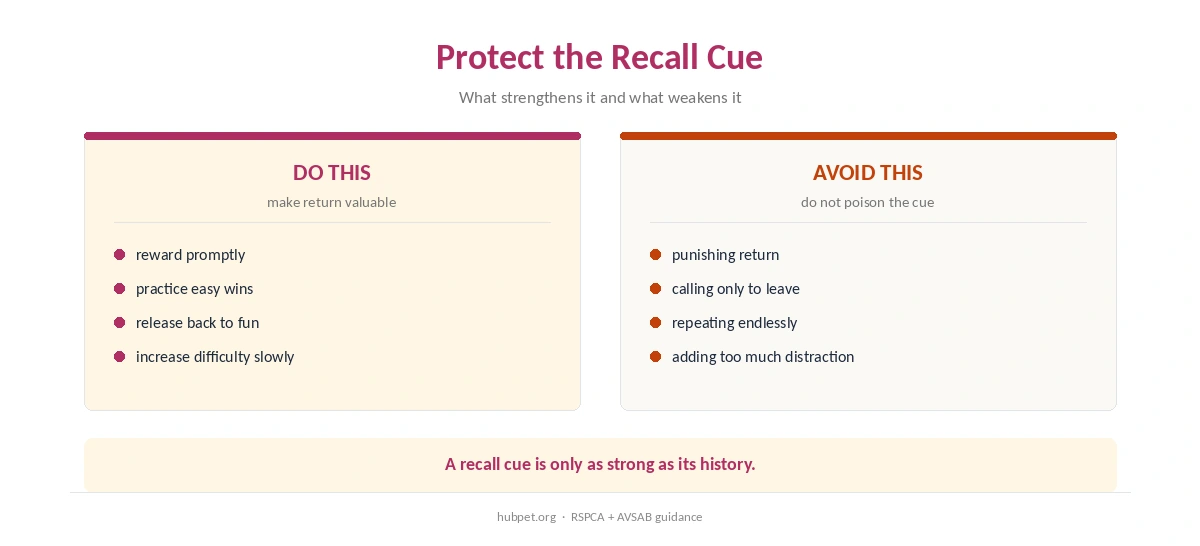
How to teach a dog to come when called also depends on protecting the cue. RSPCA advises against calling the dog and then telling them off (RSPCA, accessed 2026). That response can make the next return less attractive. Practically, how to teach a dog to come when called means keeping the cue associated with good outcomes. Likewise, do not make every recall end the fun by immediately clipping the leash and leaving.
Instead, practice the component skills separately. Teach sit and teach stay for easy control near doors. Use loose-leash walking for the trip to a practice area.
If excitement around people disrupts the return, review jumping on people and excessive barking as separate skills.
When to Get Professional Help
Contact a qualified reward-based trainer if recall repeatedly fails around important distractions. Get professional help sooner when chasing, fear, or aggression creates a safety risk. AVSAB recommends reward-based methods and says aversive methods should not be used for dog training or behavior modification (AVSAB, 2021; reaffirmed 2025).
How We Research
HubPet uses animal-health, welfare, and behavior sources rather than personal anecdotes. We read these sources on October 11, 2026: RSPCA recall training guidance, AVSAB humane training position. See How We Research for our method.
How to Teach a Dog to Come When Called FAQ
Use one short cue consistently. The exact word matters less than a clear history of rewards for returning.
Avoid turning the cue into background noise. Make the next repetition easier by reducing distance or distraction.
RSPCA recommends building success in the home and garden first, then practicing in safe outside spaces; a long training line can add safety during this stage (accessed 2026).
No. RSPCA specifically advises not calling a dog and then telling them off, and AVSAB recommends reward-based training (RSPCA accessed 2026; AVSAB 2021/2025).
Treat reliability as context-specific. A dog who returns in the kitchen may still need easier practice around wildlife, dogs, traffic, or exciting people.
The Bottom Line
How to teach a dog to come when called requires a strong reward history for returning. Then raise difficulty gradually. Therefore, protect the cue, practice in safe settings, and make coming back worth the dog’s effort.