
This article is general information, not veterinary advice. If your pet seems unwell, is in pain or may have eaten something harmful, contact your vet or an animal poison control line right away. Read our vet disclaimer.
How to stop a dog from pulling on the leash is to make a loose leash move the walk forward. RSPCA advises standing still when the leash becomes tight (RSPCA, accessed 2026). Reward attention and loose-leash walking, then move again when the dog comes back near you (RSPCA, accessed 2026). AVSAB recommends reward-based methods and rejects leash corrections or other aversive techniques (AVSAB, 2021; reaffirmed 2025). For another step-by-step training page, see how to Practice Calm Behavior Before Walks.
How to Stop a Dog From Pulling on the Leash: Teach the Rule Indoors First
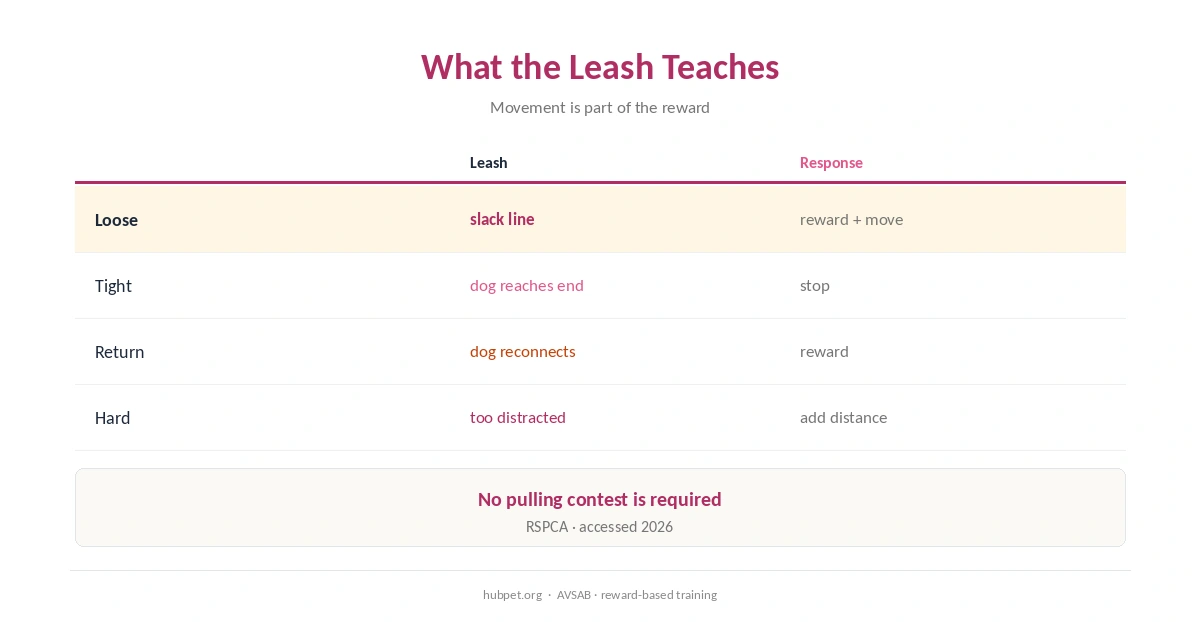
The clearest rule is simple: a loose leash makes progress happen; pulling pauses progress. Begin somewhere quiet where the dog can notice you. This matches the low-distraction setup in basic dog training at home and the reward timing in positive reinforcement.
| What happens | Your response | What the dog learns |
|---|---|---|
| Leash stays loose | Reward and keep moving | Loose leash makes good things continue |
| Dog reaches the end | Stop without jerking | Pulling does not move the walk forward |
| Dog turns back or reconnects | Reward and move again | Checking in restarts progress |
| Distraction is too hard | Increase distance | Training works below overload |
How to Stop a Dog From Pulling on the Leash Step by Step
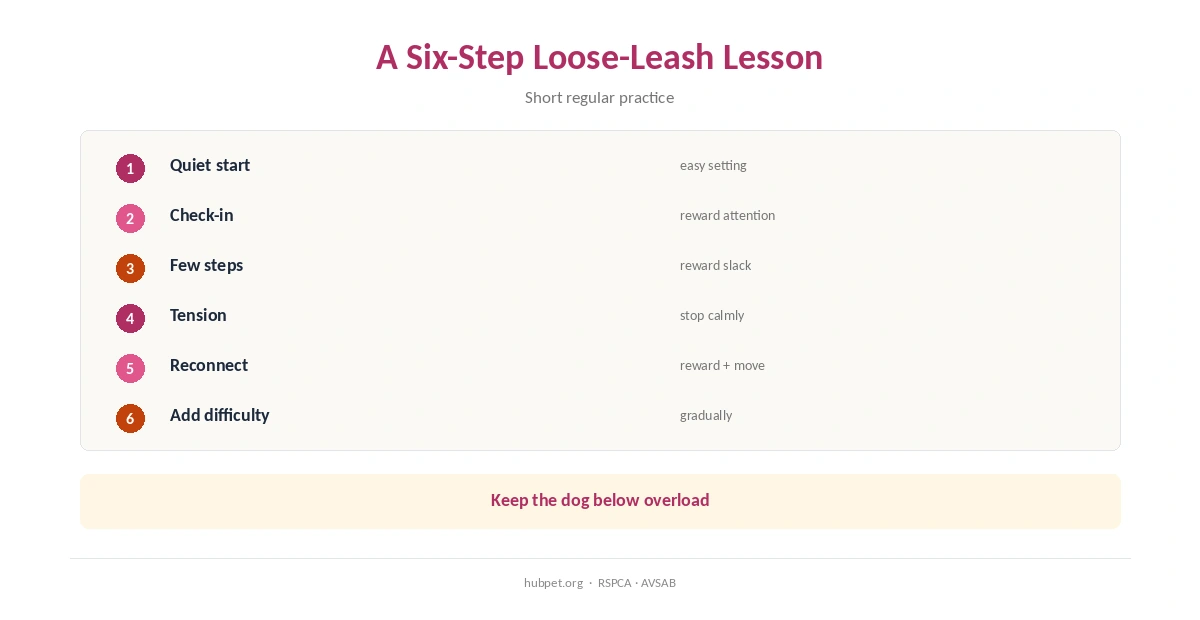
- Start in a quiet area and wait for the dog to orient toward you.
- Reward the check-in, then take a few easy steps while the leash remains loose.
- Reward again while the dog is near you rather than waiting for pulling to start.
- If the leash tightens, stop and stay still instead of pulling back or jerking the leash.
- When the dog reconnects and the leash loosens, reward and move forward again.
- Add distance, new routes, and distractions gradually so success remains possible.
How to stop a dog from pulling on the leash also depends on keeping practice manageable. RSPCA recommends short, regular sessions (RSPCA, accessed 2026). Use familiar cues from teach a dog to sit and teach a dog to stay at doors or before moving toward a distraction.
If the dog pulls toward something they want, use access to that thing as a reward for loose-leash walking, as RSPCA suggests (accessed 2026). Pulling slows access; calm movement makes access possible. This is the same principle used in stopping jumping on people: reinforce the behavior that earns the greeting or movement.
What Not to Use for Leash Pulling
How to stop a dog from pulling on the leash does not require leash jerks, intimidation, or pain. AVSAB’s 2021 humane-training statement, reaffirmed in 2025, says aversive methods should not be used for dog training or behavior modification. Adjust distance, reinforcement, and environmental difficulty so the dog can learn what keeps the leash loose (AVSAB, 2021/2025).

When to Get Professional Help
Get help from a qualified reward-based trainer if the dog repeatedly lunges at people or animals or is difficult to control safely. Also get help when the dog cannot respond to food and simple cues even at a greater distance. If walks involve repeated barking at triggers, reducing excessive barking at home can help separate arousal management from the loose-leash skill. The daily dog care checklist can help you review rest, activity, and routine.
If the dog surges toward doors or visitors before a walk, work on the transition indoors first. Door barking and pet-proofing your home offer management ideas before you step outside.
How We Research
HubPet uses veterinary, welfare, and behavior sources rather than personal anecdotes. We read these sources on October 11, 2026: RSPCA loose-leash training, AVSAB Humane Dog Training position. See How We Research for our method.
How to Stop a Dog From Pulling on the Leash FAQ
RSPCA advises stopping and waiting quietly. When the dog pays attention and moves closer, reward and start moving again.
No. The training plan should avoid a pulling contest. Stop movement, wait for reconnection, then reward the loose leash and continue.
RSPCA recommends short, regular practice. Keep the environment easy enough that the dog can repeatedly succeed rather than rehearsing pulling for a long walk.
Yes. Access to something the dog wants can reinforce loose-leash walking when you control the approach and pulling does not move the dog closer.
No. AVSAB recommends reward-based methods and states that aversive training methods are not necessary for dog training or behavior modification.
The Bottom Line
How to stop a dog from pulling on the leash comes down to consistent consequences. Loose leash means rewards and movement; a tight leash pauses progress. RSPCA provides that structure, and AVSAB supports reward-based training rather than leash corrections or intimidation (RSPCA accessed 2026; AVSAB 2021/2025).