
This article is general information, not veterinary advice. If your pet seems unwell, is in pain or may have eaten something harmful, contact your vet or an animal poison control line right away. Read our vet disclaimer.
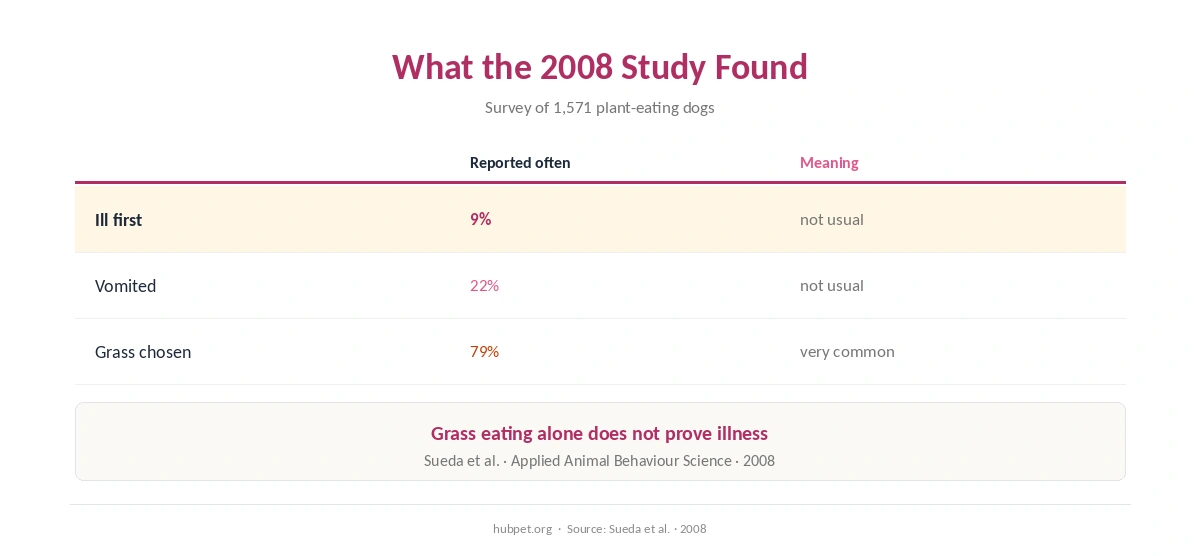
Why your dog eats grass usually has a less dramatic explanation than the old “upset stomach” story. In a 2008 Applied Animal Behavior Science survey of 1,571 plant-eating dogs, owners reported frequent signs of illness beforehand in only 9% of dogs, while 22% frequently vomited afterward (Sueda et al., 2008). The authors concluded that plant eating appears to be a common, largely normal dog behavior. Still, repeated grass eating together with vomiting, diarrhea, pain, or a sudden behavior change deserves veterinary attention (VCA, accessed 2026).
Why Your Dog Eats Grass: What the Research Found
The strongest direct evidence on why your dog eats grass comes from Sueda and colleagues. Their 2008 study found that grass was the plant eaten most often by 79% of the surveyed plant-eating dogs. Most dogs rarely appeared ill before eating plants, and most rarely vomited afterward (Sueda et al., 2008). That does not prove a single motive. Instead, it argues against treating every grass-eating episode as proof that a dog is sick or trying to induce vomiting.
| Question | What the study found | Practical meaning |
|---|---|---|
| Ill before eating? | 9% frequently appeared ill | Illness was not the usual pattern |
| Vomited afterward? | 22% frequently vomited | Vomiting was not the usual outcome |
| Most common plant | Grass in 79% | Grass eating was widespread |
Why Your Dog Eats Grass: When It May Be a Problem
Context matters more than the grass alone. VCA advises a veterinary call when grass eating comes with stomach discomfort, vomiting, diarrhea, or other illness (VCA, accessed 2026). If your dog also seems weak, painful, confused, or otherwise unwell, use the pet emergency signs guide. Do not wait for a serious sign to pass. A sudden change from your dog’s normal routine also matters. Compare it with signs your pet is in pain.
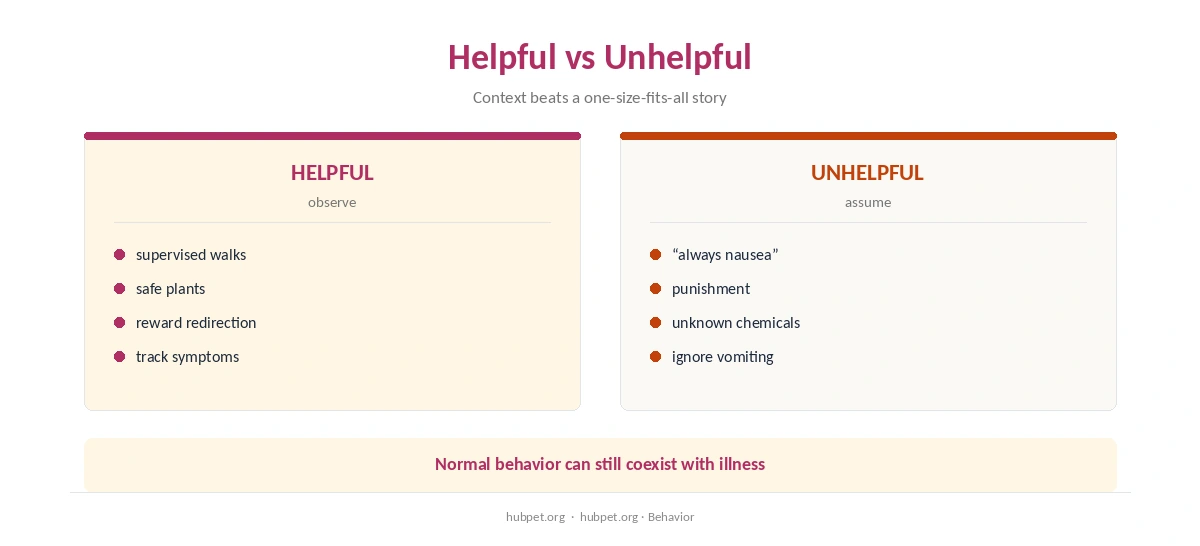
- Notice whether the grass eating is occasional or a new repeated pattern.
- Watch for vomiting, diarrhea, abdominal discomfort, weakness, or appetite change.
- Keep dogs away from grass or plants treated with chemicals you cannot verify.
- Prevent access to unknown plants and review plants that are toxic to pets when the exposure is indoors.
- Use a calm interruption and reward-based redirection if you need to move the dog away from a risky area.

Do not punish grazing. If access itself is unsafe, redirect the dog and reward moving with you. That follows the same humane principle as using positive reinforcement correctly. If the dog scavenges many non-food items rather than only nibbling grass, mention that broader pattern to your veterinarian. Meanwhile, keep exercise and enrichment predictable with the daily dog care checklist. That makes a new repetitive habit easier to notice.
What You Can Do at Home
If your dog eats a little untreated grass and otherwise acts normal, observation is reasonable. That approach fits the 2008 study and VCA guidance. Keep walks supervised and remove access to plants you cannot identify. Practice an easy “leave it” or movement-away cue with rewards. The foundation in basic dog training at home is useful here. Also use pet-proofing at home to keep fertilizers, pesticides, and unsafe plants out of reach. In other words, why your dog eats grass matters less than whether the pattern and the dog’s condition have changed.
When to Get Professional Help
Call your veterinarian if grass eating becomes urgent or suddenly frequent. Also call for vomiting, diarrhea, poor appetite, pain, lethargy, or another physical change (VCA, accessed 2026). Go now for severe or repeated vomiting, collapse, trouble breathing, marked abdominal swelling, seizures, or suspected poisoning. If your veterinarian rules out medical concerns and the issue is mainly behavioral, use a qualified reward-based trainer.
How We Research
HubPet uses published veterinary, welfare, behavior, and research sources rather than personal anecdotes. We read these sources on October 11, 2026: Sueda et al., Applied Animal Behavior Science, 2008, VCA Why Dogs Eat Grass. See How We Research for our method.
Why Your Dog Eats Grass FAQ
Not usually. In the 2008 Sueda study, owners reported frequent vomiting afterward in only 22% of surveyed plant-eating dogs.
Not by itself. In the same study, only 9% frequently appeared ill before eating plants. Symptoms and sudden changes matter more than the grass alone.
Prevent access to treated or unknown plants. Occasional grazing by an otherwise normal dog is not automatically a medical problem, according to the study and VCA guidance.
No. If you need the dog to move away, use calm management and reward-based redirection.
Call when the behavior changes suddenly or becomes urgent. Vomiting, diarrhea, pain, poor appetite, lethargy, or another physical change also warrants a call.
The Bottom Line
Why your dog eats grass has no single proven motive. The best direct study found plant eating common. It usually did not coincide with illness or vomiting (Sueda et al., 2008). Watch the whole dog, control unsafe plant exposure, and involve your veterinarian when the pattern or the dog’s health changes.