
This article is general information, not veterinary advice. If your pet seems unwell, is in pain or may have eaten something harmful, contact your vet or an animal poison control line right away. Read our vet disclaimer.
How to teach a dog to sit is a simple reward-based exercise. Guide the dog into position, mark the moment the bottom reaches the floor, and reward immediately. Blue Cross and RSPCA both describe this lure-and-reward sequence. AVSAB recommends reward-based methods for all dog training (Blue Cross, 2024; RSPCA, accessed 2026; AVSAB, 2021, reaffirmed 2025). Start somewhere quiet so the dog can learn the movement before distractions compete for attention.
How to Teach a Dog to Sit: Build the Movement First
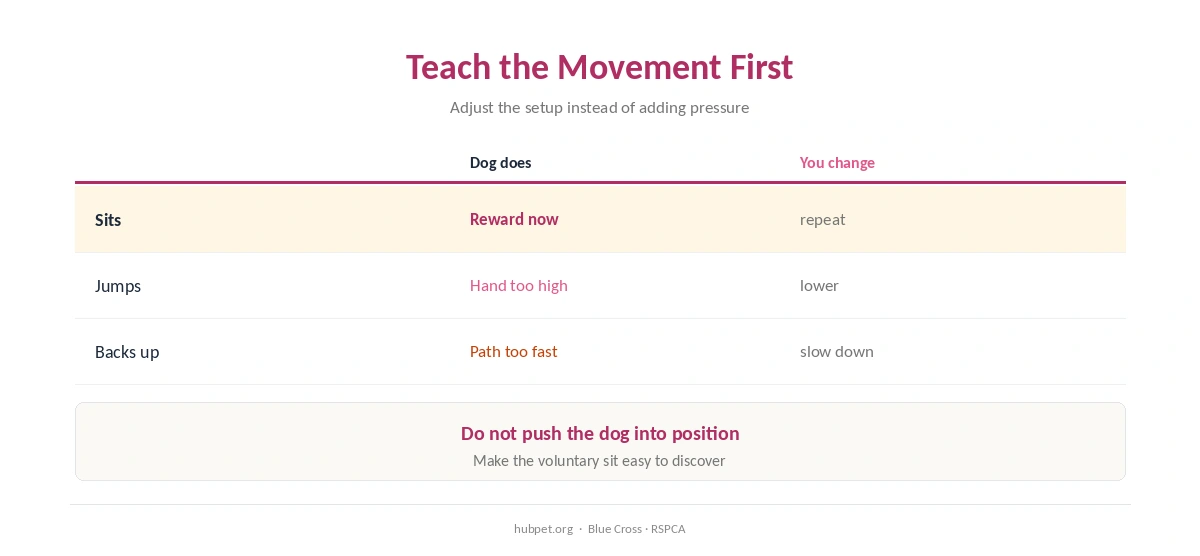
Hold a small reward near the dog’s nose and move your hand slowly up and back. As the dog follows the hand, the head rises and the rear can lower. Mark and reward as soon as the bottom reaches the floor. Blue Cross cautions that holding the reward too high or moving too quickly can make a dog jump or back away (Blue Cross, 2024). This is how to teach a dog to sit without pushing the rear down or physically forcing the position.
| Dog does | Your response | Next move |
|---|---|---|
| Bottom touches floor | Mark and reward immediately | Repeat easy reps |
| Jumps up | Lower and slow the lure | Make motion easier |
| Backs away | Adjust hand path | Reset without pressure |
How to Teach a Dog to Sit: Add the Cue After Success
Do not rush the word. RSPCA advises adding “sit” when the dog is already moving into the position reliably, so the cue becomes linked with the correct action (RSPCA, accessed 2026). Then practice short, regular sessions. The same sequencing appears in basic dog training at home, while positive reinforcement explains why immediate rewards strengthen the behavior you want.
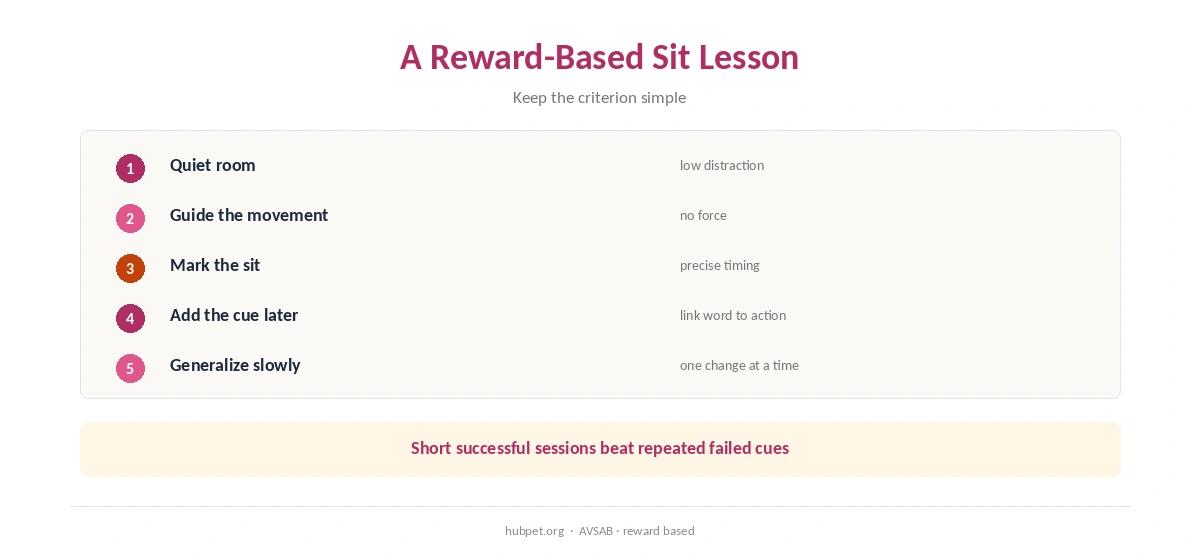
- Practice in a quiet room with few distractions.
- Lure the dog into the sitting position without pushing the body.
- Mark and reward the instant the bottom reaches the floor.
- Add the word “sit” only after the movement is predictable.
- Practice in new places one small difficulty increase at a time.
Once the cue works indoors, change one variable at a time. Try another room, a doorway, or a calm outdoor area before asking for sit around major distractions. Blue Cross recommends practicing the skill in different situations and continuing to reward success (Blue Cross, 2024). A reliable sit can support calmer greetings from jumping-on-people training and can become one option during door-barking practice.
What to Do If Your Dog Does Not Sit
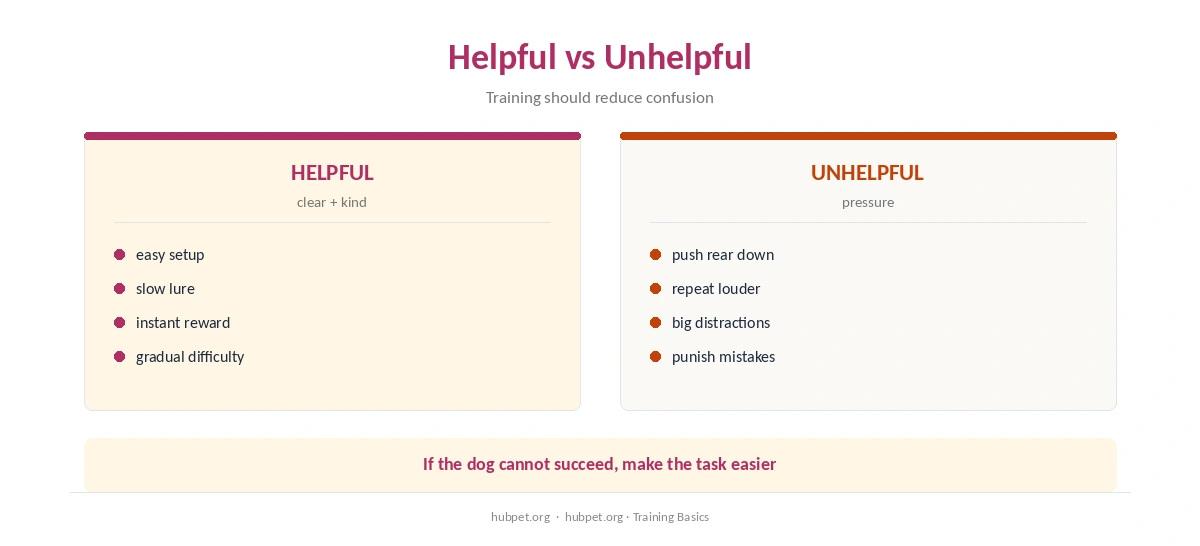
Lower the difficulty instead of repeating the cue louder. Check your hand path, reduce distractions, and reward a successful easy repetition. RSPCA recommends patience and short sessions because dogs learn at different rates (RSPCA, accessed 2026). If the dog seems reluctant to bend the legs or has trouble rising, stop. A sudden refusal to offer a previously easy sit should not become a training battle. Compare the change with signs your pet is in pain and ask your veterinarian if needed.
Training works best when household routines are predictable. The new pet owner checklist can help organize early routines, and counter-management training shows how a simple stationary behavior can fit real home life. In daily life, how to teach a dog to sit matters less than keeping the cue easy and rewarding.
When to Get Professional Help
Ask a qualified reward-based trainer for help if the dog becomes fearful, shuts down, or cannot progress despite easier setups. Contact your veterinarian first when reluctance to sit is new or appears linked to pain, stiffness, weakness, or another physical change. AVSAB recommends reward-based methods and emphasizes addressing medical and environmental factors when behavior problems are more complex (AVSAB, 2021; reaffirmed 2025).
How We Research
HubPet uses published veterinary, welfare, behavior, and research sources rather than personal anecdotes. We read these sources on October 11, 2026: Blue Cross dog training guidance, reviewed 2024, RSPCA sit-training guide, RSPCA reward-based training guidance, AVSAB Humane Dog Training position. See How We Research for our method.
How to Teach a Dog to Sit FAQ
RSPCA advises adding the cue after the dog is already moving into the position reliably, so the word becomes associated with the correct movement.
No. Use a lure or hand motion and reward the voluntary movement instead of physically forcing the body.
Blue Cross notes that a reward held too high or moved too quickly can prompt jumping. Lower and slow the hand path.
Keep them short and regular. RSPCA recommends short sessions so the dog is not overwhelmed.
A sudden change can be more than a training issue. If the dog seems stiff, painful, weak, or physically reluctant, contact your veterinarian.
The Bottom Line
How to teach a dog to sit is to make the correct movement easy, mark it precisely, and reward it immediately. Add the cue after the dog understands the action, then generalize the skill gradually. If the dog struggles physically or emotionally, reduce pressure and get the right professional help.