
Paw balm is often sold as a barrier for dry pads, rough sidewalks, or winter salt. It may be useful for certain dogs, but a slick coating cannot replace a safer route, suitable footwear, or washing off irritating debris. Ingredients, texture, and the dog’s response matter more than claims that a tin works in every season. Use only products intended for dogs, and consult a veterinarian when feet are sore or visibly injured. These are general equipment and home-care considerations, not individualized veterinary care. If a dog has pain, injury, or ongoing skin problems, contact a veterinarian and read our veterinary disclaimer.
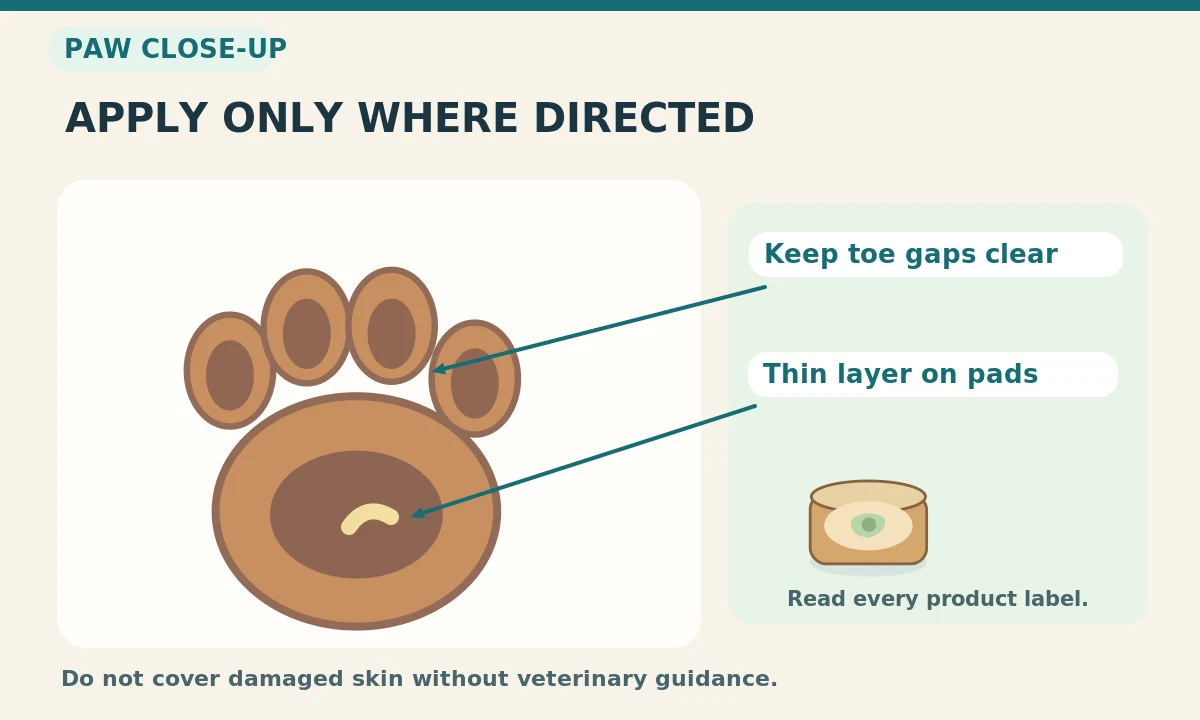
Read the product label before touching the paw
Check that the container identifies the balm for canine paw use and provides ingredient, application, and storage directions. Avoid relying on homemade blends or assuming that a human skincare product is safe to lick. If your dog has allergies, damaged skin, or a medical condition, ask the veterinarian before applying a new product. Some pets lick their feet intensely after any unfamiliar scent. Keep the tin out of reach between applications so a dog cannot chew or swallow its packaging. Record which product you used if irritation develops.
Inspect and clean the pads first
Start with good light and a calm dog on a stable floor. Look at the pads, nail edges, and spaces between toes for grit, cuts, swelling, or painful cracks. Wipe away loose dirt with an appropriate damp cloth and dry the area gently. Do not push balm into a deep split or use it to hide a sore paw. Persistent limping, a wound, or sudden sensitivity calls for veterinary advice rather than an additional cosmetic layer. A clean pad also helps you judge how much product reaches the surface without mixing it with dirt.
Apply a thin layer, not a slippery coating
Follow the maker’s instructions and use a small amount on the intended pad surface. Massage gently only while the dog stays comfortable. Keep the dog on a nonslip mat during application. A thick waxy layer may leave residue on floors or reduce traction, especially on polished surfaces. Do not pack balm between toes unless the label and veterinarian indicate that use. Allow time for the surface to settle before a walk and check whether the dog immediately tries to lick it away. Stop if the dog reacts badly.
Consider salt, grit, and pavement separately
Balm can offer a layer of protection in certain conditions, but salt and ice-melt chemicals still need to be removed after exposure. ASPCA and Cornell advise checking paws and wiping or washing off irritants after winter walks. Some surfaces remain unsafe regardless of a product on the pads. On very rough, hot, icy, or heavily treated ground, change the route or limit the outing. A well-fitted boot may provide more physical separation when tolerated. Do not assume that any balm makes hot pavement or freezing ground safe.
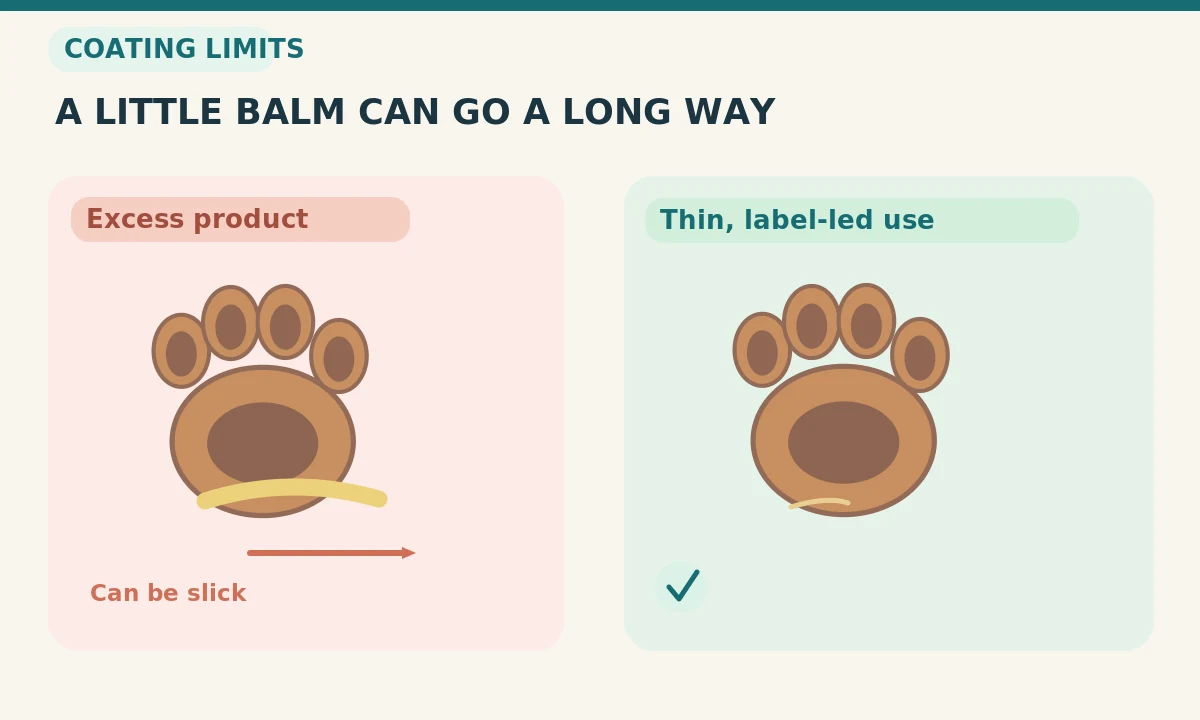
Watch your dog’s footing after application
Try the balm indoors on a secure mat before stepping onto smooth tile or wooden flooring. Observe the dog’s gait and confidence through a few gentle steps. If the paws slide, wipe off excess product and reassess. A balm sold for protection is not automatically a traction aid. Avoid coating the pads just before climbing slippery stairs. For older dogs or dogs with mobility concerns, seek a veterinarian’s advice before changing footing conditions. Stop a walk if the dog slips or shows pain, regardless of what the balm packaging promises.
Introduce paw handling as a cooperative routine
Offer a calm reward when your dog presents a paw or allows a brief touch. Work in short sessions, perhaps with only one foot at a time. Do not restrain a frightened dog tightly to finish the application. Instead, practice touching, inspecting, and releasing the foot, then revisit balm use when the dog is comfortable. The dog should be able to move away between repetitions. A predictable routine makes it easier to notice new discomfort later. If paw handling has become painful or frightening, a qualified trainer or veterinary professional can help.
Remove sidewalk residue after the walk
Wipe or rinse the paws as needed when returning from treated sidewalks or muddy routes. Clean between toes and remove grit without scrubbing irritated skin. Dry gently, especially if the dog has long fur or spends time on wet ground. A balm does not neutralize chemical exposure or eliminate the need for cleaning. Check for redness, unusual licking, or tenderness before reapplying anything. Keep used towels away from the dog until they can be laundered. Follow veterinary advice if your dog may have ingested a harmful substance.

Store the tin safely and know when to stop
Close the container after use and store it away from heat, dirt, and curious mouths. Check the expiry or use-by directions when supplied. Replace contaminated balm instead of dipping a dirty paw or cloth back into the tin. Discontinue use if you see a rash, new discomfort, or persistent licking. Seek prompt veterinary guidance for cracked, bleeding, swollen, or painful pads. A good routine combines observation, safe walking surfaces, thorough cleanup, and occasional product use only when useful. No balm removes the need to protect a dog from bad weather.
How We Research
Our editors use established veterinary and animal-welfare guidance about clothing fit, paw safety, gentle handling, visibility, and cleaning. Product dimensions, physical diagrams, and material checks are inspection criteria. They are not independent laboratory ratings, medical endorsements, or promises that any specific product prevents harm. We do not claim to have tested or ranked named brands. Read more about HubPet.
Sources
ASPCA — Cold Weather Safety Tips — professional guidance informing the selection, safe-use, or hygiene checks above.
Cornell University College of Veterinary Medicine — Winter Safety Tips — professional guidance informing the selection, safe-use, or hygiene checks above.
VCA Animal Hospitals — Cold Weather Safety for Your Pets — professional guidance informing the selection, safe-use, or hygiene checks above.
AAHA — Cold Safety for Pets — professional guidance informing the selection, safe-use, or hygiene checks above.
No. Some dogs manage normal walks without it. Choose based on ground conditions, pad health, veterinary advice, and your dog’s comfort.
No. Balms and boots work differently. Boots can offer a physical barrier, but fit and traction still need careful testing.
Do not apply it there automatically. Follow the product directions and seek advice for irritation or problems between toes.
Yes. Veterinary organizations recommend removing salt and other deicers after walks. A balm does not remove those chemicals.
Stop use and check the ingredients and label. Contact your veterinarian for persistent licking, vomiting, irritation, or possible harmful ingestion.