
Dog digging under a fence is a safety problem before it is a landscaping problem. A single gap can lead to traffic, another animal, or a missing dog. Your first job is to prevent unsupervised access to the vulnerable boundary while you work out why the dog wants to cross it. This guide explains the difference between emergency management, professional fence repairs, and humane behavior changes. It does not provide structural specifications that would suit every property or soil type. Discuss persistent panic, sudden behavior changes, or injuries with a veterinarian and review the HubPet veterinary disclaimer.
Treat an active escape route as urgent
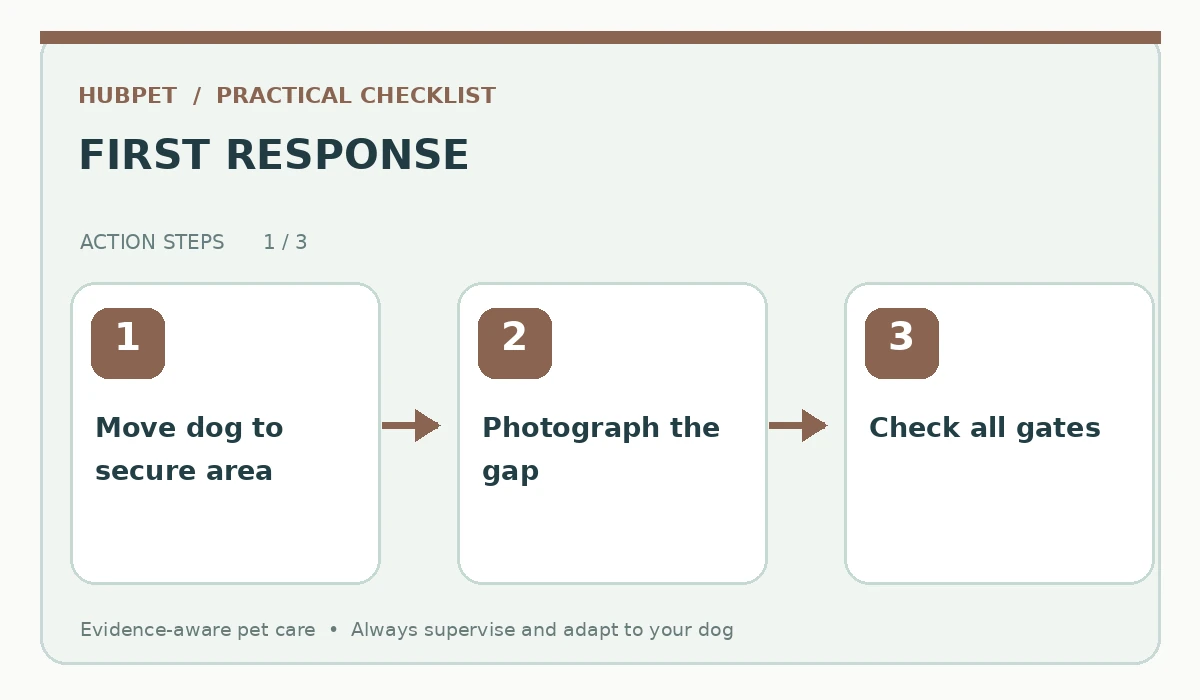
If you have found a new tunnel or daylight visible beneath the fence, do not test it by leaving the dog outside alone. Move the dog into a secure indoor space or another safely supervised area. Check that gates latch and that an open door cannot provide a second route out. Walk the boundary from both sides only when you can do so safely and with permission. Photograph the location for a qualified fence installer, noting uneven ground, erosion, and nearby utilities. A dog may return to the same opening because it already worked once. Immediate supervision is essential while repairs are planned.
Identify what is happening beyond the fence
Watch from a safe distance at the times digging usually begins. Is the dog following wildlife scent, trying to reach another dog, reacting to noises, or escaping a frightening event? Some dogs dig for cool ground rather than an exit, so the location and body language matter. Do not assume defiance. Note whether the behavior appears when people leave, when visitors pass, or during storms. AKC and RSPCA guidance stresses addressing the motivation instead of simply covering the hole. If a dog seems panicked or injures its paws while escaping, seek veterinary behavior support promptly.
Check the entire boundary, not only one hole
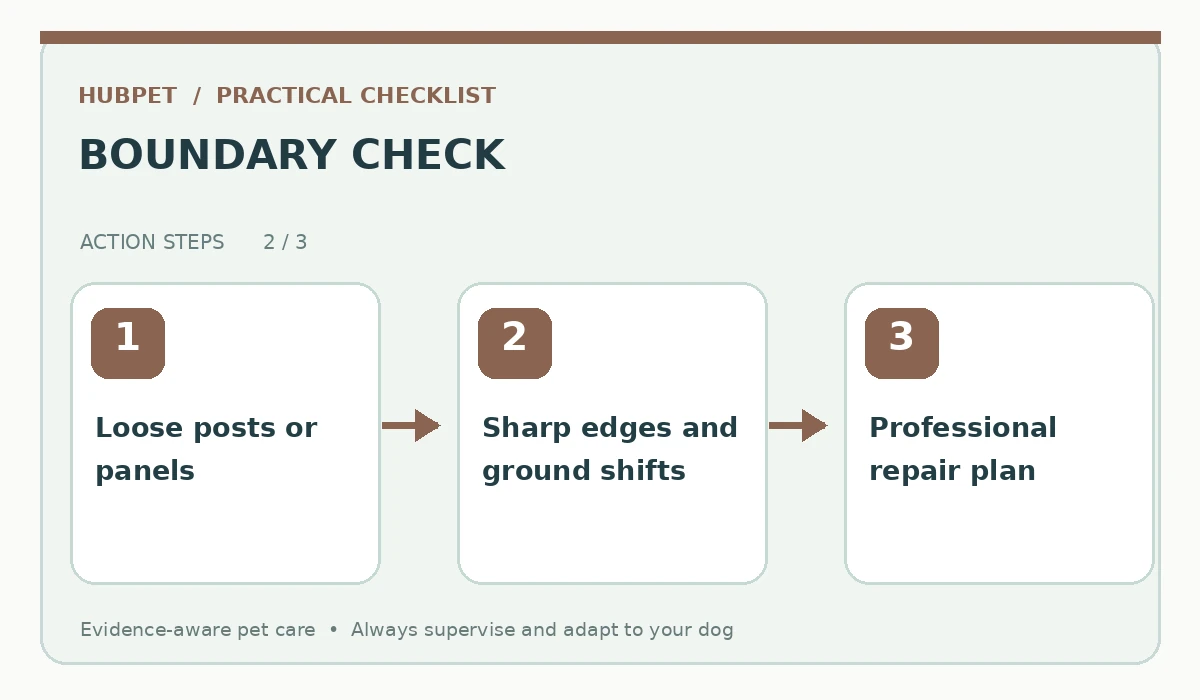
Inspect for loose panels, rotting posts, lifted wire, spaces under gates, and corners where the ground slopes sharply. A new barrier placed over one tunnel may redirect digging to the next weak point. If you rent, coordinate with the property owner before making changes. Avoid sharp exposed wire, protruding fasteners, unstable pavers, and anything that can trap a paw. Fence foundations and buried systems must respect local utility, drainage, wildlife, and building requirements. Ask an experienced installer to assess suitable methods rather than copying an online depth measurement as if it worked in all soils.
Keep the dog out of the work area
Fence repair can expose sharp metal, treated wood, soil additives, nails, or equipment. Keep pets and children indoors until the site is clear and stable. Do not encourage the dog to investigate fresh concrete, adhesive, or open trenches. If crews are present, arrange a calm indoor resting place with water and enrichment. Remind all caregivers which gates remain temporarily insecure. Photograph the finished repair and check it after heavy rain or frost that changes the ground. Structural control only works when the whole household follows the same access rule.
Create a reliable yard routine
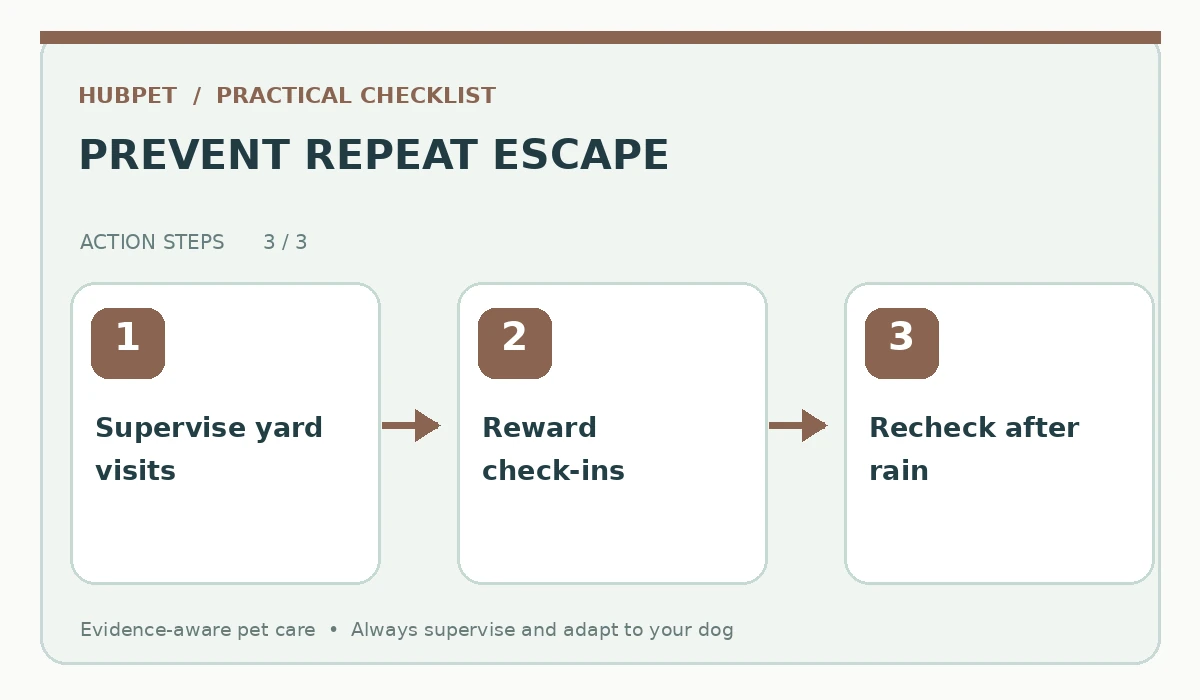
Supervise outdoor time rather than turning the yard into unsupervised storage for an energetic dog. Start with a sniff walk, a few reward-based cues, or a short play session appropriate to the dog’s age and health. Stay nearby and reward checking in with you before the dog starts scraping at the boundary. Short, engaging visits may be more useful than hours alone in an empty yard. Avoid tethering as a substitute for security; tethers can tangle and cause injury. Observe whether giving the dog predictable attention reduces visits to the vulnerable fence line.
Offer digging where it is permitted
For dogs that enjoy the physical act of digging, a designated patch or digging box can provide an outlet away from the fence. Choose a safe, supervised area with no toxic plants, sharp objects, hidden utilities, or pesticide residues. Hide a toy shallowly and reward the dog for exploring there voluntarily. Keep the permitted spot distinct from the boundary and redirect early rather than after a tunnel forms. Digging opportunities are not a universal solution for escape attempts driven by fear or separation distress. When anxiety is the driver, address that cause with a qualified professional.
Manage sightlines and triggers thoughtfully
A dog that reacts to passing dogs or people may spend more time patrolling gaps where activity is visible. A secure visual screen can sometimes reduce stimulation, but it must not create a climbing aid or compromise wind stability. If the trigger is storm noise or fireworks, move the dog to a safe indoor location rather than insisting it remain outside. Avoid punishment, electric deterrents, and startle traps near the fence; these can increase fear and leave the escape motive intact. AVSAB favors reward-based training and environmental management for behavioral problems.
Check identification and emergency readiness
Even a repaired fence can fail when a gate is left open. Verify that your dog’s visible identification is current and the microchip registration contact details are up to date. A microchip helps with identification after someone finds a dog; it does not track live location. Prepare recent clear photos and a short contact plan for household members. If a dog escapes, avoid chasing into traffic. Use calm recall cues and follow local animal-control guidance. Prevention includes both physical boundaries and a realistic response plan in case someone forgets to shut a gate.
Monitor after repairs instead of declaring success
During the following weeks, continue supervised yard visits and inspect the entire fence line. Look for fresh soil, lifted edging, worn ground, and repeated attention to a particular corner. Keep a record of when the dog returns there, especially after changes in household schedule or nearby construction. Reinforce calm behavior in other parts of the yard. An apparently fixed hole is not proof the reason for escaping has changed. If the dog simply selects another location, reassess triggers and environmental needs rather than adding increasingly harsh deterrents.
Get help when fear or repeated escape persists
Repeated frantic attempts to get out, injuries, destructive behavior near departure times, or sudden changes warrant veterinary assessment. A veterinarian can help identify medical or stress-related factors and refer to a credentialed behavior professional for an individualized plan. For the physical fence, use a qualified installer who considers local conditions and prevents sharp or unstable edges. The safe sequence is simple: stop access to the gap, assess the motive, repair the whole boundary, provide appropriate enrichment, and monitor. Do not promise that any single barrier will make a determined dog escape-proof.
How We Research
Our editorial review compared dog-welfare guidance from veterinary institutions and animal behavior organizations with the specific household safety problem in this guide. We separated sourced health or behavior principles from practical owner checklists, and did not test named products or claim that a method prevents every injury. Always check manufacturer instructions and discuss ingestion, pain, persistent panic, or sudden changes with your veterinarian. Our team reviewed sources on October 27, 2026. For editorial background, see About HubPet.
Sources
American Kennel Club: Solutions for dogs that like to dig. Reviewed October 27, 2026.
American Kennel Club: How to stop dogs from digging and manage the yard. Reviewed October 27, 2026.
American Veterinary Society of Animal Behavior: Position statements: humane, reward-based dog training. Reviewed October 27, 2026.
ASPCA: Destructive chewing: reasons, management, and appropriate alternatives. Reviewed October 27, 2026.
No. An appropriate repair depends on fence type, soil, utilities, local rules, and the dog’s motivation. Ask a qualified installer and continue supervision.
No. Punishment can worsen fear and does not repair the escape opportunity. Secure the area, address the trigger, and reinforce safer behaviors.
It can meet a normal digging need for some dogs. It is unlikely to address panic-driven escapes on its own, so observation and tailored support remain essential.
Inspect the whole perimeter and supervise until you know it remains secure. Ground movement, gates, and another weak corner can still create an exit.
Seek help promptly for repeated escapes, frantic behavior, injuries, or strong fear responses. A veterinarian can assess health factors and refer you for reward-based behavioral care.