
Use calm, reward-based guidance only. Sudden behavior changes or signs of pain warrant a veterinarian’s advice. For medical concerns see the HubPet veterinary disclaimer.
To stop dog digging in garden beds, protect the plants while teaching a dog where digging is allowed. A dog may excavate because soil is cool, scents are interesting, there is little to do, an animal is hiding beneath the ground or escaping seems possible. Those are different starting points. This guide provides a garden layout, a reward-based dig-zone lesson and a quick trigger chart rather than a punishment tactic. Never leave a dog outside as a solution to boredom or rely on buried irritants to make dirt unpleasant.
Identify the garden trigger before altering the soil
Fresh holes beside the fence can be different from a shallow bed where a dog curls up on hot afternoons. Fence-line tunnels raise escape and traffic safety concerns; supervise immediately and repair access before training. A dog that seeks cool ground needs shade, fresh water and a comfortable resting place away from heat. For repeated digging near roots or shrubs, look for scents or small-animal activity without using pesticides or traps where pets can reach them.
Keep a two-day garden map showing which beds, times and weather conditions coincide with digging. Ask whether the dog had a walk, play and a place to rest. A sudden, frantic or distress-related change warrants a veterinary or credentialed behavior consultation. For background on the motivations, see why dogs dig in yards. This page concentrates on redirecting the habit before plants and paws are injured.
| Hole location or pattern | Possible motivation | First useful change |
|---|---|---|
| Shallow hollow in hot soil | Seeking a cooler spot | Shade, water and rest area |
| Holes along fence | Escape attempt or outside trigger | Secure fence; supervise; get help |
| Fresh vegetable bed | Loose interesting soil | Block bed; reward approved patch |
| Digging when alone | Low enrichment or distress possible | Supervision and behavior assessment |
| Same scented spot repeatedly | Interesting smell or wildlife | Redirect; inspect for hazards safely |
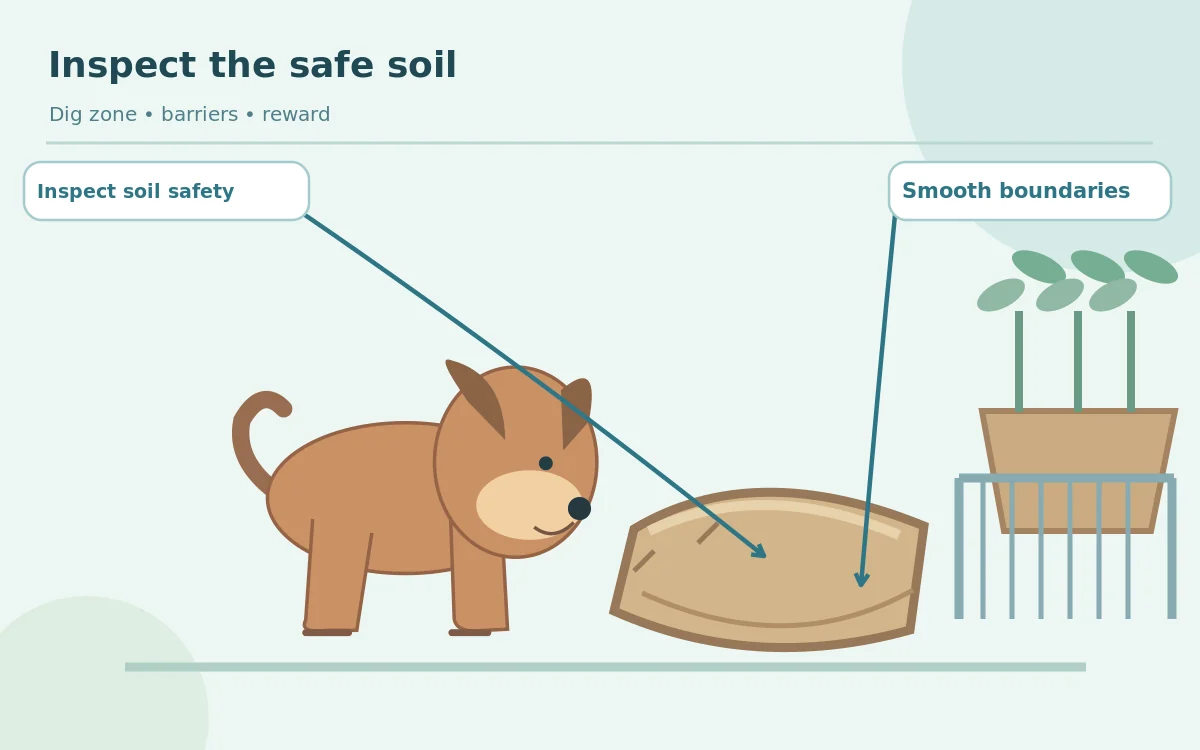
Construct a safe dog-approved digging zone
Choose a visible, shaded part of the yard away from toxic plants, sharp edging, exposed irrigation pipes and unstable fencing. A sturdy sandbox or designated patch of loose safe soil works; check for glass, wire, treated timber scraps and hazardous garden chemicals before use. Make the new spot attractive by partially burying a sturdy toy or a few appropriate treats, and let the dog discover it under supervision. Refresh the zone so new scents and finds remain interesting.
Mark the boundary clearly with low smooth edging that cannot cut paws or become a tripping point. Avoid strings, mesh or hardware buried where a dog could snag claws; if you need a protective barrier around vegetables, use a secure pet-safe fence outside the reach of the dog rather than laying sharp obstacles under soil. The Humane World and AKC guidance supports an approved digging area paired with reinforcement instead of after-the-fact punishment.
- Supervise outdoor access and secure fence gaps, chemicals and gardening tools.
- Mark current digging locations and triggers on a simple garden sketch.
- Create one shaded, hazard-free dig zone with a clear boundary.
- Bury a safe toy shallowly and reward digging inside that zone; add a consistent cue.
- Protect garden beds and review success for a week, adjusting enrichment and seeking help for escaping or distress.
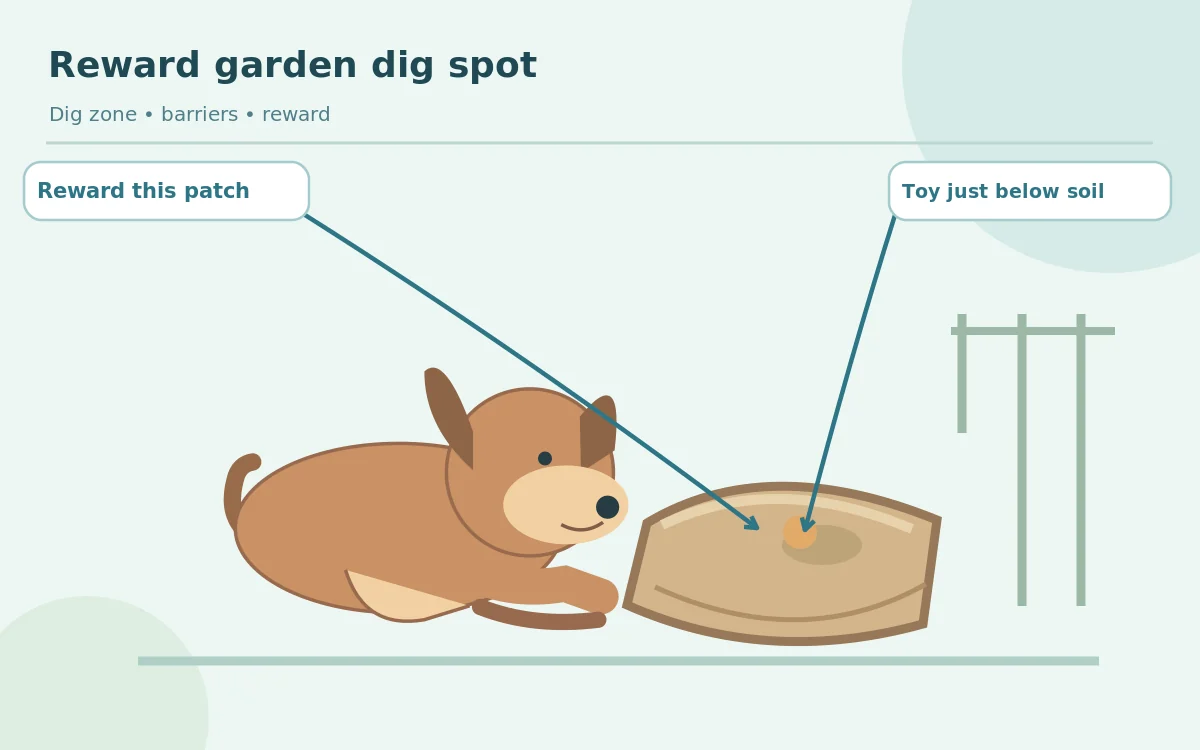
Reward the behavior you want in the moment
Start a short session near the safe zone while the dog is alert. Place a toy shallowly in the loose soil and encourage exploration. When the dog begins to paw there, say a simple cue such as “dig,” then reward. After several easy successes, walk away together and return for another supervised trial. If the dog approaches a vegetable bed, calmly call them to you and guide them toward the legal spot before a hole starts, then reward the correct choice.
Do not shout from the window or punish a dog after finding a hole: punishment does not teach where to dig and can increase anxiety. Keep the garden beds inaccessible during training and offer chewing, sniff walks and games alongside the dig zone. Consult a published weekly enrichment checklist to vary activity instead of expecting one soil box to meet every need.
Protect plants and revisit the plan
Water newly planted soil, mulch and compost can be especially interesting to a dog. Store fertilizers, cocoa mulch, slug bait and sharp garden tools securely; ask your veterinarian about any suspected toxic exposure or ingestion. Fence delicate beds with smooth stable barriers. Give the dog a separate cool resting surface; never force them to stay in direct sun while guarding the garden.
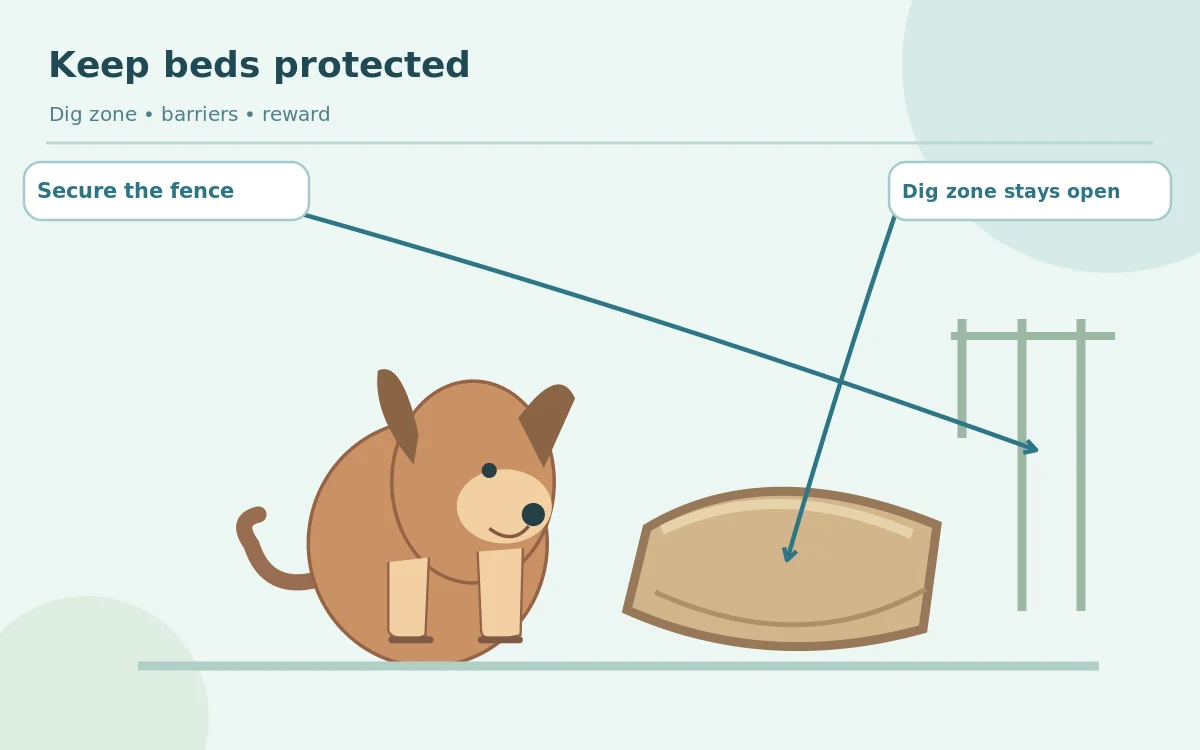
Check holes weekly: are they migrating toward the safe patch, appearing at the fence or clustering near shade? Count successful redirected digs instead of only plant damage. Reassess if the dog repeatedly tries to escape, seems fearful when left alone, or cannot settle even with enrichment. A training plan should improve welfare and yard safety together, not merely hide the evidence of digging.
A dig zone should stay fun, not become an outdoor confinement area. If the dog ignores it, try changing the substrate, adding a favorite toy or moving it closer to the preferred route. Do not hide sharp objects, sprinkle hot pepper or set up traps in old holes; those can harm paws, noses or visiting animals. For suspected heat stress, give immediate access to shade and water and contact a veterinarian; a dug hollow is not a safe cooling plan.
When to Call Your Vet
Consult a veterinarian if the behavior changes suddenly, an animal seems painful or fearful, or safe management is not working. For persistent distress, consult a credentialed reward-based behavior professional as appropriate.
How We Research
HubPet compared the linked veterinary, animal welfare and behavior resources with the exact search intent in this guide. We favor observable signals, a practical household decision chart and reward-based alternatives; we do not infer medical diagnoses from behavior or recommend punishment. Read our editorial approach for additional context.
Sources
Humane World for Animals — Dogs Digging — consulted for behavior, welfare and safety guidance.
AKC — Teach a Dog to Dig on Cue — consulted for behavior, welfare and safety guidance.
AKC — Solutions for Digging Dogs — consulted for behavior, welfare and safety guidance.
Yes. Restrict access to beds and consistently reward digging in a prepared safe zone; address shade, exercise and escape triggers too.
Choose a shaded, supervised area without toxic plants, exposed pipes or sharp garden materials, away from vulnerable beds.
Often it makes an approved patch attractive. Use durable, supervised toys and reward the dog when it digs in the right place.
No. Delayed punishment does not explain where digging is allowed and can worsen fear or frustration.
Seek help if the dog is trying to escape, digging frantically, injuring paws or showing distress when left outdoors.