
A dog chewing shoes has discovered an object that smells strongly of familiar people, bends under the teeth, and often produces an exciting chase when someone notices. The goal is not to make the dog afraid of shoes; it is to remove repeated opportunities and teach a rewarding alternative. This guide provides a realistic hallway routine, a calm trade, and a way to track whether the plan is working. If the dog has swallowed leather, foam, plastic, laces, or other shoe parts, contact a veterinarian promptly. For health limits, read the HubPet veterinary disclaimer.
Find where the shoe-taking cycle begins
Write down which shoes disappear, where people put them, and what the dog does next. A puppy may chew while exploring, whereas an adult dog may take shoes when bored or when a person leaves. Notice whether people accidentally reward stealing by running after the dog. A pattern helps you choose management that solves the real opportunity. If one pair is especially attractive, it may be a matter of easy access and texture rather than hostility toward its owner. Avoid interpreting chewing as revenge; the activity itself and the attention afterward can make it repeat.
Remove access before attempting a lesson
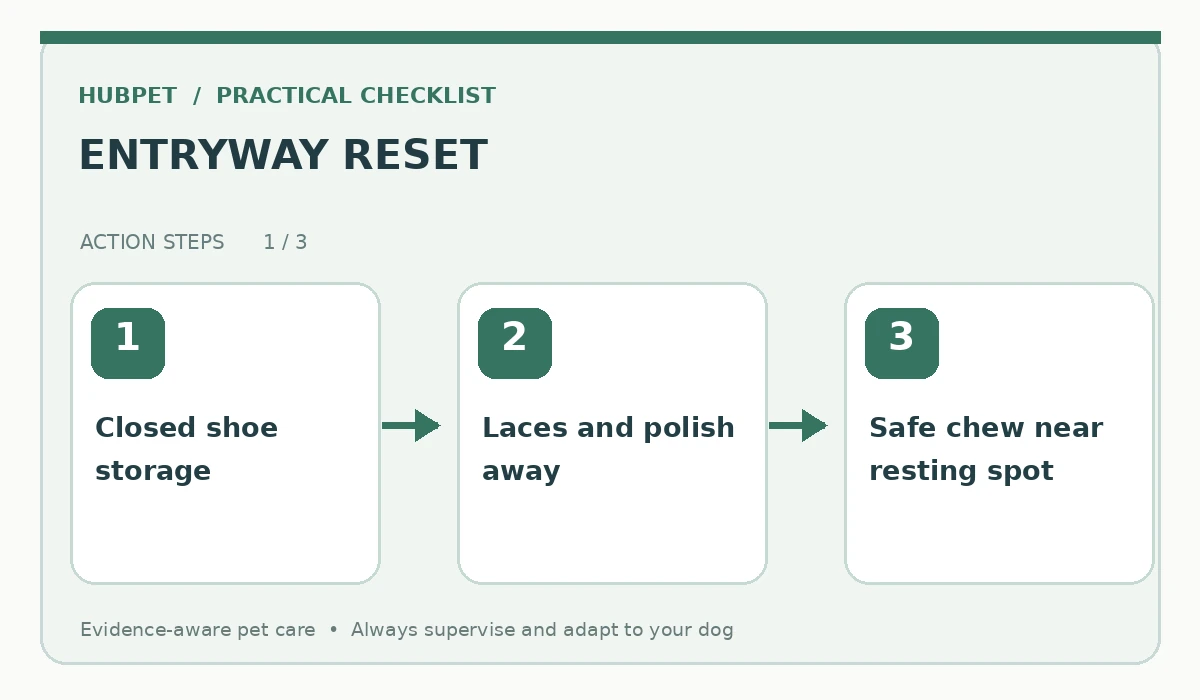
Install a closed shoe cabinet, use a lidded box, or move footwear behind a door that latches reliably. Check entryways, guest areas, closets, and laundry rooms. Children and visitors need the same simple rule: no shoes on the floor within the dog’s reach. Move laces, shoe polish, insoles, and cleaning chemicals as well. A dog that rarely finds a shoe cannot rehearse the unwanted behavior as often. Management is not a substitute for training, but it makes training fairer because the dog encounters fewer confusing choices. Pet-proof the room before leaving your dog alone.
Offer a legal chewing activity in the right location
Place an appropriate supervised chew or food enrichment item near the dog’s preferred resting area before busy household transitions. An allowed toy in a remote basket does little when footwear sits beside the door. Observe whether the dog prefers gnawing, pulling, or food puzzles and choose a safe option that meets the need. Match the object to the individual dog’s mouth and chewing strength; torn fragments and swallowable pieces require immediate removal. Reward voluntary engagement with the alternative, rather than only reacting after the dog already takes a shoe. Rotate intact toys to keep interest without accumulating clutter.
Teach a calm trade before an emergency
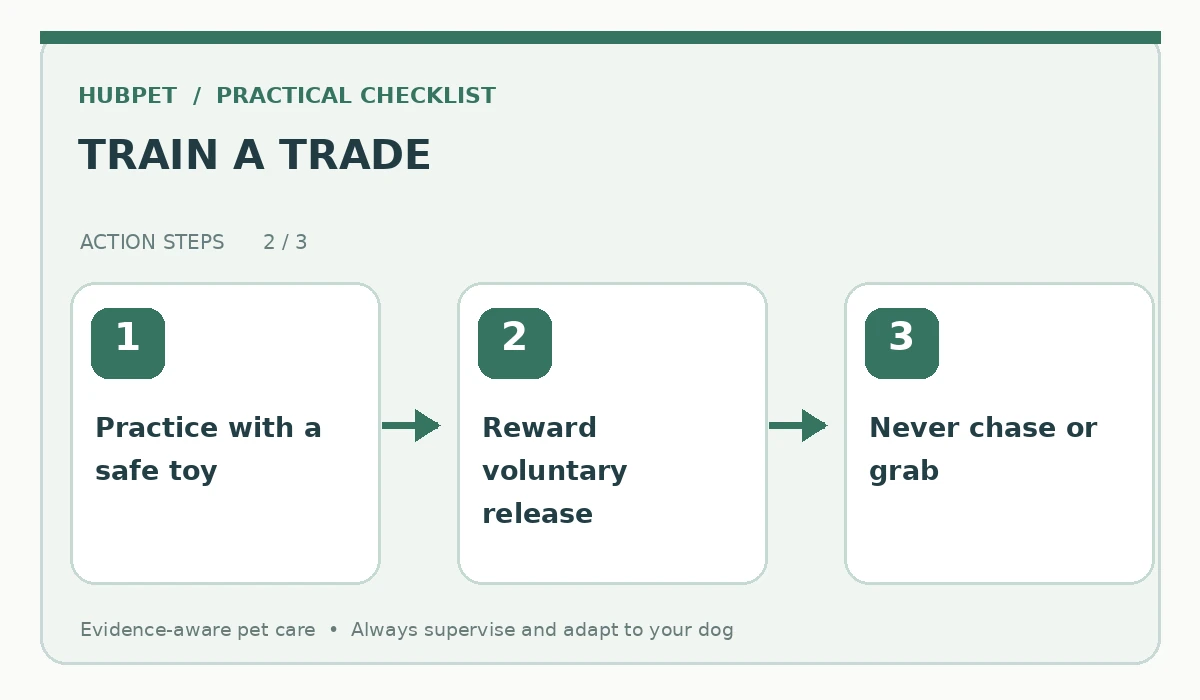
With an ordinary low-value toy, say a consistent cue and offer a reward that the dog enjoys. When the dog releases voluntarily, mark the moment and give the reward; sometimes return the toy to prevent a pattern in which release always ends fun. Gradually practice with slightly more interesting permitted objects. Do not test the skill by handing over a dangerous shoe or encouraging theft. Avoid prying the mouth open or chasing the dog across the house. If the dog freezes, growls, or guards an item, step back and seek qualified behavior help rather than escalating a confrontation.
Handle a stolen shoe without turning it into a game
Keep your body language quiet, avoid reaching toward the dog’s face, and use a practiced reward-based trade from a safe distance. If you cannot retrieve the shoe safely, manage the surroundings and contact a behavior professional if the dog guards objects. Afterward, put the shoe away and consider how it became accessible. Do not scold the dog for damage discovered long after it happened; that will not teach a link between past chewing and the owner’s reaction. The useful lesson comes from reinforcing allowed choices when they occur and preventing another easy opportunity.
Make arrivals and departures less chaotic
Shoes often appear during transitions when the dog feels excited or caregivers lose focus. Before putting on shoes, offer a food puzzle or short settled-on-mat activity in a supervised place. At arrival, put shoes away first and greet the dog when the hallway is calm. If departures trigger distress, do not assume a chew toy fixes separation-related anxiety. Track barking, pacing, accidents, or destruction that occur mainly when the dog is alone. Discuss strong distress with a veterinarian and qualified professional; confinement can worsen anxiety for some animals.
Practice the alternate choice deliberately
Set up a brief training session with the dog on a leash or behind a comfortable barrier while a closed cabinet remains in sight. Reward looking away from the area, going to a mat, or picking up an allowed toy. Move gradually toward realistic daily routines only after the dog succeeds under easier conditions. The aim is to reinforce what to do, not tempt the dog into failure. AVSAB recommends reward-based training and environmental arrangements that make appropriate responses likely. Finish sessions before frustration rises and let the dog rest between attempts.
Coordinate visitors and family members
The plan fails if one person stores shoes and another leaves boots in a hallway. Agree on a single storage place and a short verbal routine before doors open. Ask guests to place bags and shoes out of reach immediately. Teach children to call an adult rather than pulling a shoe from the dog’s mouth. Give the dog a quiet space during crowded arrivals so it is not competing for attention. Tracking preventable slips is more constructive than blaming someone for an occasional forgotten pair. Update the household rule if your dog repeatedly targets shoe racks or closet doors.
Track progress with opportunities, not blame
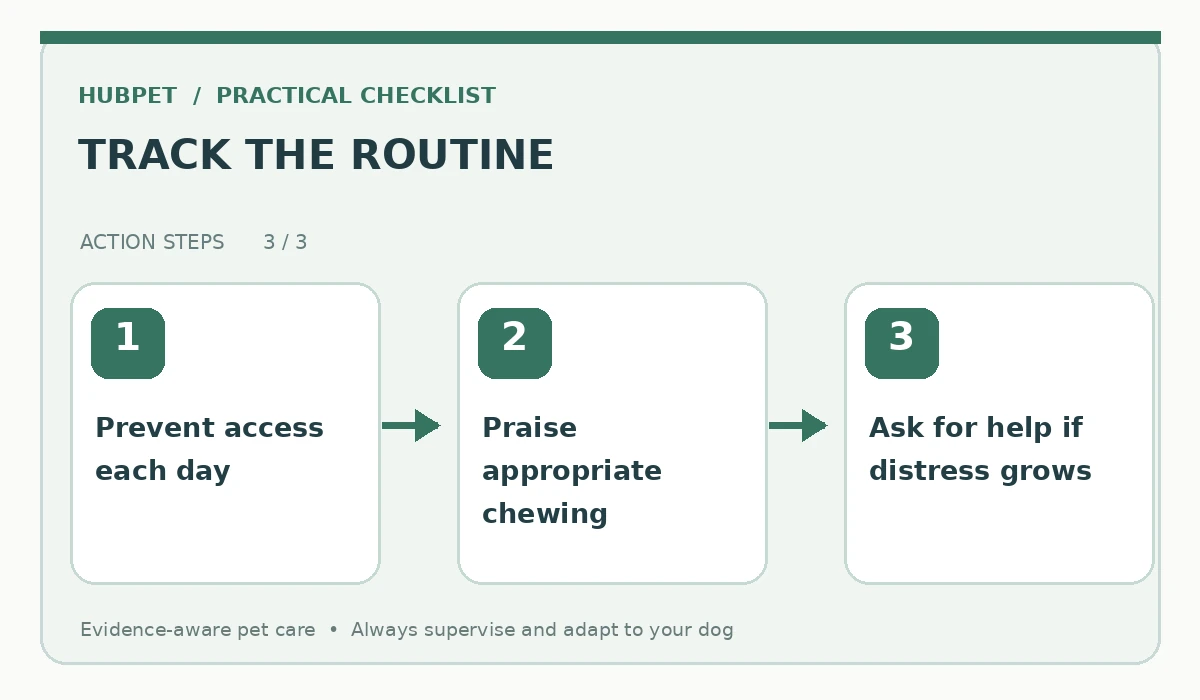
For a week, note how many times footwear became accessible, whether the dog approached it, and whether an offered alternative worked. A day with no stolen shoes tells you little if the household locked away every shoe, but that management is still useful. Gradually look for voluntary choices in normal life while preserving supervision. Check that the chew options remain intact and appealing. If your dog suddenly starts targeting new non-food materials or seems unable to settle, discuss the pattern with a veterinarian. The target is a sustainable home habit, not a one-day obedience demonstration.
Respond quickly to swallowed shoe parts
A dog can tear out foam, rubber, metal eyelets, or long laces before anyone notices. Missing pieces, vomiting, abdominal pain, retching, reduced appetite, or lethargy deserve urgent veterinary advice. Do not induce vomiting or try home remedies without direct veterinary instruction. Save a photograph or matching shoe to show the material and approximate missing amount. Once the veterinary team addresses the immediate risk, reset the environment and return to a calm prevention-and-reward plan. Shoes are human objects with unexpected hazards; preventing access is safer than hoping a dog will always refuse them.
How We Research
Our editorial review compared dog-welfare guidance from veterinary institutions and animal behavior organizations with the specific household safety problem in this guide. We separated sourced health or behavior principles from practical owner checklists, and did not test named products or claim that a method prevents every injury. Always check manufacturer instructions and discuss ingestion, pain, persistent panic, or sudden changes with your veterinarian. Our team reviewed sources on October 27, 2026. For editorial background, see About HubPet.
Sources
ASPCA: Destructive chewing: reasons, management, and appropriate alternatives. Reviewed October 27, 2026.
HumanePro / Humane World for Animals: Puppy teething: appropriate toys and positive management. Reviewed October 27, 2026.
American Veterinary Society of Animal Behavior: Position statements: humane, reward-based dog training. Reviewed October 27, 2026.
VCA Animal Hospitals: Pica in dogs: non-food ingestion and veterinary evaluation. Reviewed October 27, 2026.
Shoes carry familiar scent and offer interesting textures. The reaction when the dog takes a shoe can also become rewarding, so secure storage and an appealing safe alternative matter.
Avoid it. A dog may struggle to distinguish the old shoe from a valuable pair, and laces, soles, or hardware can be hazardous if swallowed.
Avoid chasing. Use a previously trained trade with a safe reward, then change the environment so shoes are less available. Seek help if guarding or biting occurs.
No. Sprays vary in acceptability and do not address the motivation or eliminate access. Choose secure storage, appropriate enrichment, and positive training first.
Swallowed parts, repeated eating of non-food objects, new compulsive chewing, or digestive signs warrant veterinary assessment. Do not assume every case is normal play.