
This article is general information, not veterinary advice. If your pet seems unwell, is in pain or may have eaten something harmful, contact your vet or an animal poison control line right away. Read our vet disclaimer.
How to protect paws from cold and salt starts with limiting contact, checking feet, and removing winter residue after walks. The AAHA cold-weather safety article, updated February 4, 2026 says winter conditions can crack or irritate paws and recommends wiping paws, removing salt and debris, and considering booties if a dog tolerates them.
De-icers also create ingestion risk when a pet licks residue from the feet. The ASPCA Poison Control guidance from January 22, 2026 says rock salt can irritate paws and that several de-icer salts can upset the gastrointestinal tract if swallowed. Therefore, paw cleaning is part of both comfort and exposure prevention.
How to Protect Paws from Cold and Salt Before a Walk
How to protect paws from cold and salt is easier when you plan the route. Choose cleared paths when possible, avoid visible piles of de-icer, and shorten exposure when conditions are harsh. The winter pet care checklist covers the wider cold-weather setup.
For pets that need more winter support, review the winter comfort guide. There is no single outdoor-time cutoff that fits every pet. Coat, age, moisture, wind, health, and surface conditions all change the practical risk.
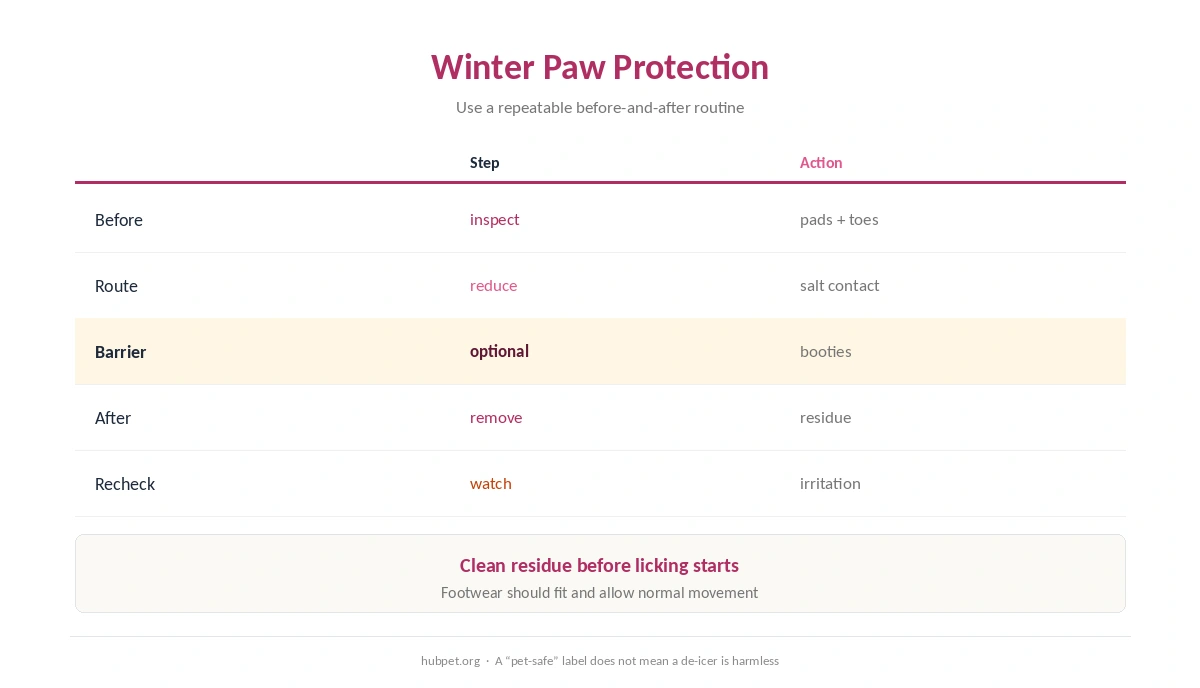
| Winter paw step | What to do | Reason |
|---|---|---|
| Before leaving | Inspect pads and between toes | Find existing cracks or irritation |
| Route | Avoid concentrated salt and chemical piles | Reduce contact |
| Barrier | Use well-fitted booties if tolerated | Adds physical separation |
| After walk | Wipe or rinse and dry | Removes salt, ice, and residue |
| Recheck | Look for licking, redness, limping, or tenderness | Catches trouble early |
How to Protect Paws from Cold and Salt After a Walk
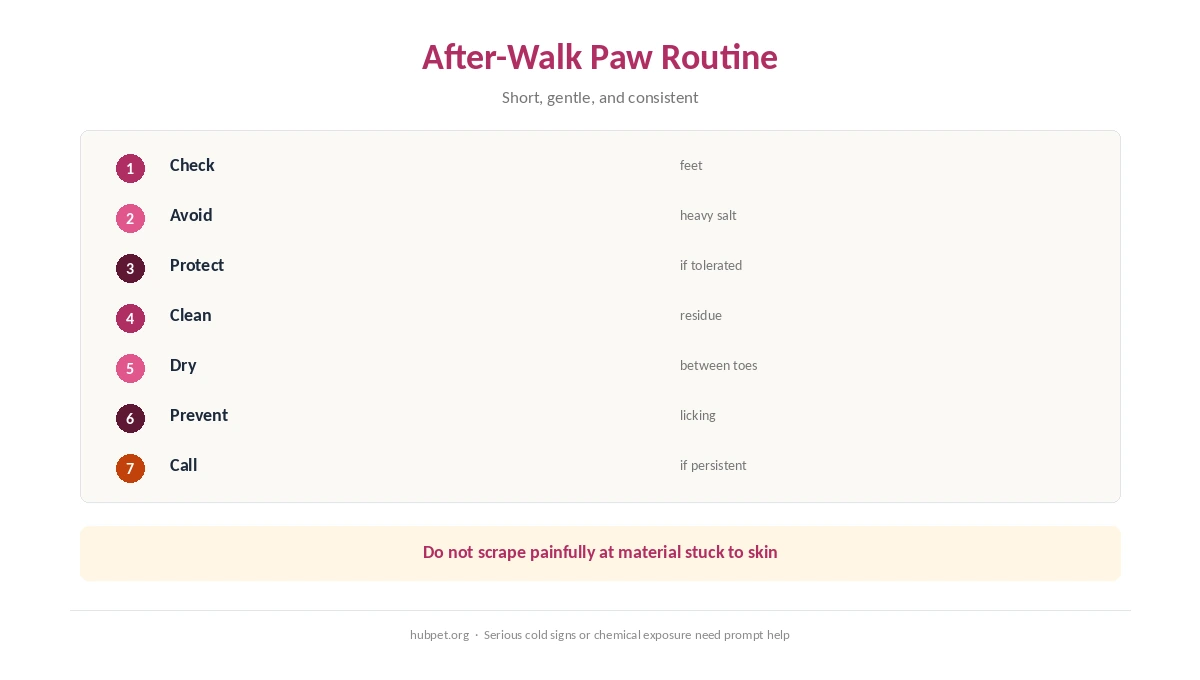
Clean the feet before the pet has time to lick residue. The paw-cleaning guide gives a simple routine. Dry between the toes and around the pads rather than leaving the feet damp in cold weather. A reliable after-walk routine is a practical part of how to protect paws from cold and salt.
Next, check for packed ice, debris, redness, cracks, or a new limp. If grooming is difficult, keep handling brief and voluntary with the handling-practice guide. Do not scrape or pull painfully at material stuck to the skin.
If a pet dislikes footwear, introduce it gradually indoors rather than wrestling it on at the door. The positive reinforcement guide can help pair brief wear with rewards. The goal is comfortable protection, not forcing equipment the pet cannot move normally in.
- Check the paws before and after cold-weather outings.
- Avoid heavily salted or chemically treated patches when another route is available.
- Use footwear only if it fits well and the pet can walk comfortably.
- Wipe or rinse residue from paws promptly after the outing.
- Dry the feet and remove loose ice or debris gently.
- Prevent licking until you remove the residue.
- Contact your veterinarian for persistent irritation, limping, swelling, or suspected ingestion.
Cold, Salt, and Senior Pets
Senior pets or animals with mobility limits may need simpler routes and better footing. The senior-home navigation guide can help reduce slips indoors after wet walks. The senior-dog comfort guide also covers resting surfaces and mobility support.
Keep the wider outing realistic. The daily dog care checklist can help you notice changes in movement or grooming. Meanwhile, the play-and-rest guide offers indoor options when outdoor activity needs to be shorter.
When Cold or De-Icer Exposure Needs Veterinary Help
AAHA’s 2026 cold-safety guidance lists shivering, weakness, pale or cool skin, confusion, and slowed breathing among cold-exposure warning signs. Suspected frostbite or hypothermia needs prompt veterinary guidance. Use the pet emergency signs guide if the pet is collapsing, struggling to breathe, seizing, or showing another emergency sign.
For de-icer exposure, ASPCA Poison Control’s 2026 guidance advises contacting a veterinarian or poison-control service if toxic ingestion is suspected. Do not induce vomiting or give a home remedy unless a veterinary professional specifically directs it. The pet first-aid checklist can help you keep emergency contact information ready.
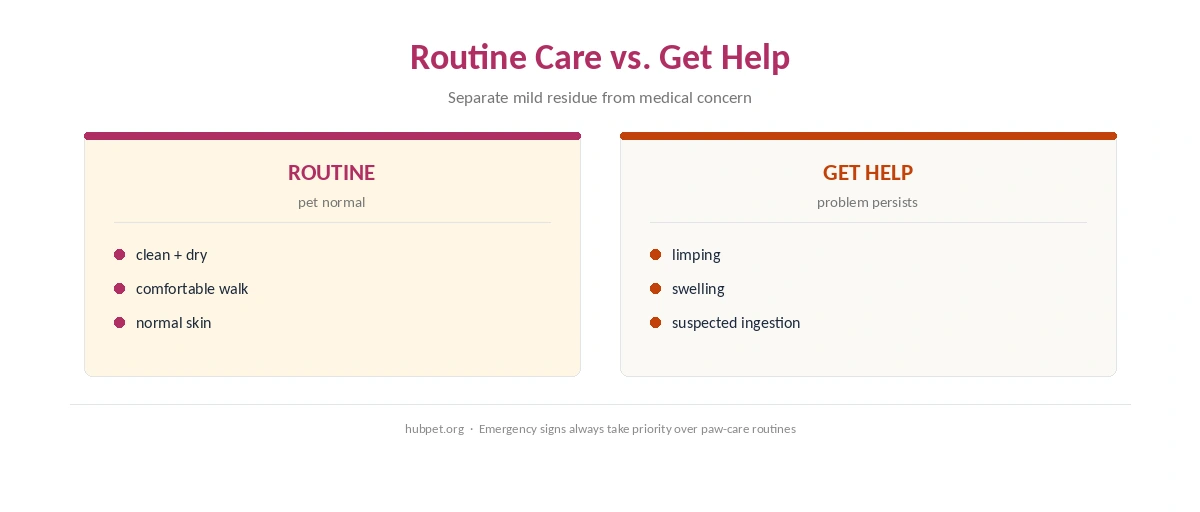
If the issue is limited to mild residue on otherwise normal paws, clean and dry the feet and monitor. If limping, swelling, bleeding, persistent licking, or clear tenderness continues, contact your veterinarian. The pain-signs guide explains why behavior and movement changes deserve attention.
How We Research
HubPet reviewed these sources on October 11, 2026: the AAHA cold-weather safety article, updated 2026, the ASPCA de-icer safety article from 2026, and the ASPCA cold-weather safety tips. Read more about our research process.
AAHA and ASPCA guidance recommends removing salt, ice, and chemical residue after walks. Wipe or rinse the paws and dry them.
No. ASPCA notes that there are no specific labeling requirements for a de-icer to be called pet safe and that even alternatives can cause stomach upset if swallowed.
They can reduce direct contact if they fit properly and the dog tolerates them. Introduce them gradually.
For suspected toxic ingestion, contact your veterinarian or an animal poison-control service promptly. Do not use a home remedy or induce vomiting unless directed.
Persistent limping, swelling, bleeding, marked tenderness, or worsening irritation deserves veterinary assessment.
The Bottom Line: How to Protect Paws from Cold and Salt
How to protect paws from cold and salt is a repeatable routine: reduce exposure, use a comfortable barrier when appropriate, clean and dry feet after walks, and recheck the paws. Persistent irritation, serious cold signs, or suspected chemical ingestion needs veterinary help.