
This article is general information, not veterinary advice. If your pet seems unwell, is in pain or may have eaten something harmful, contact your vet or an animal poison control line right away. Read our vet disclaimer.
Shampoo for cats and dogs sounds like a convenient single bottle for a mixed-pet household. It can be reasonable only when the manufacturer explicitly labels the finished product for both species and the individual pet is an appropriate age. A product advertised for dogs alone is not a safe shortcut for bathing a cat. Ingredients, instructions, medical purpose and licking after the bath all matter. This guide uses a label-first checklist, separates routine dirt from skin disease, and explains why flea shampoos deserve additional caution. It does not rank brands or suggest substituting an unapproved product.
Read the species and purpose before the ingredient list
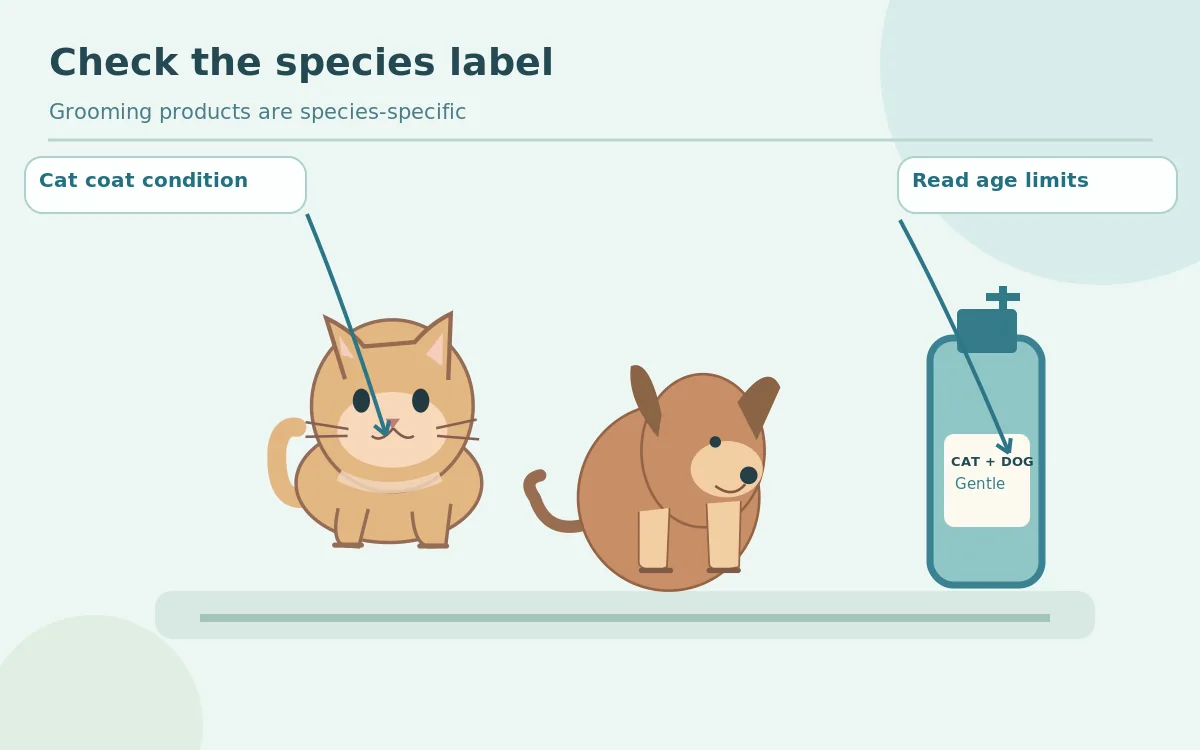
Start with the front and back labels, not the words “gentle” or “natural” in marketing copy. Identify the species stated in the directions, minimum age and any restrictions for pregnancy, illness or sensitive skin. A dog-and-cat grooming shampoo should say that it is appropriate for cats and dogs, and provide actual instructions for both. If the label only lists dogs, skip it for the cat even when the packaging resembles a feline product. VCA recommends feline-specific shampoo for cats and canine-specific products for dogs. A combined claim needs clear dual-species directions; the words “pet shampoo” alone are not confirmation.
| Label finding | What it means | Your next move |
|---|---|---|
| Dogs only | Not approved for your cat | Use a cat-labeled cleanser instead |
| Cats and dogs explicitly | Possibly suitable for routine washing | Still check age and ingredients |
| Medicated or flea-killing | Medical/pesticide purpose | Ask the vet before selecting |
| Human or baby shampoo | Not formulated for pet skin | Choose species-appropriate product |
| Strong fragrance or essential oils | Extra ingredients without clear benefit | Prefer simple unscented options |
The flea-treatment exception is especially important
A medicated or flea shampoo is not interchangeable with an ordinary cleaning shampoo. Some parasite products meant for dogs contain permethrin or related pyrethroids that are dangerous to cats; VCA and PDSA warn that mistaken use can cause severe poisoning. Never divide a dog dose between two animals, use a dog flea shampoo on a cat, or assume a household recipe is a harmless replacement. Fleas can also indicate an environmental problem beyond what a single bath solves. Ask your veterinarian about a cat-specific parasite-control plan, particularly for kittens. If a cat may have been exposed to a dog flea product, contact a veterinarian immediately rather than waiting for symptoms.
Look at the difference between cleaning and treating. A healthy dog with ordinary mud may benefit from an occasional gentle wash; a healthy cat with a tiny patch of dirt may only need brushing or a damp cloth. Persistent itch, redness, an oily coat or recurrent odor is not proof that a stronger shampoo is required. Those signs may warrant examination. Similarly, “hypoallergenic” is a marketing description unless the manufacturer explains what it means for its formula. Avoid essential-oil mixtures, undiluted detergents and human shampoos. A product with a dual-species label still requires individual tolerance and proper rinsing.
- Identify whether each pet needs a full bath or only a local wipe.
- Read both species directions, age limits and any parasite-treatment claims.
- Ask a veterinarian before medicated shampoos or any flea-killing product.
- Set up a nonslip surface, lukewarm water and towels before bringing the pet in.
- Use the product exactly as labeled, protect the face, rinse thoroughly and dry calmly.

Choose a cleanser by the actual job
For routine coat soil, compare clear pet-safe labeling, mild cleaning purpose, rinseability and an absence of unnecessary scent. For a cat that resists bathing, grooming with a soft brush or spot cleaning can be a better first choice; see our guide to brushing a cat without stress. A dog with a dense double coat may need careful saturation and prolonged rinsing rather than stronger soap. If a skin problem has been diagnosed, use the exact product or plan prescribed by a veterinarian instead of improvising. Do not switch species halfway through because one bottle is already open.
| Household need | Safer starting point | Avoid |
|---|---|---|
| Clean dog after muddy walk | Dog-labeled gentle wash | Human detergent |
| Cat has one small dirty patch | Brush or damp cloth | Unneeded full-body bath |
| Both pets require routine washing | Explicit dual-species label | Assuming dog-only product works |
| Fleas or persistent itchy skin | Veterinary parasite/skin assessment | DIY pesticide mixtures |
Prevent stress and residue during a bath
Prepare a towel under the animal’s feet so it does not slide. Use comfortably warm—not hot—water and keep liquid out of the eyes, ears and nose. Work calmly, use small amounts of cleanser and pay close attention to manufacturer contact and dilution directions. Rinse until no visible lather remains because cats groom and can ingest residue. Never force a frightened cat to remain under a running stream. For dogs that dislike spray noise, a gentle cup pour can be less startling. Our low-mess dog bath routine outlines room setup and cleanup. Dry the pet in a warm area and observe for itching or discomfort afterward.

Purchase decisions should also account for storage, not just the shared label. Keep every bottle in its original packaging so age restrictions and ingredient warnings remain available. Label a separate shelf for medicated flea products, and do not transfer concentrates into unmarked containers. In households with cats and treated dogs, ask your veterinarian how to prevent secondary exposure to topical flea treatments. A pleasant scent is not evidence of skin health. If the pet develops redness, hives, vomiting, drooling or other signs after a bath, stop using the product and get veterinary advice rather than attempting a second “corrective” shampoo.
When to Call Your Vet
Contact a veterinarian before treating fleas, scaling skin, sores or repeated intense itching. Seek urgent advice if a cat is exposed to a dog-only flea shampoo or other suspected pesticide, especially if drooling, tremors, twitching or weakness appear. This guide does not diagnose skin disease, approve particular ingredients or provide parasite-drug dosing.
How We Research
This comparison relies on VCA animal-hospital guidance about species-specific grooming products and PDSA information on permethrin toxicity in cats. Product directions and minimum ages vary, so a generic article cannot approve any particular shampoo formulation or replace a clinician’s advice. We intentionally do not recommend home flea recipes or brand rankings. Read HubPet’s editorial approach for more information.
Sources
VCA — Choosing Dog and Cat Shampoos — source and guidance checked for this article.
VCA — Grooming and Coat Care for Cats — source and guidance checked for this article.
PDSA — Permethrin Toxicity in Cats — source and guidance checked for this article.
Use only a product explicitly labeled as appropriate for cats; a dog-only shampoo is not a safe substitute.
No. Read the actual label for both species, age restrictions, medical claims and individual skin concerns before use.
Routine pet bathing should use products formulated for the relevant species, since human products can irritate pet skin.
No. Some dog flea products contain substances dangerous to cats. Contact your veterinarian for cat-specific parasite care.
Stop using the suspected product, rinse only as directed when appropriate and ask your veterinarian to assess persistent irritation.