
General education only; this is not individualized veterinary advice. For pain, illness, breathing difficulty, marked distress or other safety concerns, contact your veterinarian. See the HubPet veterinary disclaimer.
Kittens and baths do not automatically belong together. Most healthy kittens groom themselves and do not need routine full-body shampooing. A little food on the chin or litter dust on a paw is usually a spot-cleaning problem, not a reason to soak a very young animal. Veterinarians sometimes recommend washing after a significant mess, a veterinary recommendation, or specific contamination, but a wet kitten can chill rapidly. Age, temperature, skin condition and the cause of the dirt should guide the decision. This practical checklist separates ordinary grooming from situations that require a veterinarian rather than a home bath.
Decide whether the kitten truly needs water
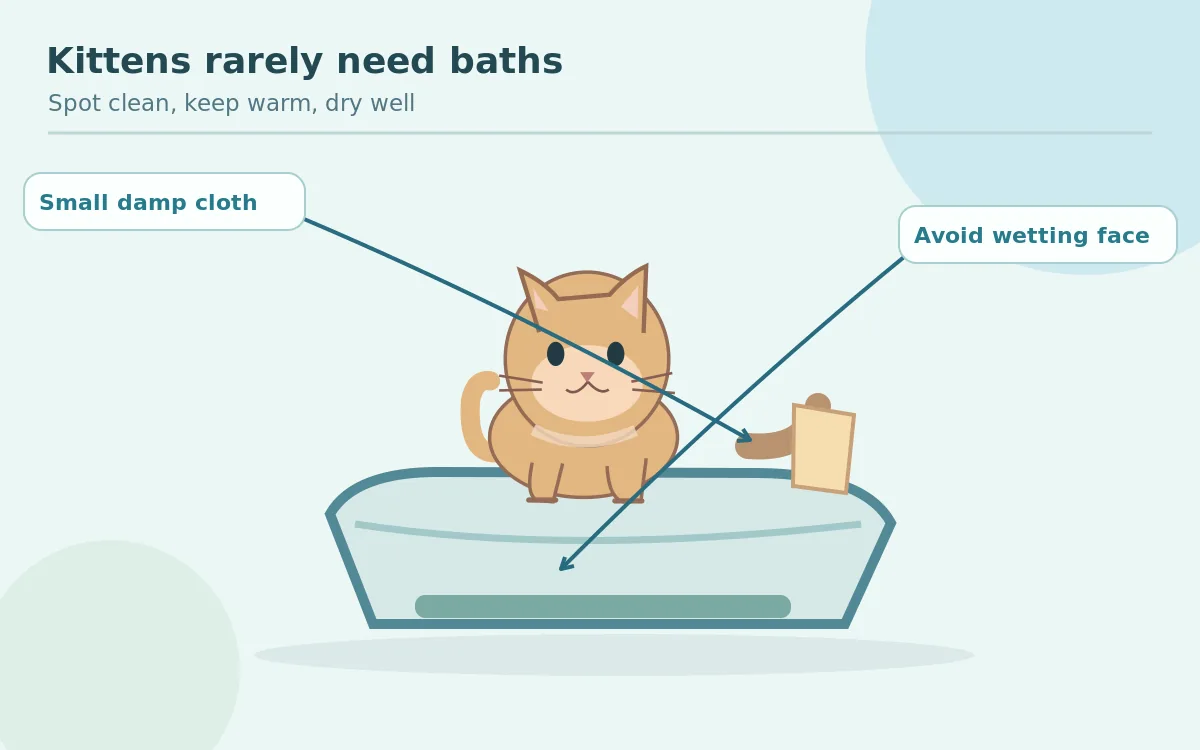
Look closely before turning on the faucet. If the fur has a small smear of food or dust, gently wipe that area with a soft slightly damp cloth and dry it afterward. If the kitten is sticky over much of its coat, evaluate what caused the mess. Unknown chemicals, oil, paint, cleaning products or possible toxins should prompt veterinary or poison-control advice before washing: some materials are dangerous when licked and different substances need different treatment. VCA notes that healthy cats generally keep themselves clean without regular baths. Repeated shampooing can create unnecessary stress and may irritate sensitive skin. The least invasive effective cleaning method is usually preferable.
| Observation | First choice | Escalate when |
|---|---|---|
| Dry food or litter dust on fur | Gentle brushing or local wipe | Skin seems painful or inflamed |
| Small sticky patch | Warm damp cloth, then dry | Unknown chemical may be present |
| Widespread non-toxic mess | Ask vet if age or health is uncertain | Kitten is very young or chilled |
| Fleas or flea dirt | Flea comb and veterinary advice | Heavy fleas, pale gums or weakness |
| Healthy clean kitten | No bath needed | Persistent odor or coat changes |
Age matters more than a one-size-fits-all bathing calendar
A one-month-old kitten is not simply a miniature adult cat. Very young kittens struggle to maintain body temperature, so unnecessary immersion creates more risk than benefit. If dirt covers a four-week-old kitten, ask a veterinarian or experienced kitten rescue professional about the safest cleanup and drying plan. An older, healthy two- or three-month-old kitten may tolerate brief, careful cleaning better, but still does not need frequent baths merely because it reaches a particular age. Focus on being warm, dry and calm. Best Friends Animal Society describes hypothermia as an important neonatal risk, reinforcing why immediate warming and veterinary help matter when a young kitten feels cold.
Fleas require special caution. Cornell notes that a substantial flea burden can cause anemia in kittens. The presence of fleas is not a reason to grab a dog flea shampoo, essential oils or an adult-cat product. VCA warns that some flea treatments intended for dogs contain permethrin, which is toxic to cats. Contact your veterinarian for an age- and weight-appropriate parasite plan. A flea comb may help you assess the problem while arranging care. If the kitten has pale gums, pronounced lethargy or many visible fleas, seek veterinary attention promptly rather than spending time on a cosmetic bath. Treat the home environment as directed too; one bath does not control the full flea life cycle.
- Check why the fur is dirty and whether a local wipe will solve the problem.
- Make sure the kitten is warm, alert and otherwise well before any planned wash.
- If a bath is advised, prepare towels, a nonslip surface and comfortably warm water first.
- Keep the kitten’s face out of flowing water and avoid products not approved for kittens.
- Dry thoroughly, keep the kitten warm and watch for shaking, weakness or distress.

Set up a small, calm cleaning space
When a professional recommends a bath, prepare everything before picking up the kitten. VCA suggests a small sink or tub, a nonslip surface, warm water tested by hand or elbow, and positive reinforcement. Keep the stream gentle and avoid the eyes, nose and ears. Use only a veterinary-recommended kitten-appropriate cleanser when the cleaning task truly requires one. Never use human shampoo, strong fragrance, essential oils or a dog flea treatment on a kitten. Speak softly and stop if the kitten struggles hard; a panicked animal may swallow water or injure itself trying to escape. For less serious dirt, a damp cloth is often more than enough.
| Situation | Practical approach | Main caution |
|---|---|---|
| Tiny kitten with small mess | Warm damp cloth and immediate dry | Avoid chilling |
| Healthy older kitten with dirty coat | Short, calm wash only if necessary | Do not force or over-bathe |
| Veterinarian-prescribed medicated bath | Follow the clinic instructions exactly | No improvised product or dose |
| Suspected harmful substance | Call vet or poison service first | Do not spread or let kitten lick it |
Drying and recovery matter as much as washing
Move the kitten onto a dry towel immediately and blot moisture gently rather than rubbing vigorously. Use a second dry towel if the first becomes wet. Keep the room comfortably warm and free of drafts; check that the kitten is alert and not trembling or becoming weak. Avoid directing a hot hairdryer at delicate skin, and do not rely on a warm surface that the kitten cannot move away from. Continue checking the coat around the belly, chest and paws, where dampness can linger. The daily cat care checklist can help you establish a low-stress routine between occasional cleanups.
Brief, pleasant handling builds good grooming habits. Reward voluntary approaches to a dry sink or a towel, let the kitten retreat and gradually introduce a soft brush. Our gentle cat brushing guide explains a less disruptive way to maintain a coat. If your new kitten hides, shakes or resists touch, focus first on trust and gradual exposure, not on making it tolerate a full bath. The first-week kitten home checklist covers a calm environment. For persistent matting, foul odor or repeated soiling, a veterinary exam may find a cause that bathing alone cannot solve.
When to Call Your Vet
Call promptly for a cold, trembling, listless or weak kitten, pale gums, breathing trouble, skin injury, heavy flea infestation or possible chemical exposure. Very young and sick kittens should avoid home baths without veterinary direction. No shampoo or homemade parasite treatment is a substitute for an appropriate medical plan.
How We Research
This decision guide draws on VCA’s kitten-bathing and parasite cautions, Cornell’s explanation of flea-related anemia, and Best Friends Animal Society’s neonatal temperature warnings. We intentionally give no flea-drug doses or universal “safe bathing age,” because the safest response depends on age and clinical condition. Read HubPet’s editorial approach for additional details.
Sources
VCA — How to Bathe Your Kitten — source consulted for this guide.
Cornell — Fleas and Kitten Health — source consulted for this guide.
VCA — Kitten Flea Product Safety — source consulted for this guide.
Best Friends — Medical Care for Kittens — source consulted for this guide.
Usually not. Healthy kittens generally groom themselves, and a small dirty patch often needs only a soft damp cloth and prompt drying.
A four-week-old kitten can chill easily. Seek veterinary guidance for significant soiling or parasite concerns rather than performing an elective full bath.
No. Some products intended for dogs contain ingredients dangerous to cats; ask a veterinarian for a kitten-appropriate flea plan.
Stop using unapproved products, keep the kitten warm and contact a veterinarian. Heavy fleas, weakness or pale gums require prompt evaluation.
Start with a dry tub, reward calm voluntary exploration and progress slowly. Do not force immersion, and use an actual bath only when needed.