
Use supervised, reward-based activities and ask your veterinarian about injuries or suspected swallowed toy parts. See the HubPet vet disclaimer.
A tug rope dog game should feel like a cooperative activity, not a contest of strength. An appropriate rope can help a dog engage, practice releasing on cue and enjoy a short burst of interactive play. But swinging, hard jerks and fighting over possession can turn a friendly game into neck strain or guarding. This beginner routine focuses on starting only when the dog volunteers, holding the toy low, rewarding a clean release and finishing before the dog becomes frantic. If your dog dislikes tug, choose another enrichment activity instead of trying to force enthusiasm.
Check the rope and the dog before the first tug
Choose a toy long enough that your hands are away from the dog’s mouth and inspect it for loose threads, unraveling ends, hard components or knots the dog could swallow. VCA cautions that owners should retire frayed rope toys; tug ropes are for supervised interaction, not indefinite chewing. Make sure the dog can grip the toy without pain or slipping onto your hand. If there is an injured mouth, painful neck, recent surgery or a known mobility problem, ask a veterinarian before playing. Start on nonslip flooring with enough room to turn without striking furniture. Keep children out of the pulling zone until an adult can reliably manage the game.
| What you see | Interpretation | Response |
|---|---|---|
| Loose body, easy release | Comfortable play | Continue in short bursts |
| Mouth shifts toward fingers | Handle too short or high arousal | Pause and change grip |
| Rope fibers separating | Ingestion hazard | Retire the toy immediately |
| Stiff posture or growling at approach | Possible guarding/distress | Stop and seek professional support |
| Yelping or head shaking | Possible pain | End game and assess with vet |

Teach the exchange before raising excitement
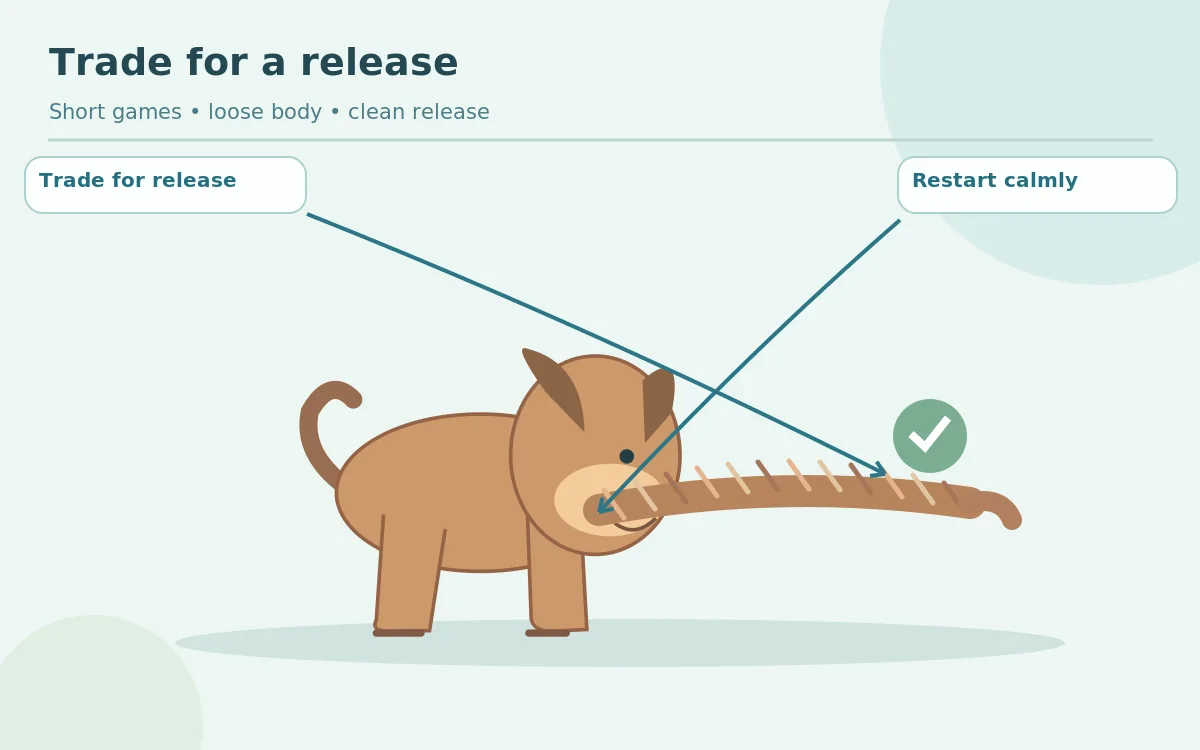
The cleanest way to teach a release is to make dropping the rope profitable. First offer a toy the dog likes but does not guard. Invite “take it,” gently hold your end and let the dog pull horizontally without violent shaking. After a moment, become still and offer a treat or second toy; mark and reward when the mouth opens. Then invite another tug. The American Kennel Club describes trading as a positive method for teaching “drop it.” Avoid prying the jaw open, pulling the rope out of the mouth or punishing a slow release. Those tactics can make possession more valuable and increase conflict.
Keep the rope approximately at the dog’s natural mouth level, not up in the air. Move with the dog rather than dragging the head sharply side to side. Allow the dog to “win” the toy sometimes; a successful release should not mean the fun ends forever. If the dog wanders away with the rope, let the game end peacefully. If the dog begins grabbing clothing, barking frantically or jumping at your face, pause until calm returns. Play is optional and should never require pain, threats or forced submission. For a fuller release sequence, see our drop-it training guide.
- Invite the dog to approach and offer a clean, suitably sized tug toy.
- Say “take it” once, then use relaxed low horizontal resistance.
- After a brief round, freeze the toy and offer a valuable trade.
- Mark a voluntary release, reward, then restart if the dog remains calm.
- Finish with a calm cue, put the rope away and offer water and rest.
Adjust the game to the dog in front of you
A small puppy may prefer soft fleece over a thick stiff rope; a powerful adult still needs controlled hand positioning rather than maximal resistance. Older dogs or dogs with dental disease may tolerate gentle carrying but not pulling. The toy should feel pleasant to bite and be large enough not to disappear into the mouth. A dog that clamps the rope and freezes when a person approaches is not an opportunity to “prove” control. End the interaction without confrontation and review our guide to guarding food and toys. With a history of guarding or bites, consult a qualified reward-based professional.
| Dog/play context | Adjustment | Stop if |
|---|---|---|
| Young or inexperienced dog | Soft toy, tiny rounds, generous trades | Teeth move toward skin |
| Large excited dog | Wide floor space and low tug angle | Hard body slams or loss of control |
| Older dog | Gentle invitation and shorter effort | Stiffness, limping or reluctance |
| Multi-dog household | Individual one-dog-at-a-time turns | Competition around toy |
| Dog guarding objects | Avoid contested tug sessions | Freezing, snarling, bite risk |
Use an easy ending, not a final power struggle
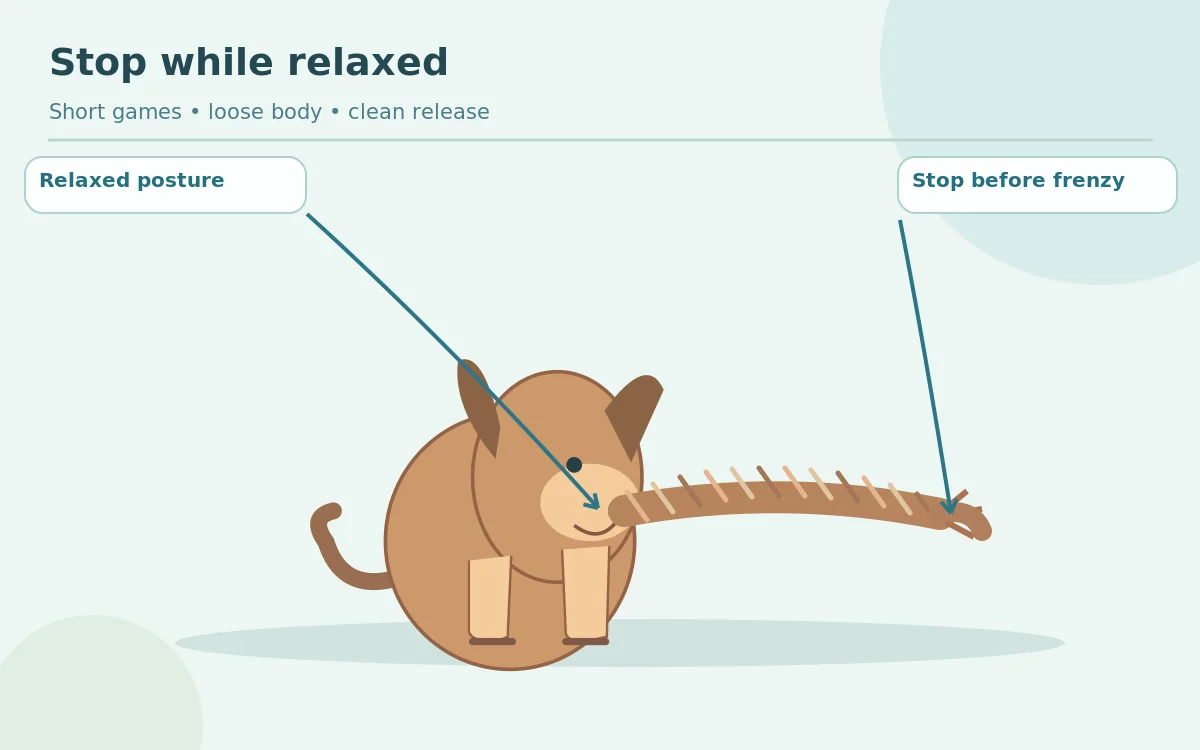
When the dog still wants to play but remains calm, say the release cue, reward the drop and give an alternative calm activity. Put the toy out of reach because ropes after the dog chews them apart can become foreign-body hazards. Check hands and clothing for accidental mouth contact and note whether arousal was rising before you stopped. You can repeat short, positive sessions on another day; there is no value in extending tug until the dog becomes exhausted. The AKC describes short tug intervals with pauses to think and trade. Pairing energetic play with a predictable ending helps your dog learn when excitement begins and when it is time to recover.
Common mistakes are easy to fix. For a reluctant release, improve the trade reward or practice away from the rope at a calmer moment. When teeth approach your hand on the handle, use a longer design or choose a different game. When your dog repeatedly shreds the rope, it cannot serve as an unsupervised chew. Never use tug as a way to punish unwanted behavior or to challenge a dog that is uncomfortable sharing objects. For dogs that lose self-control around toys, our play-arousal guide helps you recognize earlier pause signals.
When to Call Your Vet
Ask your veterinarian about mouth pain, broken teeth, neck soreness or reluctance to move after play. If a dog swallows rope fibers or a toy piece, seek veterinary advice promptly rather than inducing vomiting. For serious guarding or previous bites, contact a qualified humane behavior professional; physical confrontation increases risk.
How We Research
We compared reward-based release guidance from the AKC and the ASPCA with veterinary toy-safety advice from VCA. The goal is a cooperative game with a reliable trade and early stop signals, not a strength contest. No rope material promises bite-proof durability, and the dog’s behavior and health determine suitability. Read HubPet’s editorial approach for more information.
Sources
AKC — Playing Tug of War Safely — source and guidance checked for this article.
AKC — Teaching Drop It — source and guidance checked for this article.
VCA — Choosing Safe Dog Toys — source and guidance checked for this article.
ASPCA — Tug-and-Drop Training Guide — source and guidance checked for this article.
Yes, when the puppy enjoys a soft toy, movements stay gentle and you reward each voluntary release.
Let the dog take possession sometimes, then invite another round; the important skills are calm invitations and safe exchanges.
Pause, offer a more valuable trade and practice drop-it separately rather than prying the mouth open or arguing over the toy.
Not for a dog that might chew and swallow fibers. Supervise rope play and put damaged toys away.
Stop before frantic mouthing or loss of control, and immediately if you notice pain, guarding, damaged fibers or distress.