
General pet-care information, not veterinary advice. Special diets, allergies, chronic illness, puppies and kittens may require individualized guidance from your veterinarian. If your pet swallows a foreign object, seems unwell or may have eaten a toxic ingredient, contact a veterinarian promptly. Read our veterinary disclaimer. Treats for dogs and cats are not automatically interchangeable just because both animals beg for them. A small morsel of an appropriate plain food may suit a healthy dog and a healthy cat, but a packaged dog snack may be too large or formulated for canine preferences, while a cat treat may be rich or calorie-dense for a dog. The correct question is not “Which pet likes it?” but “Are the ingredients, texture and portion appropriate for this species and individual?”
Use species-labeled treats when possible, or share only a carefully chosen plain, fully cooked, unseasoned, boneless food that your veterinary team says suits both pets. Count extras separately for the dog and the cat. Never assume dog food can replace cat food or vice versa. If one animal steals the other’s treat, check the actual ingredient list and amount before deciding whether to call your vet.
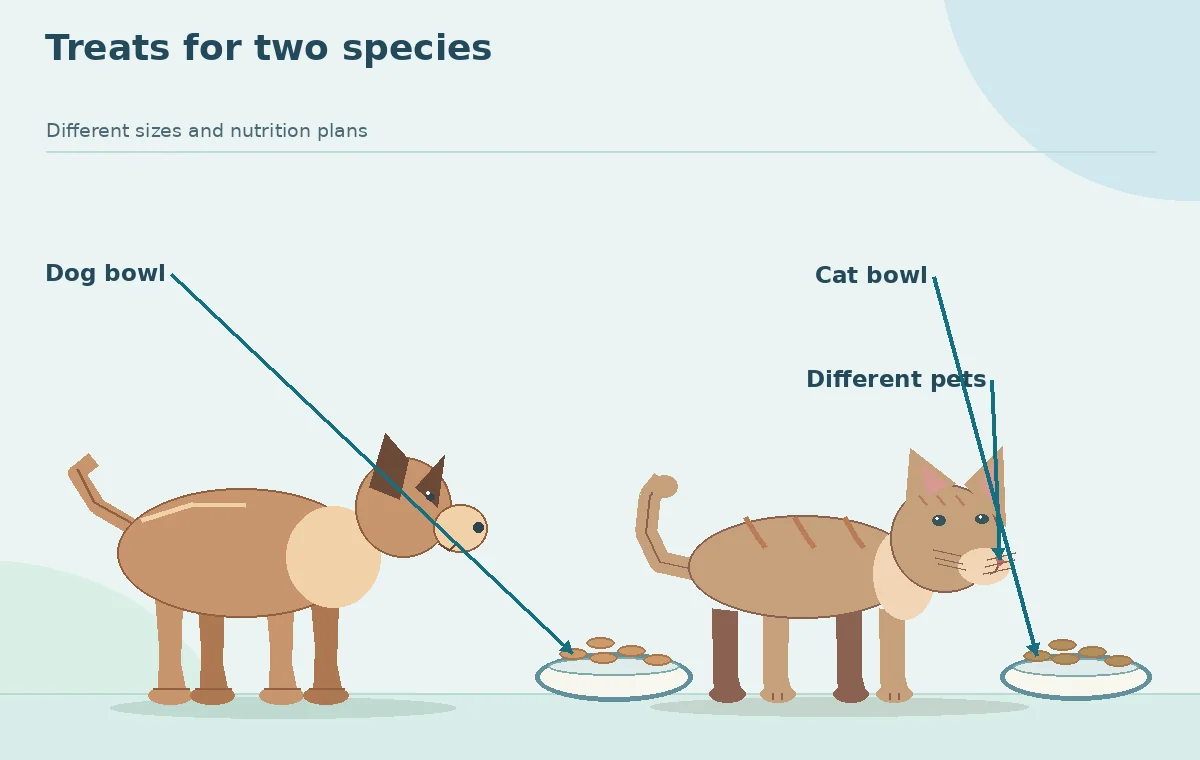
Use this shared-treat decision chart
A dog and a cat can live together and still need different nutrition. Cats have distinct essential nutrient requirements, and commercial pet foods aim to be complete for a named species and life stage only when the label says so. Snacks generally are not complete diets. Also consider chewing: a snack that a large dog crunches safely can be a choking hazard for a small cat or toy-sized dog. Do not divide a hard chew simply to make it appear species-neutral.
| Food or snack | Possible use | Key limitation |
|---|---|---|
| Plain fully cooked boneless chicken | Small occasional piece for some healthy dogs and cats | No sauces, seasoning, skin or bones |
| Dog-labeled soft treat | Prefer for dogs | May be unsuitable texture or ingredient mix for cats |
| Cat-labeled soft treat | Prefer for cats | Can be rich; portion may differ for dogs |
| Raw animal treat or cooked bones | Avoid sharing | Pathogen, dental or obstruction concerns |
| Food with onion, garlic or toxic sweeteners | Do not give to either pet | Toxicity differs by species; seek veterinary advice |
Read two labels, not one marketing name
Compare the ingredient list, calorie statement, feeding instructions, species label and size of each piece. The word “natural” does not tell you whether there is excessive fat or an ingredient your pet cannot tolerate. Do not treat all dog snacks as unsafe for a cat in every accidental nibble; risk depends on the snack, the amount and the animal’s health. Conversely, do not assume a cat treat is harmless for every dog just because the portion is small. Keep packaging available if you call the clinic.
Set up a two-pet treat station
- Store dog and cat snacks in separate, closed containers with the original ingredient labels available.
- Offer each pet its species-appropriate treat in a different place to prevent stealing and food guarding.
- Preportion extras for each pet’s own daily allowance; do not divide one shared calorie budget.
- Check that each piece is soft enough and small enough for the individual pet to eat safely.
- After any accidental swap, record exactly which product, its ingredients and approximate amount.
- Return to the normal complete species-specific diet and call your vet for concerning symptoms or toxic ingredients.
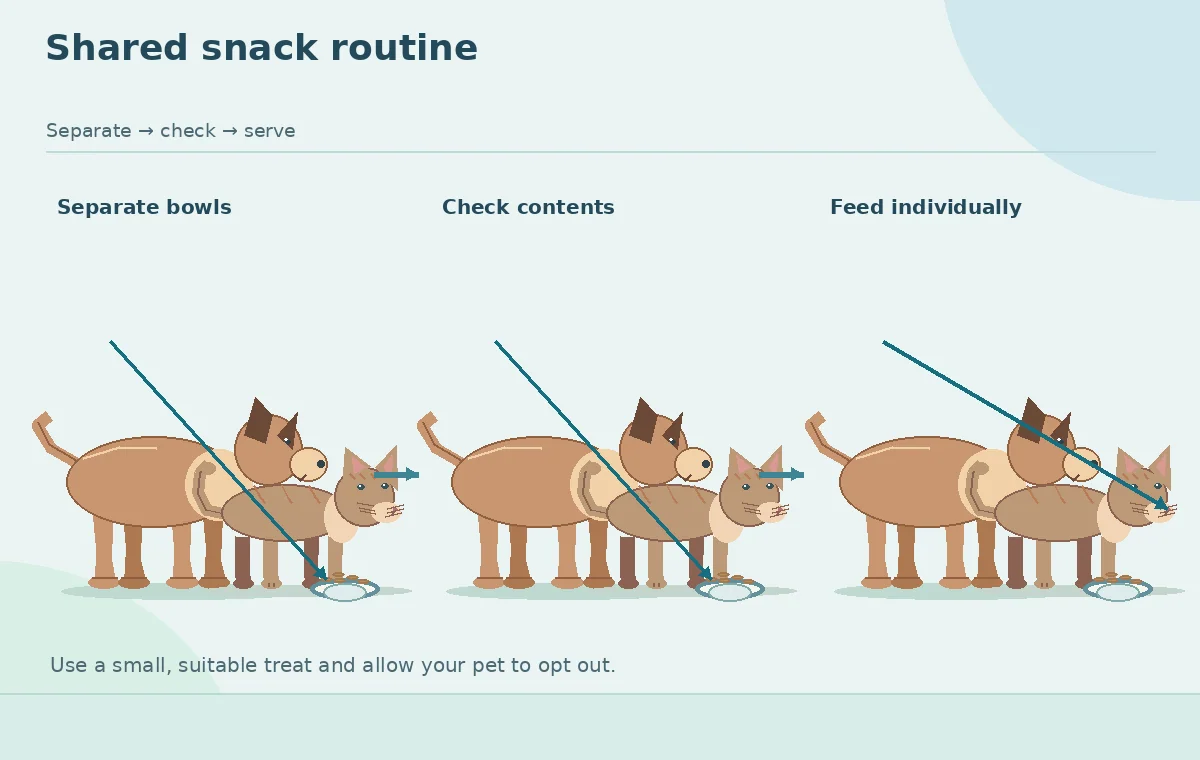
Make snack time predictable rather than letting the faster dog grab the cat’s treat off a counter. Dogs may guard food; the published guide why dogs guard food and toys discusses how to avoid escalating conflict. Feeding pets separately also lets you notice who is actually eating which calories. If you are choosing a cat enrichment toy, the HubPet cat chew-toy safety guide explains why detachable parts can become a different kind of ingestion risk.
What if my cat ate a dog treat—or my dog ate cat treats?
Start with the label and the pet’s condition. One ordinary small pet treat may not create a crisis for a healthy adult, but there is no safe blanket rule. A hard chew can lodge or splinter, very fatty treats may cause digestive illness, and ingredients such as onion or garlic can be dangerous. Call your veterinarian or an animal poison-control service if the snack contains a questionable ingredient, the pet ate a substantial amount or develops symptoms. Do not induce vomiting or offer medications on your own.
| Accidental snack situation | What to record | Action |
|---|---|---|
| One small soft treat; pet seems normal | Brand, ingredients and size | Monitor and consult vet if uncertain |
| Large hard chew or missing pieces | Object size and material | Urgent veterinary advice about obstruction |
| Chocolate, onion, garlic, xylitol concern | Exact ingredient list and amount | Call vet/poison service promptly |
| Repeated snack theft over several days | Which pet ate which extras | Correct access and review calories |
| Vomiting, painful belly or lethargy | Time of symptoms and exposure | Prompt veterinary assessment |

Keep treats from replacing meals
AAHA recommends that treats and table foods together stay at or below about 10% of each pet’s daily energy intake. A house with two pets can exceed that recommendation quickly if every family member gives “just one.” Dogs and cats have different energy requirements even at similar body weights, so size-based guessing is poor practice. Use their own veterinarian-approved feeding plans, count lickable snacks and training pieces, and keep normal balanced meals the foundation. Reward calm behavior with play or interaction when appropriate, not only with food.
When to Call Your Vet
Seek advice promptly for suspected toxic foods, swallowed bone or hard chew pieces, choking, repeated vomiting, lethargy or unusual behavior after eating. Emergency signs such as breathing trouble, collapse or ongoing choking require emergency care. Pets with diabetes, kidney disease, pancreatitis, gastrointestinal disorders or food allergies need an individualized treat plan before sharing any snack. Keep the original package for the veterinary team.
How We Research
We compared ASPCA toxic-food guidance and AVMA raw-protein safety guidance with AAHA nutrition recommendations and VCA treat information. We separate an accidental stolen bite from using the wrong species’ complete diet for regular feeding, and distinguish ingredient toxicity from size and calorie risks. No recommendation is a diagnosis of a particular exposure. Learn about our research approach on About HubPet.
Sources
AAHA — Prevention of Obesity; AAHA — Feeding Plans for Healthy, Appropriate Weight Cats and Dogs; VCA — Choosing Healthy Treats for Dogs and Cats; ASPCA — People Foods to Avoid Feeding Your Pets; AVMA — Raw Diets for Dogs and Cats.
Some ordinary cat treats may not harm a healthy dog in tiny amounts, but the exact ingredients, size and animal’s health matter.
Do not make dog treats a cat’s routine snack. Check for choking hazards and unsuitable ingredients, and favor treats made for cats.
A little plain fully cooked boneless unseasoned meat may suit some healthy pets; discuss restrictions with your veterinarian first.
Only if the product is clearly appropriate to both species and each pet has an individual portion and calorie budget.
No. Identify the product and amount and contact a veterinarian or animal poison-control service for instructions.