
Dog shampoo should clean the coat without leaving skin irritated. That sounds simple, yet a shelf of fragrance claims, specialty formulas, and medicated labels can make a basic bath complicated. Start with your dog’s coat, skin history, and the purpose of washing rather than a package promise. The HubPet veterinary disclaimer explains why general grooming advice cannot replace an examination.
For routine bathing, veterinary guidance favors products formulated specifically for dogs. Persistent itching, red skin, unusual odor, hair loss, or painful patches require a veterinarian’s advice before experimenting with different washes. This article helps you evaluate labels and bath routines; it does not diagnose skin disease or recommend a treatment product.
Identify the job of the shampoo
Routine shampoo removes surface dirt and loose material. A dog that rolled in mud needs a different decision from one with recurrent itchy patches. Write down whether you need ordinary cleaning, a formula your vet selected, or help with an underlying issue. Do not confuse a stronger scent with better cleaning.
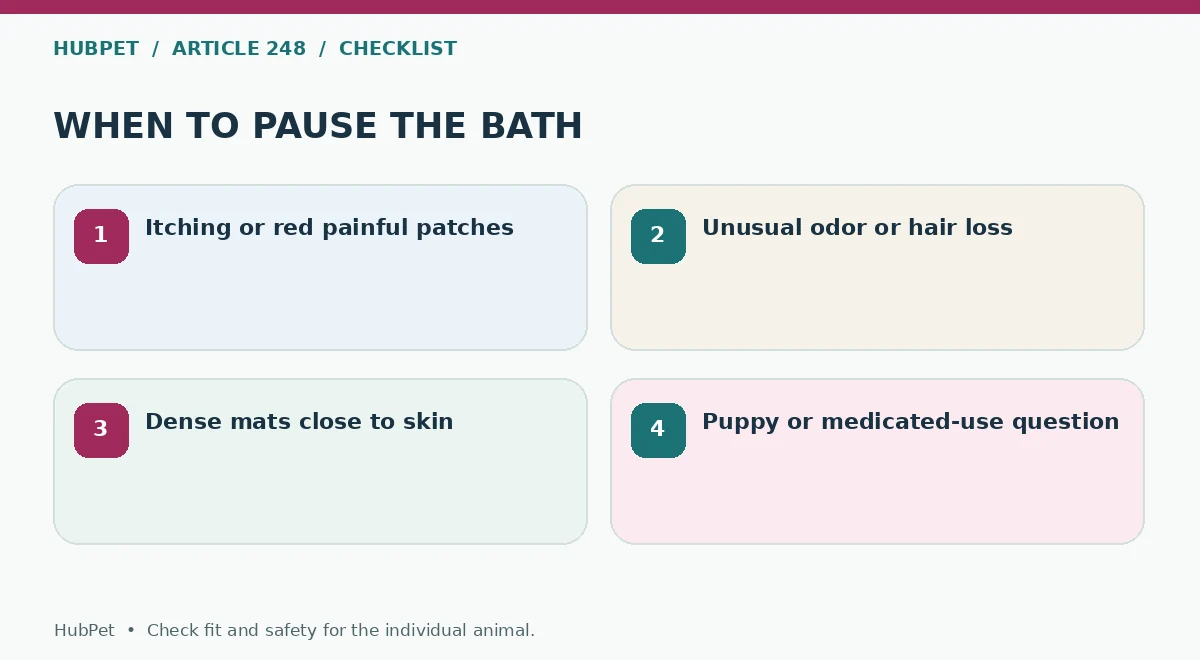
Check your dog’s skin before reaching for the bottle. Look for soreness, sores, flaking, and tenderness while parting the coat gently. If these signs are new or significant, pause the bath and ask your veterinarian. The pet skin-check guide explains what to observe without diagnosing.
Choose a dog-specific, clearly labeled formula
Human and baby shampoos do not automatically suit canine skin. VCA explains that dog skin differs from human skin and recommends shampoo intended for dogs. Read the animal species and intended use on the label; a general pet label does not guarantee that every ingredient is suitable for every species.
Choose a bottle with readable directions, complete ingredient information, and a method for contacting the manufacturer. If the label is vague about dilution, contact time, or rinsing, that uncertainty may outweigh an appealing ingredient list. Never improvise mixing ratios for a concentrated product.

Consider fragrance and sensitive skin carefully
A strong perfume can mask odor without addressing why it occurs. When a dog has sensitive skin, ask a veterinarian about a mild, fragrance-free or hypoallergenic option. Avoid assuming botanical oils or natural fragrances cannot irritate skin; natural is not the same as suitable for an individual dog.
Observe the dog after bathing. New scratching, redness, or discomfort can indicate irritation, but many causes are possible. Rinse any product as its directions require and contact a veterinarian if the reaction is worrying. Do not layer multiple strongly scented grooming sprays after a bath.
Separate routine cleaning from medicated shampoo
Medicated shampoos may have specific active ingredients and prescribed contact times. Those products belong in a veterinary plan when a clinician identifies a need. A shampoo promoted for itch relief is not proof that it treats an infection, allergy, or parasite problem.
If your veterinarian recommends a product, ask exactly how often to use it and whether it should remain on the coat for a specified interval. Follow the professional directions and the product label rather than advice meant for a different diagnosis. Routine shampoos should not be substituted into a prescribed regimen.
Look at coat type without overcomplicating the choice
Dense double coats, short smooth coats, and long silky hair need different amounts of rinsing and drying. However, a specialty coat label is not always essential for safe routine cleaning. Think about how easily you can distribute shampoo, rinse fully, and dry the coat without tangles.
Brush gently before bathing where appropriate. Severe mats require expert help because water can tighten or conceal painful tangles. Follow our dog grooming at home guide to prepare the coat rather than asking shampoo to replace brushing.
Check puppy suitability and age directions
A puppy may have sensitive skin and limited tolerance for a slippery bath. Read the age guidance on the exact bottle instead of assuming every dog-specific formula is suitable for a very young puppy. Ask your veterinary team about bathing a puppy with health or vaccination concerns.
Keep introductions gentle. Practice standing briefly on a non-slip surface without water, reward calm participation, and build toward a short bath. Avoid pouring water over the face, ears, or nose. A clean damp cloth often suits facial dirt better than a stream of suds.
Evaluate rinse time as a buying feature
Thick gels and concentrated products may require careful dilution and extra rinsing. Residue can irritate skin, so choose a formula you can realistically rinse from your dog’s coat. Check the label for the amount needed; do not assume using more shampoo will make the dog cleaner.
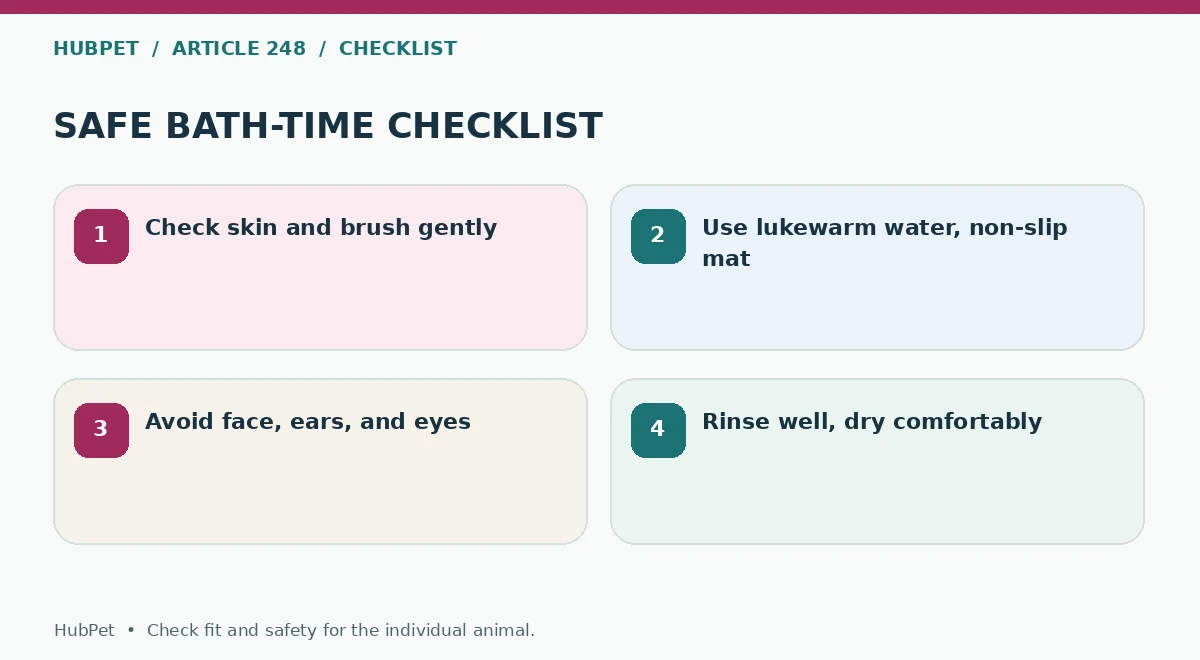
Use lukewarm water and protect the eyes and ears. Work through the coat with gentle hands, then rinse until suds and residue are removed according to directions. VCA and ASPCA emphasize appropriate products and thorough rinsing. Keep the dog warm and comfortable during drying.
Recognize problems a shampoo cannot solve
Strong odor that returns quickly, itching that disrupts sleep, ear discomfort, and skin lesions may signal problems beyond surface dirt. A different scent, deodorizer, or repeated bath may delay a useful veterinary examination. Photograph or write down changes, including when they began.
A pet with dry or flaky skin also needs an individualized approach. Excessive bathing can complicate comfort for some dogs. Rather than trying a stream of different products, review the dry-skin care overview and ask a vet when symptoms persist.
Assess value without trusting marketing superlatives
Compare cost per usable bath, not bottle size alone. Concentrated formulas may stretch further when used exactly as directed, while thick coats may need more careful distribution. Evaluate scent, availability, clear labeling, and your dog’s previous tolerance before deciding a higher price buys better care.
Avoid claims of universal hypoallergenic performance or instant resolution of skin problems. No ordinary cleaning product suits every dog. Maintain a small written record of formulas used and any reactions; that record is more useful at a veterinary visit than a shelf of half-finished bottles.
Finish with a gentle bathing checklist
Prepare towels, a non-slip mat, clean water, and the labeled product before inviting the dog into the bathing area. Check skin, avoid tangles, use a modest amount, protect the face, and rinse carefully. Keep sessions short enough for the dog to remain relaxed and reward calm behavior.
Dry the coat in a comfortable environment and watch for unusual irritation afterward. If bath time repeatedly causes fear, ask a qualified groomer about low-stress options. Do not force an uncomfortable dog through a complete washing just to follow a calendar schedule.
How We Research
We checked this guide against the authoritative sources listed below on October 26, 2026. We reviewed practical differences, safety limits, and relevant home conditions rather than drawing conclusions from brand advertising. Specifications, warranty policies, and device capabilities change; check the manufacturer’s current manual. We did not purchase, laboratory-test, rank, or endorse individual products. Where a pet has pain, skin concerns, or fear, seek individual veterinary advice. See our approach at About HubPet.
Sources
VCA Animal Hospitals: Grooming and Coat Care for Your Dog. Accessed October 26, 2026.
ASPCA: Dog Grooming Tips. Accessed October 26, 2026.
VCA Animal Hospitals: Get Your Pet Bathing Routine Down. Accessed October 26, 2026.
Veterinary guidance generally recommends shampoo formulated for dogs. Human products can contain ingredients that irritate canine skin, so ask your vet about suitable alternatives.
No. The label does not guarantee tolerance for every dog. Ask a veterinarian about persistent itching or known skin sensitivities.
Not without veterinary guidance. Itching has several possible causes, and an active-ingredient shampoo may be inappropriate without diagnosis and instructions.
A strong scent is not a measure of cleansing. Mild or fragrance-free products may be more appropriate for a sensitive dog, subject to veterinary advice.
Follow the product label and rinse thoroughly to remove residue from the coat and skin. Stop and seek advice if the dog develops redness or discomfort.