
This article is general information, not veterinary advice. If your pet seems unwell, is in pain or may have eaten something harmful, contact your vet or an animal poison control line right away. Read our vet disclaimer.
How to bathe a dog without making a mess starts before the water turns on. ASPCA advises brushing first and using lukewarm water (ASPCA, accessed 2026). It also advises pet-formulated shampoo, a thorough rinse, and keeping water away from the eyes, ears, and nose (ASPCA, accessed 2026). VCA also recommends keeping clean towels within reach and using a spray nozzle or large cup for controlled rinsing (VCA, 2026).
How to Bathe a Dog Without Making a Mess: Set Up First
The easiest way to bathe a dog without making a mess is to remove avoidable chaos. Put towels, pet shampoo, and a cup or sprayer within reach. Also, place a nonslip surface in the bathing area before the dog enters. VCA says the space should be comfortably warm and that towels should be ready before you remove the dog from the bath (VCA, 2026).
| Before the bath | Why it helps | Source |
|---|---|---|
| Brush loose hair and tangles | Less loose coat in the tub; wet tangles can become harder to remove | ASPCA and VCA, accessed 2026 |
| Place towels within reach | You can contain water as soon as the bath ends | VCA, 2026 |
| Use a controlled sprayer or cup | Directs water where you need it | ASPCA and VCA, accessed 2026 |
| Use pet-formulated shampoo | Reduces risk of irritation from inappropriate products | ASPCA, accessed 2026 |

How to Bathe a Dog Without Making a Mess: Use a Simple Sequence
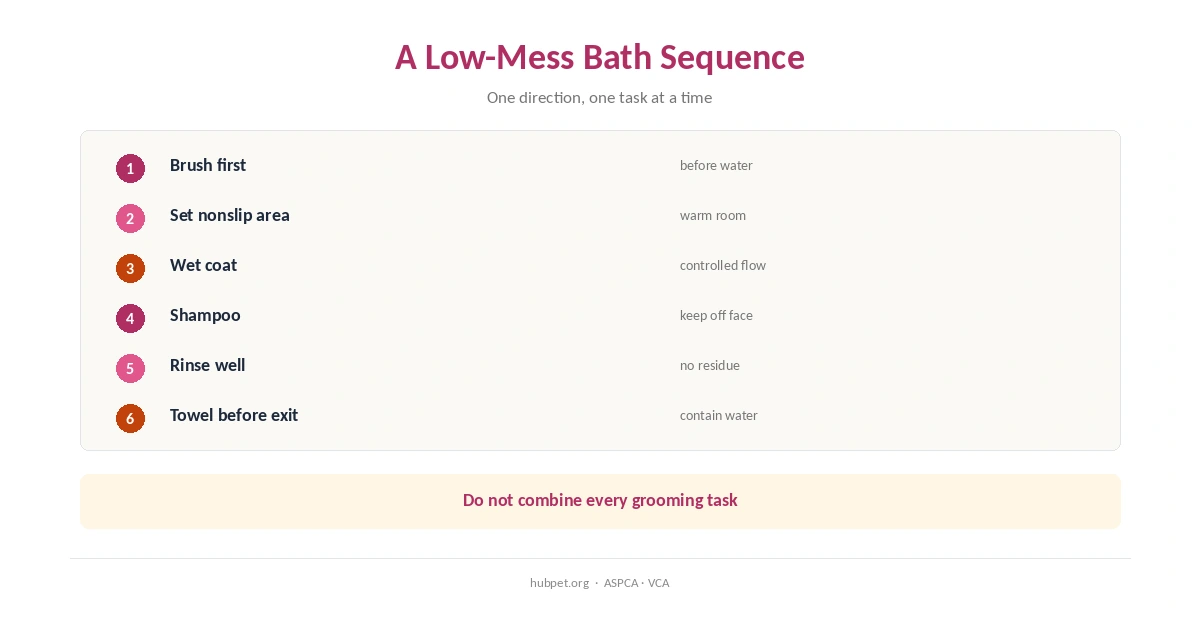
To bathe a dog without making a mess, work in one direction and keep the rinse controlled. ASPCA recommends wetting the dog thoroughly and avoiding direct water in the ears, eyes, and nose (ASPCA, accessed 2026). Then massage in shampoo, rinse well, and towel-dry the dog (ASPCA, accessed 2026). Therefore, do not keep reaching across the room for supplies while a wet dog waits.
- Brush first so loose hair and tangles are easier to manage before they get wet.
- Place a nonslip surface in the bathing area and keep the room comfortably warm.
- Wet the coat with lukewarm water using a controlled sprayer, cup, or pitcher.
- Apply a shampoo made for pets and keep soap away from the face.
- Rinse thoroughly so shampoo does not remain in the coat.
- Wrap the dog in a ready towel before leaving the bathing area, then dry gently.
If your dog has mats, address them before the bath. VCA says wet tangles can become much harder to remove (VCA, accessed 2026). For the broader coat routine, use how to groom a dog at home. Also, managing pet hair on furniture can reduce the amount of loose coat that ends up in the bathing area and on towels.
Keep Ears, Nails, and Skin Separate From Bath Time
Bathing is not the moment to force every grooming task into one session. The published guide on cleaning dog ears safely explains that ear cleaning should be individualized rather than automatic. Likewise, trimming dog nails at home is easier when the dog is calm and the task is separated from a stressful bath.

When to Call Your Vet
VCA says bathing frequency and products may need veterinary guidance when a dog has allergies or another skin condition (VCA, accessed 2026). Contact your veterinarian for persistent redness, sores, marked itching, or a strong recurring odor after bathing because these can reflect a skin or ear problem (VCA, accessed 2026). AVMA lists trouble breathing, collapse, seizures, and suspected poisoning among reasons for urgent veterinary action (AVMA, 2025). Go now for these or another sign in pet emergency signs.
For routine weeks, the daily dog care checklist helps you notice coat and skin changes before bath day. Meanwhile, the new pet odor guide separates normal cleaning from smells that can signal a health problem.
How We Research
HubPet uses veterinary, welfare, and behavior sources rather than personal anecdotes. We read these sources on October 11, 2026: ASPCA Dog Grooming Tips, VCA Grooming and Coat Care for Your Dog, VCA dog bathing guidance, 2026. AVMA Pet First Aid, 2025. See How We Research for our method.
How to Bathe a Dog Without Making a Mess FAQ
Yes. ASPCA and VCA recommend brushing first, especially to remove loose hair and tangles before they get wet.
ASPCA and VCA advise lukewarm water. Avoid extremes, and keep the room comfortably warm.
ASPCA recommends a shampoo formulated for pets because some human products can irritate a dog’s skin.
Use a controlled sprayer or cup and avoid directing water into the eyes, ears, or nose. A damp cloth can handle face dirt.
Call your veterinarian if odor is persistent or returns with redness, itching, discharge, sores, or another change. Skin, ear, or dental problems can cause odor.
The Bottom Line
How to bathe a dog without making a mess is mostly preparation: brush first, stage every supply, control the water, rinse thoroughly, and have a towel ready. ASPCA and VCA support that sequence (accessed 2026). If skin or odor problems keep returning, stop treating the bath as the solution and ask your veterinarian what is driving the change.