
Puppies often spring toward people because closeness, faces, hands and excited voices predict attention. That does not make a puppy stubborn or dominant. The practical goal is to make a different action pay: keep all four paws on the floor when a person approaches. Begin with one familiar adult in a quiet room before involving visitors. This guide uses a brief greeting cycle and a way to record progress, rather than asking a young puppy for long periods of stillness. If jumping includes fearful lunging, snapping or intense distress, seek qualified behavioral help.
Choose one greeting rule everyone can follow
Decide whether a standing puppy with four paws on the floor may receive affection or whether you prefer a brief sit. Standing is often easier for a very young, wiggly puppy. Tell every household member the same rule and keep rewards within reach of the entryway. A puppy cannot understand why pawing earns attention from one visitor yet causes frustration with another. Avoid looming over the puppy or repeatedly saying no; that adds excitement without demonstrating the replacement behavior. Set up two minutes of easy practice with one person before testing a real arrival.
Arrange the first practice before excitement peaks
Use a nonslip surface with enough space for the puppy to turn. Place a low gate or pen nearby if you may need a break, and keep a handful of puppy-appropriate treats ready. One adult stands still several steps away while another quietly supports the puppy. Ask the approaching person to move slowly and avoid squealing, bending abruptly or waving hands overhead. If the puppy becomes frantic, increase the distance instead of restraining them tightly. A calm setup lets you reward the exact moment paws remain on the floor rather than waiting for a jump and reacting late.
Reward four paws before the leap begins
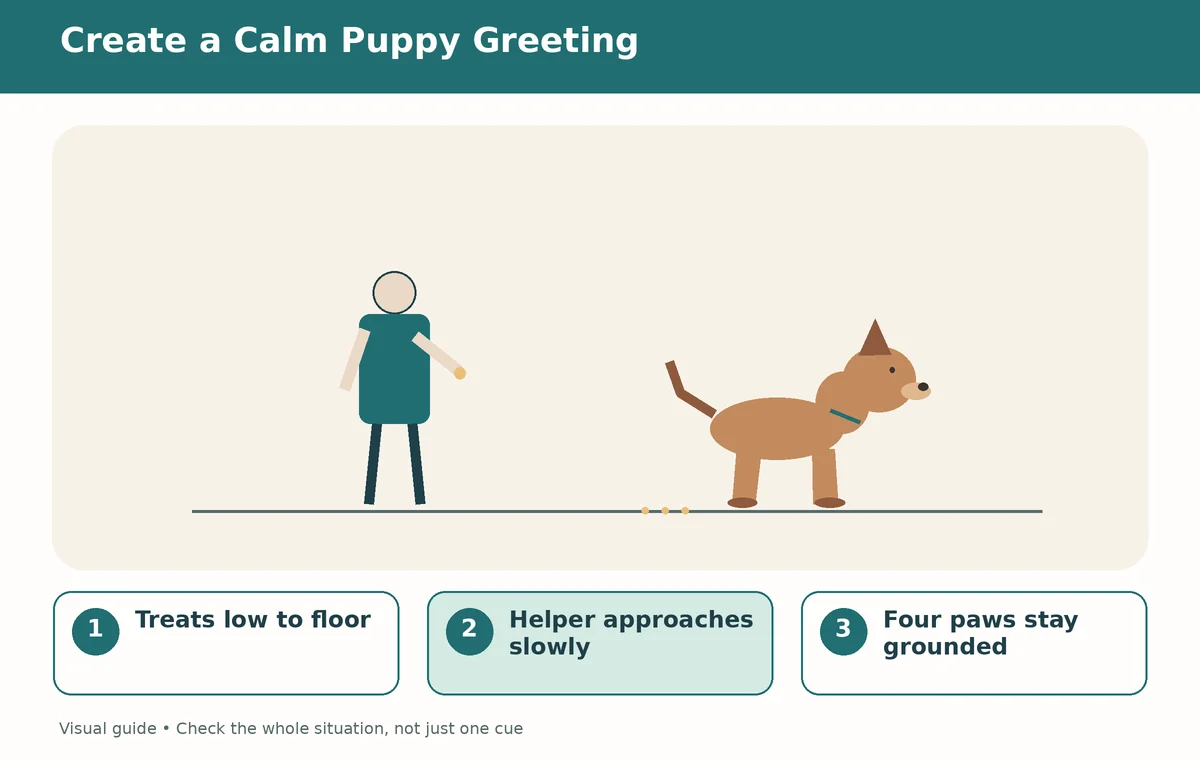
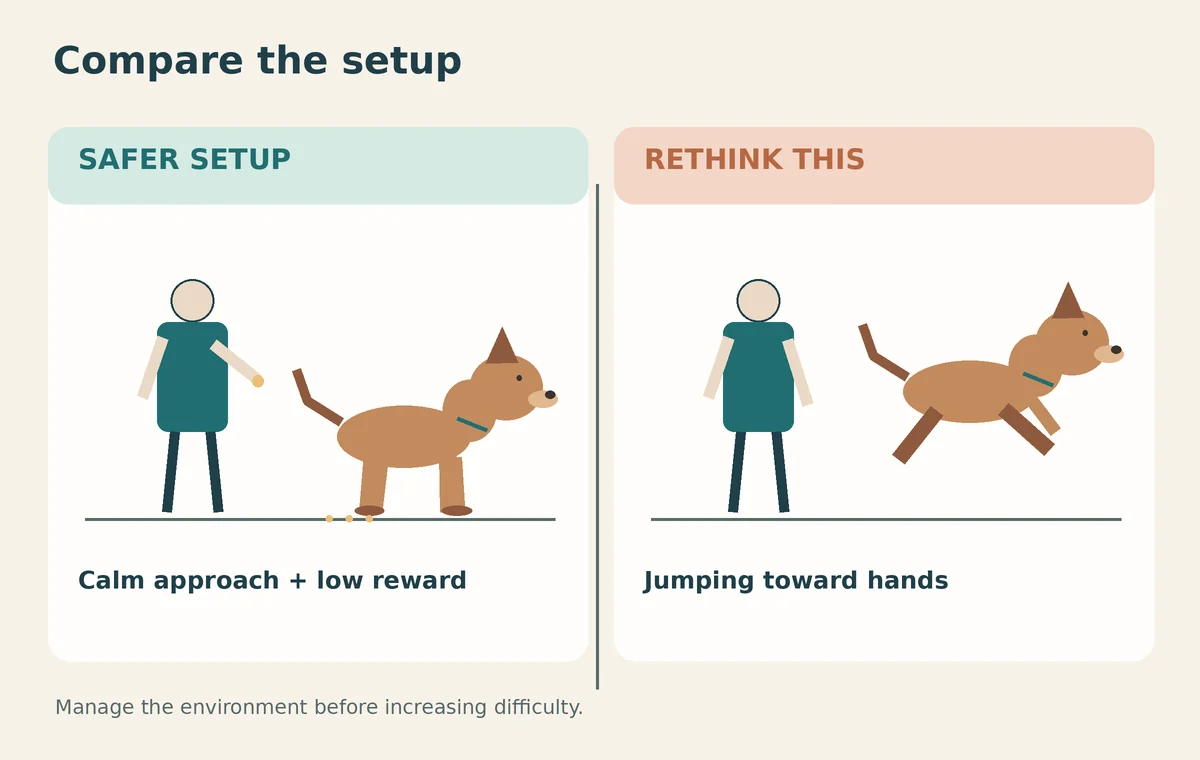
As your helper moves closer, place a tiny treat on the floor between the puppy’s front feet while all paws remain grounded. A low reward location encourages sniffing instead of launching upward. The visitor can greet softly while the puppy finishes the treat, then step away before excitement returns. Repeat several short approaches. When success becomes easy, wait a fraction longer before placing the reward; do not suddenly remove all reinforcement. The aim is for the puppy to notice that grounded feet make people approach. Praise calmly, and allow an easy sniff or gentle pet only if your puppy welcomes it.
Handle an actual jump without a struggle
If the puppy jumps, the visitor should stop advancing and calmly make space. Keep voices neutral, hands away from paws and your posture balanced. Resume greeting when the puppy returns to the floor, ideally before another leap begins. Do not push the chest, hold paws, knee the dog or jerk a leash. Those actions can injure a growing animal and often turn the encounter into a bigger game. If jumping repeats several times, lower the difficulty: move the visitor farther away or practice behind a gate. The setback tells you the setup was too exciting, not that the puppy needs harsher consequences.
Train the whole family to become predictable
Children and visitors can inadvertently reward jumping by shrieking, running or waving a toy. Have an adult manage the puppy and teach young children to stand out of reach until the puppy is ready. Never make a child responsible for controlling an overexcited dog. Invite cooperative family members to rehearse one at a time; a series of quiet successes is more useful than a crowded rehearsal. Place a note by the door explaining the four-paws rule to guests. Avoid forcing a greeting on someone who is nervous around dogs; the puppy can enjoy a chew in a separate safe area instead.
Use a pen or gate when you cannot coach
Management is not a failure. During deliveries, large gatherings or rushed mornings, use a secure room, puppy pen or properly introduced crate with a suitable enrichment activity. Check latches, floor traction and access to water as appropriate. Do not tether a puppy unattended or attach a restraint to furniture where it could wrap around a limb. If the puppy has rehearsed jumping all evening, training tomorrow becomes harder. A barrier protects the visitor and keeps the puppy from being repeatedly rewarded for springing up. Return to planned greetings when a calm adult can supervise.
Add a sit only after standing greetings work
Once your puppy understands four grounded paws, you can add an optional sit. Teach sit separately without a person approaching first, then request it before the helper takes a single step forward. If the puppy stands, let the visitor pause; reward the next correct response. Do not repeatedly push the puppy’s hips down. Some puppies stand up for balance during greetings, so a reliable standing four-paws rule may be a better everyday target. Adjust expectations for age, size, mobility and temperament. The skill is polite greeting, not an obedience pose held through overwhelming excitement.
Measure progress without relying on a fixed timeline
Make a quick record of the setting, number of people, distance and whether the puppy remained grounded for three brief approaches. Look for easier recovery after a surprise entrance and less frantic pawing, not instant perfection. A puppy who succeeds with family may still jump at a friend wearing a hat or carrying groceries. Return to simpler repetitions with each new person. Avoid doubling difficulty by adding noise, strangers and a narrow hallway at once. Training can fluctuate during adolescence, so protect the habit with ongoing management and appropriate rewards.
Troubleshoot common greeting setbacks
A puppy who grabs treats but instantly jumps needs lower, earlier rewards and a shorter greeting. When the puppy ignores food, the visitor may be too close. Increase distance and let the puppy settle. Replace petting with a calm verbal greeting and treat search on the floor when touching causes frantic nipping. Respect a puppy who retreats or freezes and stop the interaction. A welcome greeting must remain voluntary. Change one feature at a time and write down what worked instead of intensifying corrections or demanding longer sessions.
A simple practice routine for the week
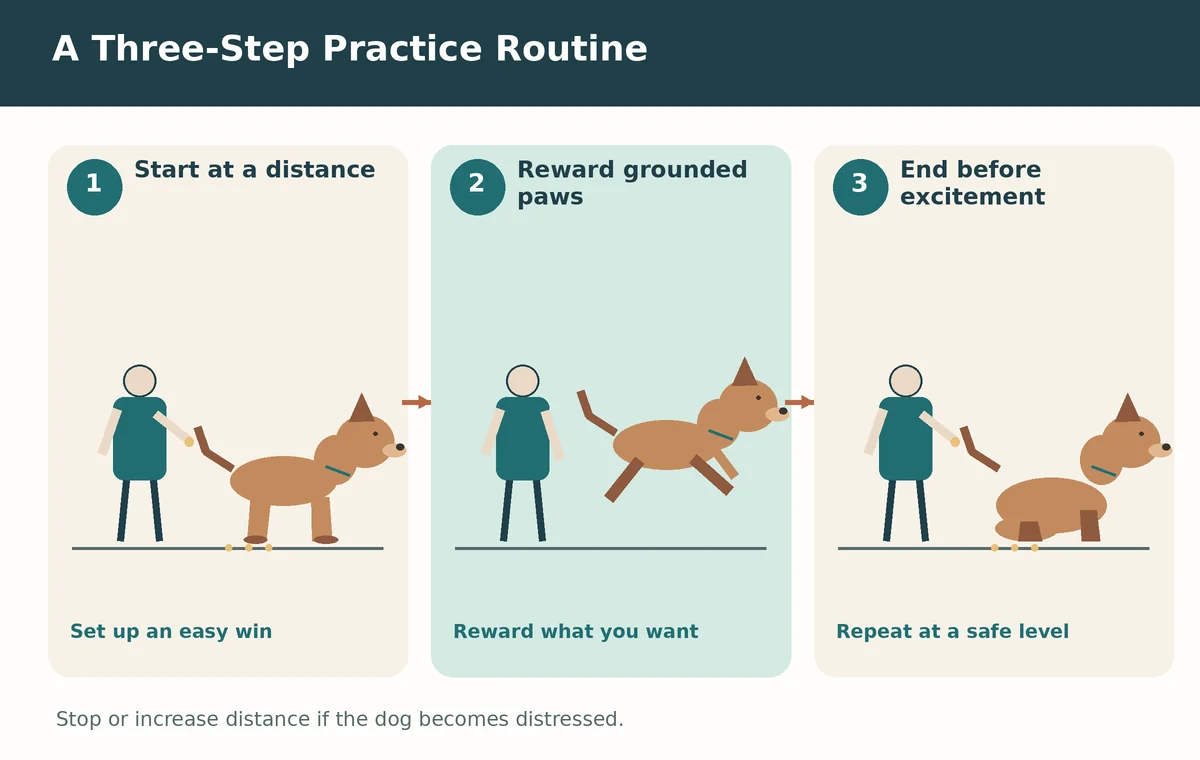
Pick one quiet moment each day and make several calm approaches with the same helper. Keep sessions short enough that your puppy still wants to participate. On later days, change just one element: a different helper, a coat or a little more doorway movement. Keep a gate ready for genuine visitors and reward ordinary calm behavior between sessions. If your puppy becomes increasingly fearful, bitey or difficult to manage, ask your veterinarian about a reward-based training referral. The outcome to seek is a puppy who chooses grounded paws because that reliably makes greetings pleasant and safe.
How We Research
We review reward-based canine training guidance and test the logic of each recommended setup against everyday household or neighborhood constraints. Our process compares what the dog can physically do, the opportunity to rehearse unwanted behavior, the ability to retreat, and whether the replacement behavior has an immediate reward. We do not claim to have observed individual dogs, inspected a specific home, tested fence hardware, or run controlled behavioral trials. Read our editorial approach and consult a qualified professional when an individual dog needs a tailored plan. Sources reviewed October 28, 2026.
Sources
American Kennel Club, How to Stop a Dog From Jumping on People During Greetings. Read the source guidance. Reviewed October 28, 2026.
American Kennel Club, Got a New Puppy? Teach Them These 10 Things First. Read the source guidance. Reviewed October 28, 2026.
American Veterinary Society of Animal Behavior, Position Statements and Handouts. Read the source guidance. Reviewed October 28, 2026.
Safety note: These are general training and environmental guidelines, not a substitute for individualized veterinary or behavior advice. Keep people and animals safe; stop if a dog shows fear, pain, aggression or escalating distress. See our veterinary information disclaimer.
Either can work. Start with four grounded paws if a sit is difficult during greetings, and add a sit later if it suits your puppy.
Arrive quietly, deliver a low reward before paws lift and step back if jumping starts. Practice calmer arrivals outside busy moments.
Yes, if the puppy welcomes contact and remains grounded. Have visitors pause or withdraw calmly when excitement rises.
Some jumping decreases, but excited greetings can remain rewarding. Consistent practice and management teach a clear alternative.
Seek reward-based professional guidance if jumping becomes unsafe, includes snapping or panic, or does not improve with careful practice.