
The front door combines several challenges: a bell, footsteps, a swinging door, a narrow passage and a person the dog wants to reach. Training only the moment of contact rarely works because excitement has already built. Start by designing a visitor route that keeps people safe while the dog rehearses a separate mat behavior. A gate can buy time, but it is not a substitute for teaching. This plan distinguishes doorbell practice, guest entry and an optional greeting, so families can decide when interaction is appropriate. Visitors should never be required to greet a dog.
Map a safe arrival zone before the next knock
Choose a gate or solid door that separates the dog from the opening without blocking exits. Place a stable mat a few steps back from that barrier, outside the path of shoes, grocery bags and the door swing. Check that the dog cannot jump over or push the gate and that its openings cannot trap a paw or head. If the gate is unsuitable, use a separate room with a comfortable resting place. Keep treats and a leash handy for supervised transitions, but never leave a restrained dog tied to a knob or furniture. Invite guests in without depending on the dog staying still.
Teach mat behavior when nobody is arriving
Toss a treat onto the mat and reward the dog for stepping onto it. Repeat until walking to the mat becomes an easy game, then reward standing, sitting or lying calmly there. Add a word such as “mat” just before the dog starts the action. Practice from different points of the room and briefly step toward the door before returning to reward. Build duration in small pieces rather than requiring a long stay immediately. A dog that can only settle in a silent room needs more practice before the doorbell becomes part of the lesson. Make the mat a comfortable, voluntary station.
Split the doorbell from the guest
Play a quiet recording of the doorbell or ask a helper for a gentle single knock while your dog remains behind the barrier. Immediately cue the familiar mat action and reward it. If the dog barks, rushes or leaves the mat, soften the sound or increase the distance from the door. Once the dog can respond to the cue during mild sounds, practice touching the handle, opening the door a crack and closing it again. These are separate steps, not an all-at-once test. Keep the home entrance closed during rehearsal so a dog cannot rush out unexpectedly.

Give guests a simple entry script
Before a visit, explain that you are teaching a calm arrival routine. Ask the guest to enter without calling the dog, leaning over the barrier or putting fingers through it. The guest can put belongings away while you reward the dog on the mat. Avoid asking someone with limited balance to become part of an experimental greeting. If the dog is anxious around strangers, keep them in a separate comfortable space and do not invite interaction. A calm evening with no dog–guest contact is a valid success. Petting should be a choice, never the price of coming inside.
Introduce a short controlled greeting only when ready
Once the dog can remain relaxed on the mat while the visitor enters, practice with one calm adult helper. Use a well-fitting harness and loosely held leash if needed for supervised control, keeping the gate available. Allow the helper to approach a few steps while the dog remains grounded, then reward and pause. If paws leave the floor or the dog strains toward the visitor, calmly create more distance and try an easier repetition. Do not drag the dog forward by the collar or hold them in a forced sit. Some dogs do better with a short sniff and departure rather than prolonged petting.
Prevent accidental rehearsal during real gatherings
A busy party is not training class. Use a secure room, gate or comfortably introduced crate with an activity that suits the dog. Arrange for water, ventilation and regular breaks, and check that children cannot open the barrier unexpectedly. Do not leave a dog wearing a leash that could catch on furniture. If the house has a long entry corridor, put the gate far enough back to avoid a charging dog colliding with visitors. Protect neighbors and delivery workers from surprise contact. Consistent management prevents one enthusiastic guest from undoing a week of practice.

Read the dog, not just the feet
A dog can remain seated and still be highly stressed. Watch for frantic panting, rigid posture, repeated barking, refusal of familiar food, freezing or retreat. A dog who avoids a guest should be allowed to withdraw. If the dog appears worried, skip the greeting, increase separation and ask a qualified reward-based professional for help. Keep dogs away from unfamiliar children until adults can provide safe, calm supervision; never assume a child understands canine warning signs. Your purpose is comfortable co-existence, not forcing social contact. If guests dislike dogs, honor that preference without apology.
Keep training reps predictable and short
Choose a cooperative helper and schedule several brief practice arrivals. Start when the household is quiet. The helper approaches, the dog goes to the mat, the door opens and the helper leaves again. Reward calm behavior throughout the sequence. Later change one element at a time: a different coat, a grocery bag or a slightly longer visit. If the dog cannot complete the previous version, make it easier. Record how long the dog stays on the mat and whether they can recover after a knock. Avoid treating a single calm visit as proof that all guests are safe to greet.
Troubleshoot the doorbell and barrier
Barking before the bell may mean the dog responds to footsteps outside. Practice quieter hallway sounds first. For scratching at the gate, move the mat farther back or use an enclosed room. Ask a chatty visitor to reduce eye contact and remain neutral when talking excites the dog. When food gets ignored, lower the intensity rather than offering ever-larger treats in a panic. If the dog rushes through whenever a family member opens the gate, create a second barrier or wait for the dog to move away. Physical safety comes before obedience performance.
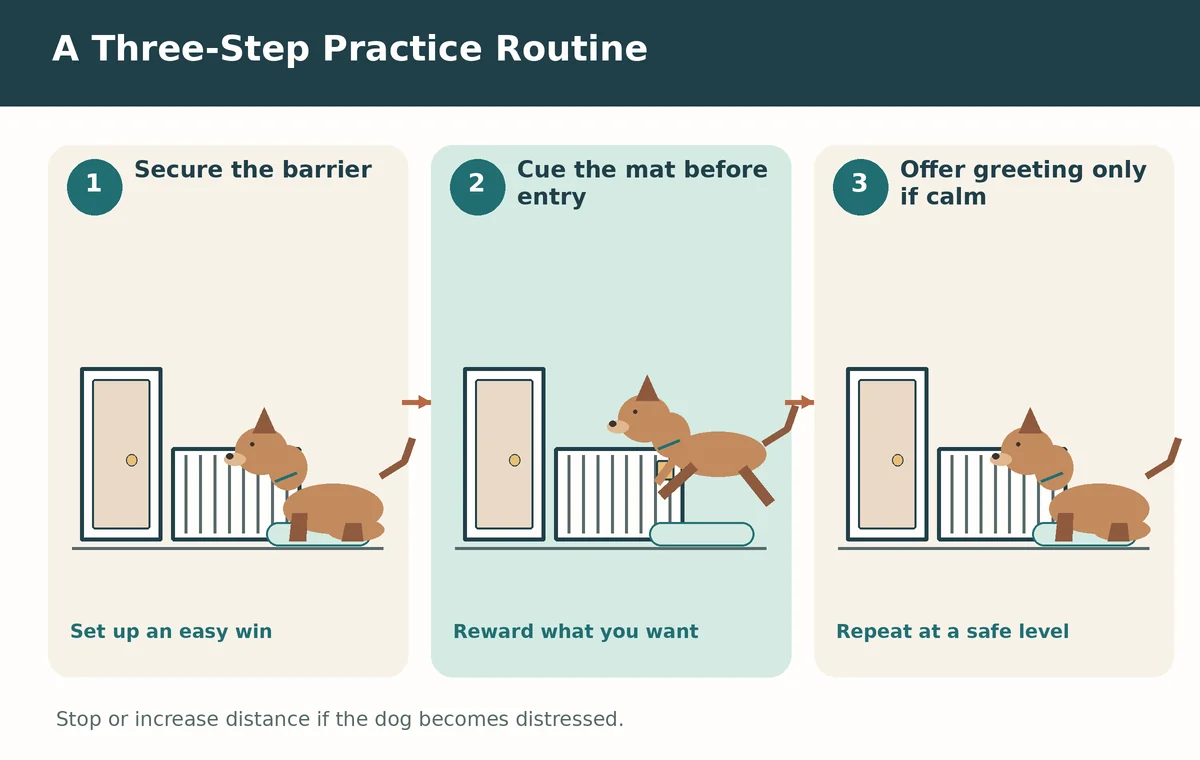
Build a household arrival checklist
Before opening the door, secure the dog behind the correct barrier, check the mat and treats, and ask who will coach the exercise. During entry, let the guest proceed without dog contact, then reward the dog for settling. After the visitor sits, decide whether a calm optional greeting is suitable. If not, maintain separation with a comfortable activity. Remind family that doors, latches and gate stability need checking every time. If the dog has knocked people over, has a history of bites or shows escalating fear, consult your veterinarian and an appropriately qualified behavior professional before attempting close guest introductions.
How We Research
We review reward-based canine training guidance and test the logic of each recommended setup against everyday household or neighborhood constraints. Our process compares what the dog can physically do, the opportunity to rehearse unwanted behavior, the ability to retreat, and whether the replacement behavior has an immediate reward. We do not claim to have observed individual dogs, inspected a specific home, tested fence hardware, or run controlled behavioral trials. Read our editorial approach and consult a qualified professional when an individual dog needs a tailored plan. Sources reviewed October 28, 2026.
Sources
American Kennel Club, How to Stop a Dog From Jumping on People During Greetings. Read the source guidance. Reviewed October 28, 2026.
American Kennel Club, Dog Etiquette Basics. Read the source guidance. Reviewed October 28, 2026.
American Veterinary Society of Animal Behavior, Position Statements and Handouts. Read the source guidance. Reviewed October 28, 2026.
Safety note: These are general training and environmental guidelines, not a substitute for individualized veterinary or behavior advice. Keep people and animals safe; stop if a dog shows fear, pain, aggression or escalating distress. See our veterinary information disclaimer.
Guests should pause and avoid rewarding jumps, but management and a taught mat or four-paws behavior are more effective than ignoring alone.
A properly installed, dog-appropriate barrier may help with management. Verify strength, height, gaps and safe placement before use.
Start with a quiet simulated sound, reward a familiar mat behavior and increase the challenge only when your dog stays comfortable.
No. Some guests and some dogs prefer no interaction. A secure, comfortable separate space is a good option.
If the dog knocks people over, displays fear or aggression, or cannot settle safely, seek qualified reward-based guidance.