
A dog may jump on the couch for warmth, a view of the window, closeness to family or a familiar resting surface. Decide whether your rule is no couch at all or furniture access only after an invitation. Make that boundary predictable and teach a voluntary “off” behavior before it becomes a conflict. This guide is about household manners, not treating pain or fear. If a dog stiffens, growls or guards the couch, stop attempting close physical removal and seek professional guidance. A safe home rule never depends on dragging, startling or shoving a dog off furniture.
Pick a consistent couch policy
Household members should agree on whether the dog may ever use the couch and where they may rest instead. One person allowing naps on the cushions while another scolds creates a hard-to-read rule. If access is invitation-only, use one clear invitation cue and a separate “off” cue; do not assume the dog can infer permission from your mood. If the family chooses a no-couch policy, reward the dog for settling nearby on an approved bed. Consider older dogs and pets with mobility changes: repeated jumping up and down may need veterinary review and an alternative resting arrangement.
Build a resting spot the dog actually wants
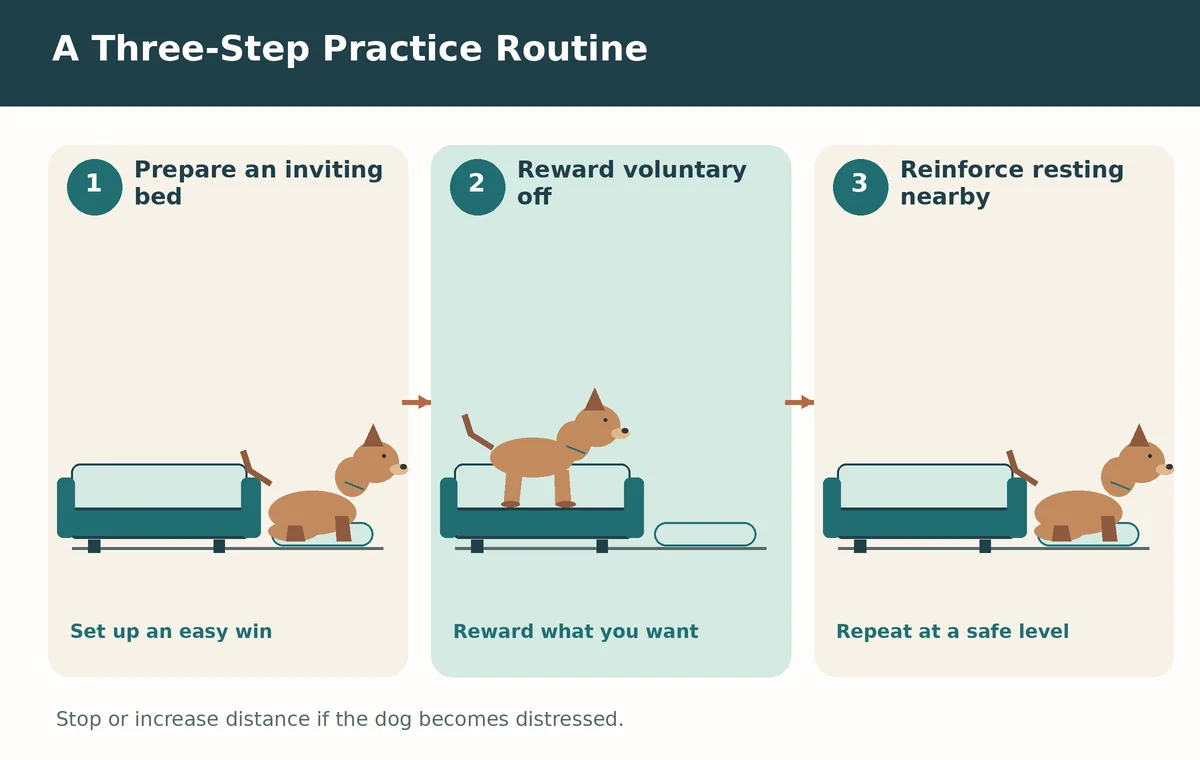
Choose a dog bed that supports the dog’s usual sleeping position and place it near the people or view they seek. A thin mat in a cold, isolated corner is unlikely to compete with a soft couch in a family room. Add a washable blanket with a familiar scent and give calm praise or a suitable chew when the dog uses the bed. Avoid moving the bed every day during early training. If the dog loves the window view, use a safe ground-level place with an unobstructed sight line if possible. The alternative should satisfy the same need that made the couch attractive.
Teach “off” with an easy voluntary movement
Practice only when the dog is relaxed and willing to move. Hold a small treat near the floor a step away from the couch and let the dog step down on their own. As all paws land on the floor, calmly say “yes” and reward. After several successful repetitions, say “off” just before the dog chooses to descend, then reward the movement. Never use the cue as a threat. Do not pull on the collar, push the body or shake the furniture. A fearful or physically uncomfortable dog needs a different approach and possibly professional assessment.

Avoid making the sofa a treat vending machine
Paying for each descent from the couch can teach a rapid up-and-down loop. Prevent rehearsals by managing access when you cannot supervise, and reward resting on the approved bed far more often than stepping off furniture. After teaching the off cue, sometimes guide the dog directly to the bed and deliver the reward there. Vary the timing of low-key attention when the dog is already on the floor. The goal is a durable resting habit, not repeatedly paying for an unwanted jump. Keep all interactions calm, predictable and free of confrontation.
Practice before guests and busy evenings
Training is easier in a quiet room than during a movie night with snacks, visitors and excited children. Rehearse the off cue with one person seated calmly, then with a second adult entering the room. Teach the dog that a guest taking the couch does not remove access to the dog’s own comfortable spot. If the dog repeatedly climbs onto visitors, use a gate or supervised separation while training continues. Avoid asking children to push or pull a large dog off furniture. Give the dog a clear route to the bed without stepping over legs, bags or narrow gaps.
Make the room layout work for you
Close the room or rearrange pillows when nobody can coach the dog. Avoid unstable furniture stacks that could fall. If your dog uses the couch to watch passersby, reduce the intense window view with curtains or change the approved bed location. Do not use sticky traps, startling alarms or irritating sprays on upholstery. These methods may create fear and do not explain the desired behavior. A consistent floor-level rest area, supervised practice and occasional quiet enrichment can lower the incentive to climb onto furniture again.

Protect joints and prevent unsafe leaps
A dog with difficulty climbing, slipping on floors or hesitating before jumps may need veterinary advice rather than more training repetitions. Avoid encouraging repeated high jumps simply to practice the cue. Use a stable low surface for teaching if necessary and only when safe for that individual. Never lift a dog abruptly without knowing how to support their body, and do not rely on a ramp without gradual training and suitable traction. If the dog already uses a mobility aid, work within veterinary guidance. Comfortable movement matters more than enforcing an arbitrary furniture rule.
Recognize guarding instead of calling it stubbornness
A dog may freeze, growl, snap or block approach while resting. Do not challenge or physically move them. Increase distance, keep children away and seek help from a veterinarian or qualified reward-based behavior professional. Punishing warning signals can make situations more dangerous by suppressing useful communication. You may temporarily block unsupervised furniture access only when you can do so without confronting the dog. Consider whether pain, fear or another resource-related issue is involved. A furniture dispute is never worth a bite or an injured animal.
Reinforce the alternative throughout the day
Notice spontaneous choices. Your dog may walk to their bed, settle near family or stay on the floor as someone sits. Reward those moments with quiet praise, a small appropriate treat or pleasant attention. Practice a short mat cue before turning on the television. If the dog chooses the floor after an invitation, respect that choice. Keep household rules visible and avoid exceptions that confuse learning. Frequent calm repetitions are more valuable than a lengthy session after the dog has already spent an hour enjoying the couch.
Check progress and adjust the rule if needed
Track whether the dog rests independently and responds to a single off cue. Check comfort when family members occupy the sofa. If the dog still seeks the couch, ask whether the alternative bed is too hot, cramped, noisy or far from people. Adjust the environment before increasing demands. If you decide to allow couch access, teach a clear invitation and make sure departures stay voluntary. The desired outcome is safe, predictable cohabitation, not perfect obedience at the expense of trust or physical comfort.
How We Research
We review reward-based canine training guidance and test the logic of each recommended setup against everyday household or neighborhood constraints. Our process compares what the dog can physically do, the opportunity to rehearse unwanted behavior, the ability to retreat, and whether the replacement behavior has an immediate reward. We do not claim to have observed individual dogs, inspected a specific home, tested fence hardware, or run controlled behavioral trials. Read our editorial approach and consult a qualified professional when an individual dog needs a tailored plan. Sources reviewed October 28, 2026.
Sources
American Kennel Club, Why Dogs Jump on Furniture and How to Stop It. Read the source guidance. Reviewed October 28, 2026.
American Kennel Club, Teach a Dog to Respect Your Personal Space. Read the source guidance. Reviewed October 28, 2026.
American Veterinary Society of Animal Behavior, Position Statements and Handouts. Read the source guidance. Reviewed October 28, 2026.
Safety note: These are general training and environmental guidelines, not a substitute for individualized veterinary or behavior advice. Keep people and animals safe; stop if a dog shows fear, pain, aggression or escalating distress. See our veterinary information disclaimer.
No. Furniture access is a household choice, provided the dog can use it safely and people respect canine comfort and boundaries.
Reward the dog for stepping down voluntarily and add the verbal cue just before the movement once the action is familiar.
The couch may still be more rewarding than the alternative. Improve the bed, block unsupervised access and reinforce resting there.
No. Physical pressure can cause fear or injury. Stop, lower the difficulty and seek professional help if the dog guards the space.
Avoid repeated jumps and ask your veterinarian about safe movement, joint comfort and suitable lower resting options.