
A coat-specific guide to pin ends, cushion tension, brushing technique, and the limits of pin brushes on mats. These are general pet-care selection criteria, not veterinary advice. For painful skin, significant irritation or other health concerns, consult your veterinarian and read our veterinary information disclaimer.
What a pin brush actually does
A pin brush has spaced metal pins set into a flexible pad, often with polished or rounded ends. It can separate and smooth longer hair and pick up surface debris. It is not a substitute for carefully checking all the way to the skin with an appropriate comb. On a very short, smooth coat, those long pins may offer little benefit. Choose the tool for the hair texture, not for a breed name on the package. An easy first test is whether the pins glide through a clean, untangled patch without scraping or pulling.
Choose pin ends before choosing a brand
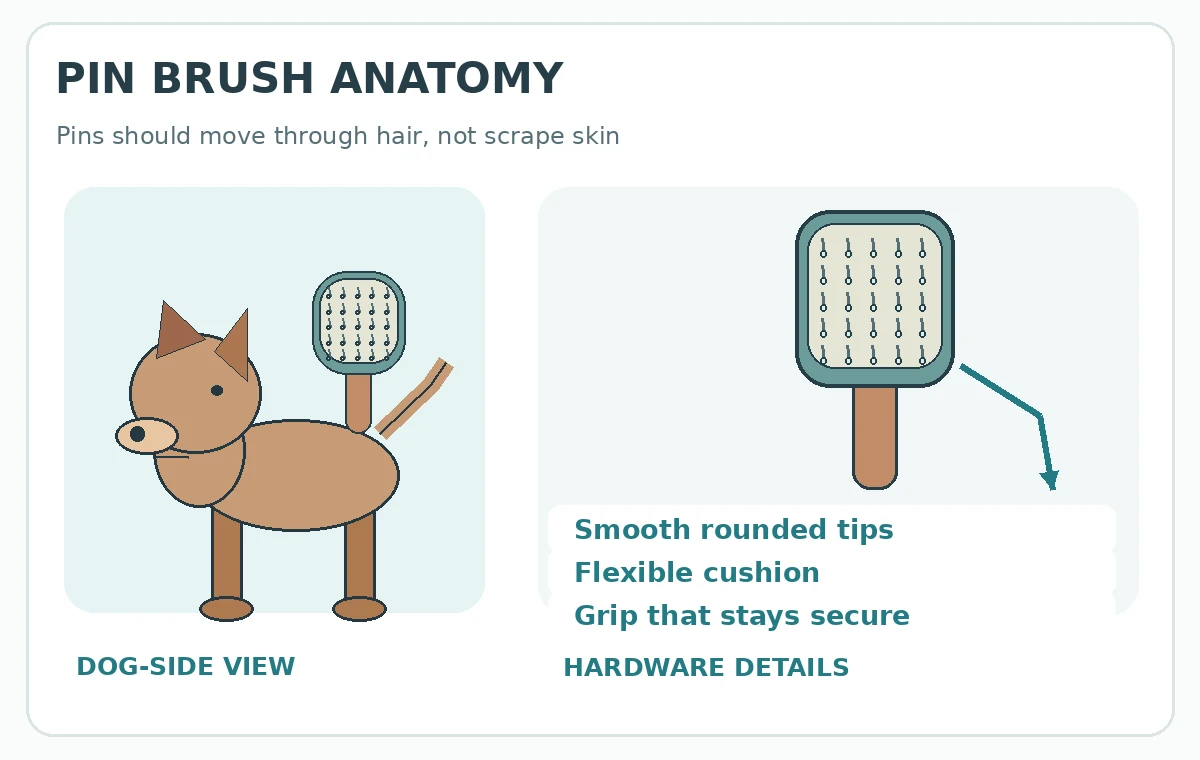
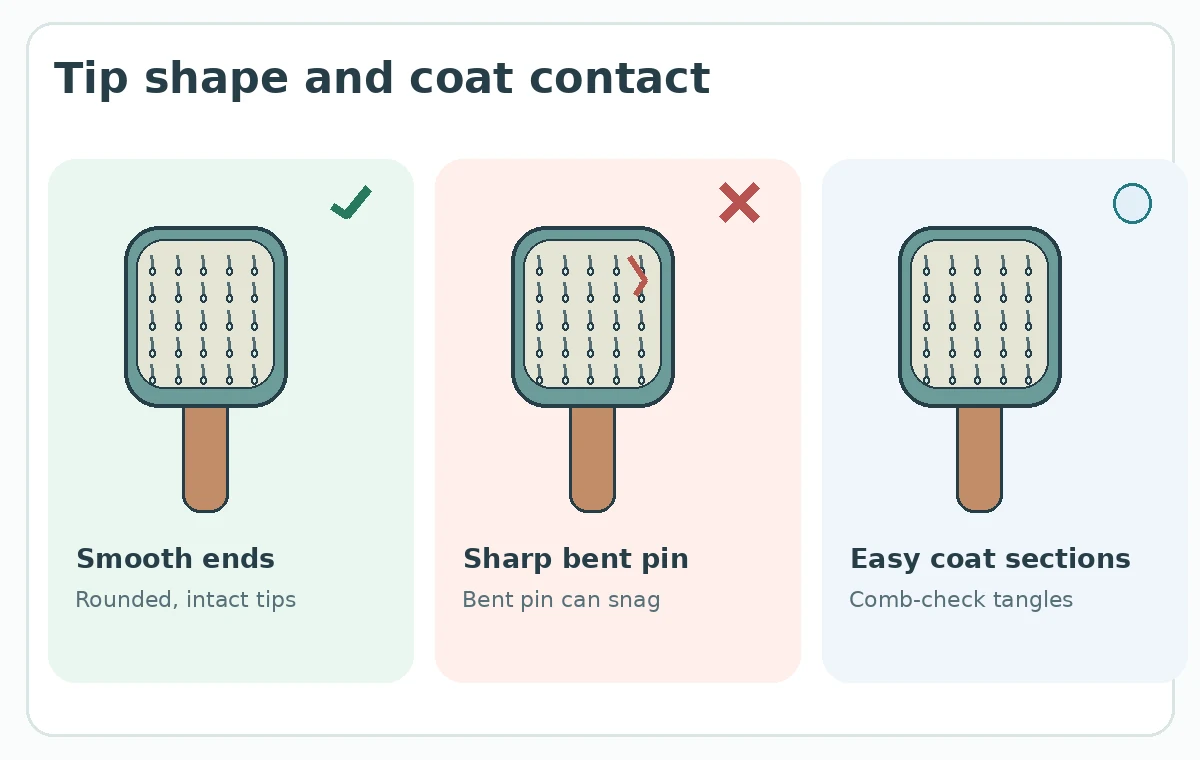
Inspect each pin under good light. Rounded, smooth ends matter because a rough cut wire can drag against skin. Some brushes have tiny balls on the ends; check that they are firmly attached and do not catch hair. A loose ball can snag strands, and a bent or protruding pin makes the brush unsuitable for use. Run your fingertips across the brush face without pressing; any sharp edge is a reason to reject it. Never assume decorative soft-looking tips will survive repeated washing or a dog chewing the brush.
Match pin length to the actual coat
Dense, long hair calls for enough pin length to move through sections without forcing the brush into the skin. For a small dog with fine, sparse hair, a short lightweight head is often easier to control. A long pin that meets resistance is not permission to push harder. Part the coat with your fingers to see whether the brush is contacting hair or digging against the body. In a heavy double coat, a pin brush may finish the outer hair while another properly chosen tool addresses loose undercoat.
Check cushion response and handle control
The pad should flex slightly when the pins meet the coat, rather than acting like a rigid rake. Press a few pins gently on your own palm to feel their movement; this is only a hardware inspection, not a measure of a dog’s comfort. Look for a handle that stays secure with damp hands and a head size that fits behind the shoulder without scraping elbows or ears. A large paddle may seem efficient but can prevent careful work in narrow areas. Washable materials and a removable hair mat help routine cleaning.
Prepare the coat before any brush stroke
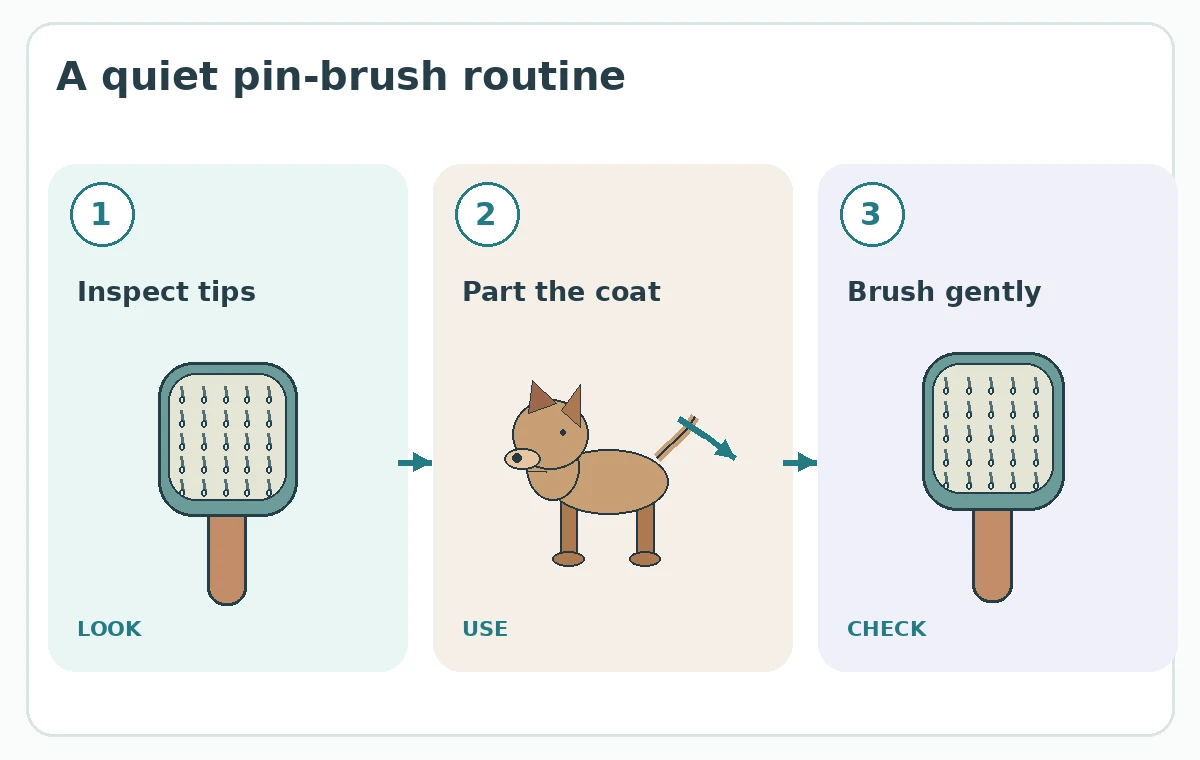
Groom in a quiet place with non-slip footing, treats and enough light to inspect the coat. Check behind ears, armpits and under a collar for tangles before starting. Separate small sections with your free hand. If a section already feels tight or knotted, stop and address it gently rather than repeatedly dragging a brush through it. Wet, compacted mats can tighten after bathing. Veterinary guidance recommends professional help for severe matting because attempts to cut near the skin can cause harm.
Use short, low-pressure passes
Begin on a loose section of hair along the shoulder or back. Support the coat at its base, then brush in the direction of hair growth with short strokes. Lift the brush out at the end of each pass rather than scraping the tips across skin. Pause after a few strokes and examine both the hair and the dog’s posture. A relaxed dog may lean into contact; freezing, turning away or licking lips can signal discomfort. Offer a break instead of holding the dog still until the entire coat is finished.
Compare pin brush, slicker and comb jobs
A pin brush works well for smoothing and separating longer hair. Meanwhile, a slicker uses a dense field of angled wire pins and may remove loose hair or small tangles with careful handling. Finally, a comb is your check for hidden snags after brushing. They are not interchangeable simply because they all have metal teeth. If a comb stops abruptly, do not yank it through. Go back to a small section and work gently; seek a groomer when a mat sits close to skin or your dog resists handling.
Clean the brush without damaging the pad
Remove trapped hair after each session. Follow the maker’s directions for the cushion and handle before soaking; some pads hold water around pin bases. Wipe away oil and debris with a pet-safe cleaning method, rinse when appropriate and dry fully before storage. Check whether rust, loose pins or a cracked cushion developed during washing. Keep the brush out of reach if your dog enjoys chewing handles or pin tips. Replacing a cheap, damaged tool is safer than continuing to use it because the head still looks mostly intact.
Know when a pin brush is the wrong answer
Pin brushes do not treat inflamed skin, painful tangles or sudden heavy shedding. Stop if the skin looks red, moist, flaky or tender, or if brushing causes unusual pain. A veterinarian can assess skin changes and a professional groomer can manage difficult coat problems without repeated pulling. Do not work over stitches, lumps or suspected wounds. If your dog has a very short coat, a soft bristle tool or grooming mitt may be more comfortable and easier to use than a long pin brush.
Build a repeatable two-minute inspection
Use a small daily check instead of a long, stressful grooming marathon: look at ears and underarms, brush a few loose sections, follow with a comb where suitable, then inspect the tips. Record trouble spots such as collar friction or recurring tangles so the next session starts there. Reward calm participation and finish while the dog is comfortable. Your success measure is a relaxed dog and accessible coat, not a bucket full of removed hair. If you need force to finish, the tool or the routine needs to change.
How We Research
We evaluated pin brushes for dogs using veterinary coat-care guidance, humane handling standards and practical inspections of material, fit, surface safety, maintenance and situations that call for professional help. We do not claim to have tested specific products in a laboratory or examined each dog individually. Our recommendations prioritize observable features over marketing scores, with our editorial approach explaining our research practice. Sources reviewed October 28, 2026.
Sources
AKC, Dog Brushes: How to Choose the Right Dog Brush. Read source guidance. Reviewed October 28, 2026.
VCA Animal Hospitals, Grooming and Coat Care for Your Dog. Read source guidance. Reviewed October 28, 2026.
AKC, Grooming Your Dog, educational tool guide. Read source guidance. Reviewed October 28, 2026.
Safety note: Stop grooming when your dog shows pain or intense distress. Seek a veterinarian for new or persistent skin changes; ask a qualified groomer for dense mats and high-risk coat removal. Never use equipment as a substitute for gentle handling.
Often not as the main tool. Short, smooth coats may respond better to a soft bristle brush or rubber mitt.
No. They must remain smooth and firmly attached; loose tips can snag hair or expose rough wire.
Do not pull through tight mats. Ask a professional groomer for help when a mat is dense or near skin.
Use short, light passes with hair growth for a comfortable starting routine and watch your dog’s response.
Replace it when pins bend, loosen or rust, or when the cushion cracks and creates sharp edges.