
This article is general information, not veterinary advice. If your pet seems unwell, is in pain or may have eaten something harmful, contact your vet or an animal poison control line right away. Read our vet disclaimer.
How to clean dog ears safely starts with an important rule: not every dog needs routine ear cleaning. VCA says some dogs with healthy, clean ears may never need it (VCA, accessed 2026). Over-cleaning can irritate the ear canal. If you see redness, inflammation, pain, concerning discharge, or odor, contact your veterinarian before cleaning. Merck’s 2026 review lists head shaking, odor, redness, swelling, scratching, discharge, and pain among signs of otitis externa (Merck Veterinary Manual, 2026).
How to Clean Dog Ears Safely: Check Before You Start
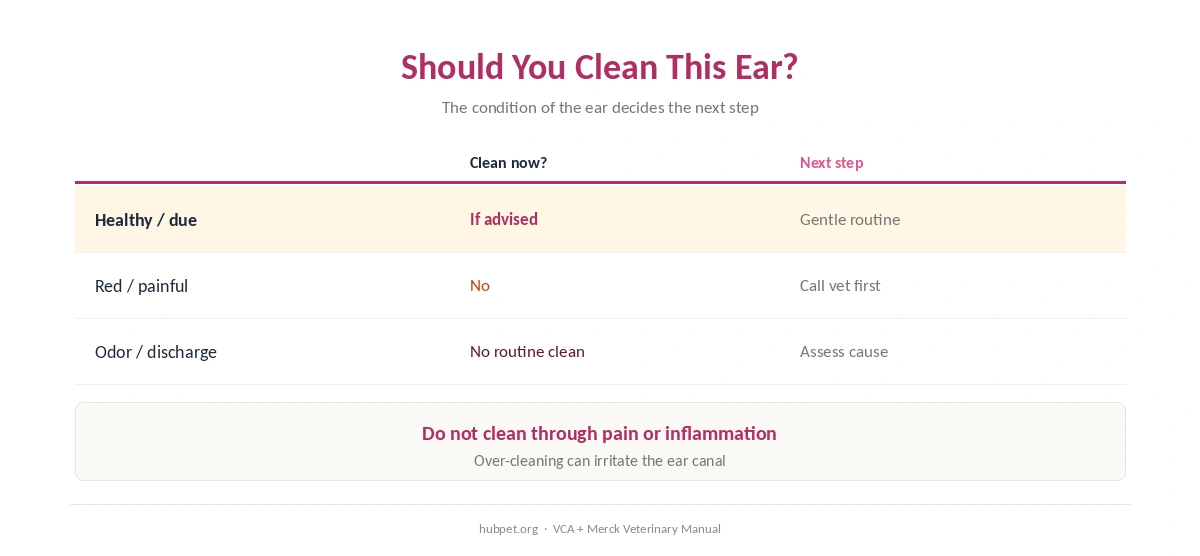
Look at the ear flap and visible canal opening before reaching for cleaner. A normal ear should not hurt when you touch it or show obvious inflammation. VCA says to seek veterinary assessment for redness, inflammation, or pain before cleaning (VCA, accessed 2026). Infection or a damaged eardrum may be present. Therefore, how to clean dog ears safely begins by deciding whether home cleaning is appropriate at all.
| What you see | Home cleaning? | Next step |
|---|---|---|
| Healthy ear, cleaning is due | Reasonable if your vet has advised it | Use vet-approved cleaner + gauze/cotton |
| Red, swollen, painful ear | No | Contact your veterinarian first |
| Odor, discharge, repeated head shaking | Do not treat as routine dirt | Veterinary assessment |
How to Clean Dog Ears Safely: Step by Step
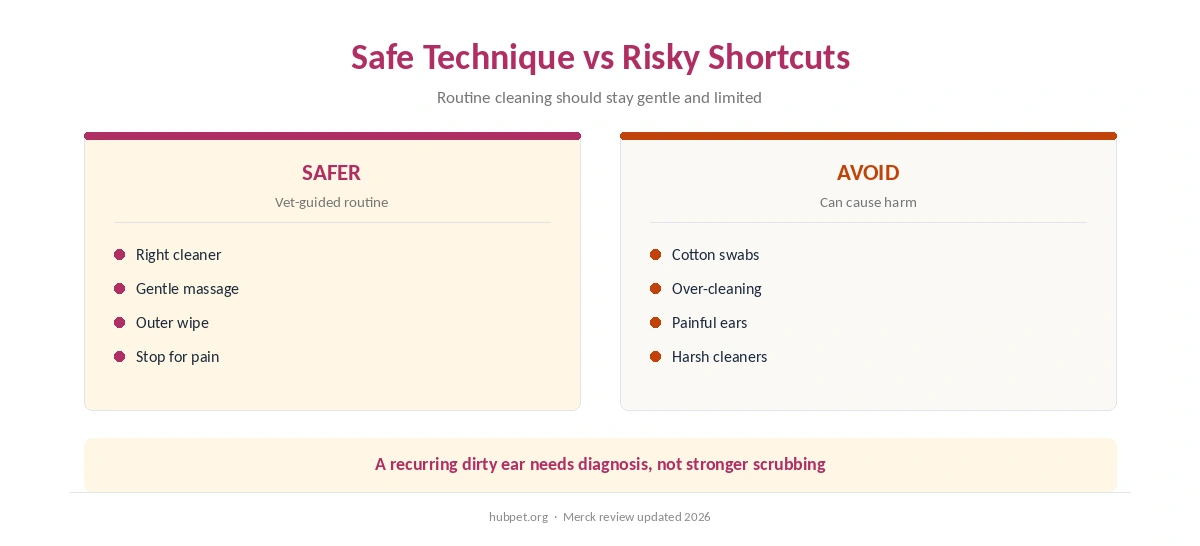
Use an ear-cleaning solution recommended for your dog, plus cotton balls or gauze. VCA advises against cotton-tipped applicators because they can traumatize the canal or eardrum. They may also push debris deeper (VCA, accessed 2026). VCA also warns that hydrogen peroxide or alcohol can irritate an inflamed or ulcerated canal. Follow your veterinarian’s product instructions rather than improvising a homemade treatment.
- Set up in an easy-to-clean area and keep treats ready for calm cooperation.
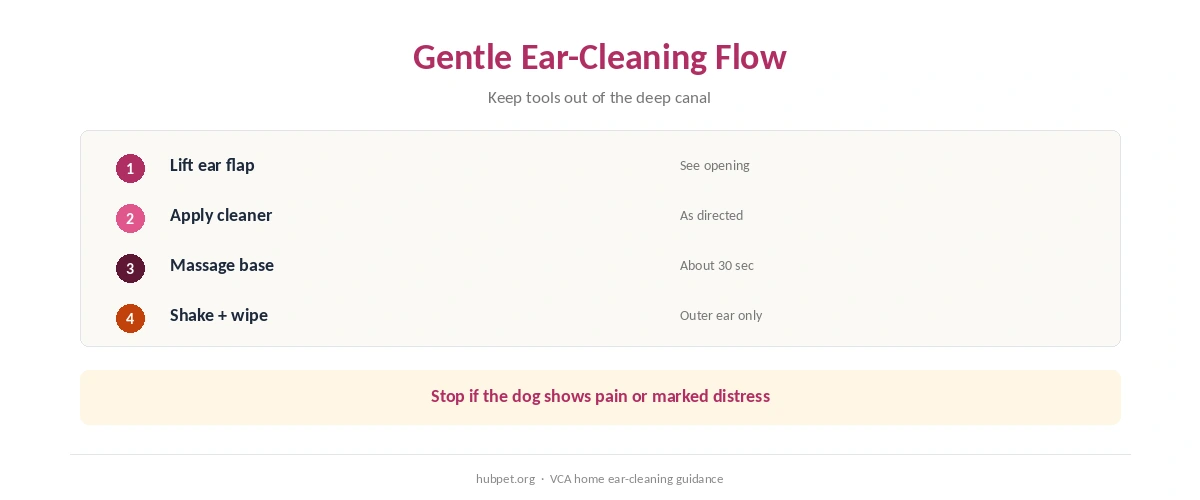
- Lift the ear flap gently so you can see the opening of the canal.
- Apply the veterinarian-recommended cleaner as directed without pushing the bottle tip deep into the ear.
- Gently massage the base of the ear for about 30 seconds if your veterinarian or product instructions use this method (VCA, accessed 2026).
- Let the dog shake, then wipe loosened debris from the visible outer ear with gauze or cotton.
- Stop if the dog shows pain, marked distress, or the ear looks worse than expected.
Do not push tools down the ear canal. Merck also advises against cotton swabs and recommends a cleaning solution chosen with veterinary guidance (Merck Veterinary Manual, 2026). If your dog resists because handling feels frightening rather than painful, keep the interaction brief and reward calm cooperation. Use positive reinforcement for cooperative handling, and keep sessions as simple as the skills in basic dog training at home. However, pain changes the plan: stop and get veterinary advice.
How Often Should Dog Ears Be Cleaned?
There is no universal schedule. VCA says some dogs with healthy, clean ears may never need routine cleaning (VCA, accessed 2026). Over-cleaning may irritate the canal. Your veterinarian can set a frequency based on ear health, history, swimming, skin disease, and previous infections. Do not treat “daily” or “weekly” as a default for every dog. How to clean dog ears safely therefore means following the schedule for this dog, not a generic calendar. A daily dog care checklist can remind you to observe ears without turning inspection into daily cleaning.
When to Call Your Vet
Call your veterinarian before cleaning if you see redness, inflammation, swelling, or pain. Also call for odor, discharge, repeated scratching, or head shaking (VCA, accessed 2026; Merck Veterinary Manual, 2026). If your dog becomes newly sensitive to touch, compare that change with signs a pet may be in pain. Recurring ear trouble needs diagnosis because otitis externa can have several underlying causes (Merck Veterinary Manual, 2026).
How to clean dog ears safely also depends on calm handling. The broader routine in grooming a dog at home can help you keep touch predictable. New owners can place ear checks inside the new pet owner checklist without assuming that cleaning is always required.
How We Research
HubPet uses published veterinary, welfare, behavior, and research sources rather than personal anecdotes. We read these sources on October 11, 2026: VCA dog ear-cleaning instructions, Merck Veterinary Manual otitis externa review, 2026. See How We Research for our method.
How to Clean Dog Ears Safely FAQ
No. VCA says some dogs with healthy, clean ears may never need routine cleaning, and over-cleaning can irritate the canal (VCA, accessed 2026).
No. VCA and Merck advise against cotton swabs because they can push debris deeper or injure the canal or eardrum.
VCA warns that hydrogen peroxide or alcohol-containing cleaners can irritate an inflamed or ulcerated ear canal. Ask your veterinarian which cleaner is appropriate.
VCA’s home-cleaning instructions describe gently massaging the base for about 30 seconds after you apply cleaner (VCA, accessed 2026). Follow your veterinarian’s instructions for your dog.
Stop and contact your veterinarian for redness, swelling, pain, odor, discharge, repeated head shaking, or recurring ear problems.
The Bottom Line
How to clean dog ears safely means cleaning only when it is appropriate, using a veterinarian-recommended solution, keeping tools out of the deep canal, and stopping when the ear is painful or inflamed. A dirty-looking ear can be a symptom, so recurring problems belong with your veterinarian rather than a stronger cleaning routine.