
Potty training in crate works only when the crate is a comfortable resting place and the human provides frequent, timely toilet opportunities. The goal is not to teach a puppy to hold their bladder until an arbitrary clock says so. Instead, use short, positive crate rests between supervised activity and trips to the correct toilet spot. If your puppy is too young to stay dry during an absence, choose a larger pen with a separate toilet zone or arrange a helper. Never use a crate to punish an accident.
This guide offers general education, not an individual veterinary diagnosis or treatment. Pain, illness, persistent distress or sudden toileting changes require a veterinary evaluation. Read our vet disclaimer.
Understand the three-zone routine
Think in three spaces: a comfortable crate for voluntary rest, a supervised living area for play and learning, and one designated toilet location. Take the puppy directly to that toilet spot after a nap, meal, drink, or active play. Once the puppy eliminates, reward right there. Then allow an appropriate stretch of supervised freedom before the next rest. This pattern helps your puppy learn where toileting earns rewards rather than places that lead to scolding.
VCA emphasizes consistency, supervision, and reward-based learning. The HubPet house-training foundation covers signals and reward timing in more detail. Your routine must also respect your puppy’s stage of development and actual behavior. A clock can remind you to check. However, puppy behavior shows whether a toilet trip or comfort is urgent.
| Routine moment | Caregiver action | Purpose |
|---|---|---|
| Waking from rest | Go promptly to toilet spot | Prevent a missed opportunity |
| After successful toilet | Reward at the same location | Teach the correct destination |
| During awake play | Supervise sniffing and circling | Respond before an accident |
| Extended absence | Arrange caregiver or separate pen toilet | Avoid forced soiling of bed |

Fit the crate to the puppy rather than the room
Choose an interior space where the puppy can stand naturally, turn fully, and rest stretched out. An adjustable divider can reduce an excessively large empty area as your puppy grows. Inspect the edges, flooring, latch and ventilation. Never make the crate so small that the puppy cannot change position comfortably. For a puppy that chews soft bedding, select a safe washable alternative and monitor for damage.
The crate should stay near normal family activity so short practice sessions do not create isolation. Introduce it with an open door and rewards for entering; never force the puppy in. When you need to leave for longer than the puppy can manage, a pen with a clearly separate resting area and potty station is more humane than an extended crate period. Read the crate-training guide before increasing confinement.
- Let the puppy enter the well-fitted crate voluntarily.
- Offer a toilet opportunity before short crate rests.
- After waking, head directly to the same potty spot.
- Reward elimination on site, then supervise play.
- Keep crate sessions shorter than the puppy can tolerate.
- Use a separate pen toilet or helper for longer absences.
Link rest and bathroom trips consistently
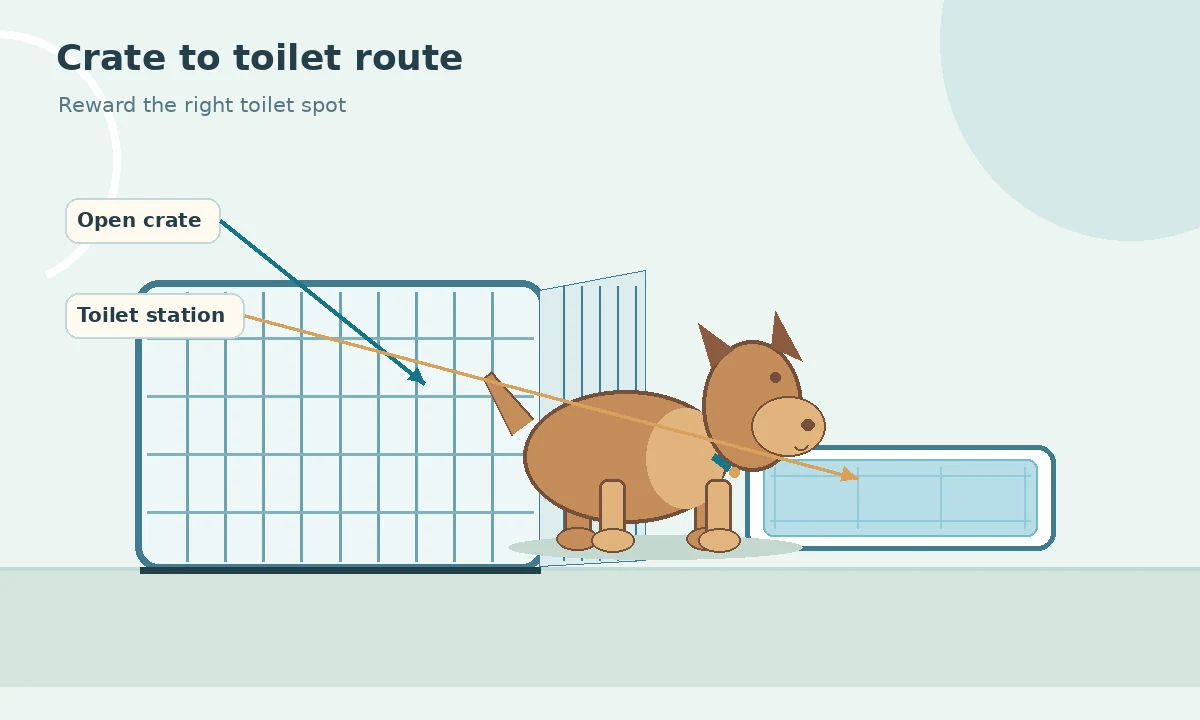
After the puppy wakes, calmly take them to the same toilet area without first starting an exciting game. Give enough time to sniff and settle. When the puppy finishes, reward immediately in place. If nothing happens after a brief attempt, return to close supervision and try again soon. Do not send a distractible puppy out alone and assume the puppy has finished.
Watch for pacing, sniffing, circling, or turning away from play. These are better signals than a rigid formula based on age. During awake periods, young puppies may need frequent breaks. Offer extra opportunities after feeding and drinking. Do not restrict access to normal drinking water just to preserve a dry crate; discuss any concerns about excessive drinking or frequent urination with a veterinarian.
Know when a crate is the wrong tool
If a puppy soils the crate repeatedly, review the interval, crate size, bedding, and whether the puppy has experienced forced confinement in the past. Repeated soiling is a management problem or possible health issue, not disobedience. Shorten sessions and increase toilet access. Some puppies recover from an accident quickly; others need a return to open-door crate practice so the resting space feels safe again.
A puppy in distress who scratches frantically or attempts to escape is not ready for a longer enclosed session. Use a safe pen, a helper, or supervised room access while you rebuild positive associations. Avoid punishment, scolding, and aversive collars. Crate confidence is a separate training goal that may need professional help.
Choose a realistic method for apartments and workdays
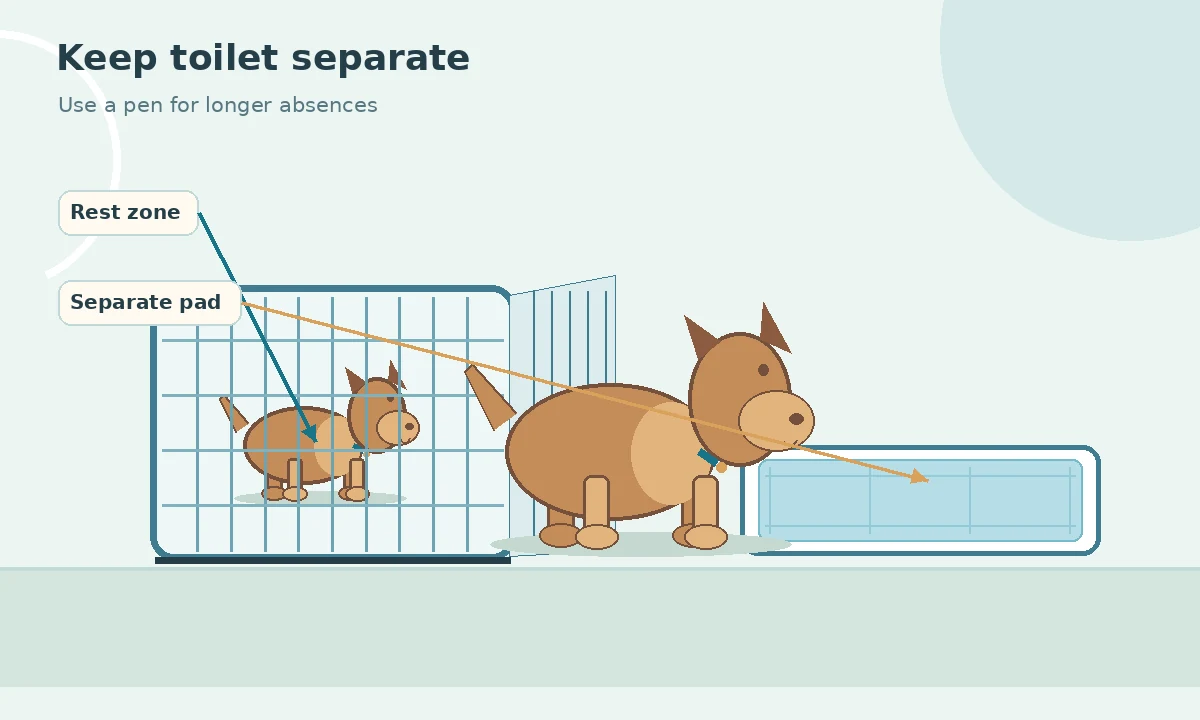
An apartment may require carrying a small puppy directly to a safe outside toilet area; hallways can cause accidents before the puppy reaches the exit. If outdoor access is impractical at certain times, a dedicated indoor pad station in a pen is an alternative. Keep any indoor toilet physically separate from the crate resting surface. Once a routine works, change one piece at a time.
Long work shifts require planned help rather than a tighter divider. Ask a caregiver or pet sitter to provide movement, water and elimination opportunities. Keep a short log with the last successful trip, rest periods and accidents; patterns help you adjust without guesswork. Introduce new freedoms gradually after repeated success. A puppy may need close supervision for months, even when individual naps remain dry.
When to Call Your Vet
Straining, bloody urine, persistent diarrhea, unusual thirst, pain or sudden loss of previously reliable bladder control warrants a veterinary assessment. Repeated crate soiling despite appropriate opportunities deserves professional review too. The right response is a safer routine and medical evaluation, never longer forced confinement.
How We Research
We built this guide around the specific question a pet owner is trying to solve, checked recommendations against the veterinary and public-health sources below, and separated evidence-based safety guidance from practical household choices. We did not purchase or rank branded products for this article. Our editorial approach prioritizes welfare, realistic limitations, and reward-based methods. See About HubPet for more about our site.
Sources
VCA — How to Potty Train Your Puppy.
VCA — Housetraining for Puppies and Dogs.
AAHA — What to Do When You First Bring Home a New Puppy (2026).
Frequently Asked Questions
A calm crate can support a predictable rest routine because many dogs prefer not to soil their beds. It does not increase bladder capacity, and frequent, age-appropriate toilet breaks remain essential.
The puppy must be able to stand, turn around and lie comfortably. A secure divider may reduce unused extra space, but never sacrifice freedom of movement or require the puppy to rest in waste.
Move more promptly to the toilet spot, especially after naps. For a small puppy, carrying them through a hallway may help. Record the pattern and shorten intervals before the next rest.
Yes, if the pad is in a distinct potty zone of a pen rather than treating the crate itself as the bathroom. Keep cues consistent and reward success at the chosen location.
Not without appropriate breaks and care. Arrange a person to provide toilet opportunities or use a suitable supervised or pen-based setup that separates sleeping and toileting areas.