
A used crate can be practical when the frame, latch, tray and cleaning history stand up to careful inspection. For crate-related stress, discomfort or mobility changes, follow your veterinarian’s advice. See our veterinary information disclaimer.
Treat a used crate as an unknown product
A secondhand crate may save material and money, but visible wear tells only part of its story. Ask for the model, age, assembly instructions and whether the previous dog chewed bars or pushed against doors. Do not assume a seller’s phrase lightly used means mechanically sound. Inspect the actual item in good light rather than accepting a single folded photo. If the model lacks the correct joining clips or replacement parts, the apparent bargain may become an unsafe collection of panels.
Measure the usable space before pickup
Compare the crate’s interior dimensions with your dog’s natural standing and sleeping posture. A large printed size number does not measure the free area after a tray or divider. Look for adequate height, width for turning and comfortable lying space. Also measure the doorway and the vehicle or hallway used to bring it home. A model that does not fit the dog or available room is not a bargain. Do not purchase first and hope the dog will adjust to cramped dimensions.
Follow each corner and connection point
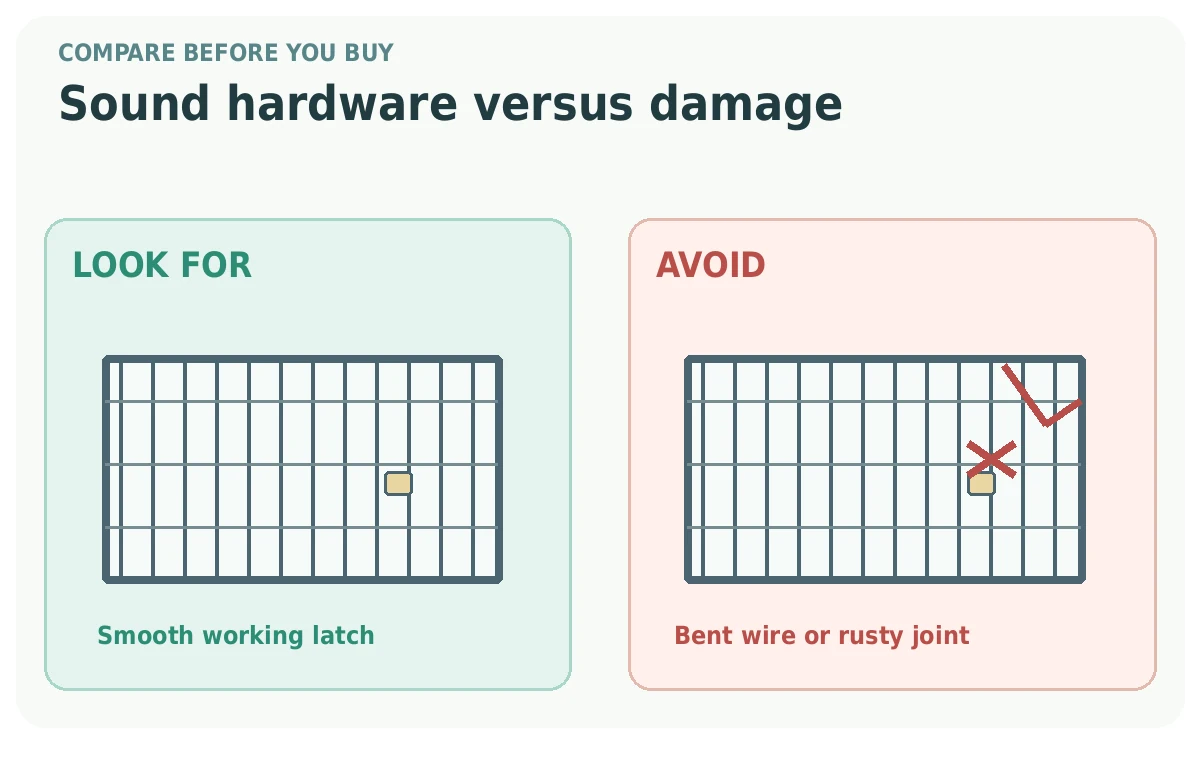
Set the crate upright and feel along every exposed edge. Look for bent wires, cracked welds, damaged plastic connectors and panels that no longer meet squarely. Fold and unfold only according to the original instructions. A missing top clip can allow a section to shift when the dog leans against it. Stop if metal catches skin, hinges jam or corners separate under gentle pressure. Improvised zip ties and electrical wire are not acceptable substitutes for structural hardware around an animal.
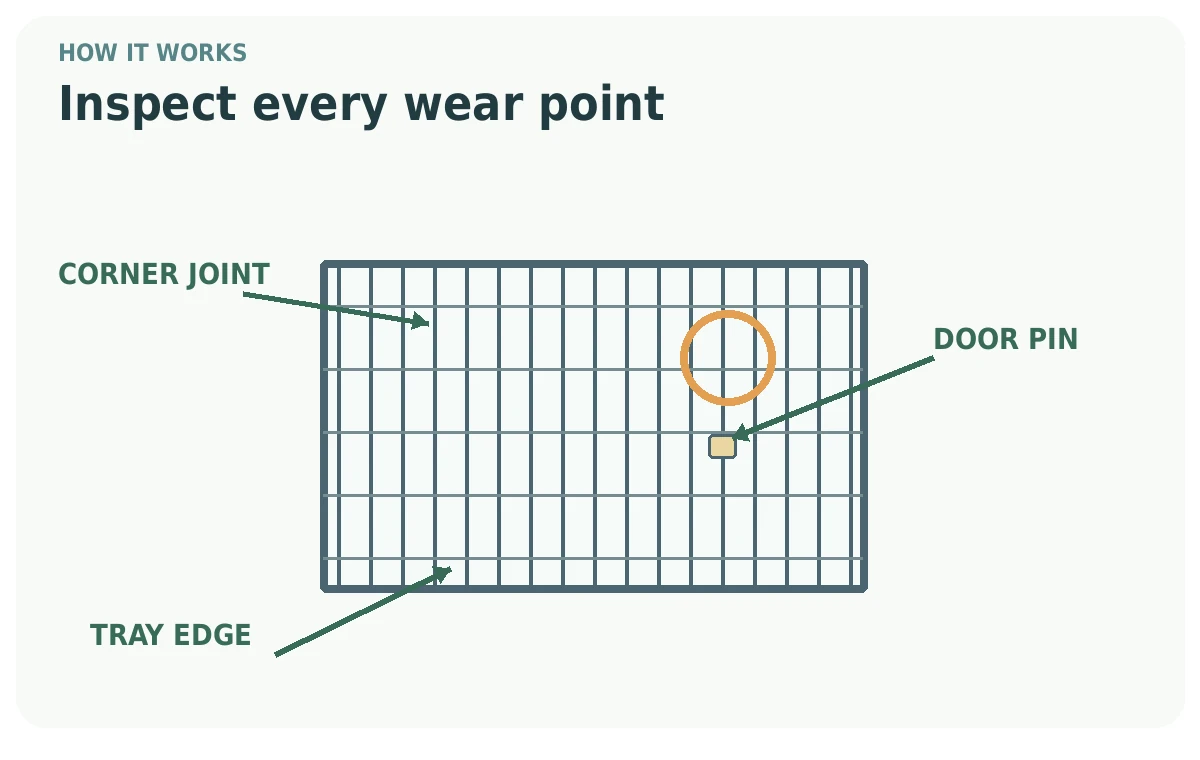
Cycle every latch while the crate stands empty
Open and close each door several times. Watch the latch pins enter their receivers fully, not just appear to touch. A door that twists or springs partly open can trap a foot or allow escape. Verify there are no missing stops or sharp wire tips. Some crates require two independent latches; check both. A bent frame may make one latch appear secure only when you lift the door upward. Reject units that need repeated force to stay shut. Adults should be able to release the door promptly.
Inspect corrosion and coating damage
Light surface wear and deep rust are different conditions. Rust around hinges, welds or door pins may reduce function and create sharp flakes. Peeling paint or unknown coatings can become a problem when a dog chews. Do not hide rust under a quick spray finish without understanding the metal’s condition. Use a light and examine hard-to-see areas below the floor frame. If pitting, cracks or rough edges appear where the animal can reach them, pass on the crate rather than attempting a cosmetic repair.
Lift out the tray and check both sides
Cracks along a removable pan can cut paws or leak onto flooring. Inspect corners, ridges, molded handles and the underside under good light. Flex the empty tray gently only if the product permits it. Examine any supplied cushion for damaged seams, heavy odors or possible infestation. It may be easier to replace soft accessories than reuse them. If the tray is missing, confirm that an exact approved replacement exists. A random board or cut sheet may create new sharp edges or unstable footing.
Clean before the first animal uses it
Remove visible hair, dust and waste before disinfecting. CDC guidance recommends soap-and-water cleaning for hard pet items and label-based disinfecting for specific hygiene needs. Keep the dog away from solutions and allow the crate to dry completely. Never mix bleach with ammonia or other cleaners. Pay special attention to joints where residue can remain. If illness in the previous animal is known or suspected, ask a veterinarian about appropriate infection-control precautions. Do not rely on fragrance to mask contamination.
Confirm parts and intended use
Find the maker’s instructions when possible. Compare latches, panels, bolts, handles and feet with product photographs. Do not claim a secondhand home crate is airline compliant or crash-tested. Prior transport damage may not appear from a front photograph. When the original part cannot be identified, avoid improvised hardware inside the crate. A bargain wire crate also should not serve as an unverified vehicle restraint. Match the crate to its documented purpose and current condition.
Introduce a cleaned used crate as a new space
A dog may notice unfamiliar odors even after cleaning. Leave the door secured open and let the animal approach voluntarily. Reward sniffing, walking inside and relaxing. Start with short sessions while you remain present. Never force the dog into the crate or use it for punishment. If the dog pants excessively, drools or tries frantically to escape, stop and reassess. Familiar bedding may help only if the dog does not chew or ingest it. Progress depends on the animal, not the previous owner’s claims.
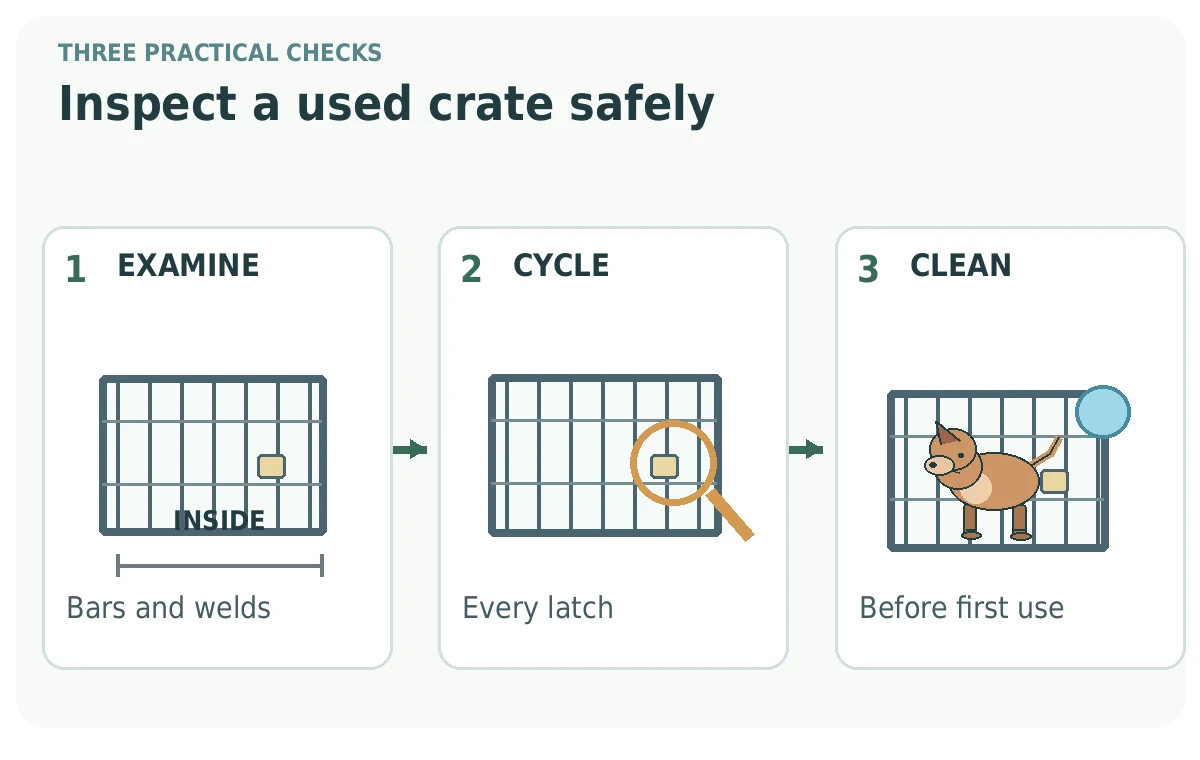
Know when replacing costs less than repairing
Factor in replacement pans, missing fasteners, safe cleaning supplies and the time needed to verify hardware. A crate with unreliable doors, deep corrosion or fractured supports may never become suitable. Reject models with sharp interior protrusions or a folding mechanism that collapses unexpectedly. A lower purchase price does not justify a higher escape or injury risk. Check availability of exact manufacturer parts before agreeing to buy, then keep a simple inspection note for future maintenance.
Use a repeatable arrival checklist
Before setup, photograph the crate unfolded, its latch positions and all attachment points. Clean and dry it, then test stability empty on the target floor. Review interior clearance and confirm that every door opens without hitting furniture. Place the dog nearby but outside for the first inspection. Over the next days, watch for new rattles, loosened clips or chewing. If the unit deforms under ordinary use, retire it. A sensible reuse decision keeps the animal’s comfort and mechanical safety ahead of the sale price.
How We Research
We compared the design and maintenance questions for secondhand dog crates against the veterinary, shelter, and public-health sources below. Our evaluation considered observable dimensions, hardware, cleaning access, animal comfort, and constraints specific to this use case. This project did not laboratory-test individual products, certify crash performance, rate retail brands, or diagnose behavior from a photograph. Manufacturer instructions and the individual dog’s response take priority. Read our editorial approach. Sources reviewed October 28, 2026.
Sources
Cornell University College of Veterinary Medicine, Dog Crates: When to Use Them and How to Pick One. Read the original guidance. Accessed October 28, 2026.
CDC, About Cleaning and Disinfecting Pet Supplies. Read the original guidance. Accessed October 28, 2026.
Humane Society / Orange County, NC, Crate Training. Read the original guidance. Accessed October 28, 2026.
Safety note: If confinement causes persistent panic, repeated escape attempts, chewing of unsafe materials, or sudden difficulty moving, stop and reassess the arrangement. Consult a veterinarian or qualified reward-based trainer as appropriate. Do not leave dogs without needed water, rest, activity, or toileting opportunities.
Sometimes, if the size fits and the entire frame, doors, tray and hardware pass inspection. Reject structural damage and sharp edges.
Clean it first. Follow CDC and product-label guidance for disinfection when appropriate, then rinse or dry fully before use.
Avoid makeshift fixes to latches or structural wire. Use approved replacement parts or choose an intact crate instead.
Pitting and flakes near moving parts raise safety concerns. Reject damaged hardware rather than painting over uncertain corrosion.
Not always, but replace any cracked or unstable pan. Confirm an exact compatible replacement before buying the crate.