
A wire dog crate can provide a predictable resting spot, yet two crates of the same advertised size may function very differently at home. The door could swing into a hallway, the removable tray might rattle, or an exposed joint could catch a paw. Before choosing a model, measure the dog and the room, then inspect each contact point. Cornell notes that wire crates offer ventilation and folding storage, but every dog needs positive introductions and appropriate space. This is a shopping and setup checklist, not a treatment for separation anxiety. If confinement causes panic or injury attempts, speak with a veterinarian. See the HubPet veterinary disclaimer for health guidance limits.
Start with the dog’s resting posture, not the label
Observe your dog standing naturally with the head up, turning around, and resting on the side. Then compare those postures with the usable interior dimensions, not the outer packaging. A crate needs clearance around the head and body, but buying excessive space does not solve an uncomfortable floor. If the dog is still growing, plan for changes over time. Cornell emphasizes that dimensions must support standing, turning, and lying down. Also consider whether an orthopedic bed or washable mat reduces the available room once you place it inside.
Inspect the door opening and closing path
Open the door fully while the crate stands where it will live. Check whether the hinge swings into a walk route or blocks a nearby closet. Next, close the door slowly and examine each latch from the side. A loose slider that misses its keeper can reopen if a dog pushes against it. Conversely, stiff hardware can pinch fingers during daily use. Look for bent wires, exposed tips, and spaces where a collar tag may snag. Remove a collar during safe crate rest if a tag could catch; ask your veterinarian for individualized guidance.

Look closely at wire joints and bar spacing
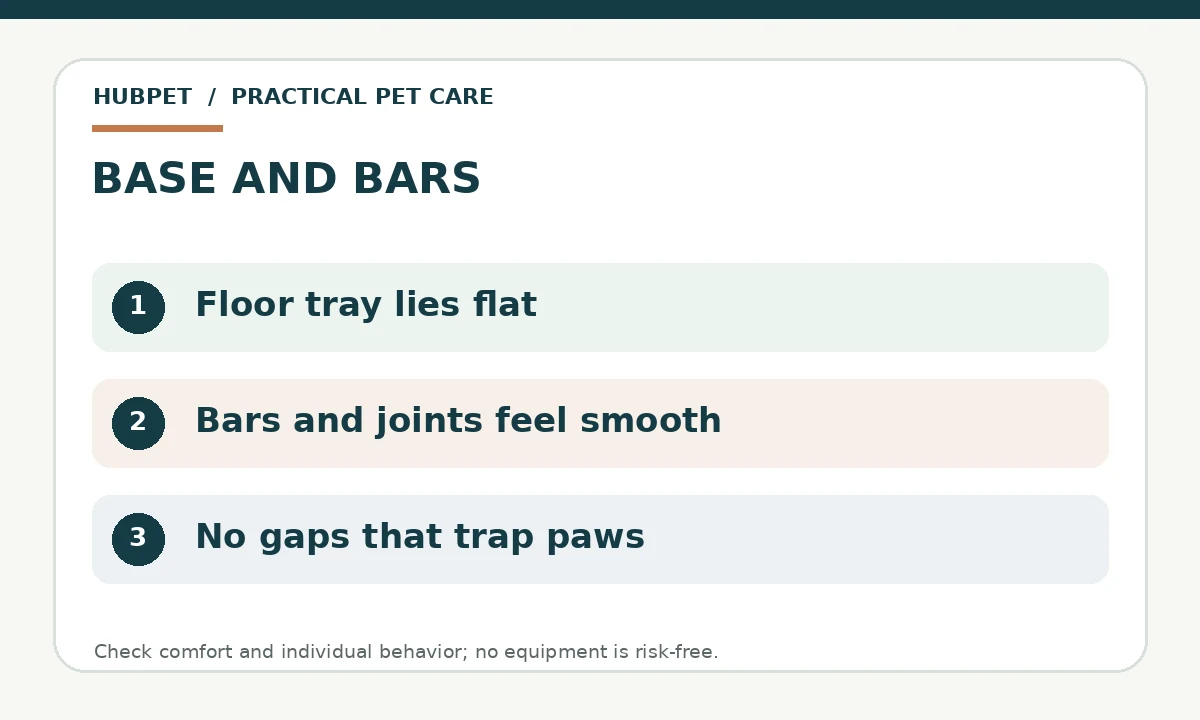
Run your eyes along welded points, corners, and the ceiling. A quality check goes beyond whether the metal feels thick. Inspect for raised edges, uneven welds, rust, and openings that might admit a paw, muzzle, or collar hardware. A dog who repeatedly bites bars can hurt teeth or gums. In that situation, tougher wire is not a behavior plan. Instead, investigate distress, unmet needs, or discomfort before continued confinement. Take photographs of defects while the crate is empty and do not try to hide damaged wire under bedding.
Check folding locks before daily use
Folding crates save storage space, although that convenience adds hinges and alignment points. Set the crate on the floor and assemble it according to the maker’s instructions. Then verify that the roof, corners, and side panels lock in their intended positions. Press gently against each panel without an animal inside to find unexpected movement. A panel that folds when bumped belongs out of service until corrected. Keep the model instructions nearby, since a borrowed crate may have a different latch arrangement from the one you previously owned.
Choose a floor that stays stable and clean
Inspect the bottom tray for cracks, curled edges, sharp seams, and movement when the dog steps onto it. A rattling or slippery surface can make an otherwise suitable crate unpleasant. If you add a mat, check that it stays flat and does not bunch beneath the door. However, dogs that shred or swallow fabric need a different bedding plan under veterinary or qualified behavior guidance. Pull out the tray after a practice setup to ensure you can clean it without dragging it over the dog’s paws or blocking the only exit.
Place the crate where people actually live
Choose a calm spot with air circulation, moderate temperature, and a view of ordinary household life. Keep it away from direct sun, space heaters, dangling cords, and doors that slam. Although wire sides provide visibility, a shy dog may prefer reduced visual stimulation. A breathable cover may help some animals, yet it must not restrict airflow or become reachable for shredding. Watch how the dog responds rather than copying a photo online. The aim is a familiar retreat that the dog can enter voluntarily, not a forced isolation station.
Run a voluntary introduction before closing the door
Set the crate up with the door secured open. Allow sniffing and reward calm approaches without pushing the dog inside. Next, scatter a few suitable treats near the entrance, then progressively farther in. Only close the door for a brief moment after the dog stays relaxed during open-door sessions. If the dog freezes, pants heavily, drools, or scratches frantically, return to an easier step. ASPCA cautions that crating can intensify distress for some dogs. Therefore, a gate or safe room may be more appropriate while you seek professional advice.
Compare real maintenance costs
A replaceable tray and accessible corners can matter more than a decorative finish. Before purchase, ask whether replacement hardware exists and whether the crate fits through your narrowest doorway while assembled. Check the weight before planning to move it frequently. Moreover, examine cleaning instructions for coatings and panels instead of assuming any household cleaner is suitable. A wire crate that folds easily but rusts after repeated washing may not meet your needs. Prioritize the dog’s fit, intact construction, and routine upkeep over a brand’s promise of exceptional durability.
Know when wire is the wrong format
Some dogs need quieter sides, different visual exposure, or a larger puppy-proofed room. Others have a history of bar biting, escape injury, or severe distress when the door closes. In those cases, a wire upgrade alone can increase risk. Ask a veterinarian or reward-based behavior professional about the underlying problem. Similarly, a wire home crate is not automatically a tested automotive restraint or an approved airline travel kennel. The use case matters, and transport requires separate model-specific verification.

Complete a two-minute buying checklist
Before spending money, confirm that the dog can stand, rotate, and rest without squeezing. Check the door opening in the intended room, every latch, the floor tray, all joints, and the folding locks. Then plan a calm introduction with the door open. If any part fails inspection, reject or replace the crate instead of adding a workaround. Finally, write down the model and spare part information. That record makes future repairs and cleaning decisions easier and prevents repeat purchases based only on a size label.
How We Research
Our editorial team compared current dog welfare, crate-selection, and humane training guidance with the equipment problem in this guide. The review distinguishes sourced safety principles from practical inspection prompts. No specific products were tested, and this guide does not claim a crate prevents injuries or suits every dog. Sources were checked on October 27, 2026. Learn about our process on the About HubPet page. For distress, injuries, or medical questions, consult your veterinarian.
Sources
Cornell University College of Veterinary Medicine: Dog crates: when to use them and how to pick one. Reviewed October 27, 2026.
Humane World for Animals: How to crate train your dog or puppy. Reviewed October 27, 2026.
ASPCA: Separation anxiety and confinement. Reviewed October 27, 2026.
American Kennel Club: Crates for dogs: how to choose a crate. Reviewed October 27, 2026.
No. They can work for dogs that tolerate confinement, but some dogs become distressed or attempt to escape. Watch behavior and ask a veterinarian about intense fear.
Do not assume that a home wire crate has crash-tested vehicle performance. Check the specific transport equipment and its independent safety information.
Avoid blocking ventilation. Some dogs prefer partial visual shielding, while others feel better with open sides. Monitor comfort and prevent chewing of the cover.
Check the door and hinges before routine use, particularly after folding or moving the crate. Stop using equipment that no longer closes securely.
Do not expect a stronger crate to resolve the problem. Bar biting can cause injury and may reflect distress; discuss behavior and safety with a veterinarian or qualified trainer.