
This guide offers general training information, not veterinary advice. If your dog suddenly changes behavior, seems painful, or shows severe distress, consult your veterinarian. Read our veterinary disclaimer.
House-training a dog means teaching a reliable place and routine for elimination, not punishing a dog for indoor accidents. Puppies are still developing bladder and bowel control; newly adopted adults may have learned a different surface or schedule. Start with frequent chances to succeed, attentive supervision, and a reward the moment your dog finishes in the chosen spot.
The plan below uses triggers instead of a rigid promise such as “every dog can wait four hours.” Age, health, activity, water intake, stress, and access to the outdoors all change what is reasonable. Keep fresh drinking water available, make overnight needs a separate decision, and ask your veterinarian about a sudden change in elimination habits.
Pick One Toileting Area and Plan Predictable Trips
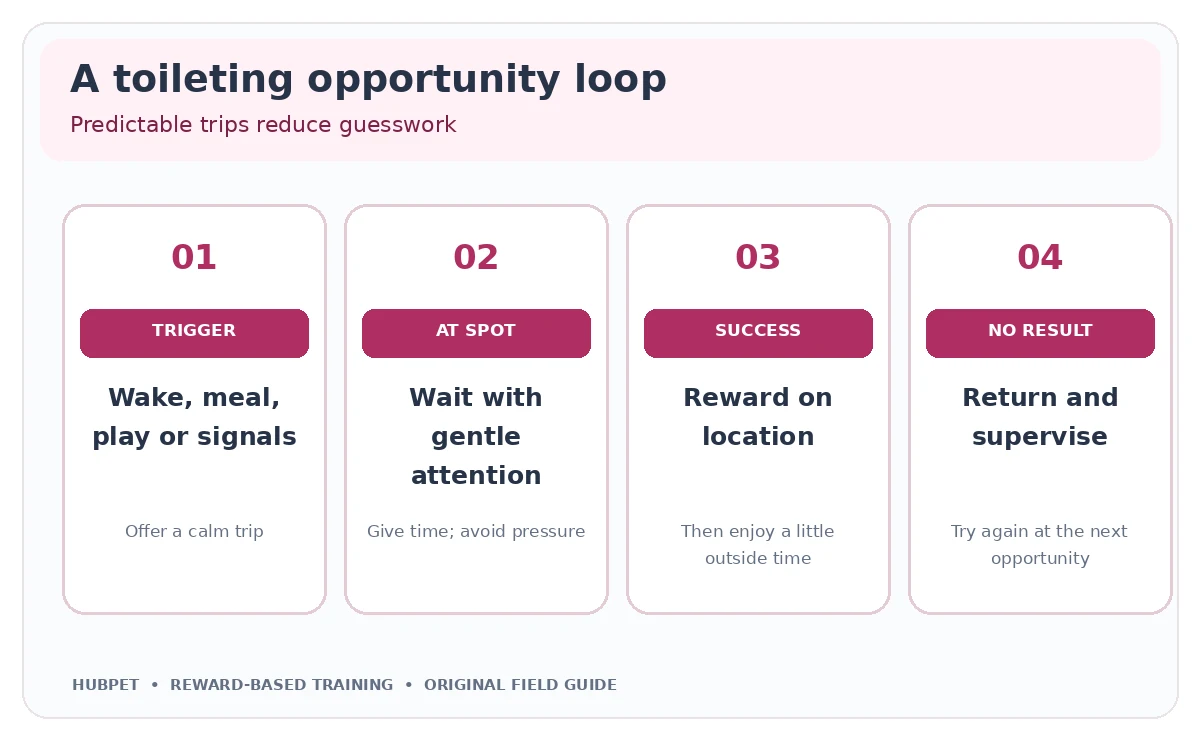
Choose a safe outdoor patch or an appropriate designated indoor station if outdoor access is limited. Go there on leash when needed so you can watch what happens. Bring the same small reward every trip. Make the location predictable, but do not wait outside so long that the experience becomes stressful. Quietly return to the spot later if your dog does not go.
Offer a trip after waking, eating, active play, and naps. A puppy needs more opportunities than a healthy adult. Watch for sniffing, circling, restlessness, or abruptly leaving an activity. A phone reminder helps busy households, yet your dog’s signals should override the reminder. Coordinate these breaks with our first-week dog checklist if the dog is new to your home.
Supervise, Separate, or Arrange a Safe Space
When you can watch closely, keep the dog near you and interrupt wandering gently by offering another timely potty opportunity. When you cannot watch, use a puppy-proofed room, pen, or a comfortably introduced crate for an appropriate short period. Do not leave a puppy confined longer than their physical needs permit. A crate is not an excuse to skip bathroom trips.
Give the dog a little more freedom after successful outdoor elimination, not immediately after an accident. Return to close supervision when routines change. If your dog feels frightened by confinement, choose a different management setup. Our home safety guide explains how to make an accessible area safer while you establish a schedule.
Reward the Exact Behavior You Want
After your dog finishes eliminating in the correct place, mark calmly and reward right there. Waiting until you return indoors can accidentally reward walking through the door instead. Keep the treat small, then allow a little sniffing or play so the dog does not learn that toileting immediately ends outdoor time.
Use a friendly phrase before a predictable elimination once you recognize the pattern. The phrase can become a cue later, but it is not a command to force a body function. For an anxious dog, avoid hovering or loud celebration. A quiet reward may be more comfortable than excited praise in a busy apartment courtyard.
Handle Accidents as Information, Not Misbehavior
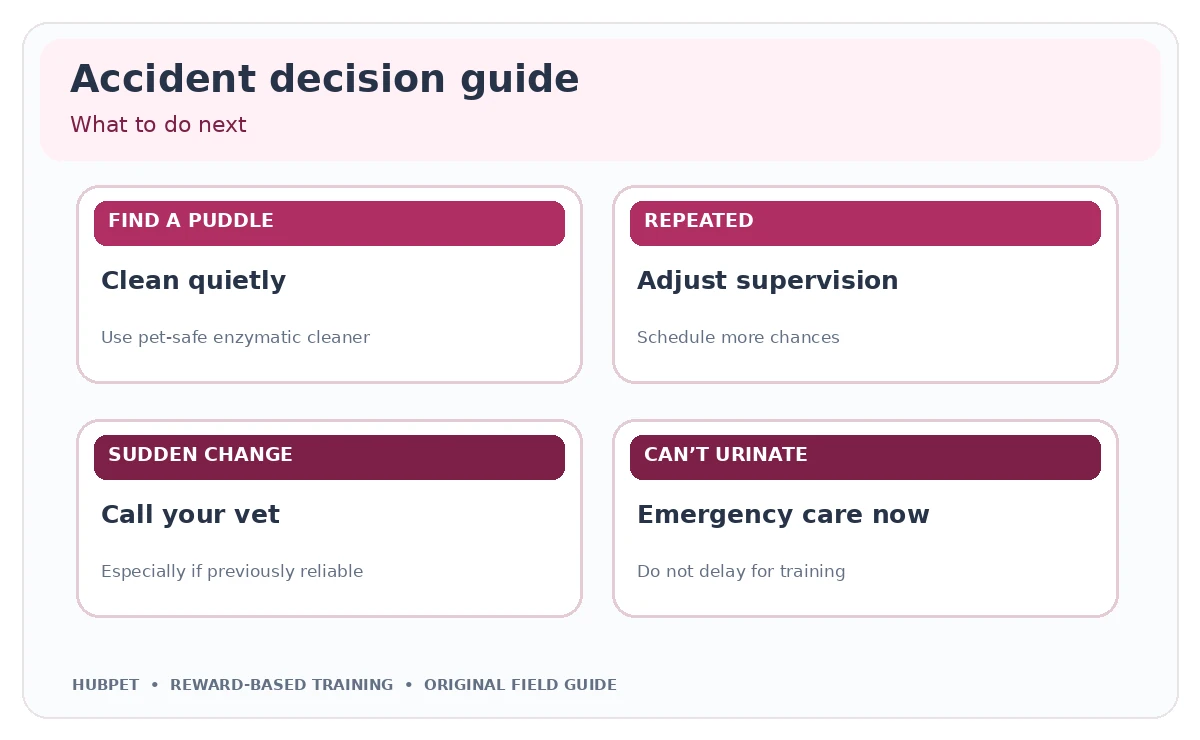
If you notice an accident beginning, guide the dog calmly to the designated area without frightening them. If you find a puddle later, simply clean it with an enzymatic cleaner suitable for the surface and pet household. Do not scold after the fact. The dog cannot use punishment to infer the correct outdoor location, and fear can encourage hiding.
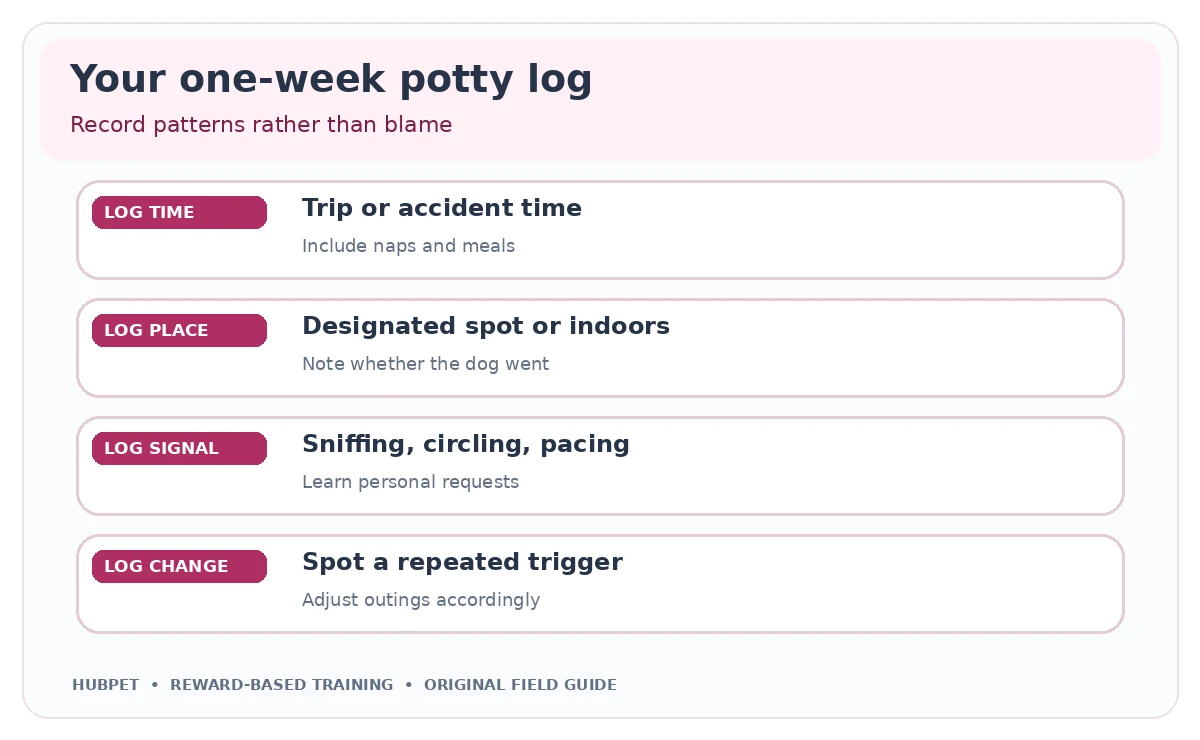
Write down what happened before the accident: nap, meal, play, long meeting, doorbell, or an unfamiliar visitor. Patterns reveal missing outings. For example, a dog that always has an accident soon after breakfast may need an earlier trip. If a dog repeatedly eliminates near the door, you may need to respond faster to their request rather than restart every training step.
Use a Seven-Day Observation Log
For one week, log time, food and water changes, successful trips, indoor accidents and anything unusual. The goal is not to produce a perfect score; it is to identify an individual rhythm. Mark a trip as “unsuccessful” if the dog did not go, then supervise carefully and offer another chance. Keep household members using the same door and reward method.
As days become predictable, lengthen intervals carefully based on this dog’s comfort and success. Avoid treating an old rule of thumb as a medical limit. When you change work hours, daycare, or walking routes, temporarily increase outings again. Our feeding-routine guide may help make meal timing easier to anticipate.
Know When Training Is Not the Answer
Sudden accidents in a previously reliable dog are a health signal until a veterinarian has evaluated them. Frequent small urinations, straining, blood, pain, unusually increased thirst, diarrhea, or distress justify prompt contact with a veterinary clinic. If your dog cannot pass urine, seek emergency veterinary care. Do not restrict water or attempt a home diagnosis to solve house soiling.
When a dog eliminates only during greetings or fear, consider emotional triggers rather than assuming they forgot the training. A veterinarian or qualified reward-based behavior professional can help separate incomplete learning from anxiety or medical problems. Resume the simple schedule after the professional rules out an urgent issue, and reward achievable progress.
How We Research
We reviewed the linked guidance below on October 26, 2026, paying particular attention to humane methods, realistic expectations, and when owners should stop training and seek professional help. We cross-checked practical steps against the HubPet editorial approach. The diagrams are original teaching aids, not records of a clinical trial. Individual dogs vary, and this guide is educational rather than a veterinary diagnosis or a promise of results.
Sources
AKC: Puppy potty training methods and supervision. Reviewed October 26, 2026.
AKC: Housetraining an adult dog without punishment. Reviewed October 26, 2026.
VCA: Behavioral and medical reasons for house soiling. Reviewed October 26, 2026.
Offer frequent trips when awake, especially after sleep, meals, play and drinking. A young puppy may need many more trips than an adult. Adjust based on observed signals, comfort and your veterinarian’s guidance.
Yes. Begin with close supervision, a consistent place and immediate rewards as if teaching a new skill. Check whether a new surface, unfamiliar schedule, fear or a medical issue could be contributing to accidents.
That depends on access, age and household needs. Choose a clear designated area and stay consistent. If you eventually want outdoor-only toileting, plan a gradual transition instead of moving the target unpredictably.
No. An accident discovered later does not tell the dog where they should eliminate. Clean thoroughly, update your supervision or trip schedule, and reinforce the next successful trip to the correct place.
Contact a veterinarian for sudden changes in a previously housetrained dog, pain, straining, blood, diarrhea or unusually increased thirst. Inability to urinate is an emergency and needs immediate care.