
Your puppy’s first night in a crate is a new experience, not a test of obedience. The crate can become a secure sleeping place when the puppy is already comfortable entering it, the setup fits, and a caregiver remains close enough to respond. Choose a practical location, offer calm practice while the door is open, and plan for toileting rather than expecting an eight-week-old puppy to sleep through every night. If the puppy is frightened of the crate, use a safe pen or supervised sleeping arrangement while teaching the crate gradually.
This guide offers general education, not an individual veterinary diagnosis or treatment. Pain, illness, persistent distress or sudden toileting changes require a veterinary evaluation. Read our vet disclaimer.
Choose the sleeping arrangement before bedtime
A wire or solid-sided crate should allow the puppy to stand naturally, turn around, and lie stretched out. Check actual interior dimensions and the fit of any divider rather than buying by an age label. Use secure hardware and cover or remove loose pieces that a puppy could chew. Breathable sides matter, and the bed should stay dry and washable. For an eager fabric chewer, a loose plush blanket or dangling string may be unsafe.
Put the crate near your sleeping area for the first nights so you can hear changes in breathing, movement, and requests to toilet. Keep it away from heaters, direct drafts, and traffic. A puppy can see or hear you without sleeping in the bed with you. Compare basic crate features against the published crate-training primer before assuming one shape or material works for every dog.
| Setup choice | Useful check | Red flag |
|---|---|---|
| Crate dimensions | Stand, turn and lie naturally | Too cramped or huge unused corner |
| Placement | Near a caregiver, well ventilated | Heat vent or isolated room |
| Bedding | Dry, washable, safe material | Loose threads or chewed foam |
| Door practice | Puppy enters voluntarily | Pushing puppy inside |

Introduce the space in daylight, not at lights-out
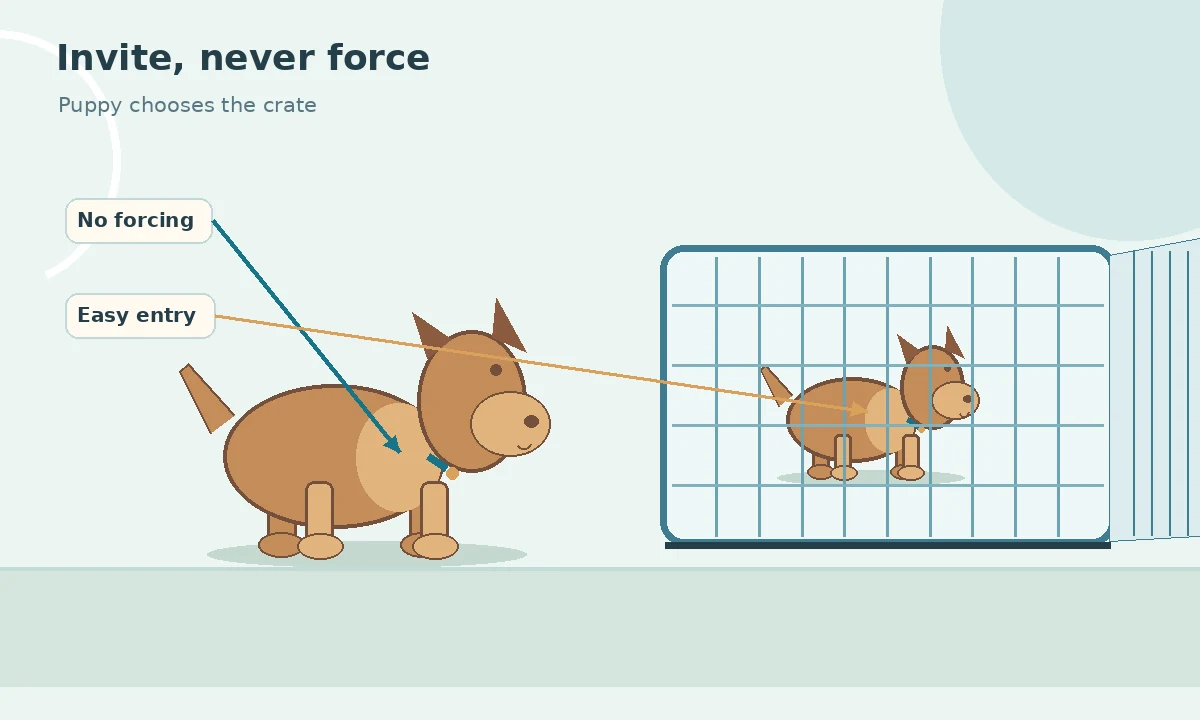
Begin with the door secured open. Toss an appropriate tiny treat just inside, let the puppy retrieve it, and allow a free exit. Repeat until the puppy approaches willingly. Add a short quiet rest with you beside the crate. Only close the door briefly when the puppy remains comfortable, then open it before anxiety builds. This voluntary approach is consistent with AAHA’s 2026 first-week guidance.
See whether the puppy can relax near the crate even before they can nap inside it. A gentle food puzzle may help during supervised practice, but remove items with loose pieces or choking risks before unattended sleep. Do not push the puppy inside or turn confinement into a punishment. Our crate-comfort guide explores gradual confidence building if your puppy hesitates to enter.
- Invite voluntary entry with the door open.
- Give a bathroom opportunity before settling.
- Place the crate near your sleeping space.
- Stay close and read your puppy’s body language.
- Take calm, boring overnight potty breaks as needed.
- Record what helped and practice again in daylight.
Build a realistic evening sequence
Offer a suitable toilet trip before bed and a little time to wind down. Keep the room quiet and lights low. Return the puppy to the same sleeping spot, provide appropriate bedding, and settle nearby. A first night may be easier if one person can sleep in the room or place the crate by the bed temporarily. This is responsive care, not a failure of independence training.
Expect some variation. One puppy may curl up quickly; another may wake after an hour and need help. Watch the body language, not just the sound. Occasional short whining may settle, while escalating vocalization, frantic scratching, drooling, or efforts to escape signal that the training step is too difficult. Open the crate calmly and arrange a less stressful option instead of demanding prolonged crying.
Respond to crying with a needs-first check
Ask whether the puppy needs a bathroom break, water, a comfortable temperature, reassurance, or relief from a frightening situation. If the puppy wakes after sleeping and becomes restless, take them directly to the designated toilet area. Use dim light and little conversation. Reward toileting quietly, then return to the resting area without a play session.
If the puppy remains distressed after basic needs are met, avoid loud interruptions or forced isolation to suppress the noise. End the crate session and arrange safe, close supervision until you can restart at an easier training stage. AAHA specifically discourages forcing a puppy into a crate or leaving them to cry it out; distress deserves a thoughtful change in the plan.

Use a quick fit-and-safety checklist in the morning
Check the sleeping surface for moisture, inspect the latch and divider, and look for loose bedding or chewed edges. Note how long the puppy slept before needing a toilet opportunity, but do not mistake one calm night for reliable bladder control. A comfortable puppy may need more breaks after an active day or a change of feeding schedule.
Keep practicing voluntary entry and brief relaxed rests in daylight. Gradually increase distance only after the puppy settles. If you change rooms later, move the crate in manageable stages. The new-dog first-week checklist helps fit the sleeping plan into meals, exercise, supervision, and veterinary visits.
When distress or health problems change the plan
Contact a veterinarian if the puppy appears ill, has persistent diarrhea or vomiting, strains to urinate, injures themselves trying to escape, or cannot calm despite gentle changes. An experienced reward-based professional can help distinguish adjustment stress from an escalating confinement problem. A crate is optional for sleeping; a safe alternative is better than repeatedly frightening a puppy.
How We Research
We built this guide around the specific question a pet owner is trying to solve, checked recommendations against the veterinary and public-health sources below, and separated evidence-based safety guidance from practical household choices. We did not purchase or rank branded products for this article. Our editorial approach prioritizes welfare, realistic limitations, and reward-based methods. See About HubPet for more about our site.
Sources
AAHA — What to Do When You First Bring Home a New Puppy (2026).
VCA — Crate Training and Confinement for Puppies and Dogs.
VCA — Housetraining for Puppies and Dogs.
Frequently Asked Questions
Only after positive practice and only while the puppy can remain comfortable. If closing the door causes escalating distress, reopen it and use a safe alternative rather than forcing an overnight session.
Near your bed or another sleeping area where you can hear the puppy and respond to bathroom needs. Choose ventilation and temperature safety over a perfectly permanent location.
Check for a toilet need, discomfort, fear, and temperature. Brief mild fussing differs from frantic, escalating distress; comfort the puppy and change the setup when they cannot settle.
Many very young puppies need one or more overnight bathroom opportunities. Individual bladder capacity varies, so plan breaks and respond to signals rather than assuming any age guarantees a full night.
Choose a suitable washable sleep surface and only items safe for that individual puppy. Inspect for loose threads and chew damage, and do not leave unfamiliar choking hazards unattended.