
This guide offers general training information, not veterinary advice. If your dog suddenly changes behavior, seems painful, or shows severe distress, consult your veterinarian. Read our veterinary disclaimer.
A puppy is learning two things at once: whether a crate feels safe and whether brief separation from people is manageable. Build comfort first. Leave the door open, let the puppy explore voluntarily, and reward relaxed behavior near or inside it. Only add closed-door time after the puppy has a positive reason to return. Crate training is optional as a management strategy; a pen or safe room may suit some puppies better.
The key distinction from adult-dog training is developmental need. Young puppies cannot reliably wait through a workday without toilet breaks, and nighttime waking may signal a real need rather than a training problem. Do not use a crate to suppress distress. The existing HubPet crate-comfort guide offers a general overview; this article gives a puppy-specific first-week progression.
Choose an Appropriate Crate and Location
Pick a sturdy, well-ventilated crate that allows your puppy to stand, turn around, and lie down naturally. Use a divider if an oversized model makes toilet training confusing, but never reduce the space below comfortable movement. Remove collars or equipment that could snag when you cannot supervise. Add bedding only if it is safe for the puppy’s chewing habits and temperature.
Place the crate in a calm, lived-in area so the puppy is not abruptly isolated. Keep the route to fresh water and potty opportunities practical. Use a doorstop or secure the open crate door so it cannot swing and frighten your puppy. Do not turn the crate into a place for punishment, and do not close it simply because the puppy is being energetic.
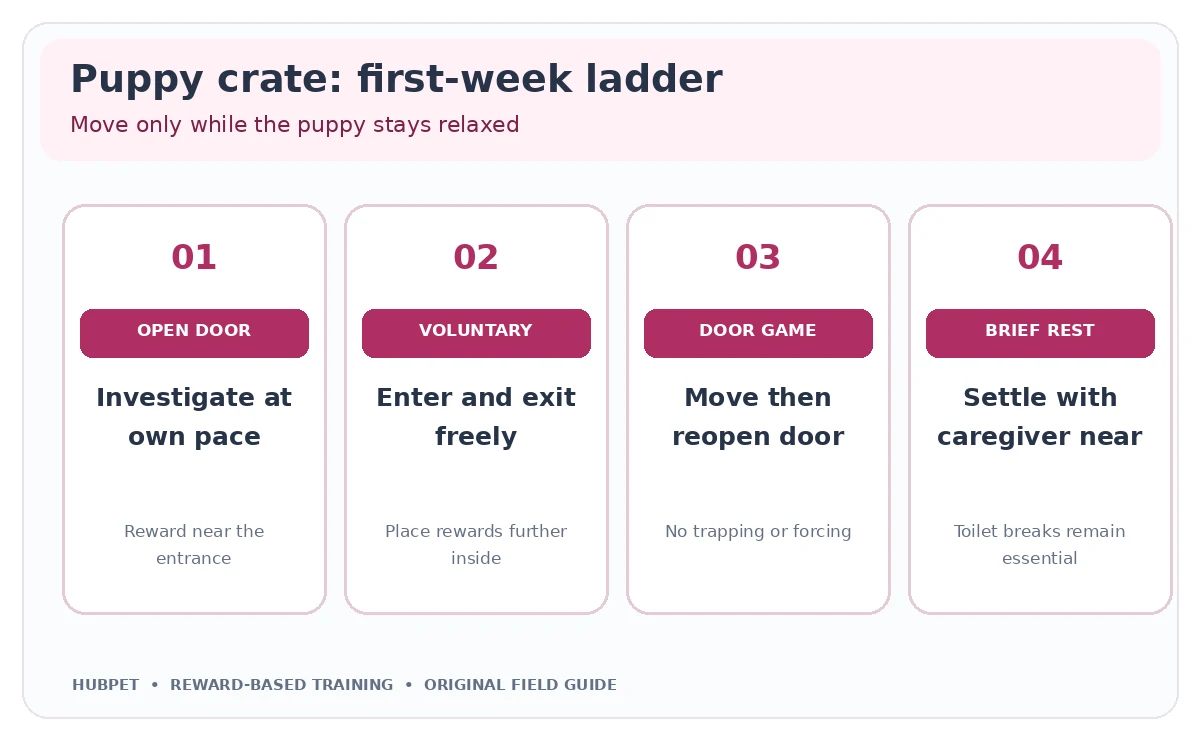
Day One: Let the Puppy Make the First Choice
Toss a small treat just inside the open doorway, then allow the puppy to turn and leave. Repeat while keeping sessions brief. As comfort grows, place the reward a little deeper. Feed a familiar meal near the crate or just inside when the puppy seems relaxed. Do not push or pull the puppy across the threshold, even if you are late for an appointment.
Look for an easy body posture, voluntary returns, normal breathing and willingness to take food. If your puppy freezes or backs away, move the reward outside the entrance and try later. Reward looking at or approaching the crate before you ask for entry. This tiny adjustment protects the puppy’s confidence and gives you a baseline for later steps.
Build Door Movement Before Confinement
When the puppy enters willingly, briefly touch the door and offer a reward while it remains open. Next, move the door partway; open it again before signs of worry. Only when this feels ordinary should you close and reopen it for a moment. Keep yourself nearby and gradually extend time based on relaxed responses, not a stopwatch target.
A mild protest may call for a potty check or an easier step; persistent barking, frantic scratching, trembling, or escape attempts mean the exercise is too hard. Open the door safely, help the puppy settle, and change the plan. Do not leave a distressed puppy to “cry it out.” The AKC’s early crate introduction guidance also cautions against allowing panic to build.
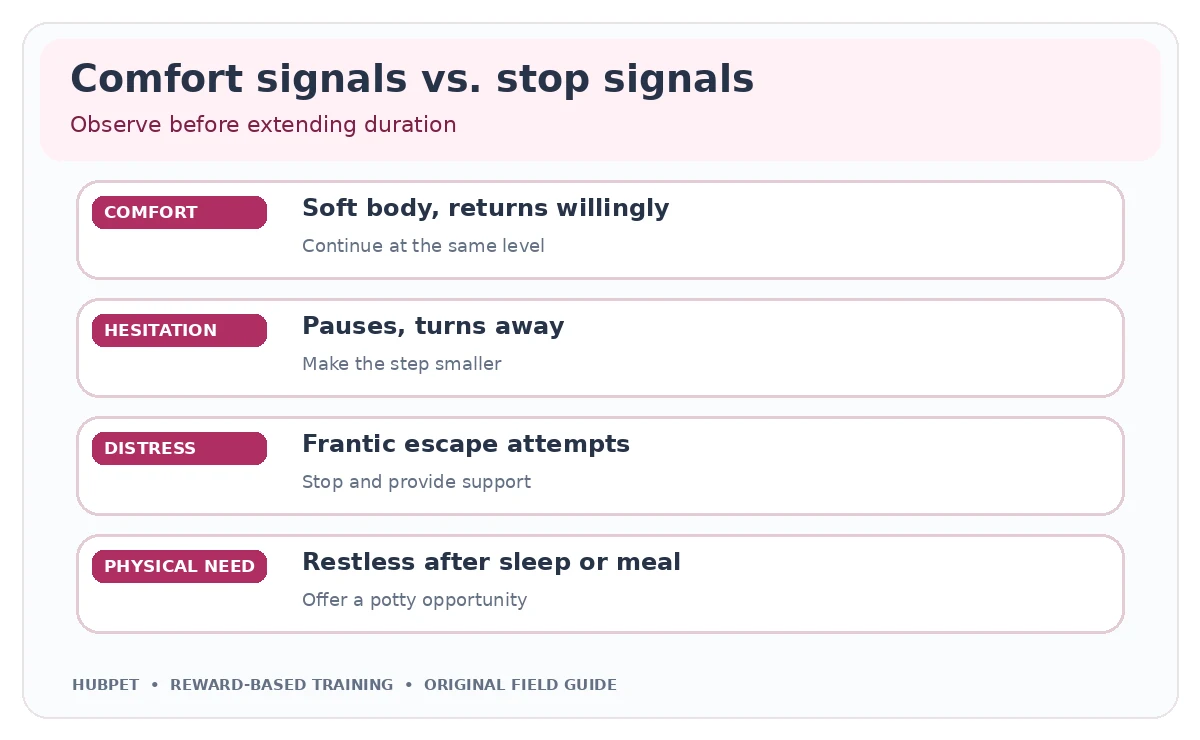
Pair Crate Time With Puppies’ Real Daily Rhythm
Try brief crate practice after an appropriate bathroom opportunity and a little calm activity, rather than at the peak of excitement. Give a safe, puppy-appropriate chew only when you can manage choking and chewing risks. A resting puppy may settle for a short period; an awake puppy needs play, exploration, human contact, and further toilet breaks.
At night, place the crate where you can hear and respond to the puppy. Some puppies need overnight outings for a while. Take them outside calmly and return to a quiet rest routine. Never assume all nighttime crying is manipulation. Our new-dog first-week checklist can help distribute care tasks among household members.
Practice Tiny Separations Only After Calm Crate Time
Once your puppy stays relaxed with the closed door while you sit nearby, stand up and sit back down. Reward calm responses. Then try one step away and return before the puppy worries. Increase your distance separately from duration. An exercise pen can make these lessons easier if a closed crate is currently too difficult.
Do not use departures as a surprise endurance test. Try several short successful returns, then stop. If the puppy becomes unsettled, go back to practicing with you close by. Building alone-time tolerance and crate familiarity are related but separate skills. The calm-space setup guide describes another useful resting option.
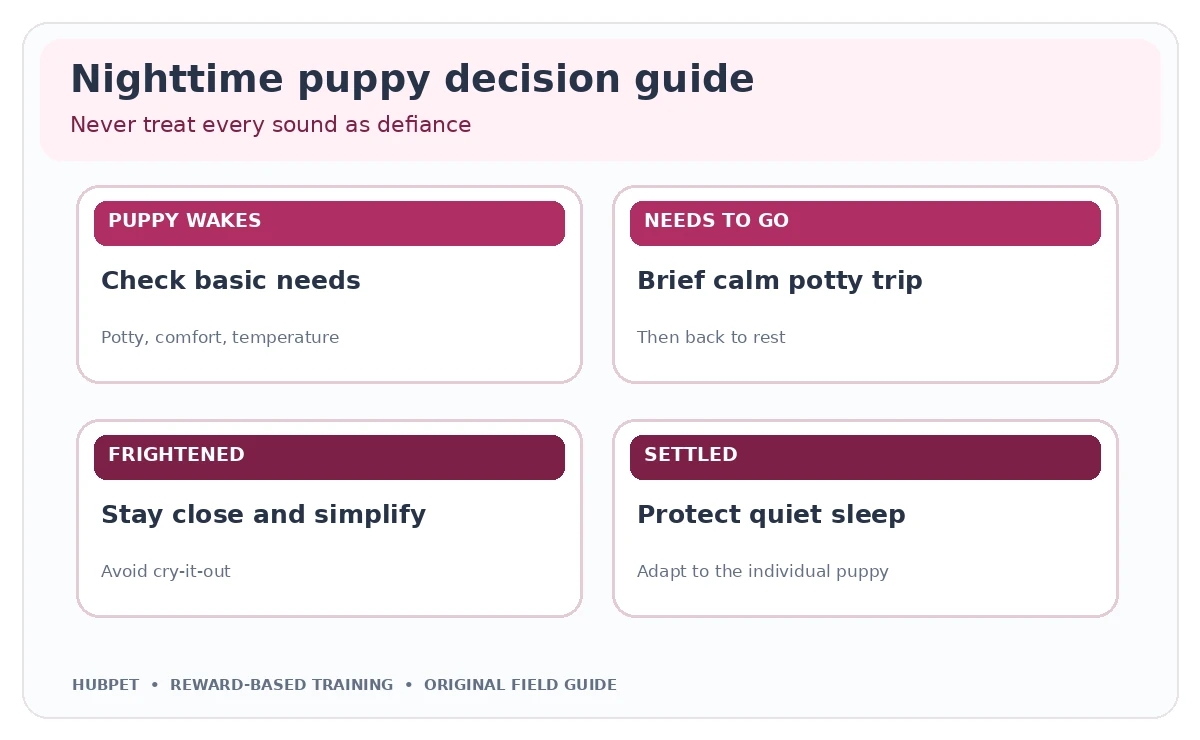
Make a Pause-or-Proceed Checklist
Proceed when the puppy walks in voluntarily, can settle briefly, and exits without panicking. Pause when the puppy stiffens, stops taking a usual reward, repeatedly avoids the entrance, or scratches urgently at the door. Stop confinement and ask a veterinarian or qualified reward-based professional for help if there is repeated intense distress or injury risk.
Keep a short note of what happened before each successful session: nap, meal, play, door movement, and how close you stood. You are tracking the puppy’s emotional comfort, not trying to beat a training record. As the puppy grows, revisit crate fit and daily needs. A comfortable crate should remain one safe choice among several.
How We Research
We reviewed the linked guidance below on October 26, 2026, paying particular attention to humane methods, realistic expectations, and when owners should stop training and seek professional help. We cross-checked practical steps against the HubPet editorial approach. The diagrams are original teaching aids, not records of a clinical trial. Individual dogs vary, and this guide is educational rather than a veterinary diagnosis or a promise of results.
Sources
AKC: Puppy crate introduction and gradual rewards. Reviewed October 26, 2026.
AKC: Early crate experiences and avoiding cry-it-out. Reviewed October 26, 2026.
AKC: Crate training step-by-step for varying ages. Reviewed October 26, 2026.
There is no single safe duration for every puppy. Age, toilet needs, health, sleep and comfort matter. Keep early sessions short, arrange frequent breaks, and never use confinement as a substitute for daily care.
No. First consider a bathroom need, discomfort, fear or loneliness. Respond calmly and adjust the setup. Intense or escalating distress means you should stop the session and revisit earlier, easier steps.
Do not force an unwilling puppy inside as a training shortcut. Reward approaches near the open entrance, allow voluntary exits, and use a suitable secure pen or puppy-proofed area for immediate management needs.
No. A well-introduced crate can help manage supervision, but an exercise pen, gates and frequent outdoor trips can also support housetraining. The key is timely access to an appropriate elimination area.
Remove unsafe items and review the setup before leaving the puppy unsupervised. Repeated panic or frantic attempts to escape call for veterinary or qualified behavior support, not longer enforced crate sessions.