
Scratching Posts for Multiple Cats calls for understanding a cat’s normal needs before changing the home. Scratching can maintain claws, stretch muscles, and communicate through scent and visible marks. The safest approach is to protect vulnerable surfaces while providing an appealing, stable alternative at the place your cat actually visits. This article gives a practical sequence for observing the behavior, adjusting the environment, and rewarding the right choice. It does not recommend punishment, declawing, or holding a cat’s paws against a post. Sudden pain, injury, distress, or a major change in behavior warrants veterinary advice. Read our veterinary disclaimer for the limits of general guidance.
See whether the problem is access rather than preference
A household can have a perfectly good scratching post that one cat barely uses because another cat sits beside it. Watch body language at ordinary times, not only during a conflict. Does one cat wait at the doorway, stare, block the hall, or chase another away from a favorite station? Those behaviors can block access to a shared scratcher even when the object looks unused. Record each cat’s preferred route from sleeping areas to windows, food, and resting spots. This map helps you understand whether more posts are needed, where to put them, and which locations are too narrow for easy movement.
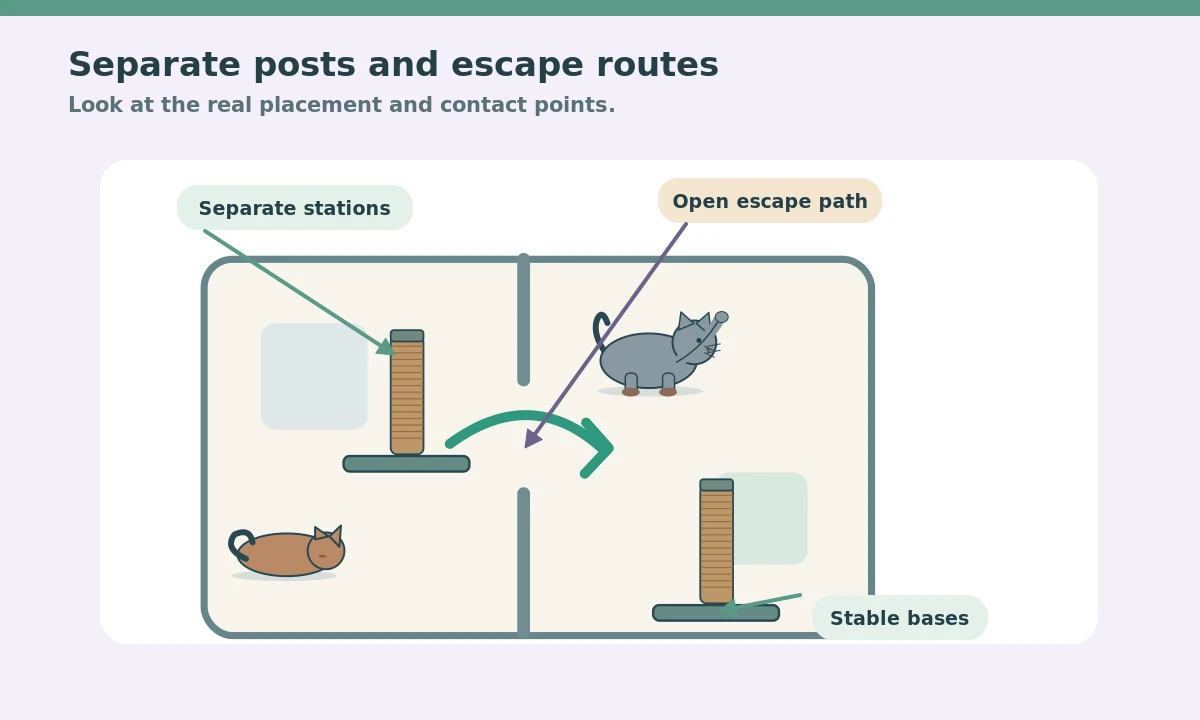
Provide choice in different rooms, not a pile of posts
A practical starting point is at least one comfortable scratching option per cat, with additional choices in separate locations when the home layout or tensions call for them. Two posts side by side at the end of a narrow hall can still act like one guarded resource. Place options near each cat’s favored resting area, along different routes, and in spaces with more than one way to leave. RSPCA multi-cat guidance emphasizes separating essential resources to reduce conflict. The important feature is independent access, not merely the total number of objects on a shopping list.
Match each cat’s physical scratching style
One cat may stretch vertically on sisal while another prefers a flat cardboard pad. A large cat needs enough vertical reach and a heavier base; a cat with limited mobility may choose a low horizontal board. Offer these alternatives without assuming cats of the same household must like the same surface. Observe claw contact, foot placement, and whether the post rocks. Keep rope ends secured and surfaces free of sharp hardware. Do not place a favorite post on a high platform that an older or less confident cat can reach only by passing an assertive housemate.
Design an entrance and an exit for every station
A scratching area should not become a dead end. In a small room, set the post where the cat can step away toward two routes or at least retreat without squeezing past another cat. Avoid tight doorways, cupboard interiors, and corners where a waiting cat can block escape. In a hallway, you may need a second station in another room rather than more equipment in the same traffic lane. Clear loose furniture and exposed cords around each post. A room map with arrows for entry and exit often reveals more about likely conflict than a photo of the posts themselves.
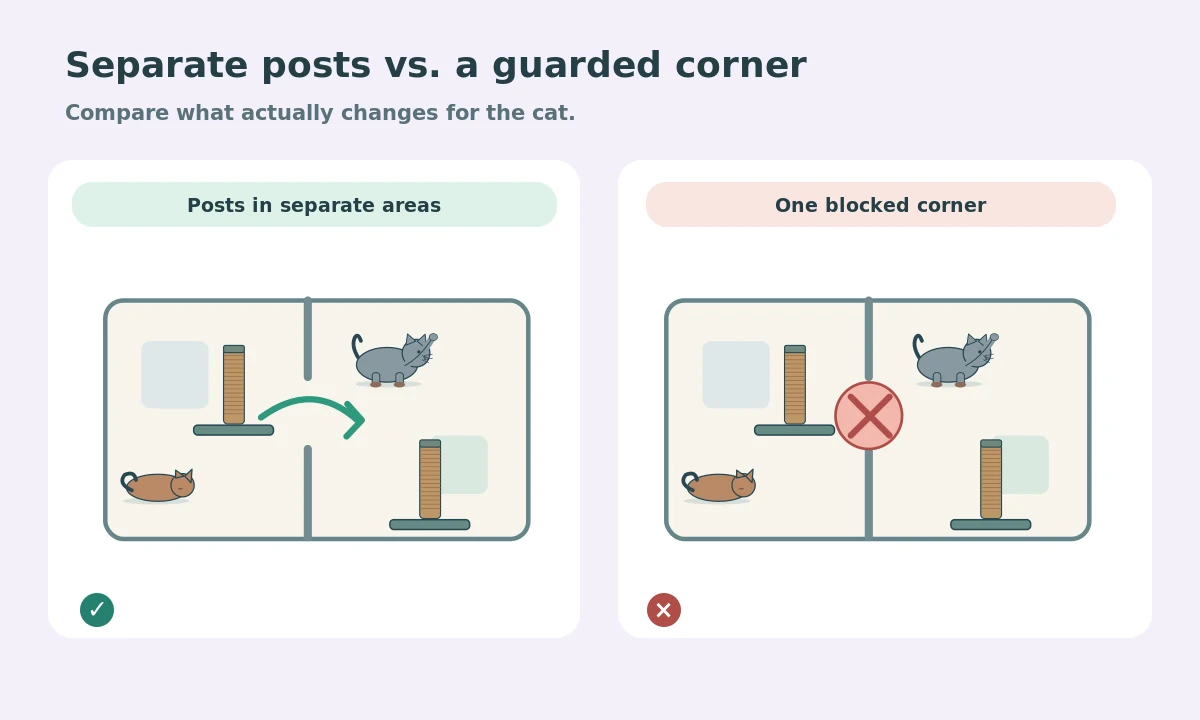
Reduce competition around exciting spots
Windows, beds, and entrances can attract more than one cat, so scratching posts placed there may become highly valued. Keep the appealing station but add another scratching choice near a different rest area. If an outdoor cat visible at the window makes both residents tense, consider limiting the view temporarily. Do not move all resources to one shared ‘cat corner’ for convenience. Cats need multiple safe resting, feeding, drinking, toileting, and scratching opportunities across the home. If one cat is chronically hiding or avoiding travel routes, treat this as a welfare concern, not just a post-placement problem.
Reward relaxed approaches instead of forcing turns
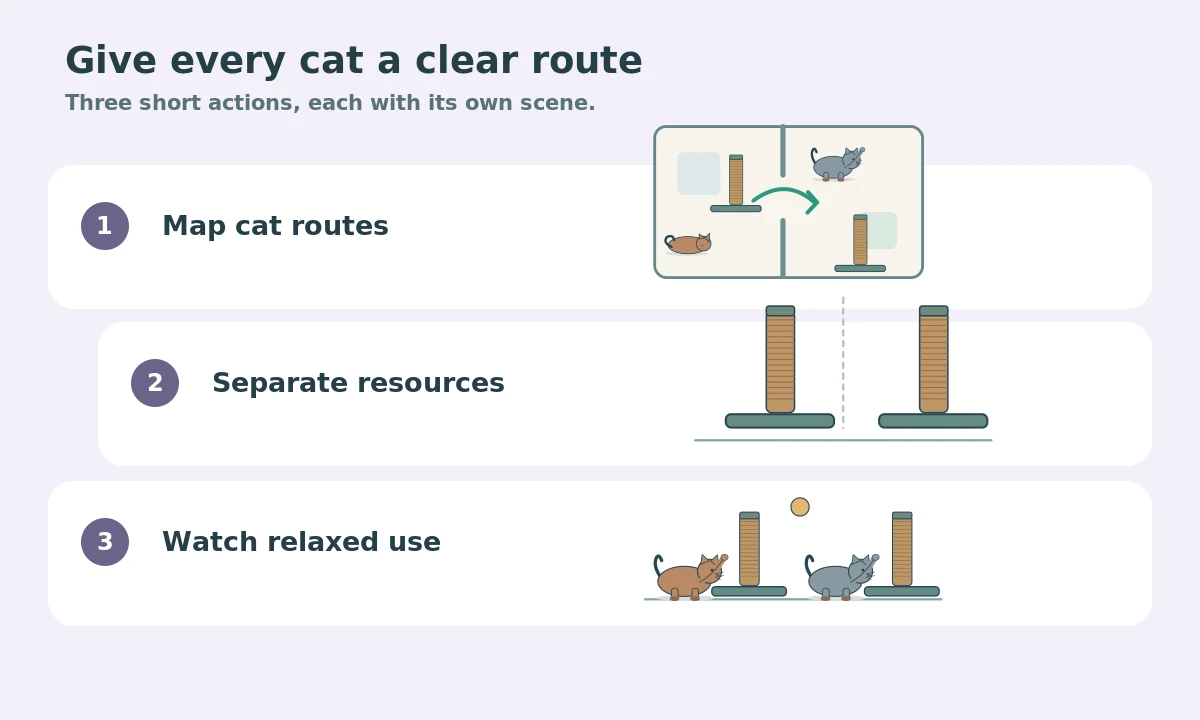
When both cats are calm, reinforce independent use of their own scratching stations with praise, play, or a small reward. Let each cat finish without the other being carried over to watch. Do not rub paws on a post or force simultaneous scratching. If one cat starts to stare or crowd the other, increase distance and reduce the difficulty of the setup. Reward at the station where the cat voluntarily scratches. Avoid making a post the only place to obtain treats; that can increase competition. The goal is easy, predictable access, not a training exercise where two cats must share one target.
Check for wear and keep familiar scent
A scratcher that looks frayed to a person can be valuable to a cat because it retains familiar markings. Do not remove every older post on the same day. Repair dangerous staples, loose strings, or splinters, but preserve safe, well-used surfaces. When a post must be replaced, put the new one beside the old for a transition period if space allows. Observe whether different cats favor different stations and avoid rotating all posts between rooms during a stressful household change. Clean surrounding floors routinely while leaving the safe, familiar scratching material available.
Know when the situation needs professional help
Persistent blocking, stalking, fights, inappropriate elimination, loss of appetite, or marked withdrawal suggest broader intercat tension. Add resources, but do not assume more posts alone will resolve repeated conflicts. Contact a veterinarian to rule out pain or illness and ask about a qualified feline behavior professional when the cats cannot move through the home comfortably. Never punish a cat for guarding or scratching: that can add fear to an already tense situation. Keep separate safe resting and feeding areas while you work on a gradual plan. A successful layout is one each cat can use without monitoring the other.
How We Research
HubPet reviewed guidance from established veterinary and animal-welfare organizations and compared the recommendations against the physical layouts shown in the illustrations. We focused on normal feline scratching, voluntary reward-based behavior change, stable materials, safe access, and triggers for seeking professional help. We do not claim product tests or individual behavior assessments. See our editorial research process. Check instructions for furniture, windows, and scratching products before applying any setup advice.
Sources
ASPCA — Destructive Scratching — https://www.aspca.org/pet-care/cat-care/common-cat-behavior-issues/destructive-scratching (accessed October 2026).
VCA — Cat Scratching Behavior — https://vcahospitals.com/know-your-pet/cat-behavior-problems-scratching (accessed October 2026).
FelineVMA — Reward-Based Training — https://catvets.com/resource/training-techniques-for-addressing-undesirable-behaviors/ (accessed October 2026).
Safety note: This is general animal-welfare guidance, not a diagnosis or replacement for a veterinarian. Do not restrain, frighten, declaw, or punish cats to suppress natural scratching. For sudden pain, injury, or intense distress, consult your veterinarian. For human wounds, seek medical advice where appropriate.
Start with independently accessible options for each cat and add more where routes or competition require it. Separate locations matter more than a single count.
They might, if neither guards it and both have other options. Avoid making one valued post the only scratching resource.
Use separate rooms or routes near resting areas with easy exits, rather than crowding every post into a narrow corner.
It may be waiting or avoiding a controlling housemate. Watch for staring, blocking, chasing, and other signs of tension.
Not automatically. Familiar scratching marks are valuable, but replace or repair the post if exposed hardware or strands become unsafe.