
A tall scratching post helps only when the cat can stretch fully and the post stays stable under a strong downward pull. The goal is to support ordinary scratching without fear, punishment or forced paw handling. For animal comfort and safety boundaries, see our veterinary information disclaimer.
Start with the cat, not a quoted product height
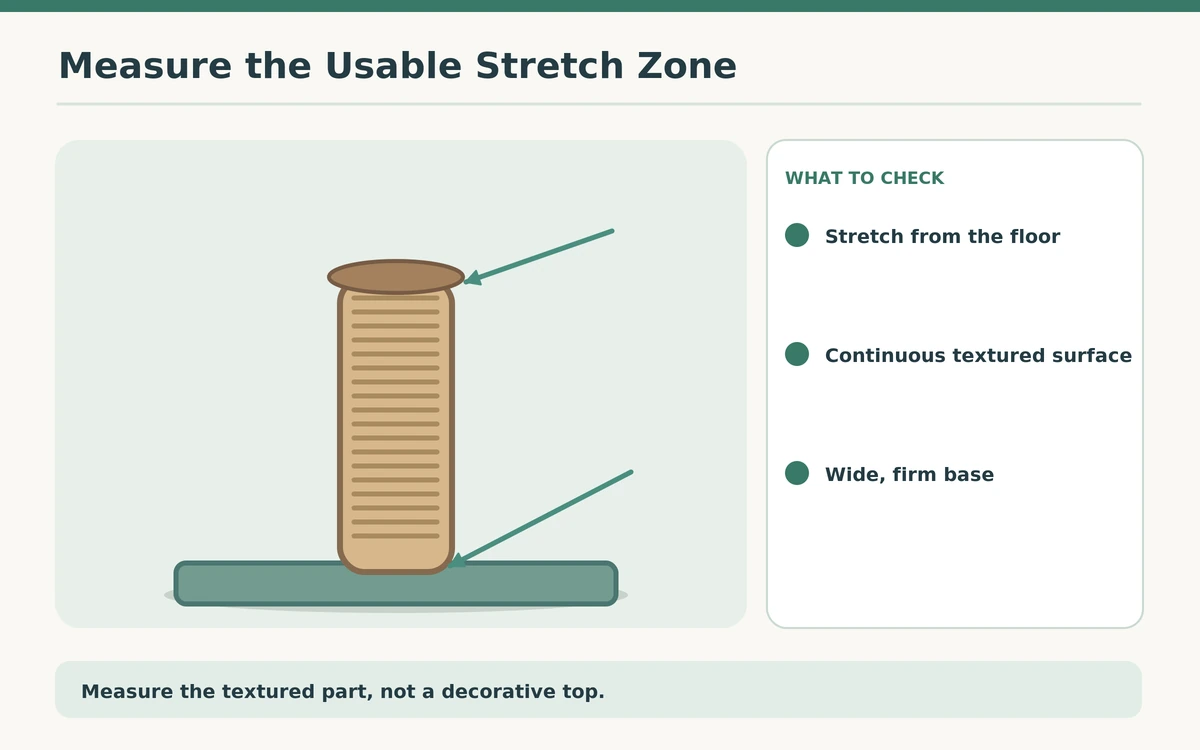
Watch your cat stretch upward against a familiar surface before choosing a tall post. Some cats rear up with their back feet planted, then pull down from above shoulder level. Others reach only partway up before switching paws. The useful scratching zone must let your cat extend comfortably without hitting a platform, roof or dangling toy. Measure the usable covered part of the post, not its total advertised height. Tall furniture with a short scratchable sleeve can disappoint an energetic adult cat. Cornell and the SF SPCA both emphasize room for a full stretch.
Measure the uninterrupted scratching surface
Use a tape measure to identify where the rough material starts and ends. Exclude decorative finials, shelves, smooth plastic connectors and exposed screws from the scratching length. A cat should be able to reach upward and draw its front paws down in one smooth motion. For a large or long-bodied animal, try a taller surface rather than guessing from product labels such as jumbo or extra-tall. If you shop online, request the dimensions of the textured section and the base separately. A photo of a kitten on a post is not an adult sizing chart.
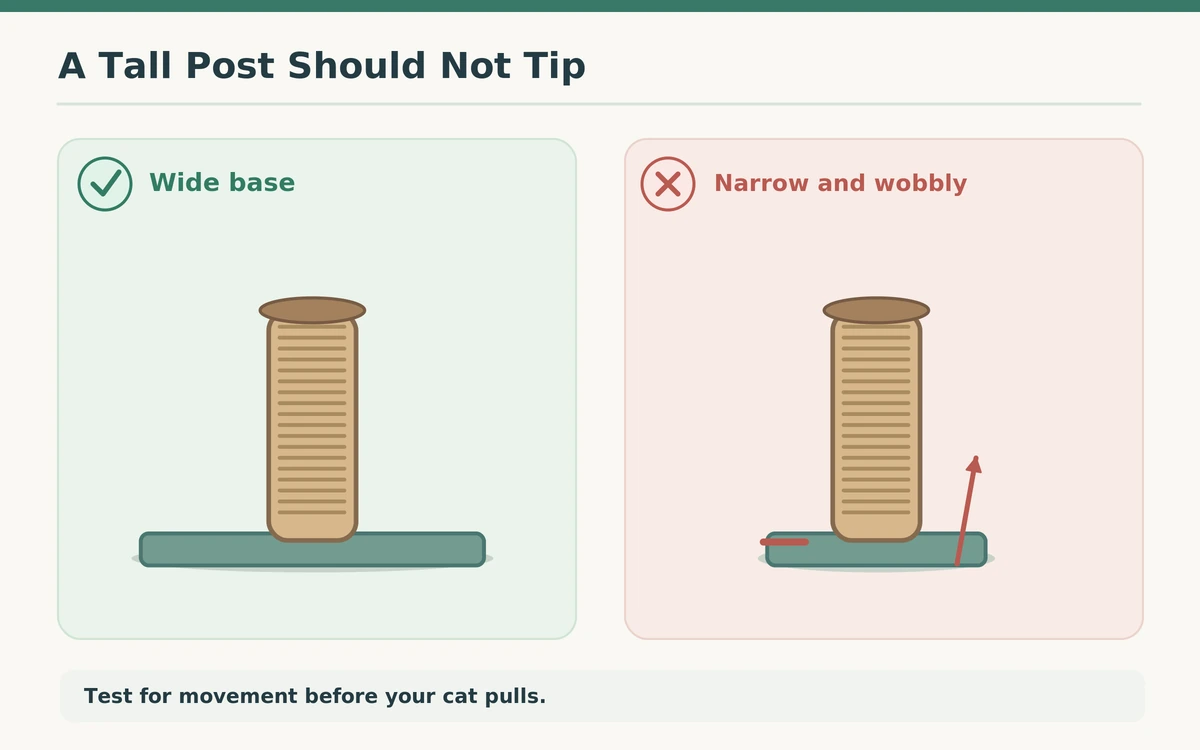
Test stability before inviting the cat
Press the upper section sideways with your hand while the base sits on the intended floor. A safe unit should not rock sharply, slide or threaten to tip under a normal scratch. Inspect the joint between shaft and base; a wide-looking base can still fail when fasteners loosen. Thick carpet may make a narrow footplate less secure, while smooth tile can let a lightweight base travel. Add traction only according to the maker’s instructions and avoid makeshift heavy weights that can fall onto paws. Consider a properly anchored wall surface when floor stability remains poor.
Keep the scratching face clear of obstacles
Place the post where the cat can approach, stand and extend without bumping a chair, wall shelf or sharp table corner. Leave free space behind the hind feet so the cat can lean into a pull. A post tightly wedged between furniture may not permit a full reach, even when its own height looks generous. Check the base for exposed staples or sharp edges. A flat, firm floor helps the animal decide whether the surface feels dependable. If the cat avoids the station, investigate room layout before assuming the cat dislikes sisal.
Compare rough surfaces by what the cat already chooses
Vertical rope, woven sisal and other durable textures can feel different under claws. Some cats prefer a loosely textured face that catches the claws; others choose corrugated cardboard or a horizontal surface. Observe current scratching direction and pressure rather than buying every possible style. A tall post does not replace a flat pad for a cat that scratches rugs with its body low. Check that rope wraps remain tight and that no loops invite snagging. Keep a familiar used scratcher available during the trial so the cat retains a reliable outlet.
Choose a location the cat already values
Put the new station beside an existing preferred scratching spot, near a sleeping area or along a normal route. Cats may scratch after waking and can use scratch marks as visible signals, so hiding every post in a quiet corner often misses the point. If a sofa already attracts scratching, position the post directly beside that sofa at first. Protect the furniture with a removable cover if needed. Once the cat uses the post consistently, shift it gradually rather than moving it across the house overnight. Multi-cat homes need separate stations in more than one location.
Invite use without moving the cat’s paws
Let the cat inspect the new surface independently. Try a short wand-toy game that passes beside the post, or reward voluntary contact with a treat if the cat enjoys food rewards. Some cats respond to catnip, while others show little interest. Avoid dragging a paw down the material or lifting the animal against the post; forced handling can create avoidance. Keep play gentle near the post so the cat does not slam into the base. A successful introduction means the cat chooses the location and can leave freely, not that you produce an immediate demonstration.
Inspect the base and shaft every week
Tug lightly at the shaft to check its joint, look for shifting screws and run your eyes along the surface for sharp fasteners or loose strands. A post may stay usable after visible scratching wear, and familiar scent can encourage repeated use. Retire or repair it when its structure wobbles, sections detach or long fibers create an entanglement risk. Avoid patching with unknown adhesives where the cat can lick them. Follow the maker’s replacement-part instructions. If a large cat climbs the post, choose a design specifically suitable for that added load.
Plan a two-location trial before replacing all scratchers
For a week, leave the tall post by a preferred scratching target and a familiar horizontal option elsewhere. Note whether the cat stretches fully, pulls down with confidence or seems to step away when the post moves. Track any renewed sofa or carpet scratching as information about location and texture. If the tall post stays unused, try a different placement or grain before making another purchase. Cornell emphasizes matching orientation and stability. Do not punish missed attempts or withdraw every other outlet. The goal is comfortable normal scratching.

A purchase checklist you can use in the store
Confirm the clear scratching height, total footprint, weight, joint construction and floor compatibility. Check whether the covering offers enough continuous vertical texture and whether spare covers or replacement rope are available. Examine the product for protruding hardware, dangling cords and small detachable trim. Ask how the manufacturer expects owners to tighten connections as the unit ages. Place it where the cat can make a full-body reach and leave an alternative option nearby. Spend on a usable, stable scratching surface rather than extra features that crowd the reach zone.
How We Research
We reviewed the feline welfare and veterinary behavior sources linked below for tall cat scratching posts. This guide compares observable scratching preferences, construction details, safety checks, and owner-managed setup choices. We did not run laboratory abrasion tests, measure brand durability, certify mounts, endorse an individual product, or diagnose a cat from a single behavior. Follow maker instructions and an individual cat’s comfort, and consult an appropriate veterinary professional for sudden behavioral change or injury. See our editorial approach. Reviewed October 28, 2026.
Sources
Humane World for Animals, How to Help Your Cat Scratch in the Right Places. Read the original guidance. Accessed October 28, 2026.
Cornell Feline Health Center, Feline Behavior Problems: Destructive Behavior. Read the original guidance. Accessed October 28, 2026.
San Francisco SPCA, Scratching Posts. Read the original guidance. Accessed October 28, 2026.
ASPCA, Destructive Scratching. Read the original guidance. Accessed October 28, 2026.
Safety note: Stop use when a scratcher tips, shifts, exposes sharp hardware, traps claws or sheds pieces that the cat chews. For bleeding, persistent limping, possible swallowed objects or a sudden change in scratching with other symptoms, seek veterinary guidance. Never declaw a cat to solve furniture scratching.
Choose enough uninterrupted textured height for your individual cat to reach upward and pull down at a comfortable full-body stretch. Measure the cat and the usable surface rather than relying on a universal product number.
Possibly, but test for rocking and sliding on that exact floor. A post that stays stable on tile may tip on deep carpet, especially when the base or shaft joint is narrow.
Height alone cannot overcome a poor location, unappealing grain or unstable base. Try the preferred scratching area and keep an accepted surface available during the trial.
Not merely because it looks worn. Familiar shredded material can attract cats. Replace or repair it if the shaft loosens, sharp hardware appears or strands pose a snagging risk.
Provide several appropriate scratching choices in separate locations. Cats can guard resources, and distinct stations reduce the need to share one desirable spot.